
20 Essential Checklists: When and Why to Hire a CFO in the UAE

What if the biggest threat to your UAE business in 2026 is not competition, but administrative non-compliance, increasingly data-driven tax reviews, and missed regulatory filing deadlines?
Every founder dreams of growth.
But the UAE business environment has moved beyond basic company setup and early tax awareness. Businesses now operate within a mature corporate ecosystem shaped by active Corporate Tax filing, VAT controls, digital tax administration, and stricter financial record-keeping requirements.
Corporate Tax is now an active filing obligation rather than an upcoming policy. Taxable businesses generally have nine months from the end of their Tax Period to file the return and settle the tax due. For companies with a 31 December 2025 year-end, the deadline is 30 September 2026.
That’s why many businesses are turning to CFO services in the UAE, not as a luxury, but as a critical operational necessity to protect against corporate liabilities, preserve working capital, and satisfy increasingly stringent lender and investor reviews.
The right CFO is not merely a numbers specialist. They act as a strategic partner who optimizes the corporate supply chain, drives financial digitalization, evaluates capital structures, and maintains close oversight of liquidity and compliance risk.
In an environment where weak controls, unreliable forecasts, or missed deadlines can trigger penalties and disrupt funding, strong financial leadership is no longer optional.
Want to know precisely when to bring one on board and why it could change your company’s future?
Here’s a 20-point guide to the essential checkpoints that signal it is time to hire a CFO in the UAE.
Understanding the CFO Role in the UAE Context
The Evolving UAE Business Landscape in 2026
The UAE has entered a mature and highly regulated corporate phase. Businesses are no longer preparing for Corporate Tax as a future obligation; they are filing returns, settling liabilities, maintaining audit-ready records, and managing the interaction between Corporate Tax, VAT, payroll, banking, and financial reporting requirements. Taxable persons must generally file their Corporate Tax returns and pay any tax due within nine months from the end of the relevant Tax Period.
The compliance burden has also widened. Federal Decree-Law No. 16 of 2025 introduced important VAT changes from 1 January 2026, including stronger documentary requirements, a five-year limitation for claiming excess refundable tax, and the ability of the Federal Tax Authority to deny input tax deductions where a business knew—or should have known—that a supply was connected to tax evasion. Businesses must therefore assess supplier legitimacy rather than relying only on the presence of a tax invoice.
Digital reporting is becoming equally important. The UAE’s phased e-invoicing programme requires businesses with annual revenue exceeding AED 50 million to appoint an Accredited Service Provider by 30 October 2026 and implement the system by 1 January 2027. This transition requires finance teams to integrate accounting, invoicing, tax, and master-data systems before mandatory reporting begins.
AML/CFT controls have also become more structured, particularly for regulated financial institutions and other businesses falling within the applicable supervisory framework. Risk-based customer assessment, transaction monitoring, record retention, and escalation procedures increasingly influence whether companies can maintain reliable banking and commercial relationships.
In this environment, cfo services uae are no longer simply used to improve bookkeeping. Strategic financial leadership has become a critical operational necessity for protecting against corporate liabilities, preserving recoverable working capital, managing debt obligations, and satisfying increasingly stringent institutional credit and due-diligence reviews.
A capable CFO evaluates whether the company’s funding structure remains commercially sustainable after financing costs and the applicable 9% Corporate Tax charge. They also assess debt capacity, covenant headroom, dividend capacity, related-party funding, and the balance between equity and external borrowing before management commits capital.
Role of a CFO Service in UAE Companies: More Than Bookkeeping
A modern CFO acts as a strategic partner who optimizes financial performance across the corporate supply chain, drives digital transformation, and maintains close oversight of liquidity risk. The role combines financial modelling, cloud-based data integration, treasury management, internal controls, tax governance, and commercial decision support.
Instead of reviewing static historical accounts, the CFO connects operational data with cash flow forecasts, margin analysis, inventory movements, customer collections, supplier commitments, and tax liabilities. This gives management a reliable view of how commercial decisions affect profitability and available cash.
What Does a Chief Financial Officer Do?
CFO services in the UAE involve evaluating corporate capital structures, directing financial planning and analysis, optimizing the cash conversion cycle, and designing risk-mitigating treasury and hedging frameworks. A CFO also aligns the maturity of assets and liabilities, monitors borrowing costs, and ensures that short-term funding is not being used unsustainably to finance long-term requirements.
The CFO converts financial and operational data into forward-looking decisions. This includes preparing budgets, developing scenario models, testing liquidity under adverse conditions, monitoring debt covenants, evaluating investment returns, and identifying financial or regulatory risks before they become material exposures.
Full-Time, Part-Time and Outsourced CFO Services
For many SMEs and high-growth startups, hiring a permanent C-suite executive may not be commercially proportionate to the company’s present size or transaction volume. Businesses are therefore adopting outsourced CFO services, fractional CFO arrangements, and virtual finance leadership models that convert a significant fixed employment cost into a more predictable professional-services retainer.
The cost comparison should consider more than basic salary. A permanent appointment may also involve recruitment fees, bonuses, visa and relocation expenses, medical insurance, allowances, end-of-service benefits, and other employment costs. By comparison, outsourced models allow businesses to define the required level of strategic support, reporting frequency, and compliance oversight within an agreed scope.
This flexibility has made CFO services in Dubai and CFO services in the UAE particularly relevant for businesses that require senior financial control but do not yet need a full-time executive. Actual savings depend on the CFO’s seniority, industry, workload, service scope, and the complexity of the company’s operations.
Core Responsibilities of a UAE CFO in 2026
Financial planning and analysis — preparing integrated budgets, forecasts, scenario models, tax-adjusted projections, and capital-allocation assessments that support management decisions.
Cash flow and treasury management — monitoring working capital, optimizing collection and payment cycles, matching asset and liability maturities, and maintaining sufficient liquidity for payroll, tax, debt, and supplier obligations.
Wages Protection System compliance — ensuring that contractual salaries are processed accurately and on time through approved banks, financial institutions, or exchange houses under the UAE’s electronic WPS framework.
Corporate Tax governance — maintaining reliable accounting records, calculating the applicable tax position, identifying related-party adjustments, and ensuring that returns and tax payments are completed within the statutory nine-month filing window.
Real-time transaction monitoring — establishing approval limits, exception reports, bank reconciliations, fraud indicators, and dashboard-based controls that identify unusual or unauthorized financial activity promptly.
VAT and supplier due diligence — verifying supplier identities, Tax Registration Numbers, commercial substance, supporting documentation, and transaction integrity before input tax is claimed, particularly where the circumstances could indicate a tax-evasion arrangement.
Risk and compliance management — coordinating tax, payroll, banking, insurance, contractual, and regulatory obligations while ensuring that management receives timely information on emerging financial exposures.
In short, CFOs do not merely manage the accounting function. They protect liquidity, strengthen governance, support compliant growth, and ensure that the business can withstand the UAE’s increasingly data-driven tax and regulatory environment. For companies facing rapid expansion, funding requirements, cross-border transactions, or complex reporting obligations, professional cfo services in uae have become an operational requirement rather than an optional layer of management.
When to Hire a CFO: 20 Essential Checkpoints
Deciding to bring a CFO on board isn’t about following a trend. It’s about recognizing that your business has reached a new level of complexity. One where strong financial leadership can make the difference between sustainable growth and costly mistakes.
The following checklist highlights the most essential checkpoints that innovative UAE businesses watch for. If you see yourself in these situations, it’s a strong signal that it’s time to consider CFO services in the UAE.
Business Growth & Complexity
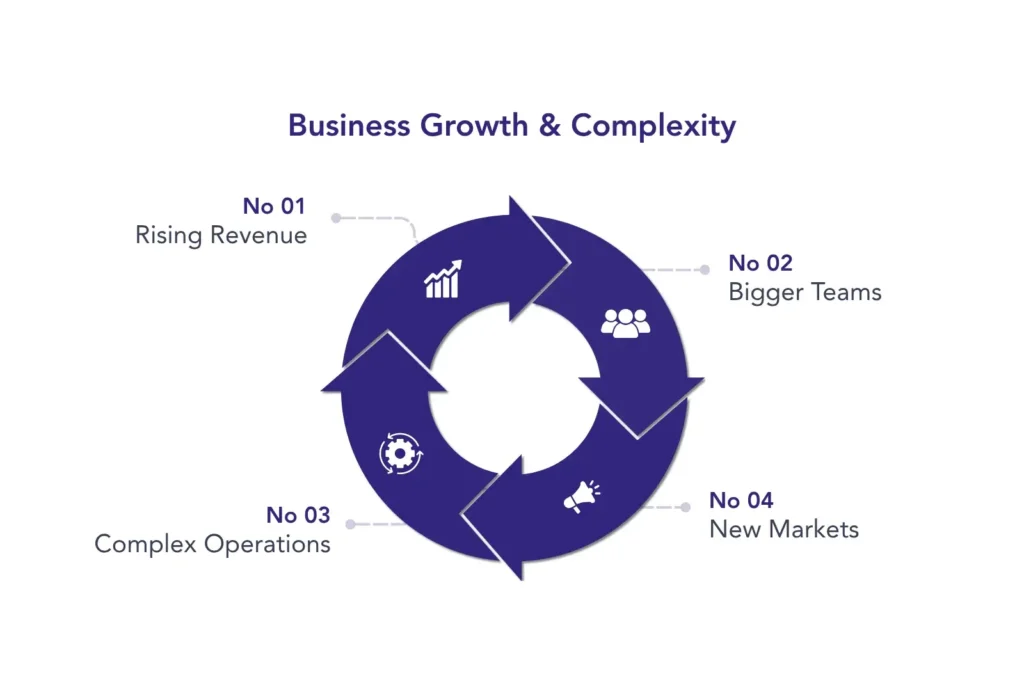
Growth is commercially positive, but it increases transaction volumes, reporting demands, tax exposures, and the risk of control failures. In 2026, corporate complexity is increasingly linked to digital tax administration, audited financial reporting, payroll monitoring, transfer-pricing documentation, and other compliance obligations. A strong CFO ensures that financial systems and internal controls develop at the same pace as the business.
1. Rising Revenue
Crossing critical revenue thresholds can immediately increase a company’s financial reporting and tax-compliance obligations. For Corporate Tax purposes, a taxable person that is not part of a Tax Group and earns revenue exceeding AED 50 million during the relevant Tax Period is required to prepare and maintain audited financial statements. The requirement also applies separately to Qualifying Free Zone Persons and specified Tax Groups.
Rapid growth can also trigger more extensive transfer-pricing documentation. A business must maintain a Master File and Local File where its revenue is at least AED 200 million during the relevant Tax Period, or where it belongs to a multinational group with consolidated revenue of at least AED 3.15 billion. Experienced outsourced CFO companies help management monitor these thresholds, strengthen financial reporting, and prevent revenue growth from creating an unmanaged compliance gap.
2. Bigger Teams
CFO services in Dubai become increasingly important when expanding payroll creates stricter Wages Protection System monitoring, complex end-of-service benefit calculations, employee-related provisions, pension obligations, and Emiratisation requirements. A CFO must reconcile employment contracts with payroll records, confirm that salaries are processed through the Wages Protection System, and forecast the full employment cost of every new hire.
Private-sector establishments with 50 or more employees are generally required to achieve annual growth of 2% in the number of Emiratis employed in skilled positions, implemented through a 1% semi-annual target. This policy is intended to achieve a cumulative Emiratisation growth rate of 10% by the end of 2026. Selected establishments with 20 to 49 employees are also subject to separate recruitment and retention requirements. Failure to meet the applicable Emiratisation targets may result in financial contributions and other administrative consequences.
From 1 January 2026, the minimum monthly wage for Emiratis employed in the private sector increased to AED 6,000. Existing employment contracts were required to be aligned by 30 June 2026. From 1 July 2026, an Emirati employee paid below this amount may cease to count towards the employer’s Emiratisation target, while new work permits may be suspended until the salary is corrected. This AED 6,000 minimum wage applies specifically to Emirati employees, not to every private-sector worker.
3. Complex Operations
CFO consulting services become essential when a business operates across multiple currencies, industries, entities, or revenue streams. Managing multi-currency cash flows and cross-border invoicing without a documented foreign-exchange risk policy directly exposes the business to currency volatility, inaccurate margins, and unpredictable cash requirements.
The CFO must distinguish between transaction exposure arising from foreign-currency invoices, translation exposure arising from consolidating foreign operations, and economic exposure affecting the company’s longer-term competitive position. This allows management to quantify the actual risk instead of reacting to exchange-rate movements after margins have already been affected.
The CFO Currency Management Checklist: Mitigating Exchange Rate Exposure
- Map and quantify currency exposure
Identify every foreign-currency receivable, payable, loan, bank balance, purchase commitment, forecast transaction, and overseas investment. Separate transaction, translation, and economic exposures, then measure their potential effect on cash flow, profit, and net assets under different exchange-rate scenarios.
- Define risk tolerance and hedge ratios
Document the level of exchange-rate volatility the business can absorb without breaching its budget, liquidity limits, or debt covenants. Establish hedge ratios for identified exposures. For example, management may decide to hedge 80% to 100% of highly probable or contractually confirmed exposures over the following 12 months. This percentage should be treated as a policy-specific illustration rather than a universal benchmark.
- Select appropriate hedging instruments
Use forward contracts where budget certainty is the principal objective. Options may be considered where the company requires downside protection while retaining the benefit of favourable exchange-rate movements. Collars can reduce option costs by setting an upper and lower exchange-rate range. Each instrument should be assessed for pricing, liquidity, documentation, counterparty risk, and accounting implications before execution.
- Use natural hedging before derivatives
Match foreign-currency receivables against payables in the same currency, negotiate supplier and customer contracts in aligned currencies, centralise group cash positions where appropriate, and assess whether each subsidiary’s functional currency reflects its underlying economic environment. Natural hedging can reduce net exposure before the business incurs the cost of financial derivatives.
- Establish treasury controls and accounting compliance
Approve a formal treasury policy defining transaction limits, authorised instruments, permitted counterparties, approval levels, reporting responsibilities, and prohibited speculative activity. The finance function should independently confirm contracts, reconcile settlements, monitor mark-to-market valuations, and account for derivatives and qualifying hedge relationships under the applicable financial reporting standards.
4. New Markets
Navigating diverse free-zone regulations and GCC jurisdictions requires a CFO to establish robust transfer-pricing policies, complete applicable corporate registry requirements, assess permanent-establishment risks, and coordinate cross-border VAT and withholding-tax positions. Expansion decisions must therefore be reviewed from legal, tax, treasury, and operational perspectives before contracts are signed or employees are deployed.
Under the UAE Corporate Tax regime, the arm’s-length principle applies to transactions and arrangements with Related Parties and Connected Persons, whether those parties are located in the UAE mainland, a Free Zone, or another jurisdiction. The AED 200 million revenue threshold determines whether specified businesses must maintain a Master File and Local File; it does not determine whether the underlying transfer-pricing rules apply. The Ministry of Finance’s Transfer Pricing documentation requirements provide the relevant documentation thresholds.
Outsourced CFO services help management evaluate the financial consequences of market entry, including entity structuring, related-party pricing, funding arrangements, foreign-exchange exposure, indirect tax registration, compliance costs, and the cash required to sustain operations until the new market becomes profitable.
Financial Planning & Controls
Solid financial planning separates controlled growth from unmanaged expansion. As transaction volumes increase, UAE businesses need more than retrospective bookkeeping. They require reliable reporting systems, tax-adjusted forecasts, disciplined treasury controls, and documented approval procedures. That is why many businesses use CFO services in the UAE to establish financial controls before reporting failures, liquidity constraints, or compliance exposures become material.
5. Poor Reporting
Relying on delayed or inaccurate financial reporting in 2026 can produce incorrect Corporate Tax returns, unreliable VAT positions, missed filing deadlines, and weak management decisions. Financial statements used to calculate taxable income must be prepared under the accounting standards accepted for UAE Corporate Tax purposes. IFRS generally applies, while businesses with revenue not exceeding AED 50 million may elect to use IFRS for SMEs, subject to the applicable conditions.
Audited financial statements are required for specified categories, including taxable persons whose revenue exceeds AED 50 million, Qualifying Free Zone Persons, and Tax Groups under the applicable rules. The requirement should not be presented as a universal obligation for every UAE business.
Corporate Tax returns are submitted through the FTA’s EmaraTax platform. The return includes information derived from the financial statements, including the accounting principles applied, taxable income, available tax losses, tax credits, and Corporate Tax payable. The FTA may also request the underlying financial statements and supporting records. Experienced CFO accounting services ensure that management accounts, statutory statements, tax schedules, and return disclosures reconcile before submission.
6. Strategic Planning
Growth raises more technical questions than simply deciding how much to spend. Management must design dynamic scenario models that incorporate the applicable 9% Corporate Tax charge, evaluate the cost of capital, test debt-service capacity, and measure how inflation, financing costs, and exchange-rate movements affect operating margins. The standard 9% rate generally applies to taxable income exceeding AED 375,000.
CFO consulting services use these assumptions to develop base-case, downside, and expansion scenarios. Each model should show the effect on revenue, gross margin, EBITDA, taxable income, cash reserves, covenant compliance, and funding requirements.
For investment decisions, the CFO may calculate the weighted average cost of capital using the following structure:
WACC = (Equity ÷ Total Capital × Cost of Equity) + (Debt ÷ Total Capital × After-Tax Cost of Debt)
The calculation should reflect the entity’s actual debt pricing, capital structure, business risk, effective tax position, and the extent to which finance costs are deductible under the UAE Corporate Tax rules. WACC then becomes the discount rate used to test whether projected investment returns compensate the business for the capital employed and the risks assumed.
7. Cash Flow Risks
A profitable business can still experience a liquidity crisis when customer collections slow, inventory remains unsold, or supplier payments fall due before cash is received. Extended cash conversion cycles and working-capital blockages are particularly serious where substantial tax credit balances remain unreviewed or unclaimed.
The 2026 amendments introduced a five-year limitation framework for requesting the refund of qualifying credit balances or using those balances to settle tax liabilities. Federal Decree-Law No. 16 of 2025 also introduced a five-year time limit for reclaiming excess refundable VAT after the relevant reconciliation. Businesses should therefore not assume that historical VAT credits can remain on the account indefinitely.
Outsourced CFO companies should maintain a tax-credit ageing schedule showing the originating tax period, balance available, supporting documents, limitation date, amounts utilised, and refund status. This allows management to submit valid claims before the statutory period expires rather than allowing recoverable working capital to lapse.
8. Weak Controls
Fast-growing businesses often process more payments, add system users, and delegate authority without redesigning their financial controls. A skilled CFO establishes a comprehensive framework of system-based internal controls, segregates critical financial duties, and secures digital payment channels to reduce treasury fraud and unauthorized transactions.
The control framework should include maker-checker approvals, role-based system access, payment limits, independent bank-detail verification, daily exception reporting, automated duplicate-payment detection, and timely bank reconciliations. Changes to supplier bank accounts should be independently confirmed through verified contact channels rather than approved solely through email.
Outsourced CFO services can also configure alerts for unusual payment values, repeated invoice numbers, transactions outside normal business hours, inactive suppliers, and attempts to bypass established approval limits. The objective is to prevent errors and fraud before funds leave the company, rather than identifying them during the year-end audit.
9. Compliance Pressure
Tax compliance is now a mature regulatory reality rather than an implementation exercise. Federal Decree-Law No. 16 of 2025 introduced significant VAT amendments from 1 January 2026, while Cabinet Decision No. 129 of 2025 amended the administrative penalty framework with effect from 14 April 2026. Corporate Tax penalties remain governed by the separate Corporate Tax penalty regime, including Cabinet Decision No. 75 of 2023 and its amendments.
For businesses with a financial year ending on 31 December 2025, the Corporate Tax return and any Corporate Tax payable must be submitted and settled by 30 September 2026 through EmaraTax. Reliable CFO services in Dubai or CFO services in Abu Dhabi should therefore complete the financial close, tax adjustments, related-party review, and payment planning well before the statutory deadline.
The VAT and Tax Procedures amendments also require businesses to review ageing credit balances. Transitional provisions allow taxpayers to request refunds for certain credit balances where the five-year period expired before 1 January 2026 or will expire during 2026. The transitional request must generally be submitted within one year from 1 January 2026. This is more precise than stating that every VAT credit arising from 2018 to 2020 automatically expires on the same date.
Chronological Tax Compliance Roadmap: Key 2026 Deadlines
| Date or Period | Compliance requirement | Potential consequence | Required CFO action |
| Throughout 2026 | Prepare financial statements using the applicable UAE Corporate Tax accounting standard and retain supporting accounting and tax records. Audited financial statements are required only where the relevant statutory criteria apply. | Incorrect taxable income, unsupported return positions, audit adjustments, and record-keeping penalties. | Complete monthly closes, maintain tax reconciliations, document accounting judgements, and assess whether the AED 50 million audit threshold or another audit category applies. |
| 14 April 2026 | Cabinet Decision No. 129 of 2025 became effective, amending administrative penalties under the general tax procedures, VAT, and Excise Tax framework. | For failure to settle applicable Payable Tax, the amended schedule provides a penalty calculated at 14% per annum and imposed monthly on the unpaid amount. Other fixed penalties apply for registration, record-keeping, return, and notification failures. | Review unpaid tax balances, return status, tax-registration details, and outstanding FTA correspondence. |
| 30 September 2026 | Corporate Tax return and payment deadline for a taxable person whose financial year ended on 31 December 2025. | The FTA states that late filing or late settlement may attract AED 500 for each month or part thereof during the first 12 months, increasing to AED 1,000 per month or part thereof thereafter. | Finalise the financial statements, Corporate Tax computation, elections, transfer-pricing adjustments, return disclosures, and payment instructions before the deadline. |
| 31 December 2026 | End of the transitional one-year period for requesting refunds of qualifying historical credit balances where the five-year period expired before 1 January 2026 or expires during 2026. | The right to request the refund or use the qualifying credit balance may lapse, subject to the detailed statutory conditions and exceptions. | Prepare a credit-balance ageing analysis, reconcile historical VAT returns, confirm supporting documents, and submit eligible refund requests through EmaraTax. |
| Within nine months of each Tax Period | Submit the Corporate Tax return and settle any Corporate Tax payable. | Progressive late filing or payment penalties and possible review of inaccurate return information. | Maintain a compliance calendar based on each entity’s financial year rather than relying on a single group-wide date. |
Funding & Investment Needs
Raising capital changes the level of financial scrutiny applied to a business. Banks and investors assess historical performance, cash generation, debt capacity, tax compliance, governance, and the reliability of management forecasts. This is usually when founders recognise that they need more than an accountant—they need the financial credibility and transaction support provided by experienced CFO services in the UAE.
10. Raising Capital
Securing institutional debt or venture capital in 2026 requires reliable financial statements, a clear Corporate Tax history, supportable cash-flow forecasts, and professionally prepared valuation models. Audited financial statements may be particularly important where they are required by law, requested by a lender or investor, or necessary to validate the company’s reported performance. For Corporate Tax purposes, the statutory audit requirement applies to specified categories, including taxable persons with revenue exceeding AED 50 million, Qualifying Free Zone Persons, and Tax Groups under the applicable rules.
CFO consulting services prepare integrated financial models that reconcile revenue forecasts, operating costs, capital expenditure, working-capital movements, debt repayments, and tax liabilities. A discounted cash-flow valuation should use post-tax free cash flows and therefore reflect the projected UAE Corporate Tax liability. The standard rate is 9% on taxable income exceeding AED 375,000, but the model should calculate tax using projected taxable income rather than simply applying 9% to accounting profit or EBITDA.
The CFO must also test the valuation against different assumptions for revenue growth, gross margins, customer collections, terminal growth, and the weighted average cost of capital. This provides lenders and investors with a defensible valuation range rather than a single optimistic figure.
11. Investor Confidence
Investors look beyond growth potential. They assess whether the business has institutionalised corporate governance, documented internal controls, transparent board reporting, and a complete audit trail from the underlying transaction to the financial statements and tax returns. CFO accounting services establish these structures before due diligence begins.
A CFO should provide the board and investors with consistent reporting on revenue quality, cash conversion, customer concentration, debt exposure, related-party transactions, tax positions, covenant compliance, and material operational risks. Each reported figure should be traceable to an approved ledger, contract, invoice, bank record, or other supporting document.
ESG information is also becoming increasingly relevant to institutional investment decisions. Where the company is listed, falls within an applicable sustainability-disclosure framework, or is seeking funding from investors with specific ESG requirements, the CFO should establish measurable environmental, social, and governance indicators aligned with recognised standards. Independent assurance may be obtained where required or where it materially strengthens the credibility of the disclosures; it is not a universal requirement for every UAE private company. ADX guidance confirms that ESG disclosures give investors information needed to assess sustainability performance and make informed decisions.
12. Deals and Restructuring
Mergers, acquisitions, and corporate restructurings raise the level of financial and tax risk. Undisclosed tax liabilities, unsupported accounting balances, non-arm’s-length Related Party transactions, or exposure to the OECD Pillar Two framework can reduce enterprise value, delay completion, trigger price adjustments, or result in additional contractual protections being demanded during due diligence.
Outsourced CFO services and established outsourced CFO companies support pre-deal readiness by reconciling financial statements, normalising earnings, validating working capital, reviewing debt and contingent liabilities, and preparing complete financial and tax data rooms. They also assess whether transaction values, management charges, intercompany financing, intellectual-property arrangements, and other Related Party transactions satisfy the UAE arm’s-length principle. The FTA confirms that UAE transfer-pricing rules apply to transactions with Related Parties and Connected Persons, regardless of whether they are located on the mainland, in a Free Zone, or outside the UAE.
The CFO should also identify whether the proposed merger or restructuring may qualify for relief under the UAE Corporate Tax rules. Business Restructuring Relief may apply to qualifying transfers or mergers undertaken in exchange for shares or other ownership interests, provided the statutory conditions and subsequent compliance requirements are satisfied. The availability of relief must be established before the transaction is executed rather than assumed after completion.
OECD Pillar Two exposure must be described carefully. The UAE Domestic Minimum Top-up Tax applies only to constituent entities of multinational enterprise groups with annual consolidated global revenue of at least EUR 750 million in at least two of the four preceding financial years. It applies to financial years beginning on or after 1 January 2025 and does not ordinarily apply to independent SMEs or domestic groups below the threshold. For in-scope groups, the potential 15% minimum effective tax outcome can affect forecasts, deferred tax assessments, acquisition structures, and transaction valuations.
Risk & Compliance Management
Risk often develops quietly while management remains focused on customers, sales, and expansion. By the time the exposure appears in a tax audit, bank review, regulatory inspection, or cash-flow forecast, the financial impact may already be material. Experienced cfo services in the UAE identify these exposures early and establish controls that prevent compliance failures from disrupting normal operations.
13. Financial Risks
Compliance oversights can trigger regulatory penalties, weaken banking relationships, restrict access to financial services, and, in regulated sectors, expose the business to licence or operational sanctions. The level of exposure depends on the company’s activities, regulator, ownership structure, and compliance obligations.
The Central Bank’s updated CDD, KYC and record-keeping guidance took effect on 7 November 2025 and applies to CBUAE-licensed financial institutions. It requires banks and other regulated institutions to understand the customer’s business, beneficial ownership, source of funds, expected account activity, and financial-crime risk. Where a financial institution cannot complete the required CDD/KYC procedures, it may be required to reject, restrict, or terminate the banking relationship and consider filing a suspicious transaction or activity report.
This means an ordinary business can experience account restrictions or banking disruption even where the regulatory deficiency originates from incomplete ownership records, unexplained transactions, inconsistent commercial activity, or failure to respond to bank information requests. The CFO should therefore maintain an updated banking compliance file containing trade licences, constitutional documents, beneficial ownership details, contracts, invoices, audited accounts where applicable, tax registrations, and explanations of material transactions.
For businesses classified as Designated Non-Financial Businesses and Professions, AML/CFT obligations can include risk assessment, customer and beneficial-owner verification, suspicious transaction reporting, record retention, and internal compliance procedures. The Ministry of Economy has previously suspended DNFBP operations for specific AML failures, including failure to register on goAML; however, suspension is not an automatic consequence of every compliance error.
Trusted cfo consulting services integrate tax, banking, legal, treasury, and operational risk into one reporting framework. This gives management a clear view of overdue filings, unusual account activity, covenant breaches, regulatory correspondence, licence renewals, and other exposures requiring immediate action.
14. Currency & Commodity Risks
Cross-border entities should implement structured corporate hedging policies, use instruments such as forward contracts and options where commercially appropriate, and monitor interest-rate differentials to protect thin operating margins. Derivative instruments should be used to manage identifiable business exposures rather than for speculative trading.
The UAE dirham is maintained at a fixed exchange rate against the US dollar. As a result, an AED-based business generally has limited direct AED/USD volatility, but it can remain exposed to movements in currencies such as the euro, pound sterling, yen, renminbi, and other GCC or emerging-market currencies.
Experienced outsourced cfo companies should monitor the following risk indicators:
- Net foreign-currency receivables, payables, loans, and forecast transactions
- The percentage of confirmed and forecast exposure already hedged
- The maturity profile of exposures and derivative contracts
- Exchange-rate sensitivity of revenue, gross margin, and cash flow
- Interest-rate differentials between the two currencies
- Forward points, which broadly reflect the interest-rate differential over the contract period, together with applicable market pricing and liquidity factors
- Customer and supplier pricing flexibility
- Inflation differentials and balance-of-payments trends that may affect longer-term economic exposure
- Commodity input prices, freight costs, and the company’s ability to pass cost increases to customers
- Counterparty credit limits and collateral requirements
The CFO should use the CBUAE’s official exchange-rate data for applicable UAE VAT conversion requirements and monitor the Dirham Monetary Framework for changes in UAE monetary conditions and benchmark rates. The CBUAE publishes daily exchange rates for more than 70 currencies and maintains the Base Rate as the UAE’s prevailing monetary-policy rate.
A formal hedging policy should define permitted instruments, hedge limits, approval levels, authorised counterparties, reporting responsibilities, valuation methods, and accounting treatment. Management should also compare derivative hedging with natural alternatives, including matching receipts and payments in the same currency, negotiating contract currency, and sourcing inputs closer to the market in which revenue is earned.
15. Audit & Fraud Controls
As teams and transaction volumes grow, the risk of error, management override, false suppliers, diverted payments, duplicate invoices, and deliberate fraud increases. Robust internal control structures, risk-based customer or supplier due diligence, and automated billing reconciliations provide essential protection, but they are not universal statutory requirements in identical form for every UAE company. The precise legal obligation depends on the entity’s sector and regulatory status.
For CBUAE-supervised institutions, the board and senior management must exercise active oversight of financial-crime risks and the controls used to mitigate them. The regulatory framework expects clear governance, effective transaction-monitoring and sanctions-screening systems, regular management reporting, and review of AML/CFT audit findings.
The CBUAE transaction-monitoring guidance requires licensed financial institutions to monitor transactions continuously and assess whether activity is consistent with the customer’s known business, risk profile, and source of funds. Automated monitoring systems should use appropriate thresholds and parameters to detect unusual or potentially suspicious behaviour.
For other businesses, CFO accounting services should apply the same core control principles proportionately. These include:
- Segregation between transaction initiation, approval, recording, and reconciliation
- Maker-checker controls for online banking and payment files
- Independent verification of new or amended supplier bank details
- Role-based ERP access and periodic user-access reviews
- Automated matching of purchase orders, goods-received records, and supplier invoices
- Duplicate invoice and unusual-payment alerts
- Daily or frequent bank reconciliations
- Documented investigation and escalation procedures
- A complete audit trail linking every material transaction to its approval and supporting evidence
CBUAE anti-fraud standards for entities within their scope emphasise board-level responsibility, fraud-risk assessments, access controls, segregation of duties, and maker-checker procedures. These controls provide a useful benchmark for wider corporate treasury governance even where the specific CBUAE standard does not legally apply to the company.
A CFO should report control failures, suspected fraud, unresolved reconciliation items, and unusual transactions directly to the appropriate senior management or board committee. This creates complete audit traceability and ensures that financial misconduct is investigated before it results in further loss, regulatory exposure, or reputational damage.
Operational Efficiency & Technology
Technology improves performance only when systems, processes, and financial controls operate as one environment. Many UAE companies invest in ERP, treasury, accounting, inventory, payroll, and customer-management platforms but continue to rely on disconnected spreadsheets and manual reconciliations. CFO services in the UAE or CFO services in Dubai ensure that these systems produce consistent data, support regulatory reporting, and provide management with information that can be used for timely decisions.
16. System Integration
ERP systems, accounting platforms, and structured database integrations are becoming essential operational infrastructure for businesses preparing for the UAE Electronic Invoicing System. However, the law does not prescribe that every business must adopt a particular ERP or cloud platform. The practical requirement is for the company’s systems and processes to generate, exchange, receive, and retain compliant structured electronic invoice data through an Accredited Service Provider.
Under the UAE framework, an electronic invoice is structured, machine-readable data—not a PDF, scanned document, Word file, image, or invoice sent only by email. The invoice information is exchanged between the supplier and customer through accredited channels and reported electronically to the Federal Tax Authority.
Businesses with annual revenue exceeding AED 50 million must appoint an Accredited Service Provider by 30 October 2026 and implement the Electronic Invoicing System by 1 January 2027. The Ministry of Finance has confirmed that the mandatory implementation date remains unchanged despite the extension of the ASP appointment deadline.
The official UAE Electronic Invoicing Guidelines require businesses to assess system readiness, process alignment, data quality, governance, and the integration needed to exchange structured invoices. A CFO should lead this preparation by coordinating finance, tax, procurement, sales, information technology, and the selected service provider.
The CFO’s system-integration responsibilities should include:
- Mapping the complete order-to-cash and procure-to-pay processes
- Standardising customer, supplier, tax, product, and payment master data
- Identifying missing mandatory invoice fields
- Connecting invoicing records with VAT ledgers and general-ledger accounts
- Automating invoice validation, approval, posting, and reconciliation
- Ensuring that credit notes and invoice corrections follow controlled workflows
- Defining user access, approval limits, exception reports, and audit trails
- Testing data exchange with the appointed Accredited Service Provider
- Maintaining secure retention and retrieval of invoice information
- Reconciling information reported electronically with VAT returns and financial records
Integrated systems also improve tax-audit readiness. Rather than assembling records after receiving an information request, the finance team can trace revenue, purchases, VAT treatment, collections, payments, and accounting entries back to the original commercial transaction.
Many businesses use outsourced CFO companies to manage this transformation because system implementation is not solely an information-technology project. It affects tax classification, accounting policies, internal controls, working capital, customer billing, supplier onboarding, and management reporting.
17. Profitability & Cost Control
Technology alone does not improve profitability. A CFO must use the information generated by financial and operational systems to optimize unit economics, conduct cost-benefit analyses of capital expenditure, and apply disciplined pricing models that protect gross margins. CFO consulting services or CFO accounting services convert operational data into measurable commercial actions.
Unit economics should be assessed by product, service, customer, project, branch, and sales channel. The CFO should calculate contribution margin after direct materials, labour, logistics, commissions, payment charges, customer-acquisition costs, returns, discounts, and other variable expenses. Revenue growth should not be treated as value-creating where each additional sale consumes cash or produces an inadequate contribution.
Throughput analysis provides another view of operational performance. Management should measure how efficiently the business converts constrained resources—such as production capacity, skilled labour, warehouse space, or delivery availability—into contribution. The CFO can then prioritize products and customers that generate the strongest return from the company’s limiting resource.
Material-management due diligence should examine:
- Purchase-price variances and supplier concentration
- Inventory ageing, slow-moving items, and obsolescence
- Differences between standard and actual material consumption
- Waste, spoilage, production losses, and unexplained stock adjustments
- Freight, storage, customs, and handling costs
- Supplier payment terms and early-payment discounts
- Reorder quantities and safety-stock assumptions
- Dependence on imported materials and foreign-currency exposure
For capital expenditure, the CFO should compare the expected operational benefit with the full cost of ownership. This includes the acquisition price, implementation, financing, maintenance, licensing, training, downtime, tax effects, working-capital requirements, and eventual disposal costs. NPV, internal rate of return, payback period, and sensitivity analysis should be used before management approves a significant investment.
Dynamic pricing models should incorporate direct costs, capacity utilisation, competitor behaviour, customer demand, payment terms, currency exposure, and target contribution margins. The CFO should also define minimum pricing thresholds so that commercial teams cannot approve discounts that cause transactions to fall below the required profitability level.
Cash-sweep arrangements can further improve the use of liquidity across multiple entities or bank accounts. Subject to legal, banking, tax, and transfer-pricing considerations, surplus balances may be consolidated into a central treasury account, while operating entities retain sufficient funds for payroll, tax, suppliers, and daily expenditure. The CFO must document intercompany funding terms, approval limits, interest arrangements, and liquidity safeguards before implementing such a structure.
The objective is not simply to reduce spending. It is to direct capital towards activities that generate sustainable returns, remove costs that do not support performance, and ensure that every material investment contributes to stronger margins, liquidity, or operational resilience.
Leadership & Strategic Vision

Leadership is not simply about making decisions. It requires selecting the right investment, funding, and growth option at the right time. As UAE businesses expand, management decisions increasingly affect taxable income, liquidity, financing capacity, regulatory status, and long-term enterprise value. CFO services in the UAE or CFO services in Abu Dhabi provide the financial analysis needed to convert strategic ambitions into commercially supportable plans.
18. Executive Decisions
Strategic capital allocations, new branch expansions, major recruitment decisions, and corporate acquisitions demand rigorous financial modelling, net present value evaluations, and scenario analyses. CFO consulting services allow executives to assess whether a proposed decision will generate an adequate return after considering tax, funding costs, working-capital requirements, implementation risks, and alternative uses of capital.
For a new branch, acquisition, or capital project, the CFO should prepare a structured feasibility study covering:
- Market demand, achievable pricing, and customer concentration
- Initial capital expenditure and implementation costs
- Revenue, gross margin, and operating expense projections
- Working-capital requirements and cash-conversion assumptions
- Financing structure, interest costs, and repayment capacity
- Corporate Tax, VAT, customs, and licensing implications
- Operational, regulatory, and execution risks
- Base-case, downside, and upside scenarios
- Break-even point, payback period, internal rate of return, and NPV
- Exit value or terminal value assumptions
Net present value measures the present value of forecast cash inflows less the present value of cash outflows. A positive NPV indicates that the projected return exceeds the selected discount rate, while a negative NPV suggests that the proposal may destroy value under the assumptions used. The CFO should calculate NPV using post-tax cash flows and a discount rate that reflects the project’s financing structure and risk profile.
The analysis should also be stress-tested. For example, management should understand whether the project remains viable if revenue is delayed, construction or implementation costs increase, margins decline, interest rates rise, or customer collections take longer than expected.
19. Long-Term Strategy
Long-term strategic plans should optimize returns on capital, define acceptable corporate debt-covenant limits, maintain strategic cash reserves, and preserve sufficient liquidity for tax, payroll, debt-service, and operational obligations. Outsourced CFO services provide this level of planning without requiring the business to maintain a permanent executive role before its scale justifies one.
The CFO should establish measurable financial objectives covering revenue quality, return on invested capital, operating margins, free cash flow, debt capacity, and working-capital efficiency. Growth should not be assessed only through turnover. Management must determine whether expansion improves cash generation and enterprise value after considering the additional capital employed.
Working-capital strategy should address:
- Customer credit limits and collection periods
- Inventory purchasing, ageing, and turnover
- Supplier terms and payment scheduling
- Minimum operating cash requirements
- Short-term borrowing limits
- Tax and payroll funding reserves
- Dividend capacity and shareholder distributions
- Debt covenant headroom
- Contingency reserves for adverse scenarios
The CFO should also monitor return on investment and return on invested capital by project, entity, branch, product, and customer segment. Capital should be redirected where forecast returns no longer compensate the business for the associated commercial and financial risks.
20. Regulatory Alignment
Rules and regulations in the UAE change quickly, from corporate tax to audit standards. A misstep can be expensive. Experienced CFO accounting services make sure your plans stay compliant while your business keeps moving forward.
Long-term financial plans must incorporate UAE Corporate Tax obligations, transfer-pricing rules, Free Zone conditions, and, for qualifying multinational groups, the OECD Pillar Two and UAE Domestic Minimum Top-up Tax framework. CFO accounting services ensure that strategic decisions are assessed before implementation rather than corrected after a tax or regulatory exposure has arisen.
The UAE Corporate Tax framework applies broadly to UAE companies and juridical persons, including entities established in Free Zones. Taxable persons must generally file their Corporate Tax returns and pay the tax due within nine months from the end of the relevant Tax Period.
Transfer-pricing rules must also be integrated into management plans involving group funding, management charges, shared services, intellectual property, asset transfers, or cross-border supplies. Transactions with Related Parties and Connected Persons must be conducted on arm’s-length terms, as though the parties were independent. The detailed FTA Transfer Pricing Guide should be considered when establishing group pricing and documentation policies.
Free Zone businesses should not assume that their location automatically guarantees a 0% Corporate Tax outcome. A Qualifying Free Zone Person must satisfy the applicable conditions, including maintaining adequate substance, deriving Qualifying Income, complying with transfer-pricing requirements, and maintaining the relevant documentation. Income that does not qualify may be subject to the standard 9% rate.
The UAE Domestic Minimum Top-up Tax must be considered only where the business is a constituent entity of an MNE group with consolidated global revenue of at least EUR 750 million in at least two of the four immediately preceding financial years. The regime applies for financial years beginning on or after 1 January 2025 and is intended to achieve a minimum effective tax outcome aligned with the OECD Global Anti-Base Erosion rules.
Independent SMEs and domestic groups below this threshold are not ordinarily subject to the UAE DMTT. However, an SME operating in a Free Zone may still have normal Corporate Tax, VAT, transfer-pricing, record-keeping, and filing obligations. Similarly, a relatively small UAE subsidiary may fall within the DMTT framework where it forms part of a larger in-scope multinational group.
Experienced CFO accounting services therefore align business forecasts with the company’s actual tax status, ownership structure, Related Party arrangements, Free Zone eligibility, and international group profile. This allows management to pursue growth while preserving tax positions, maintaining adequate documentation, and avoiding structures that create unintended liabilities.
Choosing the Right CFO
Choosing the right CFO model depends on quantitative operational-complexity triggers, transaction frequency, internal finance capabilities, and the compliance budget allocated by the business. It should not be based only on company size or growth stage.
A full-time CFO may be appropriate where the business has substantial daily transaction volumes, multiple entities, complex financing arrangements, significant management responsibilities, or a continuing requirement for executive-level financial leadership. Part-time or outsourced CFO companies may be more proportionate where strategic oversight is required at defined intervals rather than throughout each working day.
Key triggers include:
- Revenue exceeding AED 50 million, which can trigger audited-financial-statement requirements for specified taxable persons and places larger businesses within the first mandatory UAE e-invoicing implementation phase
- Complex multi-currency transactions, cross-border funding, or material foreign-exchange exposures
- Preparation for statutory, lender, investor, or acquisition-related audits
- Rapid growth in customers, employees, branches, products, or jurisdictions
- Frequent funding, pricing, investment, or restructuring decisions
- Weak reporting, prolonged closing cycles, or recurring cash-flow pressure
- Material Corporate Tax, VAT, transfer-pricing, or Free Zone compliance requirements
For Corporate Tax purposes, the AED 50 million audit threshold applies to specified taxable persons rather than universally to every UAE company. Businesses above the same annual-revenue level must also appoint an Accredited Service Provider for e-invoicing by 30 October 2026 and implement the system by 1 January 2027.
Comparing Costs, Benefits, and Business Fit
Outsourced CFO services provide a more flexible cost structure than recruiting a permanent executive. For internal budgeting, a full-time CFO in Dubai may carry an indicative annual salary of approximately AED 720,000 to AED 1,080,000, before considering recruitment costs, bonuses, visa expenses, medical insurance, allowances, end-of-service benefits, and other employment-related costs.
This range is not universal. The Robert Walters 2026 UAE Salary Survey reports a broader monthly range of AED 80,000 to AED 150,000 for CFO roles, while current senior CFO vacancies can offer approximately AED 70,000 to AED 80,000 per month plus benefits. The final package depends heavily on company size, sector, ownership structure, regional responsibility, and the candidate’s experience.
Fractional and virtual arrangements convert much of this fixed employment cost into a predictable monthly fee or project-based scope. They can provide comparable strategic reporting, cash-flow oversight, tax governance, and board support where the engagement is properly designed. However, they are not identical to a permanent CFO where continuous physical presence, direct team management, or daily executive authority is required.
Many businesses initially combine outsourced CFO services with periodic cfo consulting services. The scope can then expand or transition to a permanent appointment when transaction frequency, management responsibility, and operational complexity justify the additional fixed cost.
Virtual CFO Trends
For UAE startups and SMEs, virtual CFO models can provide real-time cloud-dashboard tracking, automated financial reconciliations, AI-assisted cash-runway analysis, and structured VAT reporting without requiring a permanent executive appointment. CFO services in Dubai can remotely coordinate financial reporting, treasury, tax calendars, and management analysis across multiple branches or entities.
AI-enabled tools can identify collection delays, forecast short-term cash shortages, classify expenditure, flag unusual transactions, and compare actual performance with budgets. The CFO must still validate the assumptions, investigate exceptions, and remain accountable for the financial conclusions provided to management.
Automation can also extract VAT information, reconcile tax codes, and prepare return schedules. It does not remove the requirement for management review or formal return submission through EmaraTax, which remains the FTA’s official platform for tax registration, return filing, payments, and tax-account management.
Virtual CFOs should also coordinate e-invoicing readiness by reviewing invoice data, system workflows, master records, and integration with the selected Accredited Service Provider. Under the UAE framework, e-invoices must contain structured, machine-readable data exchanged and reported through accredited channels; ordinary PDFs or emailed invoice files do not qualify as e-invoices.
Key Considerations
Before appointing a CFO, evaluate the candidate’s experience in managing FTA audits, reviews, and information requests; proficiency with the company’s ERP and reporting environment; understanding of EmaraTax processes; and familiarity with the tax and regulatory requirements relevant to the UAE and other GCC jurisdictions. CFO accounting services should be matched to the actual risks of the business rather than selected solely on price or professional title.
Sector experience is particularly important:
- E-commerce businesses need expertise in payment-gateway reconciliations, customer returns, marketplace settlements, customs, cross-border sales, and high-volume VAT data.
- Real estate businesses require knowledge of project accounting, escrow controls, development costs, revenue recognition, property-level cash flows, and the VAT treatment of different property supplies.
- Construction companies need project costing, work-in-progress analysis, retention tracking, variation management, claims assessment, and contract-level cash-flow forecasting.
- Manufacturers require standard costing, bills of materials, inventory-yield analysis, procurement controls, production variances, customs exposure, and foreign-currency risk management.
Management should also assess the proposed CFO’s authority, availability, reporting frequency, deliverables, sector knowledge, professional qualifications, and ability to work with auditors, tax advisers, banks, legal counsel, and operational teams. The right arrangement is the one that provides sufficient expertise and control for the company’s actual level of financial complexity.
Benefits of Hiring a CFO in the UAE
Hiring a CFO is not about adding another title to the organisation. It introduces financial discipline, forward-looking analysis, and accountable decision-making. A capable CFO connects accounting, operations, sales, procurement, tax, and treasury so that management can identify risks early and allocate capital based on reliable information.
Enhancing Financial Visibility and Control
CFO services in the UAE improve transparency by structuring financial statements and management dashboards around critical performance indicators, including days sales outstanding, working-capital efficiency, inventory turnover, cash-conversion cycles, operating margins, and available liquidity.
The CFO coordinates with sales teams to monitor collections, procurement teams to manage supplier commitments, operations teams to control inventory and project costs, and tax teams to reconcile financial records with filed returns. This creates one consistent financial view across the business rather than separate departmental reports that cannot be reconciled.
Management can then identify which customers, products, projects, or branches generate cash, which consume working capital, and where financial controls require improvement. The FTA requires taxable persons to retain records supporting the information reported in their Corporate Tax returns, making reliable financial reporting and complete transaction-level documentation essential.
Better Strategic Decision-Making and Sustainable Growth
Sustainable growth requires more than increasing revenue. A strategic CFO works to maximise return on investment, optimise vendor and supply-chain costs, and structure pricing models around defined profitability parameters. Outsourced CFO companies provide this analysis without requiring the business to maintain a permanent executive position.
The CFO should establish pricing matrices that incorporate direct costs, logistics, commissions, payment charges, customer credit terms, expected tax costs, capacity utilisation, and minimum contribution margins. Discounts should be tested against an approved floor price so that commercial growth does not reduce profitability or consume excessive working capital.
Cost-reduction plans should distinguish between avoidable expenditure and spending that supports revenue, compliance, or operational resilience. This may include renegotiating supplier terms, consolidating procurement, reducing obsolete inventory, improving collection cycles, reviewing underperforming contracts, and directing capital towards activities with stronger risk-adjusted returns.
Facilitating Access to Capital and Investor Confidence
Banks and investors require evidence that financial information is reliable and that the business can generate sufficient cash to meet its obligations. CFO accounting services prepare IFRS-based financial information, a clearly documented Corporate Tax history, supportable forecasts, and structured due-diligence data for lenders and prospective investors.
Where an audit is legally required or specifically requested by a financing institution, the CFO coordinates the preparation of audit-ready financial statements, supporting schedules, reconciliations, and management explanations. Under the UAE Corporate Tax framework, audited financial statements are required for specified categories, including taxable persons exceeding the relevant AED 50 million revenue threshold, Qualifying Free Zone Persons, and Tax Groups under the applicable rules—not every UAE company.
A complete funding package may include:
- Historical financial statements and management accounts
- Corporate Tax registrations, returns, assessments, and payment records
- Cash-flow forecasts and debt-service coverage analysis
- Customer, supplier, and revenue-concentration information
- Working-capital and borrowing requirements
- Related-party balances and transfer-pricing documentation
- Capital expenditure plans and investment appraisals
- Material contracts, contingent liabilities, and regulatory correspondence
This level of financial organisation strengthens institutional trust, reduces due-diligence delays, and allows lenders or investors to understand how funding will be used and repaid.
Ensuring Regulatory Compliance and Avoiding Penalties
Corporate Tax, VAT, record-keeping, and filing obligations must be embedded into day-to-day financial operations. CFO services in Abu Dhabi help businesses maintain compliance calendars, reconcile tax balances, review return data, preserve supporting records, and ensure that sufficient liquidity is available before statutory payment deadlines.
Effective CFO oversight can mitigate exposure to the AED 10,000 Corporate Tax late-registration penalty. The penalty remains applicable where a person fails to register within the prescribed timeframe, although the FTA currently provides a waiver mechanism where the applicable conditions are met, including filing the first Corporate Tax return within seven months from the end of the first Tax Period.
The CFO must also prevent progressive penalties for late Corporate Tax returns or delayed payment. The FTA states that late filing or late settlement attracts AED 500 for each month or part of a month during the first 12 months, increasing to AED 1,000 per month or part of a month from the thirteenth month onwards.
Unpaid Corporate Tax is also exposed to a late-payment penalty calculated at an annual rate of 14% and imposed monthly on the outstanding amount from the day following the payment deadline. This should be described as an administrative penalty rather than bank interest.
A CFO protects the enterprise bottom line by preventing avoidable penalties, accelerating valid tax-credit recovery, maintaining accurate documentation, and ensuring that tax payments are incorporated into cash-flow forecasts before funds become due.
ADEPTS: Your Partner in CFO Services and Financial Advisory
ADEPTS provides cfo services in the UAE for businesses operating within an increasingly regulated and data-driven financial environment. Its cfo consulting services combine strategic financial management with deep expertise in Corporate Tax filing, tax-audit readiness, digital financial reporting, treasury risk management, and the design of effective internal control systems.
The approach extends beyond preparing management accounts. ADEPTS helps businesses translate financial information into decisions on liquidity, funding, profitability, tax exposure, working capital, and long-term capital allocation. This is particularly important in 2026, as finance functions must maintain accurate records, support Corporate Tax returns, manage VAT documentation, and respond efficiently to regulatory or banking information requests.
ADEPTS delivers virtual, fractional, and interim CFO models that allow businesses to obtain senior financial leadership without immediately recruiting a permanent executive. Companies seeking to outsource cfo services can define the required level of support based on transaction volumes, reporting complexity, funding requirements, regulatory exposure, and the capabilities of their internal finance team.
Depending on the agreed scope, ADEPTS can deploy digital management dashboards, rolling cash-flow forecasts, compliance calendars, approval workflows, tax reconciliations, and board-level reporting packs. These tools give management timely visibility over revenue, margins, collections, liabilities, available cash, and upcoming statutory obligations.
The engagement model can also be scaled as the business develops. A growing company may initially require monthly management reporting and cash-flow supervision, then expand the scope to include budgeting, banking support, transaction advisory, transfer pricing, audit coordination, or treasury management as operational complexity increases.
Through its cfo services uae offering, ADEPTS develops solutions aligned with the company’s industry, ownership structure, financial systems, and regulatory obligations. This can include monitoring payroll and salary-processing controls under the UAE Wages Protection System, which requires covered private-sector establishments to pay contractual wages through approved financial channels.
The service framework also addresses the amendments introduced by Federal Decree-Law No. 16 of 2025, including updated VAT documentation and compliance requirements effective from 1 January 2026. These changes increase the importance of retaining clear transaction evidence and conducting appropriate supplier and input-tax reviews.
For Corporate Tax purposes, ADEPTS can support financial-statement preparation, return reconciliations, audit coordination, and the assessment of whether the business falls within the applicable audited-financial-statement requirements. Those requirements apply to specified taxable persons rather than universally to every UAE entity.
By combining flexible CFO engagement models with structured compliance workflows and commercial financial analysis, ADEPTS acts as both a strategic growth adviser and a financial-control partner. The objective is to help businesses protect liquidity, improve profitability, maintain audit-ready records, and make decisions that remain sustainable under the UAE’s 2026 regulatory environment.
Conclusion
Identifying critical growth and compliance triggers early can protect a business from expensive financial and regulatory failures. These triggers may include exceeding the AED 50 million revenue threshold for audited financial statements under the applicable Corporate Tax rules, preparing systems for mandatory e-invoicing, entering new jurisdictions, managing multi-currency treasury risks, raising external finance, or experiencing rapid growth in transactions and employees.
The 20 checkpoints in this guide reflect one central reality: businesses must be equipped to operate through the UAE’s 2026 regulatory, audit, and enforcement environment. CFO services in the UAE and experienced outsourced CFO companies provide the financial visibility, internal controls, tax governance, cash-flow discipline, and strategic analysis needed to manage these pressures without slowing commercial growth.
UAE businesses should not wait for a tax review, liquidity shortage, funding rejection, or control failure before strengthening financial leadership. By partnering with ADEPTS, companies can proactively secure their capital structures, mitigate compliance exposures, improve profitability margins, and establish a finance function capable of supporting sustainable growth.
FAQs:
A CFO should hold a recognised professional accounting or finance designation, such as CA, ACCA, CPA, or CMA, supported by relevant senior-level experience. They should also understand UAE Corporate Tax, VAT, transfer pricing, FTA review procedures, EmaraTax processes, IFRS reporting, treasury management, and cross-border currency exposures. Strong sector-specific experience is equally important because the financial risks of construction, real estate, manufacturing, e-commerce, and professional services businesses differ significantly.
Startups can access senior financial leadership without carrying the full annual cost of a permanent CFO, including salary, recruitment, visa, insurance, allowances, bonuses, and end-of-service benefits. Market compensation varies materially by company size, sector, and seniority, so an AED 720,000 annual package and a 50%–60% saving should be presented as illustrative benchmarks rather than universal figures. A fractional or virtual CFO arrangement can still provide budgeting, cash-flow management, compliance oversight, and board reporting through a predictable monthly retainer based on the agreed scope. Current UAE salary guides confirm that executive compensation differs substantially across roles and organisations.
A full-time executive recruitment process may take approximately two to four months, depending on the required experience, industry specialisation, compensation package, notice period, and due-diligence process. This is an indicative recruitment estimate rather than an official UAE timeline. By comparison, virtual or outsourced CFO services can often be activated within days once the scope, system access, reporting requirements, and engagement terms have been agreed.
A CFO manages the financial close, Corporate Tax computation, related-party review, transfer-pricing adjustments, return preparation, supporting records, and payment planning. For a taxable person whose financial year ended on 31 December 2025, the Corporate Tax return and any tax payable are due by 30 September 2026. A CFO also monitors registration deadlines and protects the business against the AED 10,000 late-registration penalty, while assessing whether the business qualifies for the FTA’s conditional penalty-waiver initiative.
Yes. A CFO can integrate environmental, social, and governance indicators into budgets, capital-expenditure assessments, risk reports, and investor disclosures. This includes measuring the financial implications of energy use, sustainability initiatives, workforce indicators, governance controls, and climate-related risks. The CFO should also ensure that ESG information is supported by consistent data and reconciles with the company’s operational and financial records. Independent assurance should be obtained where required by the relevant reporting framework, stock exchange, lender, or investor mandate.
Delaying financial leadership can result in liquidity gaps, inaccurate returns, unmanaged tax credits, weak controls, and missed regulatory deadlines. Late Corporate Tax filing or payment attracts AED 500 for each month or part of a month during the first 12 months, increasing to AED 1,000 per month or part of a month thereafter.
Businesses may also lose the right to recover qualifying historical tax credit balances if refund requests are not submitted within the applicable five-year limitation or transitional period. For balances whose limitation period expired before 1 January 2026, or expires during 2026, the transitional refund window generally ends on 31 December 2026.
MoHRE work-permit restrictions should not be described as an automatic result of delaying CFO recruitment. However, from 1 July 2026, establishments that fail to align eligible Emirati salaries with the AED 6,000 minimum may face suspension of new work permits until the salary position is corrected.
A CFO helps a Free Zone Person assess whether it qualifies for the 0% Corporate Tax rate on Qualifying Income. The business must maintain adequate substance, earn Qualifying Income, comply with transfer-pricing rules, maintain the required documentation, and avoid making an election to become fully subject to the ordinary Corporate Tax regime.
A Qualifying Free Zone Person is also required to prepare and maintain audited financial statements under Ministerial Decision No. 84 of 2025. A CFO coordinates the audit, separates Qualifying and non-Qualifying Income, monitors de minimis requirements, and ensures that Related Party transactions and supporting records remain compliant.
CFOs should understand ERP and accounting-system integration, data governance, automated reconciliations, dashboard reporting, cybersecurity controls, and AI-assisted financial analysis. They should also be proficient in using EmaraTax for registrations, return submissions, tax-account management, and related FTA services. EmaraTax is a tax administration portal; it should not be described as a general direct database-integration platform for every company.
For e-invoicing, the CFO must coordinate the company’s finance systems with an Accredited Service Provider and ensure that structured invoice data can be generated, exchanged, validated, and retained. Businesses with annual revenue exceeding AED 50 million must appoint an ASP by 30 October 2026 and implement e-invoicing by 1 January 2027.
CFOs assess operational and financial risks, develop contingency forecasts, and establish minimum liquidity and cash-reserve requirements. They also stress-test customer collections, supplier dependence, borrowing costs, currency exposures, and interest-rate movements. This allows management to maintain payroll, tax payments, debt servicing, and essential operations during market volatility, regulatory disruption, or an unexpected decline in revenue.
Outsourced CFO arrangements are commonly structured as flexible monthly retainers or milestone-driven project scopes. The agreement should define the services, reporting frequency, time commitment, deliverables, access rights, confidentiality obligations, decision authority, fees, termination provisions, and responsibilities of the internal finance team.
This structure allows a business to begin with essential services, such as reporting, cash-flow management, and compliance oversight, and increase the engagement as transaction volumes or regulatory complexity grow. It preserves working capital by avoiding a permanent fixed employment cost while ensuring that the scope remains aligned with the company’s actual requirements.
References
- Central Bank of the UAE. (n.d.). Exchange rates. Retrieved August 3, 2026, from
https://centralbank.ae/en/forex-eibor/exchange-rates/ - Central Bank of the UAE. (2021, September 27). 3.3.1 Transaction monitoring. CBUAE Rulebook.
https://rulebook.centralbank.ae/en/rulebook/331-transaction-monitoring - Central Bank of the UAE. (2022, August 5). Dirham monetary framework.
https://www.centralbank.ae/en/our-operations/monetary-policy-and-domestic-markets/dirham-monetary-framework/ - Central Bank of the UAE. (2025, November 7). Guidance for licensed financial institutions on customer due diligence/know your customer and record-keeping. CBUAE Rulebook.
https://rulebook.centralbank.ae/en/rulebook/guidance-licensed-financial-institutions-customer-due-diligenceknow-your-customer-and - Federal Tax Authority. (2023, November 6). Transfer pricing guide (CTGTP1).
https://tax.gov.ae/en/search/genericcontent/transfer.pricing.guide.ctgtp1.aspx - Federal Tax Authority. (2026, May 21). EmaraTax. https://tax.gov.ae/en/emaratax/brief.aspx
- Ministry of Finance, United Arab Emirates. (2023, May 15). Ministry of Finance issues decision on transfer pricing documentation requirements for corporate tax purposes [Press release].
https://mof.gov.ae/en/news/ministry-of-finance-issues-decision-on-transfer-pricing-documentation-requirements-for-corporate-tax-purposes/ - Ministry of Finance, United Arab Emirates. (2025a, March 25). Ministerial Decision No. 84 of 2025 on audited financial statements for the purposes of Federal Decree-Law No. 47 of 2022 on the taxation of corporations and businesses [Ministerial decision].
https://www.mof.gov.ae/wp-content/uploads/2025/04/Ministerial-Decision-No.-84-of-2025-on-Audited-Financial-Statements.pdf - Ministry of Finance, United Arab Emirates. (2025b, December 3). Ministry of Finance to implement VAT law amendments starting January 2026 [Press release].
https://mof.gov.ae/en/news/ministry-of-finance-to-implement-vat-law-amendments-starting-january-2026/ - Ministry of Finance, United Arab Emirates. (2026a, August 3). Corporate tax in the UAE.
https://mof.gov.ae/en/public-finance/tax/corporate-tax-in-the-uae/ - Ministry of Finance, United Arab Emirates. (2026b, August 3). eInvoicing.
https://mof.gov.ae/en/about-us/initiatives/einvoicing/ - Ministry of Human Resources and Emiratisation. (n.d.-a). Emiratisation targets. Retrieved August 3, 2026, from https://mohre.gov.ae/en/guidance-and-awareness-portal-new/emiratisation-targets
- Ministry of Human Resources and Emiratisation. (n.d.-b). Wages protection system. Retrieved August 3, 2026, from https://www.mohre.gov.ae/en/guidance-and-awareness-portal-new/wages-protection-system
- Ministry of Human Resources and Emiratisation. (2025, December 31). MoHRE raises minimum wage for Emiratis in the private sector to AED 6,000 per month, effective 1 January 2026 [Press release].
https://www.mohre.gov.ae/en/media-center/news/31/12/2025/mohre-raises-minimum-wage-for-emiratis-in-the-private-sector-to-aed-6000-per-month-effective-1
Related Articles