
UAE E-Invoicing for Non-VAT Registered Businesses: What the Rules Actually Say and What You Must Do Now
Most businesses in the UAE still think e-invoicing is just a VAT problem. But the scope goes way beyond VAT. The truth is the UAE has moved past manual reporting. The system now runs on real-time data. Every invoice. Every transaction. Every mismatch. It’s all visible.
The most important thing is that you do not need to be VAT registered to fall under UAE e-invoicing rules. If your business issues invoices, especially B2B or B2G, you are already inside the system’s scope. Whether you realise it or not.
This article breaks it down clearly. No confusion. No legal fog. Just what the law says and what you actually need to do.
Overview of E-Invoicing in the UAE for Non-VAT Registered Businesses
E-invoicing in the UAE is not just about digitising invoices. It is a controlled system. A structured framework. Every invoice must follow a defined format, pass through an approved channel, and be validated before it is considered compliant.
This is part of a broader shift. The UAE is building a transaction-level tax environment. That means less reliance on periodic filings and more reliance on live data.
The general concept is that only VAT registered businesses need to comply. The scope is much wider, though.
If your business:
- Issues invoices to other businesses (B2B), or
- Supplies government entities (B2G),
you are expected to align with mandatory e-invoicing, even if you are below the VAT threshold. 2026 is basically the turning point.
- The e-invoicing pilot begins mid-2026
- Large and system-ready businesses will onboard first
- System architecture becomes operational
- Data visibility for the authorities increases significantly
Even if full enforcement expands into 2027, 2026 is when preparation is no longer optional. You need to start aligning now, or you fall behind very quickly.
Why Non-VAT Registered Businesses Need to Pay Attention
There is one misconception driving most non-compliance risk: “If I’m not VAT registered, this doesn’t apply to me.” That logic is outdated. VAT is a tax regime. E-invoicing is a reporting and validation system. They overlap a lot. But they are not the same.
A business can be:
- Outside VAT
- But fully inside the e-invoicing compliance framework
This is exactly where many SMEs sit today.
The system is automated
The Federal Tax Authority is no longer relying on manual audits alone.
The model is:
- Data-driven
- Risk-based
- Automated
Invoices are matched across parties. Supplier data is cross-checked. Patterns are analysed.
Even non-VAT businesses leave digital footprints:
- Through their customers
- Through banking systems
- Through counterparties who are VAT registered
So when your client reports an invoice, and you don’t exist in the system, it creates a gap. Gaps trigger flags. Flags trigger audits.
This is where non-VAT businesses get exposed
Not because they did something wrong. But because they assumed they were outside the system. That assumption no longer holds.
Key Rules and Deadlines for Non-VAT Registered Businesses
The legal framework is already in place. It is not theoretical anymore.
What the law says
Recent ministerial decisions and guidelines confirm one thing:
E-invoicing applies to transactions, not just taxpayers. That distinction matters. If your business participates in taxable economic activity, your invoices must meet the new digital requirements.
July 2026: The real deadline
This is not a soft date.
By mid-2026:
- The infrastructure goes live
- Approved service providers begin onboarding businesses
- Early compliance becomes visible
Waiting until enforcement becomes mandatory is risky. By then, onboarding delays, system issues, and integration bottlenecks will hit.
Do non-VAT businesses need a TIN?
Yes. In most cases. Even if you are not VAT registered, you may still need:
- A Tax Identification Number for system recognition
- Registration within the e-invoicing framework
This allows:
- Invoice validation
- System tracking
- Counterparty matching
Without it, your invoices may not be recognised as compliant.
What should you do now?
Start with structure.
- Map your invoices
Who do you bill? Businesses or individuals? - Check your systems
Are you using accounting software, or manual invoices? - Assess ERP readiness
Can your system integrate with an accredited service provider? - Plan registration
Identify whether you need a TIN or system onboarding - Understand invoice data requirements
Fields, formats, validation rules
This is not a one-step change. It is operational. It touches finance, IT, and compliance at the same time.
Penalties and Consequences for Non-Compliance
This is where the tone shifts. E-invoicing is an enforceable law. It must not be taken as a technical shift. And enforcement is built into the system itself.
What are the penalties?
Non-compliance with 2026 e-invoicing rules can trigger penalties of up to AED 5,000 per violation.
That includes:
- Issuing invoices outside the approved system
- Missing required invoice fields
- Failure to onboard with an approved provider
- Not registering when required
These are not one-off risks. They can repeat per transaction. A business issuing non-compliant invoices daily is effectively stacking penalties.
Missing deadlines is a bigger problem
The e-invoicing deadline is not just about being late. It signals to the Federal Tax Authority that your business is not aligned with the system.
That creates:
- Higher audit risk
- Increased scrutiny on transactions
- Delays in dealing with government entities or large corporates
In a connected system, non-compliance becomes visible very quickly.
Automated enforcement is the real shift
This is not the old audit model. The FTA now operates on:
- Real-time or near real-time data
- Invoice matching across parties
- Risk-based flags generated by system gaps
If your customer submits a compliant invoice and your side does not match, the system identifies it. No manual audit needed.
What happens if you continue issuing normal invoices?
This is the biggest risk area for non-VAT businesses.
If you:
- Keep issuing PDFs
- Use Excel templates
- Send informal invoices
Those invoices may no longer be legally valid in a B2B or B2G context.
The consequences:
- Your customer may reject the invoice
- Payments may be delayed
- Contracts may require compliant invoicing
- Your business credibility takes a hit
This is how compliance becomes a commercial issue, not just a tax one.
Compliance Checklist: What You Must Do Now
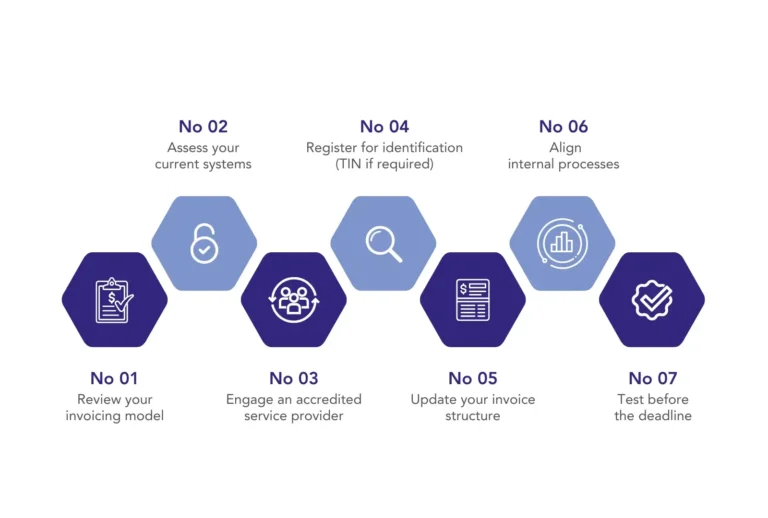
This is where most businesses need clarity. Not theory. Action. Here is a practical checklist for UAE e-invoicing non-VAT registered businesses.
1. Review your invoicing model
- Are you issuing B2B or B2G invoices?
- Are invoices manual, PDF-based, or system-generated?
If you deal with businesses, you are in scope.
2. Assess your current systems
- Do you use accounting software?
- Can it support structured invoice formats (XML/UBL)?
- Can it integrate with external platforms?
If not, you will need upgrades.
3. Engage an accredited service provider
The UAE model is based on a Peppol-style network. You cannot connect directly. You must work with an approved provider who:
- Transmits invoices
- Validates data
- Connects your system to the government framework
Choosing the right provider early avoids last-minute pressure.
4. Register for identification (TIN if required)
Even without VAT registration, your business may need:
- A Tax Identification Number
- System onboarding credentials
This step is critical for recognition within the network.
5. Update your invoice structure
Invoices must now include:
- Mandatory data fields
- Standardised formatting
- Buyer and seller identifiers
- Transaction-level detail
This is not optional formatting. It is regulated structure.
6. Align internal processes
Your finance function must adapt:
- Invoice creation workflows
- Approval processes
- Record keeping
Your team must understand what makes an invoice valid under the new system.
7. Test before the deadline
Do not wait for July 2026.
Early testing helps you:
- Identify integration issues
- Fix data gaps
- Avoid compliance failure during live operation
How ADEPTS Can Help
At ADEPTS, the focus is simple. We eliminate confusion and complexity. We make compliance practical. Most non-VAT businesses are not struggling with the law. They are struggling with execution.
That is where structured support matters.
What ADEPTS does
- E-invoicing readiness assessment
We review your current invoicing process, systems, and risk exposure. - System and ERP alignment
We help ensure your accounting or ERP setup can support digital invoicing requirements. - Service provider integration
We guide you in selecting and integrating with an accredited e-invoicing provider. - TIN registration and onboarding
We assist with identification requirements and ensure your business is recognised within the system. - Compliance mapping
We align your invoicing process with FTA expectations to reduce tax penalties risk.
Why it matters
Most penalties will not come from misunderstanding the law. They will come from:
- Poor system setup
- Delayed onboarding
- Incorrect invoice formats
Fixing those under time pressure is expensive. Doing it early is controlled.
Conclusion
This is not a VAT issue. It is a business compliance shift. The UAE is moving toward full transaction visibility. E-invoicing is the backbone of that system. If your business issues invoices, you are part of it. Even without VAT registration.
What matters now
- Understand that mandatory e-invoicing applies wider than expected
- Accept that July 2026 is a preparation deadline, not a suggestion
- Start fixing systems, not just reading regulations
The businesses that act early will adjust smoothly. The ones that wait will deal with system bottlenecks, rejected invoices, and FTA penalties. This is one of those changes where timing defines the outcome.
FAQs:
E-invoicing is a regulated system where invoices must be generated, transmitted, and validated digitally. It applies to many non-VAT businesses if they issue B2B or B2G invoices.
Penalties can go up to AED 5,000 per violation, depending on the nature of non-compliance.
In most cases, yes. A TIN helps your business be recognised within the e-invoicing system.
If your business issues invoices to other businesses or government entities, you are likely within scope regardless of sector.
The key milestone is July 2026, when system rollout and onboarding begin.
For B2B and B2G transactions, traditional invoices may no longer be considered compliant.
Through automated systems that match invoice data and flag inconsistencies.
Start by reviewing your invoicing process and assessing whether your systems are ready.
Limited. Most structured business transactions will fall within scope.
It improves credibility, standardisation, and alignment with larger corporate clients.
Possibly. Your current system must support structured digital invoicing and integration.
You risk penalties, operational disruption, and increased audit exposure.
By handling readiness, system alignment, registration, and compliance execution.
Yes, but it must still meet e-invoicing requirements and be properly configured.
If your invoices can be generated, validated, and transmitted through an approved provider, you are on the right track.
References
- UAE Ministry of Finance.
“E-Invoicing Initiative.”
https://mof.gov.ae/en/about-us/initiatives/einvoicing/ - UAE Ministry of Finance.
Electronic Invoice Mandatory Fields Version 1.0 (23 February 2026).
https://mof.gov.ae/wp-content/uploads/2026/02/UAE-Electronic-Invoice-mandatory-fields_V-1.0-23Feb2026.pdf - UAE Ministry of Finance.
Ministerial Decision No. 243 of 2025 on the Electronic Invoicing System.
https://mof.gov.ae/wp-content/uploads/2025/09/Ministerial-Decision-no.-243-of-2025-on-the-Electronic-Invoicing-System.pdf - UAE Ministry of Finance.
Ministerial Decision No. 244 of 2025 on the Implementation of the Electronic Invoicing System.
https://mof.gov.ae/wp-content/uploads/2025/09/Ministerial-Decision-No.-244-of-2025-on-the-Implementation-of-the-Electronic-Invoicing-System.pdf - UAE Ministry of Finance.
“Pre-Approved E-Invoicing Service Providers.”
https://mof.gov.ae/en/about-us/initiatives/einvoicing/pre-approved-einvoicing-service-providers/ - EY.
“UAE Ministry of Finance Publishes Ministerial Decisions on E-Invoicing.”
https://globaltaxnews.ey.com/news/2025-1964-uae-ministry-of-finance-publishes-ministerial-decisions-on-e-invoicing - Deloitte Middle East.
“Release of UAE E-Invoicing Legislation.”
https://www.deloitte.com/middle-east/en/services/tax/perspectives/release-of-uae-einvoicing-legislation.html - Comarch.
“E-Invoicing in the UAE: Overview and Implementation Timeline.”
https://www.comarch.com/trade-and-services/data-management/e-invoicing/e-invoicing-in-uae/ - OECD.
Electronic Invoicing and Digital Reporting Controls.
https://www.oecd.org/tax/administration/electronic-invoicing-and-digital-reporting-controls.htm - International Monetary Fund.
Digitalization in Tax Administration.
https://www.imf.org/en/Publications/Policy-Papers/Issues/2023/03/28/Digitalization-in-Tax-Administration-531787 - World Bank.
Tax Administration 3.0 Framework.
https://www.oecd.org/en/publications/tax-administration-3-0-the-digital-transformation-of-tax-administration_ca274cc5-en.html