
Cloud Accounting Software UAE 2026: QuickBooks vs Zoho Books vs Xero vs Odoo - Which Is FTA and E-Invoice Ready?

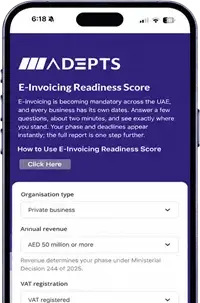
January 2027 is an important date for businesses in the UAE. This is because PDF invoices will be completely invalid after this date. Any business with revenue above AED 50 million that has not appointed an Accredited Service Provider (ASP) and gone live on structured PINT-AE XML invoicing by then will face penalties under Cabinet Decision No. 106 of 2025.
In this context, your cloud accounting software in the UAE in 2026 is critically important. It is now directly linked to compliance readiness. This explains all the attention around choosing the right one.
QuickBooks, Zoho Books, Xero, and Odoo all handle bookkeeping. All four can produce VAT reports. But they handle FTA e-invoicing compliance differently, and that difference matters a lot, especially when you consider the Phase 1 deadlines.
This guide helps you choose the platform that best handles FTA accreditation status, PINT-AE readiness, Corporate Tax support, and AED pricing for your business.
Why Software Choice Became a Compliance Decision in 2026
The choice of software was not a major issue before 2023. Business accounting software simply performed bookkeeping tasks. It generated standard VAT invoices and VAT returns.
It was simple and standard, but that changed in 2023 with the arrival of Corporate Tax in the UAE. With this one change, accounting software became responsible for identifying CT-deductible versus non-deductible expenses, generating IFRS-aligned financial statements, supporting the CT return, and making sure salary payments were processed through WPS (Wage Protection System), or risk those deductions being disallowed.
Now, e-invoicing has added a lot more to it. Your software must output PINT-AE XML, connect to an ASP via API, populate 51 mandatory data fields, and store a unique UUID per invoice. Things are becoming more systematic, technical, and complicated. Standard old methods do not serve anyone anymore.
The legal and technical requirements are not without penalties either. Choosing the right software is also important because getting things wrong under the new systems means heavy penalties sanctioned under Cabinet Decision No. 106 of 2025. This decision became effective on April 14, 2026, and it stipulates AED 2,500 per non-compliant invoice at the higher tier, AED 5,000 per month for not implementing the system at all, and the less-discussed penalty: buyers who receive non-compliant invoices cannot recover input VAT on those purchases.
The E-Invoicing Reality Check: What No Software Can Do Alone
Since the system is changing, many businesses are quite confused. One general misconception is that having the right accounting software means being fully compliant with e-invoicing. That is not true, though. There is a lot more to it.
The ASP Layer - You Need Both
Between the FTA and your accounting software stand Accredited Service Providers (ASPs). You need to appoint an ASP before October 30, 2026, if your business generates revenue above AED 50 million. ASPs submit your e-invoices to the FTA; your accounting software does not.
ASPs perform some very important tasks for your business before finally submitting your e-invoices. They validate your invoices, send them to your buyer through the Peppol network, authorize your invoices by digitally signing them, and report your tax data to the FTA’s Control Data program.
This does not mean your FTA-accredited software is not doing anything. It just means it is not everything. The software generates PINT-AE XML, the format for e-invoices, fills the 51 mandatory fields, connects to the ASP via API, and stores a UUID per invoice.
ASPs do the rest. They are interdependent.
The 51 PINT-AE Mandatory Fields - What Your Software Must Actually Output
The new e-invoicing regime is quite systematic. The Ministry of Finance has provided a very structured format for final invoices. Each invoice must contain 51 mandatory fields. These fields are filled by the ASPs, but there are a few things your software needs to do before the invoice is sent to the ASP:
Buyer Peppol Participant ID – format: 0235 + 10-digit TIN. Most businesses do not have this in their systems yet.
Transaction type flags – free zone, margin scheme, deemed supply, and reverse charge. These need to be mapped accurately.
AED-equivalent VAT at line level – even if your invoice is in USD or EUR, AED VAT amounts are required at line-item level.
CustomizationID – fixed value: urn:peppol:pint:billing-1@ae-1. It sounds small, but it causes validation failures if missing.
UNECE Recommendation 20 unit codes – standardized unit codes for goods and services.
Phase Deadlines and ASP Appointment Timelines
| Phase | Who | ASP Appointment By | Go-Live Date |
| Pilot | All businesses (voluntary) | N/A | July 1, 2026 |
| Phase 1 | Revenue >= AED 50M | Oct 30, 2026 | Jan 1, 2027 |
| Phase 2 | All other VAT-registered businesses | Mar 31, 2027 | Jul 1, 2027 |
| Phase 3 | Government entities | Mar 31, 2027 | Oct 1, 2027 |
Zoho Books UAE 2026 - FTA's Favourite SME Platform
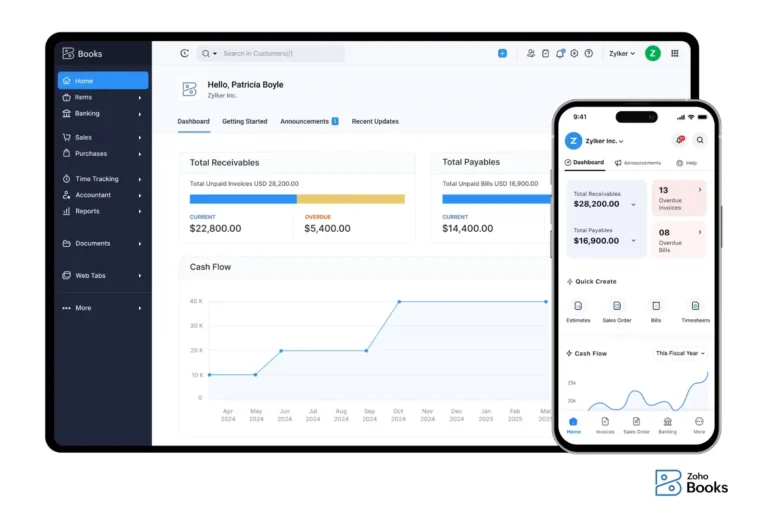
Let us begin the comparison. We will start with Zoho Books and analyse what it does best.
FTA and E-Invoicing Readiness
When it comes to FTA-accredited accounting software, Zoho Books is the most cited option, and it earns that position. It is the only one with native FTA accreditation. With Zoho Books, you need no partner configuration.
Zoho Books also offers the fastest ASP integration path. It outputs structured XML and has the fastest ASP integration path of the four. It outputs FTA-aligned structured XML, and your business can reach go-live level in just 2-4 weeks. That is real speed.
It shows that PINT-AE field mapping is built into this platform. You do not need to do this manually. With just a few steps, you are ready to go. You enable XML output, complete your master data, map the 51 fields, connect your ASP via API, and test. The best thing about Zoho Books is that it is natively built for UAE compliance.
VAT and Corporate Tax Features
Apart from e-invoicing readiness, Zoho Books handles UAE VAT 201 generation automatically. It is done organically. This means you need no extra effort. It is built for UAE compliance, and it does this well and quickly. Tax groups, TRN validation on invoices, and reverse charge are all supported. The chart of accounts is IFRS-aligned. Corporate Tax reporting is built in.
In addition, Zoho Payroll supports native Arabic invoices because it is built for the UAE. It handles WPS SIF file generation for salary compliance. Multi-currency is also integrated into the system for Professional plans and above. Basically, it covers everything an SME in the UAE needs, including VAT, CT, payroll, and Arabic invoices.
Pricing (UAE Plans)
| Plan | Approx. Price |
| Free | AED 0/month (up to 1,000 invoices/year) |
| Standard | ~AED 50/month |
| Professional | ~AED 100/month |
| Premium/Elite | Higher tier |
| Zoho One | ~AED 110/user/month (45+ Zoho apps) |
The free plan is unique among the four competitors. No other platform in this comparison offers a genuinely usable free tier for UAE SMEs.
Strengths
- FTA-native accreditation.
- Fastest e-invoicing path.
- Most affordable at entry level.
- Full Zoho ecosystem integration (CRM, Inventory, Payroll).
- Arabic invoice support.
- Emirates ID verification built in.
Weaknesses
- Multi-entity support is basic compared to Odoo and is not ideal if you are running mainland and free zone entities under one structure.
- User limits on lower plans can frustrate growing teams.
- Complex inventory needs are better served by QuickBooks Enterprise.
Based on what we have said so far, Zoho Books is the recommendation for SMEs in the UAE. They need FTA compliance but do not have a six-figure budget for it.
QuickBooks UAE 2026 - Inventory King, Compliance Needs Work
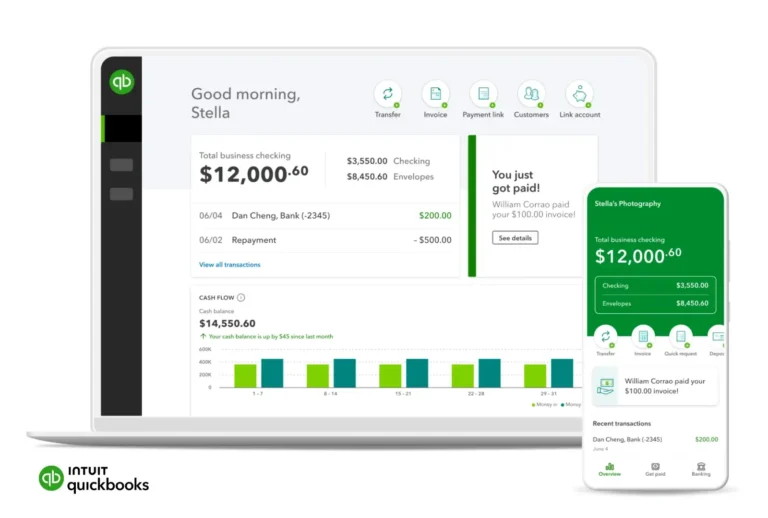
FTA and E-Invoicing Readiness
The first thing to know about QuickBooks in this comparison is that it is not natively FTA-approved. Unlike Zoho Books, which has built-in UAE compliance, QuickBooks Online and QuickBooks Enterprise need an authorized UAE partner to configure them correctly for FTA requirements.
The second most important fact is that it does not output PINT-AE XML natively. You need a partner connector for it to work, and it takes twice as long as Zoho Books. This is because e-invoicing compliance takes time and work on this platform. It is not natively integrated as it is in Zoho Books.
The third thing to flag is that salaries paid outside WPS may be disallowed as a Corporate Tax deduction. If your payroll is not generating WPS SIF files, you need to fix that before your next CT filing. QuickBooks does not handle this natively. It needs a separate WPS solution plugged in.
VAT and Corporate Tax Features
QuickBooks manages UAE VAT quite effectively when it is set up correctly by a UAE partner. It does require UAE partner configuration, but 150+ reports, a VAT activity statement, and pre-filled 5% VAT are all provided. This means it can work decently with VAT and CT features. Its multi-currency functionality is powerful. At the Enterprise level, the reporting functionality is probably superior to Zoho Books because it is more customized and granular.
Corporate Tax preparation requires manual setup, and it is not automatic like Zoho Books. However, it works for companies with a financial manager who has UAE expertise or an experienced implementation partner.
Pricing (UAE)
QuickBooks Online UAE plans start around AED 50-150/month, depending on the tier. QuickBooks Premier (desktop, cloud-hosted) starts from approximately AED 1,800/year through hosting partners like Perfonec. Enterprise pricing is higher.
Strengths
QuickBooks Enterprise is the best option if your company has complicated stock movement, such as multi-warehouse operations, extensive job costing, and manufacturing workflows. It offers 150+ reports and a huge network of fully trained accountants who know how to make the software work for UAE compliance.
Weaknesses
- Not natively FTA-accredited.
- PINT-AE needs partner integration and takes longer.
- WPS payroll requires extra setup.
- More expensive than Zoho for comparable compliance features.
- Less UAE-localized out of the box.
Best For
QuickBooks is the ideal option for UAE trading, distribution, and manufacturing companies that prioritize inventory complexity and have the funds and willingness to engage in partner configuration for e-invoicing. Do not switch platforms if your company moves large amounts of inventory between warehouses and your accountant has already received QuickBooks training. To configure it for PINT-AE, find the appropriate partner.
Xero UAE 2026 - Beautiful Software, Compliance Gaps
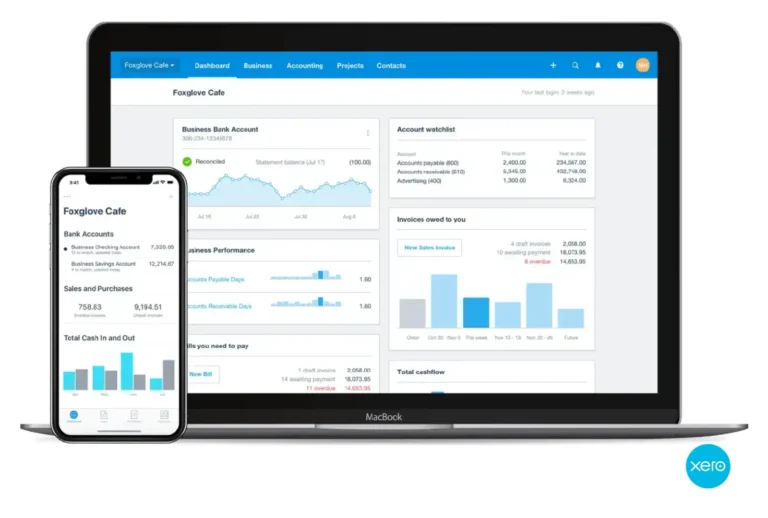
FTA and E-Invoicing Readiness
Xero is not FTA-accredited, which means it will need third-party add-ons for VAT filings and FTA compliance. Add-ons can work, and they do, but they take extra effort, extra time, and extra money. The system definitely works, but it is more complicated than systems that are accredited and have native configurations.
As far as PINT-AE e-invoicing is concerned, it does not output XML. Of all four main platforms, Xero takes the longest to go live. The estimated time to go live on PINT-AE is almost 6-10 weeks. This is a lot. It is not just the time; if you consider the complexity, it is quite frustrating.
If you have a business and Phase 1 compliance by January 2027 is your primary driver, Xero is the riskiest choice of the four. If you have time, you may be able to manage this platform.
VAT and Corporate Tax Features
Xero can handle different tax rates, including the UAE’s 5% VAT. It can create VAT reports, but you do need an extra app for submitting VAT returns to the UAE tax authority. Corporate Tax features are there, but they are not as good as Zoho Books or Odoo.
One thing Xero does really well is allow unlimited users on all plans. This means as many team members as needed can use the system without extra user fees. Xero is big on connectivity too, with its 800 apps. It wins on design and simplicity. If your company has teams in different countries, you can use Xero’s unlimited-user feature.
Pricing
When it comes to pricing, Xero has no dedicated UAE pricing page. Pricing is solely in USD. Other currencies are not supported automatically.
Strengths
- Xero wins with its unlimited users offer, no matter which plan.
- It has the best UI and genuinely the cleanest interface.
- It has a well-connected app marketplace.
- It has strong multi-currency functionality.
- It is the perfect option for businesses that need to collaborate with teams in different countries and cities.
Weaknesses
- It has the biggest compliance gaps among all four platforms.
- No confirmed FTA accreditation.
- PINT-AE, which is now mandatory, means significant integration work.
- VAT 201 direct submission is not possible.
- WPS/payroll is not built in for the UAE.
- Too many required add-ons lead to extra complexity and cost.
Best For
Xero is suitable for businesses that are not in Phase 1 compliance and therefore do not have the January 2027 deadline. It is also a great option for international companies whose teams are in different countries.
Odoo UAE 2026 - Full ERP Power, Longer Setup
FTA and E-Invoicing Readiness
Odoo is different from the other three because it is not just an accounting platform. It is a full ERP, where accounting is one part. It gives e-invoicing better coverage and context.
As far as FTA compliance is concerned, it may not be like Zoho Books, which comes with native FTA accreditation, but it does have a localization module for the UAE. Its UAE localization module includes all the basics, such as TRN validation, a UAE chart of accounts, and FTA-compliant reporting. Basically, it works.
On PINT-AE, Odoo is not lagging behind. It supports Peppol globally and is now aligning with UAE PINT-AE specifications as well. ASP integration is smoother than on other platforms, but it does take some time. It takes around 8-16 weeks, depending on scope.
VAT and Corporate Tax Features
Odoo is the strongest option when a business has more than one company, such as mainland and free zone companies or offshore companies.
You can manage all these companies in one system with Odoo. You can also handle transactions between the companies, different VAT registrations, and group accounts from the same place.
It also supports invoices in both Arabic and English, which is a great relief in the UAE, where the main native language is Arabic but a lot of business is conducted in English too. FTA compliance is not a problem either, since the platform keeps records for five years and the FTA can check the audit trail as well. You can use it online through the cloud or install it on your own server. It can also prepare IFRS financial statements and help track Corporate Tax.
Odoo can also manage other parts of the business, such as inventory, HR, and operations.
The only important thing is that Odoo needs to be set up properly by UAE tax experts, not just anyone. When it is set up properly, it can easily automate most tasks in your business.
Pricing (Community vs Enterprise)
| Version | Cost |
| Community | Free (open-source, needs hosting + developer) |
| Enterprise | From USD 24.90/user/month (~AED 90+) |
| Implementation | AED 10,000-100,000+ depending on scope |
Total cost of ownership is higher than Zoho Books or QuickBooks for most SMEs. But the point to note here is that it does a lot more than simple accounting. It replaces CRM, inventory systems, HR platforms, and e-invoicing middleware, reducing the overall cost of operations.
Strengths and Weaknesses
Where Odoo wins: Full ERP – one platform replaces multiple tools. Best multi-entity support. Active PINT-AE alignment. Bilingual. On-premise option. Open-source Community version for businesses with developer resources. Most flexible ASP integration path.
Where it falls short: This is not a “log in and start” platform. Implementation takes 8-16 weeks and requires a UAE specialist. Total cost is higher. The Community version has no official support. It is overkill for a business that just needs accounting and VAT compliance.
Best For
Odoo is built for UAE businesses with 20+ employees that need integrated operations, not just accounting. This includes manufacturing, project-based services, multi-entity groups, and distribution businesses with complex supply chains. If you are currently managing accounting in one system, CRM in another, and inventory in a third, Odoo eliminates that fragmentation. But budget for proper implementation. Do not try to DIY the UAE e-invoicing module.
Master Comparison: All Four Side by Side
| Feature | Zoho Books | QuickBooks | Xero | Odoo |
| FTA Accreditation | Native | Needs partner configuration | Not confirmed | UAE localization module |
| PINT-AE E-Invoice Output | Native (fastest) | Via partner connector | Via add-on/middleware | Active alignment |
| ASP Integration Ease | 2-4 weeks | 4-8 weeks | 6-10 weeks | 8-16 weeks (flexible) |
| UAE VAT 201 Return | Native automated | Configuration required | Needs add-on | UAE localization |
| Corporate Tax Support | Built-in | Configuration required | Limited native | Full ERP CT support |
| IFRS Financial Statements | Supported | Supported | Supported | Full IFRS |
| Multi-Currency | Yes | Yes | Best in class | Yes |
| Arabic Invoice Support | Yes | Limited | Limited | Yes (bilingual) |
| WPS Payroll (SIF file) | Zoho Payroll module | Third-party needed | Add-on needed | Odoo HR module |
| Multi-Entity Support | Basic | Multi-company option | Limited | Best of four |
| Inventory Management | Good | Best – Enterprise | Good with add-ons | Full ERP inventory |
| User Limits | Plan-dependent | Plan-dependent | Unlimited | Per-user pricing |
| Entry Price (AED/month) | ~AED 50 | ~AED 150+ | ~AED 55+ (USD) | Free / ~AED 90+/user |
| E-Invoice Setup Timeline | 2-4 weeks | 4-8 weeks | 6-10 weeks | 8-16 weeks |
| Phase 1 (Jan 2027) Readiness | High | Medium | Low-Medium | Medium-High |
| Best For (UAE) | FTA-native SME compliance | Trading/inventory-heavy businesses | International teams | Full ERP multi-entity businesses |
E-Invoicing Readiness Scorecard
Separating e-invoicing specifically from general accounting features is important because, in 2026, this deserves its own table.
| E-Invoicing Criterion | Zoho Books | QuickBooks | Xero | Odoo |
| FTA-accredited status | Yes | Configure | Not confirmed | UAE module |
| PINT-AE XML output (native) | Native | Partner needed | Add-on | In development |
| 51 mandatory field coverage | Best | Configurable | Partial | Configurable |
| ASP integration ease | Easiest | Medium | Complex | Flexible |
| Peppol Participant ID support | Yes | Configure | Add-on | Yes |
| UUID storage per invoice | Native | Configure | Add-on | Yes |
| Setup timeline to go live | 2-4 weeks | 4-8 weeks | 6-10 weeks | 8-16 weeks |
| Overall E-Invoice Score | 5/5 | 3/5 | 2/5 | 4/5 |
How ADEPTS Helps You Choose and Implement the Right Platform
Picking the right accounting software for UAE compliance is one thing. Getting it actually set up, mapped to all 51 PINT-AE fields, connected to an ASP, and running without gaps is another conversation entirely.
This is what ADEPTS does.
Software evaluation: We assess your business type, transaction volume, number of entities, and e-invoicing scope, then recommend the platform that fits your compliance timeline and budget. Not the most popular one. The right one for you.
UAE accounting setup from scratch: IFRS chart of accounts, VAT tax groups, CT expense classification, and WPS payroll configured correctly from day one, not fixed after the first filing goes wrong.
E-invoicing readiness assessment: We audit your PINT-AE field coverage, identify data gaps, such as missing buyer TRNs, Peppol IDs, and UNECE unit codes, and produce a remediation plan with a realistic go-live timeline. No surprises at the ASP integration stage.
ASP coordination: Selecting, appointing, and integrating an FTA-accredited ASP, including the EmaraTax appointment process, is part of what we manage. You do not have to navigate that process alone.
Data migration: Moving from Tally, Excel, or another system with full data validation and no compliance gaps in the transition. Clean records from day one on the new platform.
Ongoing compliance: Monthly bookkeeping, VAT return filing, and Corporate Tax support, whichever platform you are on.
See our accounting and bookkeeping services or speak to an FTA-approved tax agent if you are also managing VAT or CT queries alongside the software transition. If your historical records need cleanup before you can properly migrate, our UAE backlog accounting cleanup service handles that first.
Conclusion
Software selection in 2026 is a compliance decision. That is the headline.
Zoho Books leads on FTA accreditation and has the fastest path to e-invoicing compliance. QuickBooks leads on inventory depth. Xero leads on unlimited users and app ecosystem. Odoo leads on full ERP capability and multi-entity structure. Each one wins somewhere, but none of them is right for every business, and none of them is e-invoicing compliant without ASP integration.
What matters right now: Phase 1 businesses with revenue of AED 50M or more must appoint an ASP by October 30, 2026, and go live by January 1, 2027. If you have not started the integration process yet, you are already running late. PINT-AE setup takes 2-16 weeks depending on your platform. That window is shrinking.
The good news is that the path forward is clear. Choose the right platform for your business type, get the PINT-AE integration done properly, appoint your ASP via EmaraTax, and run the pilot before the deadline. You can do this.
ADEPTS advises UAE businesses on accounting software selection, e-invoicing readiness, and full compliance setup. Contact us for a free assessment.
FAQs:
The FTA does not publish a formal “approved software” list in the way some countries do. FTA accreditation is typically self-declared by software providers based on meeting FTA technical specifications. Zoho Books is the most widely recognized FTA-accredited option in the UAE. Always confirm the current status with the software provider or an FTA-registered advisor before making a selection decision.
No. Excel and manual invoicing tools cannot output PINT-AE XML, connect to an ASP via API, or store a UUID per invoice, all of which are mandatory under the e-invoicing system. Free-tier accounting software, such as Zoho Books’ free plan, can work if it meets the technical PINT-AE requirements, but basic Excel invoicing does not qualify. Businesses relying on Excel for invoicing need to migrate before their phase deadline.
They are two completely separate things. FTA-accredited software means the platform is recognized for UAE tax compliance, including VAT and CT reporting. An ASP (Accredited Service Provider) is the intermediary that validates, signs, and transmits your PINT-AE XML invoices through the Peppol network to buyers, and reports tax data to the FTA. Even FTA-accredited software like Zoho Books cannot connect to the FTA for e-invoicing without an ASP. Both are required.
Yes, but carefully. The FTA requires businesses to maintain accounting records for a minimum of five years. When migrating platforms, you must ensure your historical VAT and CT data is either migrated in full or retained in the original system for that period. A rushed migration that loses transaction history creates audit risk. Always run parallel systems briefly during the transition and validate records before decommissioning the old platform.
No. There is no UAE data residency requirement for accounting software hosting as of mid-2026. Cloud-hosted software, including platforms hosted on AWS, Google Cloud, or Azure outside the UAE, is acceptable. Odoo is the only platform in this comparison offering an on-premise UAE hosting option if that is a business preference, but it is not a compliance requirement.
A Peppol Participant ID is the unique digital address used to route PINT-AE e-invoices through the Peppol network. In the UAE, the format is 0235 + your 10-digit Tax Identification Number (TIN). Your accounting software must be able to store and transmit both your own Peppol ID and your buyer’s Peppol ID on every invoice. Most UAE businesses do not have this data collected yet. Building that contact database is one of the first practical steps in e-invoicing preparation.
Free zone businesses are not exempt from e-invoicing. That is a common misconception. DMCC, IFZA, JAFZA, RAKEZ, and other free zones all fall under the same phase deadlines. For a single free zone entity, Zoho Books is the most practical choice: FTA-native, affordable, and has the fastest e-invoicing path. For multi-entity structures where a free zone entity and a mainland entity need to operate under one platform with intercompany transactions, Odoo’s multi-entity support is the strongest option.
PDF invoices issued after the go-live date for your phase are non-compliant. Under Cabinet Decision No. 106 of 2025, you face AED 100 per non-compliant invoice at the standard tier, and more significantly, your buyer loses the right to recover input VAT on that purchase. That second consequence is the bigger commercial risk: clients who receive PDF invoices after the mandate date may refuse payment or seek VAT recovery penalties from you. The financial exposure adds up fast for high-volume businesses.
No, and you should not be running different platforms for this. The right accounting software handles both. Zoho Books, QuickBooks with configuration, and Odoo all support VAT and CT in the same system. The key is correct setup: IFRS-aligned chart of accounts, separate tracking of CT-deductible and non-deductible expenses, and proper expense classification. If your current software does not do this, that is a gap to address before your CT return, not after.
For a UAE startup in 2026, Zoho Books Standard at ~AED 50/month is the clearest recommendation. It is FTA-native, has a 2-4 week e-invoicing setup path, supports VAT and Corporate Tax from day one, and grows with you into the full Zoho ecosystem (CRM, Inventory, Payroll) as your business scales. The free plan works for very early-stage businesses with fewer than 1,000 invoices/year. Do not start on Excel and migrate later. The compliance debt accumulates fast.
References
- Ministry of Finance UAE. 2025. Ministerial Decision No. 243 of 2025 on the Electronic Invoicing System. Ministry of Finance UAE. https://mof.gov.ae/wp-content/uploads/2025/09/Ministerial-Decision-no.-243-of-2025-on-the-Electronic-Invoicing-System.pdf.
- Ministry of Finance UAE. 2025. Ministerial Decision No. 244 of 2025 on the Implementation of the Electronic Invoicing System. Ministry of Finance UAE. https://mof.gov.ae/wp-content/uploads/2025/09/Ministerial-Decision-No.-244-of-2025-on-the-Implementation-of-the-Electronic-Invoicing-System.pdf.
- Cabinet of the United Arab Emirates. 2025. Cabinet Decision No. 106 of 2025 on Administrative Penalties for the Electronic Invoicing System. Ministry of Finance UAE.
https://mof.gov.ae/en/about-us/initiatives/einvoicing/. - Ministry of Finance UAE. 2026. UAE Electronic Invoice Mandatory Fields V1.0 (February 23, 2026). Ministry of Finance UAE. https://mof.gov.ae/en/about-us/initiatives/einvoicing/.
- Perfonec Computers. 2026. UAE E-Invoicing 2026–2027: FTA ASP Implementation Guide. Perfonec Computers.
https://perfonec.com/uae-e-invoicing-2026-2027-20-questions-answered/. - Perfonec Computers. 2026. QuickBooks vs Tally vs Zoho Books UAE SMEs 2026. Perfonec Computers.
https://perfonec.com/odoo-uae-questions-answered-2026/. - ReconcileOS. 2026. QuickBooks vs Xero vs Zoho Books: UAE Guide (March 2026). ReconcileOS.
https://reconcileos.com. - OdooEdge. 2026. UAE E-Invoicing 2026: SME Compliance Guide with Odoo + ASP. OdooEdge.
https://odooedge.com. - Hivetek Consulting. 2026. UAE E-Invoicing Is Now Mandatory – Odoo UAE. Hivetek Consulting.
https://hivetek.com. - Fastlane Career. 2026. UAE E-Invoicing for Zoho, Xero & Tally: PINT AE Compliance. Fastlane Career.
https://fastlanecareer.com. - TaxAdepts. 2026. UAE E-Invoicing ERP Readiness Checklist 2026. TaxAdepts. https://taxadepts.com.
Related Articles