Free Zones vs Mainland: Corporate Tax Return Requirements Compared

Corporate tax is no longer something UAE businesses can ignore. With major reforms rolled out in 2023 and more clarity coming into play for 2025, understanding how corporate tax in the UAE works and how it affects your business is now a must.


One of the biggest questions we hear from business owners is:


“Do tax rules apply differently to Mainland and Free Zone companies?”


The short answer? Yes — and the differences matter.


With separate rules, filing obligations, and tax rates in some cases, knowing which requirements apply to you can help you avoid mistakes, save money, and stay compliant.


That’s where ADEPTS comes in. We help UAE income tax filers, whether on the Mainland or in a Free Zone, make sense of all the changes.


From understanding exemptions to preparing tax returns correctly, our experts guide you step by step so you can focus on running your business instead of deciphering tax codes.

UAE Corporate Tax: What’s Changing in 2025

If you’re running a business in the UAE, 2025 brings a few important tax updates that are definitely worth knowing.

1. New 15% Tax for Large Multinational Enterprises (MNEs)

Here’s the headline: if your business is part of a big multinational group with over €750 million in global revenue, a new 15% minimum federal tax will be imposed in the following year.


This is the UAE’s way of aligning with global tax reforms under the OECD’s Pillar Two. If that sounds technical, don’t stress — the key point is:


Unless you’re a massive company, this doesn’t affect you. Most SMEs and local firms can breathe easy.

2. 9% Corporate Tax Continues for Most UAE Businesses

For the majority of UAE businesses, the basic corporate tax return UAE rule from 2023 still stands:

  • You don’t pay any tax on your first AED 375,000 in profit.
  • Anything above that gets taxed at 9%.

This applies to mainland businesses and Free Zone companies that don’t qualify for special exemptions.


So yes, you might owe tax, but it’s still one of the most business-friendly rates globally.

3. More Clarity for Partnerships and Family-Owned Businesses

Another change is that partnerships and family foundations are now getting more attention.

In the past, these setups were treated informally. But now, depending on your structure, you might need to do income tax return filing, just like a regular company.


Reviewing your setup is a good idea if you have a joint venture, are part of a family-run business, or use a trust or foundation. The rules are more detailed now.

4. Increased Reporting and Transparency

Lastly, and this applies to everyone, the UAE is asking for more transparency.


That means:

  • Keep good financial records
  • File returns even if you made no profit
  • Free Zone companies claiming 0% tax? You’ll need to prove you qualify
  • If you’re part of a large group, you may have extra reporting to do

It’s not about making life more complicated. It’s about the UAE aligning with international tax filing standards while still being a great place to do business.

Understanding Entity Classification

Free Zones vs Mainland: Corporate Tax Return Requirements Compared

One of the first things you need to figure out when it comes to corporate tax returns in the UAE is how your business is classified. 


Why? Because your classification decides how much tax you owe, whether you can benefit from any exemptions, and what kind of paperwork you’ll be expected to file each year.


There are three main types of business classifications under the new UAE tax system:

  • Mainland Companies
  • Free Zone Persons (FZP)
  • Qualifying Free Zone Persons (QFZP)

Each of these comes with its own rules and tax return treatment. Let’s review what each one means and how it affects you.

1. Mainland Companies

If your business is set up with the Department of Economic Development (DED) — and not inside a Free Zone, you’re a mainland company.


This is the most common setup in the UAE.


Shops. Cafes. Agencies. Service providers. Most small and medium businesses fall into this group.


Here’s what that means for corporate tax:

  • You pay 9% tax on annual profits above AED 375,000
  • If your profit is under that amount, you don’t pay any income tax in the UAE — that buffer helps smaller businesses stay afloat

Still, even if you’re not paying tax yet, you must:

  • Register with the Federal Tax Authority (FTA)
  • File your corporate tax return every year
  • Keep your accounts clean and updated

You could face fines up to AED 100,000, even with low profits if you skip any of these steps.


As for business operations, there are no limits. Mainland companies can trade freely within the UAE, with Free Zones, and internationally. You’re free to do business with anyone, anywhere.

2. Free Zone Person (FZP)

If your company is based in one of the UAE’s Free Zones—like DMCC, JAFZA, RAKEZ, or any others- you’re known as a Free Zone Person, or FZP.


For a long time, people thought that simply being in a Free Zone automatically earned them the 0% tax rate in the UAE. But under the new rules, that’s no longer the case.


Yes, Free Zone companies are treated differently, but not all qualify for the 0% rate. Being located in a Free Zone is only step one. You need to meet extra requirements if you want to actually benefit from the lower UAE tax rate.

3. Qualifying Free Zone Person (QFZP)

This is where the 0% corporate tax benefit comes in, but it’s not handed out to everyone. Your business has to meet several specific conditions set by the government to be considered a Qualifying Free Zone Person, or QFZP.


Here’s what that means in simple terms:


First, you need to be properly registered in a Free Zone and have a valid FTA eServices trade license issued by the Free Zone authority.


Next, your business must have a real presence in that Free Zone. That means you actually run operations there. You have a functioning office. You’ve got staff on site. You’re not just using the Free Zone as a mailing address while working out of your living room or a mainland office. 


Authorities are checking for substance, not just paperwork.


Then comes the important part: what you do. To qualify for 0% tax, your income needs to come from specific “Qualifying Activities.” 


These include things like:

  • Operating as a holding company
  • Manufacturing or warehousing
  • Shipping and logistics in Free Zones

Another rule: you must not opt into the regular tax system. There’s an option in the law that lets Free Zone companies voluntarily be taxed like any other business. But if you make that election, you lose the 0% rate — even if your income would’ve qualified otherwise.


Also, if your business works with related companies, like other businesses owned by the same people or family, you’ll need to follow transfer pricing rules. Basically, you have to show that you’re charging fair market rates and not shifting profits around to avoid income tax. This means keeping proper documentation.


Lastly, you’ll need to have audited financial statements. Even smaller Free Zone companies that want to benefit from 0% corporate tax in the UAE need to maintain proper books and have them audited every year. 


It’s part of proving that your income qualifies.

Corporate Tax Rates and Applicability: Mainland vs Free Zones

Feature Mainland Companies Free Zone Companies
Standard Tax Rate
9% on profits above AED 375,000
0% on qualifying income, 9% on non-qualifying income
Tax-Free Threshold
AED 375,000 on total taxable income
No threshold on non-qualifying income – taxed from first dirham if non-qualifying
Qualifying Income Criteria
Not applicable
Must meet substance requirements, income must be from qualifying activities, and not from excluded activities or domestic mainland sources
Non-Qualifying Income Threshold
Fully taxable above AED 375,000
9% applies if non-qualifying income exceeds 5% of total income or AED 5 million (whichever is lower)
DMTT (for MNEs)
15% if global revenue > EUR 750 million
The same 15% rate applies under the same threshold
Exemptions
Small Business Relief may apply if revenue ≤ AED 3 million
Small Business Relief is not available to QFZPs
Scope of Tax
Applies to all UAE-sourced and foreign income (unless exempt)
Applies only to non-qualifying and mainland-sourced income for QFZPs

V-A. Key Corporate Tax Thresholds & Ranges (2025)

Trigger / Threshold Impact Applies To
AED 375,000 taxable income
First AED 375,000 is taxed at 0%; income above this is taxed at 9%
All taxable persons (except QFZPs)
AED 5 million OR 5% of total income (de minimis rule)
If non-qualifying income exceeds this, QFZP loses 0% CT benefit
Qualifying Free Zone Persons (QFZPs)
EUR 750 million consolidated global revenue
Triggers 15% DMTT under OECD Pillar Two rules
MNEs (Mainland & Free Zones)
0% CT for Qualifying Income
Available only if substance, activity type, and qualifying income conditions are met
QFZPs only
Connected person transactions > AED 500,000
Triggers mandatory Connected Person Disclosure Form
All entities with connected persons
Revenue or assets > AED 50 million
Triggers mandatory Audit Requirement
All entities
Total revenue > AED 200 million
Requires preparation of Master File & Local File for TP compliance
All large entities
Late Filing Penalty: AED 10,000 – AED 50,000
Penalty for failure to submit CT return, TP forms, or supporting documents on time
All taxable persons

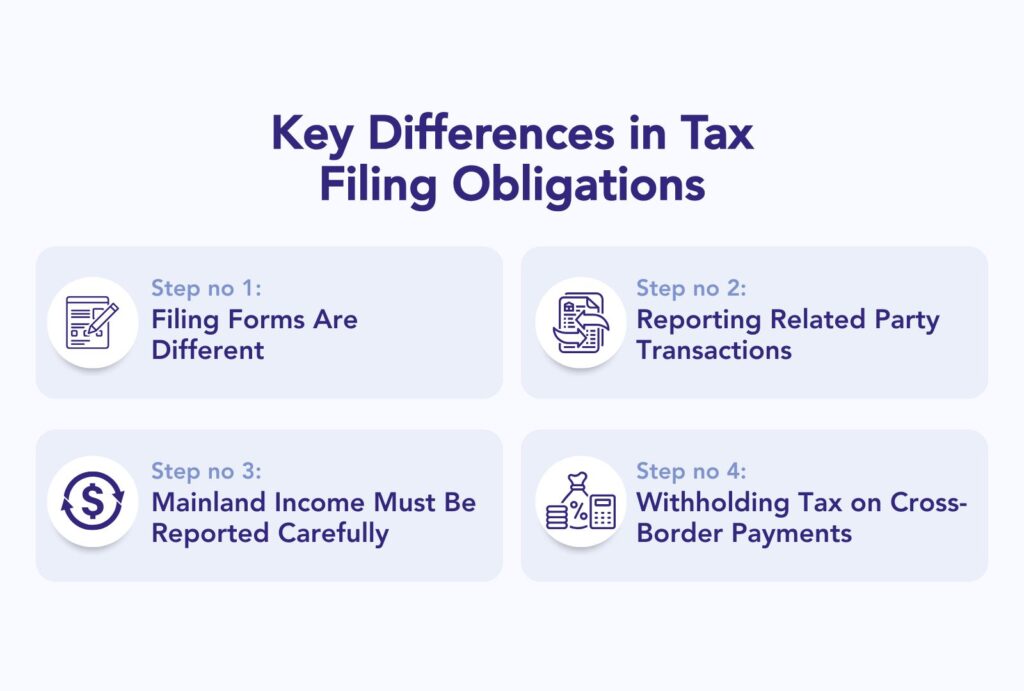
Key Differences in Tax Filing Obligations

Mainland and Free Zone companies both have to file corporate tax returns. But how they do it, and what they need to include, can be quite different.


Let’s break it down.

1. Filing Forms Are Different

Mainland businesses file the standard UAE income tax return, which is the regular form used by most UAE companies.


Free Zone companies that qualify for the 0% corporate tax in the UAE use a different form, the QFZP template. 


This form asks extra questions to confirm eligibility. It checks for qualifying income, business activity, and other conditions.

2. Reporting Related Party Transactions

If your company works with other businesses in the same group, you need to report it. This is called related party disclosure, part of transfer pricing compliance.


This rule applies to both Free Zone and mainland companies.


But Free Zone setups often encounter it earlier, especially when multiple related entities share services or capital.

3. Mainland Income Must Be Reported Carefully

Mainland companies report all UAE income under one tax structure.


Free Zone companies must split their income and apply special rules.


If a Qualifying Free Zone Person earns income from the UAE mainland, it must evaluate whether the income is from excluded activities or non-qualifying transactions.


In many cases, such income disqualifies the entity from the 0% rate, and the entire income may be subject to 9% Corporate Tax, not just the mainland portion.

4. Withholding Tax on Cross-Border Payments

Withholding tax in the UAE applies only to UAE-sourced income paid to non-resident persons. Under the current corporate tax regime, the withholding tax rate is set at 0%, making the UAE a highly attractive jurisdiction for cross-border payments. This includes payments such as royalties, interest, and service fees.


While the law establishes the framework, no actual withholding tax is currently collected, unless specified otherwise by future regulations. Both mainland and Free Zone businesses should monitor developments, especially if they frequently engage in transactions with foreign entities. Free Zone entities, in particular, may encounter these issues more due to their international operational models or foreign ownership structures.

Special Considerations for Multinational Enterprises (MNEs)

If your company is part of a large international group, you’ll need to follow a different set of UAE tax rules.


The UAE now applies a 15% corporate tax for multinational groups with over €750 million in global revenue. This is known as the Domestic Minimum Top-Up Tax (DMTT).


It applies to all qualifying entities, regardless of whether they’re on the mainland or in a Free Zone—there is no location-based exemption.


This aligns the UAE with global standards like OECD’s Pillar Two and addresses concerns under BEPS 2.0.


Even if your Free Zone company earns 0% tax locally, your group’s consolidated profits may still trigger additional tax exposure.


Review your transfer pricing, income allocations, and reporting obligations, especially if your UAE operation is part of a broader structure.

Common Mistakes and Compliance Gaps

Many UAE companies are still adjusting to the new corporate tax framework. Here are the most frequent errors:

Getting QFZP Status Wrong

Some Free Zone companies claim the UAE 0% corporate tax rate without meeting all the conditions. If the FTA (Federal Tax Authority) reviews your case and finds you ineligible, you may retroactively face a 9% tax.

Not Reporting Related-Party Transactions

Companies often forget to report deals with group companies — a transfer pricing red flag that may result in fines.

Skipping the Audit

Audits are mandatory for QFZPs. Skipping the Audit means risking your 0% tax return in the UAE claim, and fines up to AED 100,000 for non-compliance.

Filing Late or Making the Wrong Claims

Missing deadlines or making incorrect declarations can result in fines up to AED 100,000, even if you owe no tax. 

No Proof of Economic Substance

Some companies claim QFZP benefits but don’t maintain proof of operations, staff, or real presence. UAE tax compliance relies heavily on this documentation.

Key Advantages of Each Structure

The decision between mainland and Free Zone setups concerns tax rates. It affects how easily your business grows, stays compliant, and handles filings.

Mainland Companies: Why Many Still Prefer This Route

  • Full market access
    No restrictions — you can serve clients across the UAE, including Free Zone and global markets.

  • Simpler compliance
    One system, one rulebook — no need to separate qualifying vs non-qualifying income.

  • Audit readiness
    Mainland businesses are often better prepared for transfer pricing scrutiny due to local audit expectations.

  • Business momentum
    In 2024, new mainland license registrations grew by over 25%. ADGM was a major driver for global expansion.

Free Zone Companies (QFZPs): Why Many Still Choose This Model

  • 0% tax on qualifying income
    If substance and activity rules are met, you can benefit from 0% corporate tax under QFZP status.


  • Lower setup costs
    Especially suitable for lean models like consulting, digital, or holding companies.


  • Tailored for trade
    Free Zones offer smoother customs handling, which is crucial for logistics and international commerce.


  • Industry support
    Each Free Zone is optimized for specific industries: tech, media, health, finance, etc.


  • Massive growth
    Free Zones are booming:


    • JAFZA: 10,000+ firms
    • RAKEZ: 14,000+
    • Sharjah & Ajman: Over 25,000 combined

Conclusion

Choosing between the mainland and the Free Zone isn’t just about the tax rate in UAE.
It’s about your industry, revenue model, international exposure, and compliance readiness.

  • Mainland companies enjoy full market access and simpler tax filing.


  • Free Zone companies can access the 0% rate — but only if they meet QFZP conditions and back it up with solid records.

Regardless of location, tax return UAE compliance is non-negotiable. That means correct classification, timely filing, FTA eServices registration, and proper documentation.


At ADEPTS, we help businesses across the UAE mainland and Free Zone — file smarter, audit better, and plan ahead.


Need help? Let’s talk.

FAQs:

Free Zone companies, especially those claiming QFZP status, are expected to maintain audited financials. While there isn’t a strict profit threshold, audits are typically triggered when claiming 0% tax benefits.

Yes, the FTA may review and audit companies that claim QFZP status to ensure they meet all conditions. These audits help confirm economic substance, qualifying activities, and correct income categorization.

If QFZP status is lost during the year, the company may be taxed as a Mainland entity for the entire financial year, and fines up to AED 100,000 may apply for non-compliance.

Even if a company is dormant or not actively trading, it must still register for corporate tax and file a return unless it is officially liquidated or exempted. Fines up to AED 100,000 apply if ignored.

Generally, Free Zone branches of foreign companies are not automatically eligible for 0% tax. To qualify for any exemption, they must meet QFZP conditions, including income type and substance.

Excluded activities are businesses that cannot benefit from the 0% rate. Non-qualifying income includes earnings from sources outside approved QFZP activities, like direct mainland sales.

Holding and advisory services may qualify if they meet certain conditions. Marketing services are generally excluded. Each activity must be reviewed against the FTA’s qualifying activity list.

Yes, industries like finance, real estate, and insurance often fall under excluded categories. Each business must review the QFZP rules to confirm whether its sector is eligible for 0% tax.

Shared revenue involving mainland entities is considered non-qualifying income for QFZPs. That portion will likely be taxed at 9%, even if the rest of the income is tax-free.

Yes, if the company has real presence in the Free Zone, earns qualifying income from foreign clients, and meets all compliance requirements, it may enjoy the 0% corporate tax rate.

DIFC and ADGM are treated the same as other Free Zones under corporate tax law. However, businesses still need to meet QFZP conditions to access the 0% tax benefit.

Generally, QFZPs are exempt from corporate tax on qualifying income, so tax credits aren’t needed. But foreign withholding tax relief may apply if income is taxed abroad.

QFZP status is reviewed annually during tax return filing. If a business no longer meets the conditions, it risks losing the 0% rate and being taxed like a Mainland company.

There’s no separate reapplication process, but eligibility is checked every year when you file your return. You must consistently meet all QFZP criteria to retain your tax-free status.

Yes, the FTA may use AI to flag inconsistencies in filings, related-party transactions, or eligibility claims. It helps them identify risks and audit businesses more accurately and efficiently.

Resources

Related Articles​​

UAE Corporate Tax for Holding Companies: 2026 Strategic & Compliance Guide

For a long time, the UAE had a certain reputation: 


Low red tape, zero tax in the UAE, and smooth sailing for holding companies.


You could set one up, shift your assets in, and enjoy the ride. No audits, no surprises.


But things are different now.


The UAE’s Corporate Tax regime is now in its second compliance cycle. Reporting is mandatory, monitored, and increasingly evidence-driven, particularly for holding companies.


Corporate tax is no longer a concept. It is operational, monitored, and actively enforced. Reporting is mandatory, data-driven, and cross-verified. Holding companies, in particular, are now under structured regulatory scrutiny rather than informal oversight.


That doesn’t mean you’ve lost your edge.


Investor confidence remains strong, but it has become compliance-selective rather than assumption-based. ADGM reached 11,920 active licenses by Q3 2025, with assets under management surging by 48%, reflecting sustained institutional trust.


DIFC similarly crossed 8,000 active registered companies in 2025, reinforcing the UAE’s position as a preferred holding jurisdiction, provided structures are defensible and compliant.


So, what’s the catch?


The margin for error is thinner. In 2026, digital traceability through the EmaraTax portal is the new baseline for holding companies, enabling end-to-end visibility over registrations, filings, and transactional consistency. Informal structuring is no longer viable.


You need to be sharper, know the rules, and structure your business the right way. Whether you’re dealing with income tax in Dubai, setting up a holding company, or preparing your income tax return filing, you need to do it right.


That includes knowing how to navigate FTA eServices, submit your tax return in UAE accurately, and stay ahead of any excise tax obligations that might apply to your group.


You might also need to consider whether and how the tax return rules impact your cross-border holdings.


And if you’re handling VAT? Understanding how to file VAT in the UAE properly is no longer optional.


This guide is a no-fluff, straight-talking walkthrough of how corporate tax affects holding companies in the UAE and what you should do about it.

Understanding Holding Companies in the UAE

Let’s start with the basics.


A holding company is a legal entity set up to own shares or assets in other companies. It doesn’t get involved in daily operations or trading. Instead, it makes money through things like dividends, capital gains, royalties, or interest from its subsidiaries.


The UAE officially defines holding companies under Federal Decree-Law No. 32 of 2021. Holding companies must maintain adequate economic substance in the UAE, including real decision-making and management within the country.


This shift does not remove the substantive obligation. “Substance” remains a mandatory condition, particularly for Free Zone entities seeking to retain the 0% corporate tax status, meaning real decision-making, control, and strategic management must continue to exist within the UAE.


So why do people set them up?


Here’s the short answer: control and protection.


Holding companies are often used to:

  • Shield assets from risk
  • Plan around corporate tax and cross-border exposure
  • Manage succession smoothly in family businesses
  • Keep ownership and control consolidated in one place

Whether it’s a group of operating companies or a portfolio of real estate, a holding structure keeps things tidy and strategically smart.


Now, where do most people go to set one up?


You’ll find holding companies across several well-known UAE jurisdictions: 


ADGM, DIFC, JAFZA, and DMCC are among the top choices. Each offers slightly different frameworks, but they all fall under the national tax in the UAE regime now, meaning income tax in Dubai or Abu Dhabi doesn’t vary based on location anymore.


Now that we’ve looked at what holding companies are and why they’re used, let’s talk about what’s changed—and why tax planning in the UAE isn’t as hands-off as it used to be.

Overview of UAE Corporate Tax Law

With the rollout of Federal Decree-Law No. 47 of 2022, the UAE has officially entered the era of corporate taxation. The first Corporate Tax period for most UAE businesses began in 2024, with returns filed during 2025.


2026 represents the second compliance cycle, where first-year positions may now be subject to deeper review and audit validation.


Under this framework, profits above AED 375,000 are now taxed at a flat 9%. Anything below that stays exempt.


This move isn’t just about revenue. It’s designed to:

  • Promote transparency
  • Bring the UAE in line with global tax standards
  • And enforce economic substance requirements across the board

For holding companies, this marks a major shift.


Every business is now required to hold a valid Corporate Tax Registration Number (TRN). Failure to register within the prescribed timelines triggers an automatic administrative penalty of AED 10,000, regardless of whether the entity ultimately has taxable profits. 


Structures that were once low-maintenance now face real scrutiny. Passive income streams like dividends or capital gains might be taxable, depending on how the entity is set up and where the income is coming from.


Alongside that, holding companies must:

  • Calculate and pay their tax liabilities accurately
  • Keep up with annual filing obligations via FTA eServices
  • Demonstrate adequate economic substance under the Corporate Tax framework
  • And comply with Transfer Pricing (TP) regulations if they’re part of a larger group

In short, what used to be a simple setup now comes with responsibilities—and risks—if mishandled.

Mainland vs Free Zone: How Corporate Tax Applies to Holding Companies

Not all holding companies are taxed the same way in the UAE. Where you set up—mainland or free zone, can make a big difference.


Here’s how it breaks down:

Aspect Mainland Holding Companies Free Zone Holding Companies (QFZPs)
Corporate Tax Rate
9% on taxable profits
0% if qualifying as QFZP
Qualifying Income
Dividends, capital gains, interest (exemptions apply)
Typically qualifies as 0% CT if within scope
Substance Requirements
Must demonstrate adequate economic substance under the Corporate Tax regime
Must meet QFZP substance conditions under the Corporate Tax regime
Registration & Compliance
Mandatory CT registration and filing
Same
Audit Requirement
Mandatory if annual turnover ≥ AED 50 million (Corporate Tax requirement)
Mandatory for all QFZPs regardless of turnover to maintain 0% status

So, What’s a QFZP and Why Does It Matter?

QFZP stands for Qualifying Free Zone Person.


It’s a special tax status available to companies based in certain UAE free zones. If your holding company meets the criteria, you could pay 0% corporate tax on specific types of income even after 2023.


To understand how this works, think of it as a three-step flow:

1. Are You Eligible?

To qualify as a QFZP, your holding company must:

  • Be established in a designated free zone (like ADGM, DIFC, JAFZA, or DMCC)

  • Maintain adequate substance in the UAE (real operations, not just a PO box)

  • Earn qualifying income

  • Not opt into the regular corporate tax regime

2. What Counts as Exempt Income?

If you meet the criteria, you can benefit from 0% tax on income like:

  • Dividends and capital gains from UAE and foreign subsidiaries

  • Interest and royalties (in some cases)

  • Transactions with other free zone entities (subject to conditions)

Following Ministerial Decision No. 229 of 2025, “Qualifying Income” has been expanded to include the trading of Qualifying Commodities, such as metals and energy products, even where such commodities are not traded strictly in raw or unprocessed form, provided other QFZP conditions are met.


But: income earned from the UAE mainland is usually taxed at the standard 9% corporate tax rate.

 3. What Ongoing Conditions Apply?

To keep your QFZP status, you must:

  • File your income tax return filing on time

  • Maintain adequate economic substance to support QFZP eligibility

  • Maintain accurate records

  • Avoid disqualifying activities (like earning too much mainland income)

Mandatory Audits for 0% Tax Certainty

From the 2025 financial year onward, audited financial statements are a non-negotiable requirement for all qualifying free zone persons seeking to maintain the 0% corporate tax rate. This obligation applies regardless of turnover, asset size, or group structure.


Without audited financials, the 0% position becomes indefensible during FTA reviews, and the entity may fail QFZP conditions for that tax period, resulting in exposure to the standard 9% Corporate Tax regime, even if all other QFZP conditions are met.

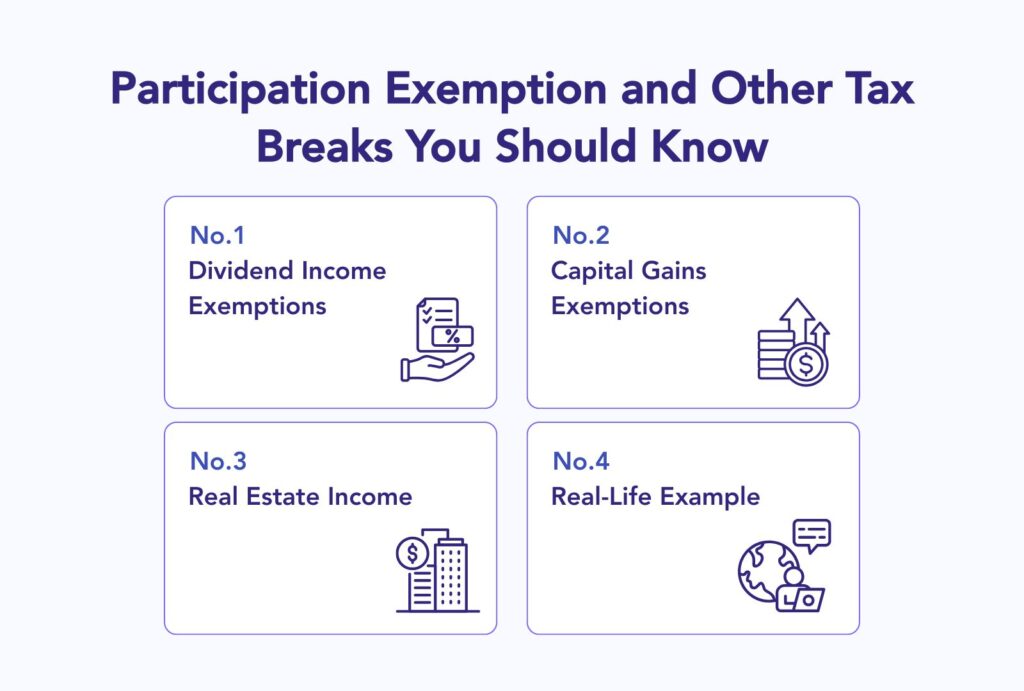
Participation Exemption and Other Tax Breaks You Should Know

Corporate Tax for Holding Companies in the UAE

Under the tax in uae corporate tax framework, exemptions still exist, but in 2026, they will no longer be claim-based; they are evidence-based. Article 23 of the CT Law, backed by Ministerial Decision No. 116 of 2023, sets out clear exemptions, many of which directly benefit holding companies, provided each exemption is supported by a verifiable audit trail.

Dividend Income Exemptions

  • Dividends from UAE companies are fully exempt from corporate tax. No conditions apply.

  • Dividends from foreign companies can also be exempt, but only if your holding company:

    • Owns at least 5% of the foreign entity’s shares

    • Has held those shares for at least 12 months

    • Has evidence that the participation is subject to a corporate income tax meeting the UAE “subject-to-tax” test (typically 9% or more, or equivalent effective rate under UAE rules)

In 2026, holding companies are expected to retain contemporaneous evidence, such as foreign tax assessments, filed returns, or official tax payment confirmations, to substantiate this condition during audits.

Capital Gains Exemptions

Capital gains from selling shares in a subsidiary may also be exempt from tax in UAE as long as the same 5% ownership, 12-month holding period, and subject-to-tax verification requirements are met.


In practice, capital gains exemptions are now reviewed alongside dividend exemptions as part of a single participation exemption audit trail, rather than as standalone claims.

Real Estate Income

Income from real estate located in the UAE is generally taxable, even for holding companies. However, there are exceptions. If the property is held through a Qualifying Free Zone Person (QFZP) structure and certain conditions are met, the income may still qualify for exemption.


In 2026, such exemptions are increasingly tested against substance, ownership structure, and audited financial statements rather than assumed eligibility.

Real-Life Example

Consider a free zone holding company that earns:

  • AED 1 million in dividends from a mainland UAE subsidiary

  • AED 500,000 in capital gains from selling shares in a foreign subsidiary

Because the company owns at least 5% of each, held the shares for more than 12 months, retains documentary proof that the foreign subsidiary was taxed at 9% or more in its home jurisdiction,it qualifies for the participation exemption. That means no corporate tax is due on either amount.


In the 2026 enforcement environment, participation exemptions are no longer “technical reliefs” – they are positions that must be defended with documentation. For holding companies, exemption planning now goes hand in hand with audit readiness.

Tax Transparency for Family Foundation-Owned Holding Companies

Corporate Tax for Holding Companies in the UAE

In 2026, the Tax Transparency Election is no longer a novel structuring tool. It has become a standard election used by family offices and private wealth structures operating in the UAE.


This mechanism allows qualifying family foundations to elect for tax transparency, meaning the income earned by their holding structures can be passed directly to beneficiaries without triggering corporate tax at the entity level.


Public Clarification CTP008 (issued in September 2025) confirms that this treatment is not limited to single-layer structures. Multi-tier arrangements in which holding companies or SPVs are owned by a tax-transparent family foundation may also be treated as fiscally transparent, provided the statutory conditions are met.


But this election is conditional. The foundation must qualify under UAE law, beneficiaries must be clearly identified, and income must be allocable and taxable at the beneficiary level.


Importantly, family foundations with separate legal personality must submit an Annual Confirmation to maintain their tax-transparent status. Failure to do so may result in the automatic loss of transparency and exposure to corporate tax at the foundation or holding company level.


Why does this matter?


For wealthy families, this election opens up new possibilities around:

  • Succession planning
  • Asset protection
  • International tax compliance
  • Long-term wealth preservation

It simplifies things by eliminating one layer of taxation while still keeping the structure legally sound and globally acceptable.

Real-Life Example

Take a UAE-based family office. It uses a family foundation to control three SPVs, all registered in ADGM. Following the tax transparency election and in line with CTP008 guidance, the holding companies beneath the foundation are also treated as fiscally transparent. income from the SPVs flows straight to the named heirs. No corporate tax is applied at the entity level, and the beneficiaries report their share of the income individually.


For high-net-worth families managing complex, cross-border structures, tax transparency is now an established compliance pathway, not an experimental planning option, provided annual confirmations and beneficiary disclosures are maintained.

Pillar Two: Why Global Tax Changes Could Hit Your UAE Holding Company

There’s a big shift coming. Starting in 2025, international tax rules are getting tougher and your UAE holding company might feel it.


The new framework, called Pillar Two, is part of a global effort led by the OECD. In simple terms? If you’re part of a large multinational group, you’ll need to pay at least 15% tax, no matter where you do business. Low-tax hubs like the UAE won’t shield you anymore—not fully, at least.


Think your free zone setup protects you? Think again.

What’s Pillar Two, Really?

It’s not just another rule. It’s a move to stop big companies from dodging taxes by parking profits in countries with little or no tax.


Here’s the deal:


If your group makes over EUR 750 million globally, and you’ve hit that mark in two of the last four years, you’re in the zone. You’ll be expected to hit a 15% effective tax rate. Doesn’t matter if you’re in Dubai, Dublin, or Delhi.


And if you’re paying less, say, 9% in the UAE, you might owe the extra 6% as a top-up.


In a free zone with 0% tax? The gap is even wider.

Who Does This Apply To?

Only very large groups are affected, specifically those that:

  • Earn at least EUR 750 million in total revenue worldwide
  • Hit that level in two of the last four years

If your group doesn’t meet that threshold, you can ignore Pillar Two for now.


But if it does, your UAE holding company is affected, even if you’re in a free zone or currently paying 0% tax.

What Happens in the UAE?

The UAE’s standard corporate tax rate is 9%. That’s below the 15% global minimum, so qualifying businesses may have to pay more. To fill the gap, the UAE may charge a top-up tax called the Domestic Minimum Top-up Tax (DMTT).


In practice, the DMTT ensures that in-scope UAE entities reach an effective 15% rate locally so that the “missing” tax is collected in the UAE, not abroad.


Let’s Simplify:


If your company only pays 9%, and it should be paying 15% under Pillar Two rules, the UAE could charge you an extra 6% tax to close that gap.

Let’s Look at an Example

Imagine your company is part of a large multinational group with global revenue over EUR 750 million.

  • You’re based in the UAE mainland and pay 9% corporate tax.
  • Under Pillar Two, you should be paying 15%.
  • The UAE may apply a 6% top-up tax to reach that 15%.

Now let’s say your company is in a free zone and currently qualifies for 0% tax under QFZP status.

  • Under Pillar Two, the entire 15% might apply as a top-up—because 0% is too low.

You could lose the advantage of being in a free zone if you’re part of a large global group.


However, Investment Entities that meet the OECD and UAE definitions are generally excluded from the DMTT calculation, which means certain fund and investment-holding structures may be outside the top-up scope even where headline tax rates are low.

Summary: How Tax Exposure Changes

Holding Company Jurisdiction Corporate Tax Rate Subject to Pillar Two? Additional Tax Exposure
UAE Mainland
9%
Yes (if ≥ EUR 750M group)
6% via DMTT
Free Zone (QFZP, Exempt)
0%
Yes (if ≥ EUR 750M group)
Full 15% may apply
DIFC/ADGM Holding Co.
0–9%
Yes (case-by-case)
6–15% depending on structure

What Should You Do?

If your company is part of a large multinational group:

  • Check your effective tax rate (ETR) — what are you really paying in each country?

  • Reassess your UAE setup — is your QFZP status still helpful, or could it trigger a 15% tax anyway?

  • Look into group restructuring — combining companies, adjusting where income is earned, or reworking ownership can reduce tax exposure.

  • Stay compliant — the UAE will follow OECD GloBE rules, and your documentation must match.

If you’re not part of a huge group, you’re safe (for now). But if your group is global and big, and your UAE holding company is paying less than 15% tax, expect to pay more under Pillar Two.


Planning ahead is essential.

Compliance and Reporting Obligations

Owning a holding company in the UAE is not just about sitting back and collecting dividends. There’s paperwork. And deadlines. 


Miss one—and it could cost you.


Let’s walk through what the law expects from you.

Corporate Tax Return

You have to file a return. Every year.

  • You get 9 months from the end of your financial year.

  • So, if your year ends on 31 December 2025, your deadline is 30 September 2026.

  • You’ll file it through the EmaraTax portal (FTA’s official platform).

That’s your basic tax obligation, no matter where your holding company is set up.


it might still need to report under ESR

Transfer Pricing (TP)

If your holding company enters into transactions with related parties or connected persons, transfer pricing rules apply — regardless of whether you are mainland or free zone.


A Related Party Disclosure Form must be submitted together with the Corporate Tax return where relevant transactions exist.


In addition, Master File and Local File documentation is required if:

  • The company’s annual revenue is AED 200 million or more, OR
  • The total value of related party transactions during the tax period is AED 50 million or more.

These files must comply with OECD-aligned transfer pricing principles and demonstrate that transactions are conducted at arm’s length.


In 2026, TP is not just documentation — it is one of the primary audit risk areas for holding companies with intercompany financing, management fees, guarantees, or asset transfers.

The 2026 Penalty Pivot (April 14, 2026)

From 14 April 2026, the old administrative penalty model (2% on the unpaid tax, plus 4% monthly) is replaced by a 14% per annum interest charge on late payments, calculated monthly.


This shifts the regime from one-off fines to a financing-cost model, making delays in paying assessed tax significantly more expensive over time.


Setting up a holding company in the UAE can save you a lot in tax. That’s the good news. But there’s a catch, it only works if you follow the rules and stay on top of your structure.


So let’s keep it simple: here’s what works, what doesn’t, and how to stay out of trouble.

Why Holding Companies Still Work in the UAE

There are solid reasons people are still choosing the UAE.

  • You can get 0% tax

if you’re a Qualifying Free Zone Person (QFZP). That means your income fits the approved list and you follow the rules. If you do that, you don’t pay corporate tax on that income. And yes, that includes things like dividends and capital gains.

  • There are treaties. Lots of them.

The UAE has agreements with over 130 countries. That helps when you’re sending money abroad you may pay less tax, or even none.

  • It makes cross-border stuff easier.

You can hold shares in other countries, consolidate things in one place, and not deal with a messy paper trail across five jurisdictions.

  • It’s good for long-term planning.

If you’re thinking ahead, passing assets to your kids, planning your estate, this is one of the simplest ways to do it cleanly.

  • Extra exemptions.

If you meet the right conditions (own 5%, hold it for at least a year, etc.), you don’t pay tax on dividends or gains. That’s in Article 23 of the tax law. Combined with robust transfer pricing alignment, this still allows UAE holding companies to manage group tax efficiently while staying compliant.

What Can Go Wrong

People assume the 0% rate is guaranteed. It’s not. If you mess up, even without realizing, you could lose everything the structure was supposed to protect.

  • Start earning the wrong kind of income? That’s a red flag.

Income from clients in mainland UAE or services not allowed under QFZP rules. This puts you at risk. You may suddenly be taxable.

  • Just getting a license isn’t enough.

You need real substance. That means having an office, doing real work from the UAE, maybe even hiring staff. Otherwise, the tax authority could say, “This company doesn’t really exist here.”

  • Offshore management? That’s a no.

If all decisions are being made from another country, the FTA won’t consider your company UAE-based. And your tax benefits vanish.

  • No proper records? That’s risky.

You need minutes of board meetings. Audited financials. Resolutions that show you’re managing the business properly. Without those, your setup looks fake.

  • And don’t ignore Substance Requirements.

Even if your company just holds shares and collects dividends, it might still need to report under ESR. Miss a filing, and you could be fined or flagged.

What You Should Be Doing Instead

It’s not about tricks. It’s about smart structure, solid reporting, and knowing the limits.

  • Make sure your income qualifies.

Stick to activities that fall under the QFZP umbrella. Avoid side activities that could pull you into taxable territory.

  • Use the participation exemption.

Own more than 5% of a subsidiary? Hold it long enough? You may not pay tax on the dividends or capital gains. But you have to check the conditions closely.

  • Consider restructuring if needed

Maybe the way your company is set up made sense two years ago. But laws change. Your business changes. You may need to realign or move some things around.

  • Think long term.

If this is a family business, build the structure now so it works for the next generation. Don’t wait for a tax problem to force a rushed decision.

  • And most importantly, get advice.

This stuff isn’t one-size-fits-all. Work with someone who understands UAE tax law and how to keep your setup legal and efficient at the same time.

E-Invoicing Readiness (July 2026)

From July 2026, the UAE is rolling out structured e-invoicing based on the Peppol PINT AE standard. Even holding companies that primarily deal with intercompany charges, management fees, and cost recharges will need systems capable of issuing and receiving compliant e-invoices.


Being e-invoice-ready is not just a technical upgrade; it underpins future FTA analytics on transfer pricing, VAT, and corporate tax consistency across the group.

Conclusion

Holding companies aren’t going anywhere. They’re still one of the smartest ways to structure ownership, manage investments, and protect wealth, especially in the UAE.


But the game has changed. With corporate tax in play, you can’t just set it and forget it anymore. The UAE still offers major planning advantages, but only if you stay compliant, file on time, and keep your structure clean.


Compliance is now the baseline, not the “extra step” you take at the end. The FTA increasingly relies on digital traceability data in EmaraTax, e-invoices, bank trails, and group reporting to run risk-based audits on holding companies.


That’s where expert guidance matters. Because the penalties for getting it wrong? They’re real. And so are the missed opportunities if you don’t know what exemptions you qualify for.


Serious about getting this right?


Our team at ADEPTS helps businesses design tax-smart, fully compliant holding company structures, without the guesswork.


Let’s sit down, review your setup, make sure it’s aligned with the 2026 enforcement environment—not yesterday’s rules.

FAQs:

It depends on how the company is set up and whether it meets specific FTA rules. Some holding companies may qualify, but it’s not automatic or guaranteed.

If a company fails to meet the conditions, it could lose QFZP status even for past years. It’s important to review activities, filings, and substance regularly to avoid surprises.

Even passive holding companies must meet a basic substance test. That usually means showing management is happening inside the UAE through directors, meetings, and proper record-keeping.

Mixed income can affect QFZP status. Depending on how much is earned and how it’s classified, part or all of the income could become taxable under corporate tax law.

Having offshore control or shadow management might weaken your case for UAE substance. The FTA may challenge your status if key decisions aren’t clearly made from within the UAE.

Without audited accounts, filings may be incomplete or inaccurate. This can lead to penalties, delays, or loss of tax benefits, especially for companies trying to prove substance or exemptions.

Access to DTTs depends on several factors, including where management decisions are made. Just being based in ADGM isn’t enough—you still need to prove you’re a UAE tax resident.

Red flags often include missed filings, mainland income, lack of substance, or inconsistent records. A mismatch between license type and real activities can also catch the FTA’s attention.

VAT credits originating from 2018–2020 that remain unclaimed or unoffset by 31 December 2026 will expire permanently. After this date, they can no longer be used to offset VAT liabilities or claimed as refunds, effectively converting them into a sunk cost. Businesses should review legacy VAT balances and take action well before the deadline.


No. FFrom 2026, reverse charge documentation expectations shift toward maintaining adequate supporting records rather than generating separate self-invoices. Taxpayers must retain contracts, supplier invoices, customs documentation, and accounting entries to support the treatment.


From 14 April 2026, late payment is treated as an interest-style charge (commonly cited as 14% per annum calculated monthly) and applies across federal taxes, including Corporate Tax, VAT, and Excise.

Resources

Related Articles​​

Is Your Business "Sellable"? A 15-Point Pre-Sale Financial Health Check for UAE SMEs

You’ve built a business in Dubai. Maybe you want to sell it now. Or maybe you’re planning for an exit in the next year or two. Either way, just listing it isn’t enough.


Buyers aren’t just looking for a good idea. They’re buying clean numbers, legal clarity, and a track record they can trust. If you want to sell your business in Dubai or anywhere in the UAE, it needs to look good on paper and off it.


A financially healthy business:

  • Attracts serious buyers


  • Commands higher valuations


  • Makes due diligence fast and painless


And in the UAE, where corporate tax is now real, VAT compliance is strict, and business selling comes with extra legal checks, you need to get it right.


This 15-point financial health check is your pre-sale blueprint. Whether you’re planning to sell your business, wondering “how to sell a business in Dubai?” or already getting interest, it all starts here.


Let’s get into it.

1. Up-to-Date Financial Records

Before you sell your business in Dubai, get your books in order. Buyers don’t make decisions on guesses, they want proof.


That means accurate profit and loss statements, balance sheets, cash flow reports, and clean bank reconciliations. Every invoice, contract, and financial record should be easy to find and updated.


In the UAE, you’re expected to follow IFRS or IFRS for SMEs. It’s not just best practice, it’s required. Using international standards builds buyer confidence and avoids delays during due diligence.


Sloppy or missing records? That’s how deals fall through. Clean books tell buyers your business is healthy and worth their money.

2. Clean Balance Sheet

A messy balance sheet makes your business look sloppy—like it has something to hide.

If you’re thinking of selling your business in Dubai, take the time to clean it up. Scrap old or useless assets. Write off debts that aren’t coming back. Go through your accounts and make sure everything lines up with what’s actually in the bank.


Show your cash flows, inventory, equipment that’s worth something. And trim down any extra liabilities. A clean, simple balance sheet tells buyers your business is in good shape and not full of surprises.

3. Profitability Analysis

Buyers want profits, not potential. If you’re planning to sell your business in Dubai, you need to show it actually makes money.


Start by calculating your gross profit margin (sales minus cost of goods sold) and net profit margin (what’s left after all expenses). Then compare those numbers to UAE industry benchmarks—most SMEs fall between 5% and 15% net profit.


If you’re below that, improve it before going to market. If you’re above, highlight it. A profitable business doesn’t just sell faster—it sells for more.

4. Liquidity Ratios

Buyers don’t like surprises, especially with cash flow. Before you sell your business, check your current and quick ratios.


These show if you can meet short-term obligations without stress. A healthy current ratio (above 1) tells buyers your business isn’t running on fumes.


If your liquidity looks shaky, fix it now. It’s a simple metric, but a big trust signal during due diligence.

5. Solvency Ratios

Debt can fuel growth—or scare off buyers. The key is balance.


Check your debt-to-equity ratio. In the UAE, anything below 1 is generally seen as healthy. It shows you’re not over-leveraged and that your business isn’t surviving on borrowed money.


If your ratio is high, reduce debt before selling your business. A buyer wants strength, not risk.

6. Cash Flow Health

Profit might look great on paper, but cash flow keeps the lights on.


Go through your cash flow statements and see if things are steady, not just random highs. Buyers are looking for consistent, positive cash flow from your day-to-day operations, not something that depends on luck or outside funding.


They want to know if the business can stand on its own.


Look for seasonal dips or irregularities. Then explain them. Clean, predictable cash flow is a huge confidence booster when preparing to sell your business in Dubai or anywhere in the UAE.

7. Accounts Receivable & Payable

Late payments, whether from you or to you are a red flag.


Buyers want to see that you collect what you’re owed on time and that you pay your suppliers without delays. Too many overdue receivables looks like weak credit control. Stretched payables signals cash flow stress.


If you’re planning to sell your business, tighten both sides. Show buyers that your operations are disciplined, and your relationships with customers and suppliers are solid.

8. Tax Compliance

Nobody wants tax trouble showing up in the middle of a deal.


If you’re planning to sell your business in Dubai, make sure all your VAT and corporate tax issues are sorted. That means filings are done, records are in order, and nothing’s overdue.


If your revenue is above AED 375,000, you should already be registered for VAT, double-check that. And keep your records for at least 7 years. That’s what the FTA wants.


Buyers get nervous fast when taxes look messy. It slows things down. Or worse—kills the deal.

9. Legal & Regulatory Compliance

Expired trade license? Missing visa renewals? That’s a problem.


Keep all business licenses, immigration cards, and employee visas up to date. Whether you’re on the mainland or in a free zone, buyers expect full compliance with UAE regulations—there are no grey areas.


If you plan to sell your business, legal tidiness matters as much as profit margins.

10. Business Valuation

Guesswork doesn’t work here. Get a professional valuation if you want to sell your business at the right price.


Use a mix of methods, asset-based, earnings-based, and market-based. A third-party valuation builds buyer trust and gives you leverage in negotiations.


Overpricing scares buyers. Undervaluing? You lose money. Aim for just right.

11. Diverse Revenue Streams

If nearly all your income comes from one customer or one product, that’s a red flag for buyers.


They want to know your business won’t crash if one deal falls through. So, show that you’ve got a mix of clients or income sources, especially anything recurring or long-term.


In the UAE market, buyers look for businesses that feel stable and not risky. Spread things out a bit. It makes your business easier to trust and easier to sell.

12. Operational Efficiency

Buyers don’t just buy revenue, they buy systems.


Document all key processes and standard operating procedures (SOPs). Show that your business can run smoothly without you.


Invest in automation and technology that makes scaling easier. An efficient business is far easier to sell and more valuable.

13. Employee & HR Compliance

Buyers don’t want drama with your team.


Make sure every employee has a proper contract, payroll is handled right, and everything follows UAE labor laws. If there are any staff issues or unpaid dues, fix them now, not at the last minute.


Thinking about selling your business? Get your HR system in order first. It’ll save you a lot of trouble later.

14. Risk Management & Insurance

No one wants a ticking time bomb.


Review your insurance policies, including assets, public liability, and business interruption. Make sure coverage matches the scale and risk level of your operations.


Buyers will also ask about credit, operational, and market risks. Be ready to explain how you’ve managed or reduced them. This builds real confidence.

15. Growth Story & Business Plan

Profit alone doesn’t sell, it’s the potential that closes the deal.

Have a sharp 5-year business plan ready, plus a teaser and information memorandum if you’re going to market. 


Lay out your story: growth so far, what’s coming next, and why it’s worth investing in.


If you’re looking to sell your business in Dubai, buyers need to see the future and believe in it.

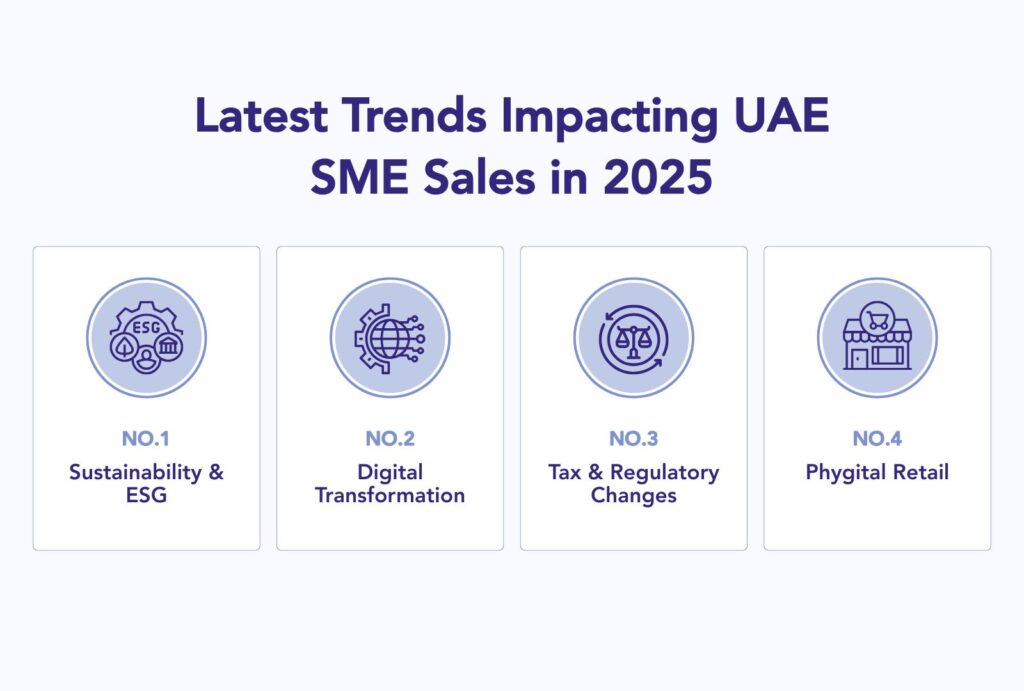
Latest Trends Impacting UAE SME Sales in 2025

Is Your Business "Sellable"? A 15-Point Pre-Sale Financial Health Check for UAE SMEs

If you want to sell your business in Dubai or anywhere in the UAE, knowing what buyers care about right now is a must. These trends could make or break your sale.

Sustainability & ESG

More investors looking to buy and sell businesses in the UAE care about sustainability. If your business follows eco-friendly practices or ESG standards, you’re set for success. It makes your company stand out, and more sellable.

Digital Transformation

Tech-enabled businesses in Dubai are getting more attention and higher valuations. If your SME uses cloud tools, AI, or runs through e-commerce, you’re in a stronger position to sell your business quickly and confidently.

Tax & Regulatory Changes

Corporate tax and VAT compliance are now deal-breakers. Anyone looking to buy and sell a business in Dubai will expect your filings to be clean and up to date. If not, expect the buyer to either walk away or slash their offer.

Phygital Retail

Hybrid models, online and physical stores together, are big now. If you’re in retail and thinking how to sell a business in Dubai, showing off a strong digital presence along with a physical outlet makes your business far more appealing.

Why Work with ADEPTS?

Selling a business takes more than just paperwork. It takes sharp numbers, clear compliance, and a real understanding of what buyers are looking for. 


That’s where ADEPTS makes the difference.


We help UAE business owners clean up their financials, sort their tax and legal obligations, and prepare for a proper exit, not a rushed one. If you’re trying to sell your business in Dubai  or anywhere in the UAE, we guide you through what matters most, every step of the way.


ADEPTS brings real experience, straight answers, and a focus on what actually gets deals done.


We handle:

  • Financial health checks that uncover red flags before buyers do

  • Full VAT and corporate tax compliance, aligned with UAE law

  • Tailored support for valuation, due diligence, and sale prep

  • Practical advice that keeps things moving, clean, and compliant

If you’re serious about getting your business sold the right way, ADEPTS is who you call before you list. 


Let’s get you ready for the real buyers—no guesswork, no mess.

FAQ's

It usually takes 3 to 9 months. Depends on how ready your business is, clean records, pricing, licenses. If things are in order, it’s faster. If not, expect delays while sorting documents and dealing with buyers’ questions.

Most deals are either share sales or asset sales. In a share sale, the whole company changes hands. With an asset sale, the buyer only takes what they want, like stock, equipment, or customer lists.

Make sure all your IP, logos, designs, tech, content, is legally owned and properly registered. If it’s shared or unclear, clean it up. Buyers don’t want risk tied to stolen or disputed branding or code.

Biggest red flags are bad books, unpaid taxes, old licenses, or overdependence on one client. If staff don’t have contracts or there’s legal trouble, buyers walk. They want a business that’s clean and low-risk.

Use NDAs early. Don’t send full details like supplier rates or client contracts until the buyer shows they’re serious. Start with basics, then open up slowly as the deal moves forward. Keep control of information.

Brokers help you find legit buyers, handle paperwork, and price your business right. They deal with delays, prepare your documents, and know how deals close in the UAE. Handy if you’re selling for the first time.

Yes. If your turnover is under AED 3 million, you might qualify for small business tax relief. Some free zones also offer 0% tax. But you still need to file correctly and meet the rules.

References

Related Articles​​

Selling Your Business in UAE? Here’s What You Need to Know About Market Trends and Regulations in 2025

If you’ve been looking for the right time to buy and sell a business in the UAE, then the time has arrived. With tax relaxations, business-friendly laws, 100% foreign ownership, and easy business registration and licensing, people are looking to buy and sell business in Dubai or set up in Abu Dhabi instead of starting a new business from scratch.


However, we also understand that deciding to buy and sell a business in Dubai can be very overwhelming, and one wrong move could mean missing out on a golden opportunity. 


That’s why, in this article, we’ll walk you through current market trends and buyer behaviors to help you make a smart, informed decision.

Current Industry Trends Affecting Business Sales in Dubai

Selling Your Business in UAE? Here’s What You Need to Know About Market Trends and Regulations in 2025

The biggest element that you need to consider to secure the best deal for your setup is to understand the trends of the market and how these trends can affect your decisions about selling business in Dubai.

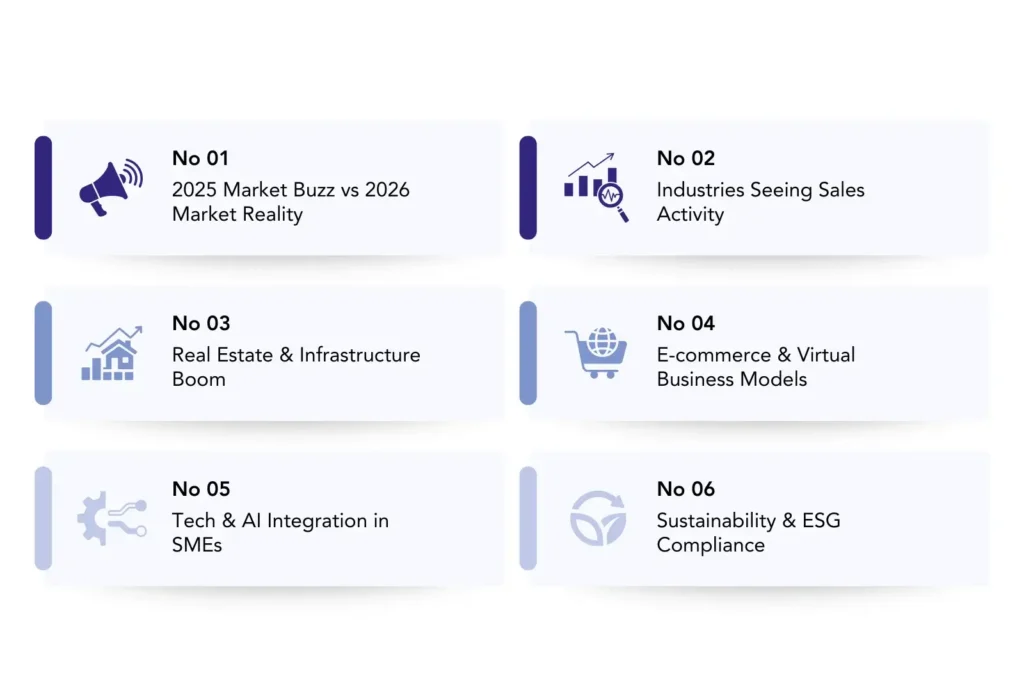
Industries Seeing Sales Activity

The first thing we need to discuss is the industries that are seeing high sales activity.


Right now, some industries in Dubai are doing really well, and that’s good news if your business is part of them and you are looking to buy and sell business in the UAE.


With the growing Dubai skyline, the latest trends in infrastructure, real estate, and construction business are flourishing, which keeps the business valuations strong, especially for companies linked to building, design, or materials.


This beautiful skyline and modern building structures, along with new and fun outing spots, are promoting the tourism and hospitality sector, especially after the Expo buzz and the events planned. This has created a stir amongst the investors who are looking to buy and sell business in Abu Dhabi, Dubai, and other growing cities.


Moreover, the UAE is becoming the hub for international businesses, and the Dubai government is offering exceptional tech and e-commerce facilities, so more and more businesses are being attracted, leading to the growth of the tech and e-commerce industry.


Online stores, apps, and everything that is digital is getting a lot of attention from investors, and if your business is in one of these areas, you might find it’s a good time to buy and sell business in the UAE.

Real Estate & Infrastructure Boom

With mega-projects popping up in key districts, the demand for businesses that can plug into these developments has gone up. Investors are looking closely at hospitality setups, construction-related companies, and anything that has the potential to grow quickly alongside these new areas.

E-commerce & Virtual Business Models

The e-commerce market in the UAE is not just growing, it’s expanding fast and pulling in a lot of attention. Businesses that already have a digital presence or can be adapted to online models are getting more offers. Digital-first setups are seen as easier to scale and align with how people shop now.

Tech & AI Integration in SMEs

Selling Your Business in UAE? Here’s What You Need to Know About Market Trends and Regulations in 2025

There’s also a strong push toward small and mid-sized businesses that are using technology smartly. If your operations are streamlined with automation or AI tools, buyers see that as a win. It means fewer hiccups and more efficiency, which makes your business stand out even more in the current environment.

Sustainability & ESG Compliance

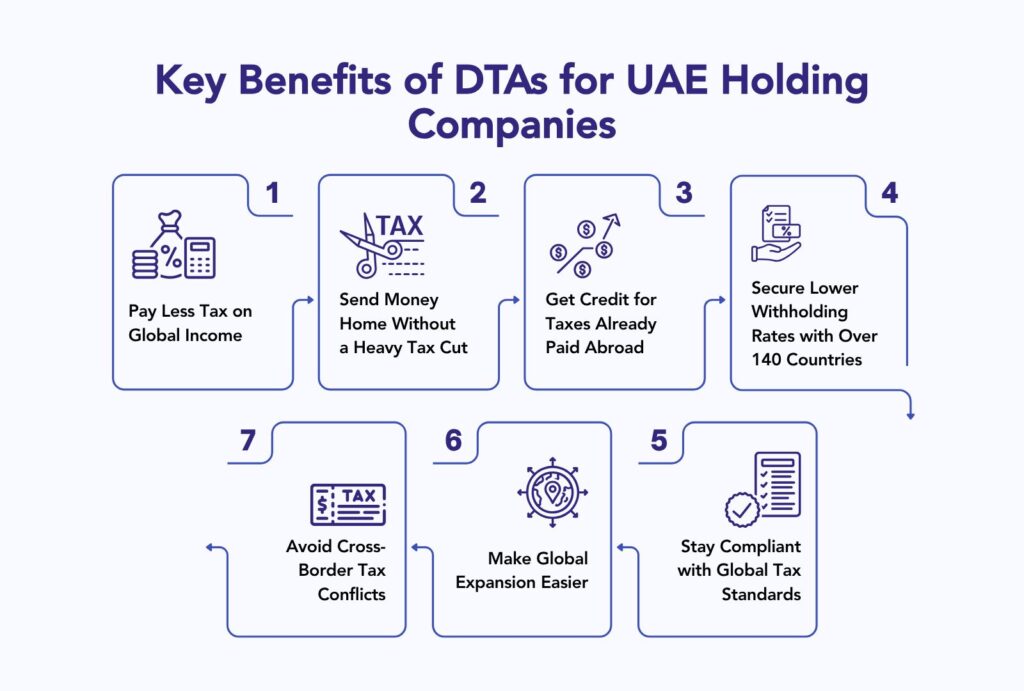
DTAs include rules to resolve disputes and prevent double claims on the same income. If two countries both want to tax you, the treaty clearly defines who has the right and who doesn’t.


This gives your business legal certainty and peace of mind, especially helpful when managing your tax visibility across FTA eServices.

Government Regulations and Initiatives

The UAE government has made it a lot easier to run and sell UAE business, especially for foreigners. Free zones are a big part of that, as buyers love them because of the exceptional benefits like full foreign ownership, no import/export taxes, and simple setup processes. If your business is based in a free zone, it’s often more attractive to international buyers looking to buy and sell business in Dubai.


On top of that, the new visa rules (like long-term and golden visas) are helping expat business owners feel more secure about living and working here long-term. This kind of stability gives buyers more confidence to invest in an existing business rather than starting from scratch, especially those aiming to buy and sell business in Abu Dhabi, where competition and opportunity are both high.

Regulatory & Financing Trends

Selling Your Business in UAE? Here’s What You Need to Know About Market Trends and Regulations in 2025

The new 9% corporate tax may seem like a big change, but it hasn’t slowed down interest, mostly because the UAE has balanced it with incentives for foreign investors. There’s also easier access to financing options like Sukuk and green bonds, which are helping fuel acquisitions and selling UAE business deals across sectors.

Trade Deals & Foreign Investor Access

The UAE’s trade landscape is also changing fast. CEPA agreements with several countries are opening new doors for international buyers. Add to that the updated rules in many free zones, and it has now become a lot simpler for foreign investors to transfer ownership, operate cross-border, and expand without a lot of complications.

Economic Factors

The impact of oil prices is not something new, especially for the people running a business in the UAE. When oil prices are high, there’s usually more market confidence, and people are more willing to invest. But when oil prices drop, buyers might become more cautious.


Then there’s the problem of inflation, of which we are all very well aware. It increases the cost of goods, rent, and services and reduces your profits. If your business is still doing well regardless of the inflation, it shows the strength of your company, making it more appealing to potential buyers who are actively looking to buy and sell business in UAE  under stable and resilient market conditions.

Conclusion

Selling your business in the UAE in 2025 isn’t just about numbers on a sheet. You’ve got to look at the full picture. Real estate is booming, e-commerce is picking up fast, and buyers are really eyeing businesses that use tech smartly or have some kind of green angle. If you move at the right time and know what buyers are after, there’s a lot of opportunity.


Things like tax changes, new rules, how easy it is to get funding, and even oil prices can affect your sale. So it’s important to stay updated. At the end of the day, what really helps is showing off what your business does well—whether that’s tech, sustainability, or solid numbers—and having someone experienced to help you through the deal. 

There’s no fixed timeline, but most deals take around 3 to 6 months. It depends on how well your paperwork is sorted, how clear the finances are, and how serious the buyer is. If everything’s in order and the business is in a good industry, things can move faster.

For now, there’s no capital gains tax, which is a big plus. But with the 9% corporate tax in place, some setups might be affected, especially mainland companies. VAT might also apply depending on what exactly is being sold. It’s always better to check with a tax advisor before you move forward.

Start with a solid NDA before you share anything sensitive. In the beginning, just give general info. Details like client lists, supplier deals, or financial statements should only be shared after you know the buyer is serious. Keep the full disclosure for the final stages.

Some buyers pay fully in cash, especially for small to mid-sized businesses. Others go for bank loans, private funding, or Islamic financing options like Sukuk. There’s also growing interest in using green bonds for businesses that follow ESG standards.

If you’re selling the company as a whole, then the employees usually stay on and the contracts carry over. But their benefits, visas, and dues need to be cleared properly. If you’re just selling assets, then you may have to end contracts and settle everything before handing over.

Selling assets means you’re handing over only what the buyer needs—like inventory, furniture, or maybe the client base—but not the actual business entity. Selling the full company means they get everything, including liabilities and ongoing contracts. What works best depends on your setup and what the buyer wants.

Usually, right after a strong quarter or financial year. Also, when your industry is doing well, like tourism during peak season or e-commerce during high sales months. Avoid listing it during market slowdowns unless your numbers still look good.

References

ESG Disclosures Framework. 14 Aug. 2024, https://www.adgm.com/operating-in-adgm/obligations-of-adgm-registered-entities/esg-disclosures-framework.

Related Articles​​

Share vs. Asset Purchase in Dubai: Which Structure Saves You More on VAT?

Thinking about buying a business in Dubai? You’ve got two ways in. You can grab the company whole by buying its shares. Or you can cherry-pick what you want through an asset purchase. Both get you control. Both have perks. But one of them can save you a big pile of money on VAT.


A lot of people miss this. They see the deal price and forget about the tax. Suddenly 5% of millions is on the table. So let’s talk clearly. No nonsense. How does VAT really work on these deals in the UAE? And which option leaves you with more in your pocket?

Understanding VAT in Dubai (2025 Update)

Share vs. Asset Purchase in Dubai: Which Structure Saves You More on VAT?

First, let’s be blunt about VAT in Dubai. It’s 5%. That’s the standard rate. It applies to most goods and services, no matter how fancy your lawyer is. But it doesn’t hit everything equally. Some things are zero-rated or exempt. Exports. Certain healthcare and education. And crucially for us—some financial services.


If you’re running a business that makes more than AED 375,000 in taxable turnover, you have to register for VAT. No tricks. No wriggling out of it. So when you’re buying a business, you can’t ignore this. It’s not some optional footnote in your due diligence report. It’s core to the cost.

What is a Share Purchase?

When you buy shares, you don’t buy the company’s stuff. You buy the company itself. The assets, the liabilities, the staff, the contracts, everything stays where it is. The only thing that changes is the ownership on paper.


Sounds simple? That’s because it is. And the best part? The UAE treats the sale of shares as a financial service. Financial services are generally exempt from VAT.


So you don’t pay 5% on the transaction value. Whether you’re buying for AED 1 or AED 100 million. Sure, you’ll pay legal fees. Maybe some regulatory charges to update shareholding records. But VAT? Zero. That’s why share deals are so popular. Clean. Predictable. No nasty VAT surprises.

VAT Impact on Share Purchases

  • No VAT on Shares: Buying or selling business in the UAE is generally exempt from VAT.

  • Financial Services: Shares fall under financial services, which are not subject to VAT.

  • No VAT on Price: You don’t pay or charge VAT on the transaction value.

  • Regulatory Fees: You may still pay fees for updating shareholder records or approvals, but these fees don’t include VAT either.

  • Keep Records: Always keep proper paperwork for any share transfer, even if VAT doesn’t apply.

What is an Asset Purchase?

Now, let’s talk asset purchases. These can look attractive. You don’t want the whole company? No problem. Pick the assets you want. Buy the property, the equipment, the stock. Leave the debts and lawsuits behind.


Sounds great. Until the taxman shows up. Because when you buy assets, you’re not buying financial services. You’re buying stuff. And stuff is taxable. So the rule is simple. Selling UAE business is a taxable supply. You pay 5% VAT.


If you buy AED 20 million worth of equipment and inventory? Congratulations. That’s AED 1 million in VAT. That can blow your budget fast if you weren’t expecting it. But there’s a twist. Dubai’s VAT law has an out for this: the Transfer of a Going Concern (TOGC).


If you buy the business as a whole, so it can keep operating without interruption, the deal may qualify as VAT-free.


But this isn’t some rubber-stamp exemption. You have to hit the criteria:

  • The business must keep running as a going concern.

  • Both buyer and seller need to be VAT-registered.

  • The Federal Tax Authority wants to see that you’re really transferring the business, not just cherry-picking assets.

Miss any of that, and you’re back to paying 5%. So which is cheaper? If you just want the company as it is, share deals win on VAT. Almost always. No VAT on the purchase price. Simple. Asset deals? Riskier. You might qualify for the going concern exemption. But you have to plan it carefully. Do it wrong and the 5% hits you.


Sometimes, you want the control of an asset deal. You can avoid liabilities you don’t like. You can just buy a business in parts that fit your requirements. But you can’t ignore VAT.


Here’s the truth.


The best structure depends on your goals. If you want simple, VAT-efficient, take-it-as-it-is? Share purchase. If you want to be selective? Asset purchase—but make sure you understand the VAT consequences. Because in Dubai, there’s no wiggle room. VAT is strict. The FTA doesn’t care about your intentions. They care about the letter of the law.


So don’t treat this like a box to tick at the end. Don’t let your lawyer bury it in the schedule of costs. Plan it from the start. Talk to your tax advisor before you sign anything. Make sure you know if your deal qualifies as a going concern. Because that 5% can be the difference between a good deal and a disaster.

VAT Impact on Asset Purchases

Let’s get real about asset purchases. They’re flexible, sure. You get to pick exactly what you want. Equipment. Stock. Vehicles. Property. Leave behind the debts and the mess.


But this freedom has a price tag—and it’s called VAT.

Pick What You Want — But Know the Cost

Let’s get real about asset purchases. They’re flexible, sure. You get to pick exactly what you want. Equipment. Stock. Vehicles. Property. Leave behind the debts and the mess. But this freedom has a price tag — and it’s called VAT.

Business Assets Are Taxable Supplies

In the UAE, selling business assets is a taxable supply. That means 5% VAT, nearly every time. It doesn’t matter if you’re buying a few computers or an entire warehouse full of goods. If you’re buying assets, expect to pay.

The Transfer of a Business as a Going Concern (TOGC)

But there’s a way out — if you do it right. The UAE’s VAT law has an important carve-out called the Transfer of a Business as a Going Concern (TOGC). This isn’t some loophole or sneaky trick. It’s a legitimate exemption, but the conditions are strict.

What Makes a Deal Qualify

For a deal to qualify as TOGC, you’re not just buying a bunch of assets. You’re buying a business in the UAE, the whole business, or at least a part of it that can keep operating on its own. The business must transfer in a way that it doesn’t stop trading. The buyer also needs to be VAT registered, ready to step in and keep it going without a break.


If all of that lines up, then VAT doesn’t apply to the transaction. No 5% on the asset price. It sounds good, and it is — if you meet those conditions. But if you’re only buying selected assets and leaving others behind, you might not qualify. The tax authority doesn’t care about your deal-making strategy. If it doesn’t look like a going concern, they’ll hit you with VAT.

Real Estate: A Special Note

Real estate complicates things even more. Commercial property sales in the UAE attract VAT by default. But buyers who are VAT-registered can usually recover that as input VAT later. It’s not free money. It’s a cash flow issue. You pay upfront, then reclaim it through your VAT return — if your business model supports that.

Plan Ahead and Document Everything

The bigger point is this: asset deals demand planning. You need to know if you’re buying a going concern or just assets. You need to document everything carefully. Otherwise, you’re looking at VAT on each piece of the deal, plus potential land or license transfer fees.

Share vs. Asset Purchase: VAT in Practice

Share vs. Asset Purchase in Dubai: Which Structure Saves You More on VAT?

When you boil it down, share deals are usually simpler. You buy the company itself. No VAT on the purchase price. The whole thing is treated as an exempt supply of financial services.


You still have to deal with regulatory filings or legal fees to update shareholding records, but the VAT side is clean.


Asset deals are messier. VAT hits most standard-rated assets unless you qualify for TOGC. Even then, you need to prove it. Document it. Report it. Make sure both sides are VAT registered. If you get it wrong, the FTA won’t forgive you.


Input VAT recovery is another angle. If you do pay VAT on assets, you might be able to recover it—if you’re VAT registered and making taxable supplies. That’s good news for cash-rich buyers. But it still affects cash flow. You pay first, claim later.


Even real estate has nuances. Shares in real estate-holding companies? VAT-exempt. But direct sales of commercial property? That’s standard-rated unless TOGC conditions are met.

What Buyers and Sellers Really Need to Know

If you want something simple, go for a share purchase. No VAT on the price. Less complexity. But you inherit everything—the good, the bad, the ugly.


If you want control? Asset purchase lets you choose. But VAT will be a factor unless it’s a going concern.


Don’t assume your deal qualifies as TOGC automatically. You’ll need clear evidence that the business keeps running without a break. Both parties need to be VAT registered. And the documentation has to be watertight.


Even the UAE’s free zones and mainland can have different interpretations. Designated zones have specific rules on supplies of goods and services that might impact whether your TOGC claim holds up. Cross-emirate transactions can add even more compliance work.

Making Sense of TOGC: The VAT Lifeline for Asset Purchases

Let’s talk about the one thing that can save you serious money if you’re buying business in Dubai: TOGC.


Transfer of a Business as a Going Concern isn’t just some dry tax term. It’s your way to keep the Federal Tax Authority from slapping 5% VAT on your entire deal.


But it’s not a free pass. The FTA wants proof you’re taking over a real business, not just cherry-picking bits you like. To get the VAT exemption, you have to tick all the boxes. The whole or an independent part of the business must move to you. You, the buyer, have to be VAT-registered in the UAE. And the business has to keep running without missing a beat.


That means you don’t just get the assets. You take on the staff, the contracts, the licenses. Everything needed to keep the doors open and customers served.


FTA wants to see that it’s genuinely a going concern. If you buy half the equipment and leave the rest, they’ll see right through it.

What Proves It’s a TOGC?

Don’t expect the tax authority to just take your word for it. They’ll want documentation.


You’ll need a clear, itemized list of what’s transferring. Every asset with a value attached. A signed sale agreement that says this deal is being treated as a TOGC.


Your VAT registration certificate has to be valid. You’ll need to show that the business won’t stop operating—often with a continuity or transition plan.


Transferring staff and customer contracts is also part of the deal. If you leave these behind, the FTA will see it as a simple asset sale, and the 5% VAT kicks in.

Real Examples: What Works, What Doesn’t

This isn’t just theory. Businesses in the UAE have done this successfully.


One real case: a company transferred an entire operating unit—leased premises, machinery, staff, and live customer contracts—to a VAT-registered buyer. The FTA agreed it was a going concern. No VAT on the deal.


But don’t think you can fudge it.


Look at the UK’s Haymarket Media case. They tried to claim TOGC, but the buyer planned to start new operations, not continue the old ones. The tax authority didn’t buy it. VAT was due.


The lesson? Continuity is everything.If you plan to shut it down and start fresh, don’t expect VAT relief.

The 2025 Landscape

If you’re planning a deal now, here’s the good news and the caution.


Share purchases remain VAT-exempt in the UAE as of 2025. That hasn’t changed. Buy the company outright, and there’s no VAT on the share price.


But asset purchases? The FTA is watching. Recent clarifications make it clear: TOGC relief is strict. Partial sales of assets almost never qualify.


And while you’re thinking about tax, remember that gains on share sales may still be subject to corporate tax. That’s a different beast from VAT. Don’t mix them up.

Getting It Right in Practice

If you want to avoid a costly VAT bill, you need to be smart. Do real VAT due diligence. Don’t just assume your deal qualifies as TOGC. Review your VAT registration, check what’s actually being transferred, and get the paperwork in order.


Structure the deal carefully. Engage experts who know how to get this right in the UAE context. The FTA is known for checking these details.


And document everything. Keep a clear record when you buy business in UAE, why it counts as a going concern, and how you’ll keep it running. If the FTA comes knocking, you want your evidence lined up.

How ADEPTS Helps

This is where firms like ADEPTS earn their keep. They don’t just tell you the law. They help you apply it to your deal. VAT due diligence, transaction structuring, compliance checks; they’re in the weeds making sure you don’t get caught out.


Because a 5% VAT bill on millions isn’t something you want to discover after you’ve signed.

The Bottom Line

Share purchases? Usually VAT-free. Asset purchases? Usually taxable at 5%, unless you qualify for TOGC. That’s the game. If you’re buying a business in Dubai, don’t just look at the price tag. Think about how the deal is structured, what VAT will do to it, and whether you’re genuinely buying a going concern.


A bit of planning now can save you a huge headache later. Talk to someone who knows the rules. Then make the smart move.

They assume the deal qualifies as a Transfer of a Going Concern without checking the conditions. Then they get hit with 5% VAT on the entire asset price because they didn’t transfer enough of the business to meet the test. Always do proper due diligence and document continuity.

Almost never. TOGC is about transferring the whole business or an independent part that can keep running on its own. If you’re just buying selected assets—like machinery, inventory, or vehicles—it’s a taxable supply and VAT applies.

Yes, they can. In designated zones, VAT grouping can change how supplies between entities are treated. It can help smooth out the VAT liability on internal transfers, but it doesn’t guarantee TOGC treatment. Always check the specific rules for your free zone and structure the deal carefully.

That usually kills TOGC status. Continuity is essential. The FTA wants to see the business move as a going concern with no break in trade. A pause in operations suggests you’re not really buying a running business, just assets—and that means VAT.

Keep it at least five years. The FTA has the right to review transactions well after the fact. You’ll want full records to prove you met the TOGC conditions if they ask.

Yes. Most professional services in the UAE are standard-rated at 5% VAT. Even if the main transaction is exempt or outside VAT scope, you’ll still pay VAT on these fees.

They watch these closely. Cross-emirate deals can involve extra compliance and registration checks. You’ll need to show that both buyer and seller are VAT-registered and that the business can continue without interruption. The documentation needs to be watertight.

References

Related Articles​​

How UAE Holding Companies Benefit from Over 140 Double Taxation Avoidance Agreements (DTAs)

What if your holding company could earn in one country, move profits to another, and skip the double tax hit?


That’s precisely what hundreds of firms are doing when setting up in the UAE.


This isn’t just about low taxes. It’s about smart structure. Holding companies in the UAE get access to one of the world’s largest networks of Double Taxation Avoidance Agreements — over 140 and counting.


These treaties do more than reduce tax bills. They open doors, remove friction, and give holding structures a clear path to move capital across borders without being taxed at every turn.


If you’re wondering how these agreements actually work and why the UAE has become the go-to base for holding companies, keep reading. The benefits go far beyond the tax rate, and tie directly into how tax in the UAE is structured for global operations.

What Are Double Taxation Avoidance Agreements (DTAs)?

Double taxation happens when two countries tax the same income. It’s a common problem in global business, and unfortunately a costly one.


Double Taxation Avoidance Agreements, or DTAs, solve that. They’re legal treaties between two countries. Their main goal is simple: make sure income is taxed only once.


For example, if a UAE holding company earns dividends from a company in India, a DTA between the UAE and India decides who gets to tax what, and by how much. This stops both countries from taxing the same income. It often reduces withholding taxes on things like dividends, royalties, interest, and capital gains.


Now, here’s where the UAE stands out.


As of 2025, the UAE has signed over 140 DTAs, which is one of the largest treaty networks in the world. These treaties cover countries across Asia, Europe, Africa, and the Americas. It’s not just quantity, it’s quality. 


The UAE has agreements with major economies, including:

  • United Kingdom

  • United States

  • India

  • Kuwait

  • Qatar

  • Bahrain

For UAE-based holding companies, this network means wider reach, lower tax exposure, and fewer legal headaches when dealing across borders. This also aligns with the growing interest in UAE income tax and how it applies to international structures.

Why the UAE is the Preferred Jurisdiction for Holding Companies

Some countries make global business harder. The UAE makes it easier, in fact more profitable.


Start with tax. Under many of its DTAs, the UAE imposes zero withholding tax on dividends, interest, and royalties. That means income can move freely between countries without losing a chunk to tax at each step — a major reason more firms are using Dubai tax structures for cross-border setups.


Then there’s the bigger picture.


The UAE offers a rare mix of political stability, pro-business regulations, and a prime geographic location that connects Asia, Europe, and Africa. For holding companies managing regional or global assets, that’s a logistical win.


Tax residency is also crystal clear. UAE holding companies can obtain official tax residency certificates, which makes it easier to claim treaty benefits abroad, without running into red tape. The FTA eServices portal simplifies much of this process, including access to tax residency documentation.


Need more? UAE free zones give holding structures an extra layer of legal protection, full ownership rights, and a modern corporate framework for international investors.


And here’s the kicker: many holding companies can qualify for the participation exemption under UAE corporate tax law. That means dividends and capital gains from subsidiaries can be fully tax-free, as long as certain conditions are met — a major incentive for businesses thinking about their income tax return filing position from abroad.


Fewer taxes. More certainty. A system built for cross-border growth.


That’s why the UAE keeps winning global trust as the top spot for holding structures.

Key Benefits of DTAs for UAE Holding Companies

How UAE Holding Companies Benefit from Over 140 Double Taxation Avoidance Agreements (DTAs)

DTAs don’t just sit in legal binders. For UAE holding companies, they bring real, measurable advantages, and here’s exactly what they help you do:

1. Pay Less Tax on Global Income

When your UAE holding company receives income from abroad, like dividends, royalties, or interest, DTAs reduce or eliminate withholding tax in that country. This means you get to keep more of your foreign earnings and reduce your overall corporate and federal tax exposure.

2. Send Money Home Without a Heavy Tax Cut

DTAs make it easier to repatriate profits from foreign subsidiaries. Instead of losing a large percentage to taxes when bringing money back to the UAE, you bring it home cleanly and efficiently. This means more control, less leakage, and faster transfers, and something every business wants when handling an income tax return globally.

3. Get Credit for Taxes Already Paid Abroad

If your company pays tax in another country, the DTA often lets you claim that as a tax credit in the UAE. So you’re not stuck paying tax twice on the same income. One payment. One record. That’s it, a principle at the heart of smart income tax return filing.

4. Secure Lower Withholding Rates with Over 140 Countries

The UAE has tax treaties with major global economies, including the UK, USA, India, Qatar, and Bahrain. These treaties lock in reduced tax rates on cross-border payments.
Think: 0% to 10%, instead of 30%. That’s a serious cost cut, especially for firms managing excise tax or foreign earnings.

5. Avoid Cross-Border Tax Conflicts

DTAs include rules to resolve disputes and prevent double claims on the same income. If two countries both want to tax you, the treaty clearly defines who has the right and who doesn’t.


This gives your business legal certainty and peace of mind, especially helpful when managing your tax visibility across FTA eServices.

6. Make Global Expansion Easier

Planning to invest in multiple countries? DTAs remove tax obstacles that slow growth.


By lowering foreign tax exposure, they help you enter new markets without watching profits get eaten up by international tax laws. This benefit makes the UAE a preferred base for companies handling how to file VAT in UAE queries and international operations.

7. Stay Compliant with Global Tax Standards

The UAE’s DTAs follow international rules, including the OECD’s BEPS framework.


This keeps your business aligned with global norms, reduces audit risk, and builds trust with international partners and regulators.


Staying compliant with federal tax rules and international tax laws is easier when DTAs work in your favor.

How UAE Holding Companies Can Maximize DTA Benefits

Getting the benefits of a tax treaty isn’t automatic. UAE holding companies need to tick the right boxes and structure their setup smartly.


Here’s how to ensure you’re not leaving any advantages on the table.

1. Meet the Eligibility Rules First

To enjoy treaty relief, your company must be considered a tax resident in the UAE. That means having real economic presence and not just a paper office. You’ll also need to meet ownership thresholds, hold the shares for a set period, and sometimes prove control or activity in the region.


Applying through the FTA eServices platform makes this process smoother, especially when requesting a tax residency certificate or claiming treaty benefits through proper tax return UAE procedures.

2. Structure Investments for Maximum Relief

Holding companies that invest across borders should plan with both DTAs and the UAE corporate tax law in mind.


The participation exemption allows qualifying dividends and capital gains from foreign subsidiaries to be exempt from UAE corporate tax. But for that to work, the structure must be built carefully, especially when you’re planning your income tax return filing across jurisdictions.

3. Use UAE Free Zones Strategically

Free zones in Dubai, Abu Dhabi, and other emirates offer more than just easy setup.


They offer confidentiality, full ownership, and legal protection, which can make them ideal for housing your holding entity. Plus, some free zones are FTA-registered, which means they support smooth excise tax filings and other tax processes linked to your global operations.

4. Real-World Tax Savings Add Up Fast

Say your UAE holding company owns a subsidiary in India. Without a DTA, you might pay 15%–25% withholding tax on dividends.


With the UAE–India treaty in place, that rate can drop to 5%, which is a massive saving. Similar results show up in treaty relationships with the UK, Qatar, and Bahrain, especially when dealing with royalties or interest income. When paired with a clean Dubai tax return, the results speak for themselves.

5. Don’t DIY Your DTA Strategy

Tax treaties are powerful, but they’re also complex. Every treaty is different and missing a small clause can cost you thousands. This is where having access to the right tax service providers or professional advisors comes in.


They’ll help you understand how to file, when to apply, and how to stay compliant with both local and foreign rules. Many firms also assist with how to file income tax return documents in a way that aligns with DTA benefits.


Maximizing DTA benefits isn’t just about setting up a company and hoping for the best. It takes planning, structure, and the right support, but tax savings and legal protection can be game-changing when done right.

Recent Updates and Trends in UAE’s DTA Network (2024–2025)

The UAE isn’t just sitting on its DTA network, it’s actively expanding, updating, and aligning it with global tax standards.


Here’s what’s been happening lately and why it matters for holding companies operating from the UAE.

1. New Treaties with GCC Neighbors

The UAE has recently signed or updated DTAs with fellow Gulf Cooperation Council (GCC) countries like Kuwait, Qatar, and Bahrain. This means smoother flow of income, reduced withholding taxes, and stronger legal certainty when operating across the Gulf.


For regional investors, these treaties unlock faster movement of profits and better coordination of tax return UAE strategies.

2. Expanding the Global Reach

From Africa to Southeast Asia, the UAE has been broadening its treaty network to include emerging markets and key trade partners.


These new DTAs bring fresh opportunities for UAE holding companies to diversify investments globally while managing their federal tax exposure efficiently. The growing list includes nations that are increasingly active in trade, fintech, and logistics, which are ideal for companies looking to expand into new markets.

3. Greater Transparency & Tax Cooperation

In line with international efforts to combat evasion, the UAE has strengthened its commitment to transparency and the exchange of tax information under its DTAs. This makes it easier for tax authorities to verify claims and for compliant businesses to avoid unnecessary scrutiny.


It also supports firms that use the FTA eServices portal to declare income and request treaty benefits in a clean, structured way.

4. How DTAs Work with the UAE’s Corporate Tax System

With the rollout of the UAE’s corporate tax in 2023, DTAs have become even more critical.
They ensure that income isn’t unfairly taxed both in the UAE and abroad. They also provide clarity on when foreign income tax return filings are needed and when exemptions apply.


For companies operating in Dubai or other Emirates, this alignment between DTAs and local tax rules helps streamline Dubai tax compliance and reduce surprises when filing.


These updates prove one thing: the UAE isn’t just keeping up, it’s setting the pace. For holding companies, that means more treaty protection, better compliance tools, and a stronger foundation for international growth.

Role of ADEPTS in Supporting UAE Holding Companies

Setting up a holding company in the UAE is smart. But doing it right — and making the most of over 140 tax treaties takes more than good intentions.


That’s where ADEPTS comes in.

Your Strategic Ally in Cross-Border Tax Planning

ADEPTS isn’t just another tax consultancy. It’s a trusted name in the UAE’s financial landscape known for helping businesses simplify complexity. Whether it’s corporate structuring, income tax return planning, or FTA eServices navigation, ADEPTS brings the clarity companies need.

Making DTAs Work for You

Understanding Double Taxation Avoidance Agreements is one thing. Using them to cut your global tax bill? That’s where ADEPTS shines.


The experts at ADEPTS helps holding companies identify the right treaty benefits, apply for tax residency certificates, and plan international flows in a way that reduces federal tax exposure — without tripping over compliance.


From reducing withholding tax rates to smoothing Dubai tax filings, every detail is handled precisely.

Tailored Solutions, Not Templates

No two holding structures are the same. ADEPTS builds custom tax strategies based on your markets, industry, and investment goals.


Are you looking to expand into treaty-covered countries like India or Qatar? Are you planning to file an income tax return across multiple jurisdictions? 


ADEPTS gives you a roadmap that is tailored, compliant, and built to protect profit.

Experts in a Rapidly Evolving Tax World

As the UAE embraces new regulations, from corporate tax to treaty updates, ADEPTS stays ahead of the curve.


They don’t just follow the rules; they anticipate them. Their experts are constantly reviewing how UAE income tax interacts with global standards, ensuring your company isn’t just compliant, but competitive.


With ADEPTS by your side, your UAE holding company is more than well-positioned.


It’s protected. It’s optimized. And it’s ready to grow, anywhere.

Conclusion

Double Taxation Avoidance Agreements are more than just legal documents, they’re a built-in advantage for UAE holding companies.


With over 140 DTAs in place, the UAE allows businesses to reduce global tax costs, repatriate profits easily, and expand internationally without hitting roadblocks. It’s a system built for smart growth, but only if you know how to use it.


The real edge comes when businesses stop reacting and start planning. DTAs can protect margins, simplify compliance, and unlock international opportunities, but only if applied correctly.


That’s where trusted advisors like ADEPTS make all the difference. If you’re serious about maximizing your UAE structure, talk to the experts who live and breathe this space. ADEPTS will help you get it right, from day one to every return.

No. DTA benefits only apply if the subsidiary is in a country with a treaty with the UAE. Without a DTA, standard foreign tax rates will usually apply.

DTAs can significantly reduce or eliminate withholding tax on royalties paid to UAE holding companies, depending on the treaty terms with the source country. Each treaty sets specific rates.

To prove business activity in the UAE, you need a valid UAE Tax Residency Certificate issued by the FTA, plus supporting documents like trade licenses, tenancy contracts, and audited financials.

Yes. Many treaties include anti-abuse clauses like the Principal Purpose Test (PPT), which denies benefits if structures exist solely to avoid taxes without real economic substance.

DTAs help prevent double taxation under the new UAE corporate tax by clarifying which country has taxing rights and allowing credits for foreign taxes paid, ensuring fairer overall treatment.

In some cases, yes. If individuals receive dividends or capital gains from treaty countries through the UAE holding company, DTA provisions may reduce or eliminate withholding tax on distributions.

Challenges include proving genuine tax residency, understanding treaty terms, managing documentation, and meeting anti-abuse rules. Errors or missing paperwork can delay or deny access to treaty relief altogether.

References

Related Articles​​

Corporate Tax for Freelancers and Sole Proprietors in the UAE: 2026 Compliance Checklist

The UAE’s corporate tax regime came into effect on June 1, 2023. Since then, businesses of all sizes have had to adjust. It happens every time corporate tax changes. Freelancers and sole proprietors are no exception either. 


Freelancers and proprietors are part of the economy just like everyone else. Many people still think corporate tax is only for large companies. It’s not. If you earn business income in your own name, you may fall under its scope. And this is why, in 2025, you need to keep an eye on compliance with the latest corporate tax. It is no longer optional and non compliance will have repercussions. 


Freelancers and solo entrepreneurs need to know what applies and what doesn’t. They should be on the right side of the law. That’s where ADEPTS comes in. We help freelancers and sole proprietors understand the rules, prepare the right records, and file returns without stress. So you can focus on your work, while we handle the numbers.

Understanding Corporate Tax in the UAE for Freelancers and Sole Proprietors

Who exactly qualifies as a freelancer or sole proprietor under the UAE’s corporate tax law? If you work for yourself, you are one. you’re considered a natural person conducting a business activity.  You may be a designer, consultant, developer, writer, or any other independent professional, anything. If you offer services in your own name it means you need to understand how the corporate tax regime applies to you.


One common misunderstanding is that corporate tax only affects big companies. In reality, natural persons who carry on business activities must register and pay tax if their income crosses the required thresholds. 


The first point to know is the annual turnover requirement: if your total business income for the year is more than AED 1 million, you are required to register for corporate tax. Remember, turnover means your total business earnings before expenses. So if you have multiple clients or larger projects, it’s easier to reach this limit than many freelancers realise.


CRITICAL WARNING FOR 2026: If your business turnover exceeded AED 1 Million in 2025, you MUST register for Corporate Tax by March 31, 2026. Missing this deadline results in an automatic AED 10,000 fine. This penalty applies even if you were unaware of the requirement.


Important clarification for the 2026 “1 Million” Turnover Test: This threshold is based on gross revenue (total money received before expenses). You must exclude personal salary from employment, residential rental income, and personal investment returns. Only business activity income counts toward the AED 1 Million turnover threshold.


Once registered, you won’t pay tax on your entire income. The UAE has set a tax-free threshold of AED 375,000 on taxable profits, which means you only pay tax on the amount that exceeds this. For example, if your freelance income for the year is AED 1.5 million and your net profit after allowable expenses is AED 500,000, you will pay tax on AED 125,000 which is the amount above the AED 375,000 threshold at the standard rate of 9%.


It also helps to know the difference between working as you and working through a company. If you’re freelancing or running a small gig in your own name, you’re what the law calls a natural person. In this case, your freelance income is taxed under your personal name, and you stick to the thresholds we just talked about.


But things change if you’ve set up an LLC, a Free Zone company, or any other legal structure. Now, you’re running a juridical person — basically, your business is its own separate entity in the eyes of the tax authorities. This means it has its own tax registration, its own books, and sometimes its own deadlines and obligations.


So, take a step back and look at how you’re set up. Are you working as yourself, or does your business have its own legal name and license? This one detail decides which rules you follow. Missing it could cost you time, money, or even penalties down the line.


A lot of freelancers feel corporate tax is complicated and stressful. But it doesn’t have to be. It really comes down to three things: know if you qualify, check your turnover and profit numbers, and keep your records clear. Once you have that sorted, you’ll find that staying compliant isn’t a headache. It just gives you freedom to do your thing without worrying about anything.

Registration Requirements and Deadlines for 2026

Corporate Tax for Freelancers and Sole Proprietors in the UAE: 2026 Compliance Checklist

If your freelance income crosses AED 1 million in a year, registering for corporate tax with the Federal Tax Authority (FTA) isn’t optional anymore. It is now mandatory. Many freelancers miss this point because they think “I work alone, so tax rules for big businesses don’t apply.” But the moment your revenue hits that threshold, you’re expected to get registered.


For 2026, if your 2025 turnover crossed AED 1 Million, your registration deadline is March 31, 2026. Missing this deadline triggers an automatic AED 10,000 late registration penalty.


Registration must be completed through the FTA’s EmaraTax portal. A Golden Visa or Freelance Permit does NOT automatically register you for Corporate Tax. You must obtain a specific Corporate Tax Registration Number (TRN) to be compliant.


The deadline matters too. If your business income in 2024 crosses the limit, you must complete your registration by March 31, 2025. Missing the deadline can be costly. The FTA can impose penalties ranging from AED 10,000 to AED 20,000, just for late registration or not registering at all. That’s money better spent on your business, not on fines.


This is exactly where ADEPTS can take the pressure off your shoulders. We handle the paperwork, review your numbers, and make sure your registration is done right and on time. So you don’t have to worry about penalities in tax return UAE.

Corporate Tax Filing Process for Freelancers and Sole Proprietors

Corporate Tax for Freelancers and Sole Proprietors in the UAE: 2026 Compliance Checklist

Once you’re registered, filing your tax return each year is the next big step. Many freelancers put this off until the last minute, but with the right plan, it doesn’t have to be a scramble.


Here’s how it works:

1. Get Your Tax Registration Number (TRN):

Once you’re registered with the FTA, you’ll receive your TRN. This is your official ID for all things corporate tax so keep it safe and handy.

2. Prepare Your Financial Statements:

Gather your invoices, bank statements, expense records, and any other documents that show your business income and costs. Good record-keeping is key here. If your numbers aren’t clear, you risk errors or delays when you file.

3. File Through EmaraTax:

The UAE uses the EmaraTax platform for corporate tax filing. It is so easy to go through the whole process via eservices FTA. Just log in, follow the steps, fill out your details, and upload your financial information.

4. Know Your Filing Deadline:

You have up to 9 months after your financial year ends to file your return. For example, if you follow the calendar year, your filing deadline for 2025 income will be September 30, 2026. For the 2025 tax period, the filing deadline will generally fall on September 30, 2026 (for calendar-year freelancers). Even if you qualify for 0% tax under Small Business Relief, you must still file your return by this deadline.

5. Watch for Common Pitfalls:

Late filing, incomplete documents, or inaccurate profit calculations can all get you in trouble. A small mistake today can become a big headache tomorrow. If you plan to close your freelance license, you must deregister for Corporate Tax within 3 months of license cancellation. Failure to deregister can lead to additional administrative penalties.


That’s why so many freelancers rely on ADEPTS. We make sure your books are clean, your numbers add up, and your returns go in on time. You can get on with serving your clients while we handle the forms.

Calculating Taxable Income: What Freelancers Need to Know

You think UAE income tax is due on all your income? Taxable income isn’t the same as what hits your bank account. You only pay tax on your net profit, not your total revenue. That means you’re allowed to subtract your business expenses before calculating how much tax you owe.


If you’re spending on tools, software, rent, internet, marketing, or anything directly tied to your work, those are likely deductible. But personal spending doesn’t count, and neither does any salary you “pay yourself” if you’re working as a sole proprietor. That’s not considered a business expense.


Accuracy matters here. Keep proper records. Every receipt, invoice, and statement tells the story of your business—and that story needs to be clear if you’re ever audited or asked to explain your numbers.


Starting April 14, 2026, under the new Unified Penalty Regime, the FTA is significantly increasing its focus on documentation readiness. Freelancers must retain all invoices, bank statements, contracts, and expense receipts for a minimum of 7 years. Failure to provide records during an audit can result in penalties ranging from AED 10,000 to AED 20,000.


If your revenue is over AED 1 million but under AED 3 million, there’s something called the Small Business Relief Program. It can reduce your corporate tax burden or even remove it entirely for a limited period. But it’s not automatic—you have to meet the criteria and file accordingly.


URGENT 2026 UPDATE: Small Business Relief (SBR) is currently only available for tax periods ending on or before December 31, 2026. Freelancers with revenue below AED 3 Million can elect for 0% tax, but this relief must be explicitly selected in the tax return. It is not applied automatically. This may be the last chance to benefit from SBR under current rules.


Also, if you have income coming in from multiple places—say, social media, consulting, sponsored content, or online courses—it all adds up. Don’t assume each stream gets treated separately. If it’s part of your business activity, it’s all part of the same tax calculation. Make things easy by calculating it all via FTA eservice


Revenue earned from international platforms like Upwork, Fiverr, Amazon, or other global marketplaces counts toward the AED 1 Million turnover threshold if the activity is conducted as part of your UAE business.

Compliance Best Practices for 2026

Stay organized. Don’t wait for the year to end to look at your numbers.


Doing a monthly or quarterly review keeps things manageable and helps you spot issues early. You don’t need to become an accountant—but you do need to know what’s going on with your income, expenses, and profit.


With new and stern laws in place, bookkeeping is a must. You should not be ignoring it. No matter what you are doing, keep a record. With simple records, you may be able to do it alone. With more complex settings, you will need professionals’ help. 


In 2026, documentation readiness is not optional. Surprise audit requests are increasing, and failure to maintain digital records for 7 years can trigger significant administrative penalties.


That’s where firms like ADEPTS can make a real difference. We take care of the technical side so you can focus on your clients and your work.


Finally, tax rules aren’t static. UAE regulations are still evolving. What’s true this year might change next year. Make it a habit to check for updates or ask someone who tracks this full-time.

Consequences of Non-Compliance

  • Missed deadlines, poor records, or skipped registration can result in real penalties. Not small ones either—fines can go up to AED 20,000 or more, depending on the issue.

  • Specifically, missing the March 31, 2026 registration deadline after crossing the AED 1 Million threshold in 2025 results in an automatic AED 10,000 fine.

  • Non-compliance can put your trade license at risk. And if you rely on a license to bill clients, that’s your whole business on the line.

  • Reputation matters too. A tax issue on your record can make it harder to work with agencies, corporate clients, or international partners. Many now ask for proof of tax registration and clean compliance.

How ADEPTS Supports Freelancers and Sole Proprietors in UAE Tax Compliance

Tax rules are changing fast. So are the ways people work. If you’re freelancing or running a one-person business, you need more than generic advice. You need answers that fit how you actually work.


That’s what ADEPTS does best. We don’t just tick boxes. We offer tax advisory that makes sense for your industry, your income streams, your income tax return filing and your personal goals.


We help you get registered properly with the Federal Tax Authority so you don’t miss deadlines. We keep your books in order so your numbers hold up if the FTA ever comes knocking. And we make sure your returns go in on time, with every allowable expense claimed and every relief you’re entitled to.


But the real value is the peace of mind. You know exactly where you stand, you know what’s coming up, and you’re not left guessing what penalty might land in your inbox.

Conclusion

Corporate tax is here to stay. It’s no longer just a conversation for big companies or people with teams and office towers. Freelancers and solo business owners are in the picture now too.


Understanding how the rules apply to you isn’t just good practice — it’s your responsibility. But you don’t have to do it alone. Start early. Get advice that’s grounded in the UAE’s actual tax law, not guesswork. And if you want to make sure nothing slips through the cracks, let ADEPTS handle the heavy lifting for you.


Ready to make compliance simple? Reach out to ADEPTS today and take control of your tax situation before it takes control of you.

FAQs:

Yes. Corporate tax applies based on your business activity and turnover — not just your trade license status. If you are conducting a business in your own name and your turnover exceeds AED 1 Million, you may still be required to register and comply.

Not always. If a foreign freelancer does not have a permanent establishment or fixed place of business in the UAE, they are generally not subject to UAE corporate tax. However, each case depends on facts like physical presence, residency status, and business setup.

You must keep invoices, receipts, contracts, bank statements, expense records, and any agreements related to your work. From 2026 onward, records must be maintained for at least 7 years. Failure to provide them during an audit can result in penalties.

All business income is combined. Consulting, sponsored content, affiliate sales, digital products, or online courses — it all counts toward your total turnover and taxable profit. It is not calculated separately per platform.

No. They are separate systems.
VAT registration is required if taxable supplies exceed AED 375,000.
Corporate tax registration is required if business turnover exceeds AED 1 Million.
You may need to comply with both.

Yes, if the expenses are genuinely related to your business. A reasonable portion of rent, utilities, internet, and phone bills may be deductible. Personal expenses are not allowed. Always keep clear documentation.

Not every freelancer will be audited. However, you must maintain proper accounting records for at least 7 years. Under the 2026 documentation focus, the FTA may request records during surprise audits. Missing documents can trigger fines between AED 10,000 and AED 20,000.

Yes. If you are operating as a UAE-based freelancer, income earned from platforms like Upwork, Fiverr, Amazon, or other global marketplaces counts toward your gross turnover threshold.

It is based on gross turnover, not profit. That means total business revenue before deducting expenses. Even if your profit is low, registration is required once turnover crosses AED 1 Million.

Once registered, you must continue filing returns unless you qualify for deregistration and apply through the FTA. Simply earning less in a later year does not automatically cancel your registration.

No. Personal bank interest, savings returns, employment salary, and personal investments are excluded from business turnover calculations. Only income from your business activity is counted.

As of now, corporate tax law does not mandate specific e-invoicing software for freelancers. However, proper digital record keeping is strongly expected, and future digital compliance measures may increase. Staying organized electronically is highly recommended.

The fine will appear in your FTA account once imposed. Payment must be made through the FTA’s EmaraTax portal. In certain cases, you may submit a reconsideration request, but approval is not guaranteed.

Failure to update your registered details with the FTA may result in administrative penalties. Keeping your contact information updated is part of compliance obligations.

There is currently no standard “tax clearance certificate” required for all freelancers. However, you must deregister for corporate tax within 3 months of license cancellation. Failing to formally deregister can result in additional fines, even if you have stopped working.

References

Related Articles​​

UAE Ranked Safest Country in the World in 2025

Beats 167 nations to claim top spot in global safety rankings


Dubai, July 28, 2025 – The UAE just claimed a title the whole world watches – safest country on Earth. In the 2025 mid-year update of the Numbeo Safety Index, the UAE took the number one position, topping a list of 168 countries.


Ending up with a mind-blowing safety score of 85.2, UAE  edged out safe havens like Andorra and Qatar.  This proves once and for all that the UAE is not just about skyscrapers and supercars- its a place where business booms.

The Global Safety Rankings Are In

The 2025 Numbeo Safety Index places the UAE at the top of the list, based on factors like crime rates, law enforcement efficiency, and public safety standards.


Here’s how the top 10 safest countries stack up:

Rank Country Safety Index Score
1
United Arab Emirates
85.2
2
Andorra
84.8
3
Qatar
84.6
4
Taiwan
83.0
5
Macao (China)
81.8
6
Oman
81.4
7
Isle of Man
79.1
8
Hong Kong (China)
78.5
9
Armenia
77.6
10
Singapore
77.4

Data sourced from Numbeo Safety Index, July 2025.

Why the UAE Stands Alone

So what makes the UAE the safest place in the world right now?


It’s not luck. It’s a mix of smart policy, serious tech, and tight community standards.

  • Tough laws and zero-tolerance enforcement
    The UAE enforces strict laws on crime, drugs, and public behavior. Penalties are severe and well known. That alone keeps a lot of problems off the streets. Strict laws and stricter enforcement has made it all possible.
     
  • Surveillance meets smarts
    It is not just about law and their enforcement. Security is state of the art too. Systems are not kept outdated. AI, facial recognition, and smart patrols are common now. The tech backbone behind UAE policing is strong and constantly evolving.


  • Hardly any crime
    Violent crimes? Rare. Petty theft? Also rare. Most residents walk around feeling safe day and night. It is a place most people would dream of living in.


  • High quality of life
    When people are thriving, crime drops. The UAE’s strong economy, generous social welfare, and good public services give people fewer reasons to break the rules.


  • 200+ nationalities, no chaos
    Despite its diversity, the UAE is peaceful. Why? Thoughtful integration, public campaigns, and a shared understanding: safety is everyone’s business.


  • Travelers feel it too
    Tourists rave about how safe they feel in cities like Dubai and Abu Dhabi. That’s not marketing, it’s reality backed by data.

And It's Not Just Safety - The UAE Wins on Taxes Too

There’s more to this country’s appeal than low crime rates.


Here’s why investors, entrepreneurs, and global talent are doubling down on the UAE:

  • No personal income tax
    You earn it, you keep it. Residents don’t pay tax on salaries.
  • 9% corporate tax
    UAE corporate tax scene is a big attraction. Corporate profits above AED 375,000 are taxed at just 9%. Below that? Zero. Many free zone companies qualify for 0% on qualifying income.
  • Dozens of tax treaties and no red tape
    The UAE has agreements to avoid double taxation and offers a stable, transparent legal system that businesses actually like working with.
  • Free zones with full foreign ownership
    Over 40 zones give you 100% ownership, full profit repatriation, tax benefits, and setup support tailored to your sector.
  • ADGM: A powerhouse for finance

Abu Dhabi Global Market is now a major player. Independent legal system, strong digital infrastructure, and a growing number of global firms.

Why Businesses Are Moving Here, Fast

If you’re an entrepreneur or a global investor, the UAE checks all the boxes.

  • Quick setup times
    Unlike many countries, you don’t have to spend months after months starting a business. Smooth procedures, convenient and supportive investment policies and clear laws mean swift company formation. In some zones, you can be fully licensed and operational in under a week.

  • No withholding tax
    Dividends, royalties, interest – you keep the full amount. No deductions. What investor won’t be attracted.

  • Total ownership, total control
    Foreigners don’t need a local partner.they can now open a business with full ownership. They keep what they earn.

  • Specialized zones for every sector
    UAe has especially designated free zones like fintech, healthtech, logistics, or media have their specially designed zones for them. This system allows each industry to reach its peak performance since laws and regulations are made specifically for that particular industry. 

A Safe Bet for the Future

The UAE didn’t just beat 167 countries on safety – it built a system that works for everyone. Residents feel secure. Tourists feel welcome. Businesses feel supported. And the numbers back it up. In a world full of uncertainty, the UAE offers something rare: stability, clarity, and peace of mind, whether you’re walking down the street or planning your next big move.

References

Related Articles

Asset Sale vs. Share Sale in the UAE: Which Has Better Tax Implications for You?

Planning to sell your business in Dubai? Here’s the twist: how you sell it matters just as much as finding a buyer.


One route could save you a fortune in taxes. The other? It might lock you into legal and financial baggage you never asked for.


Most business owners rush into a deal without understanding the difference between an asset sale and a share sale. That’s risky.


This guide unpacks both options in plain language and shows you which one could work better for your kind of business. Stick around. The details could change how you sell business in Dubai, and how much you walk away with.

Overview: Asset Sale vs. Share Sale

Asset Sale vs. Share Sale in the UAE: Which Has Better Tax Implications for You?

Trying to sell your business in Dubai or restructure it? Before you dive into offers, you need to know what kind of sale you’re making. The difference between an asset sale and a share sale isn’t just legal; it has serious tax and risk implications.

Asset Sale

In an asset sale, you’re not selling the whole business, but only the parts. The buyer picks and chooses: inventory, property, machinery, licenses, IP, whatever makes sense.


Only selected assets (and sometimes specific liabilities) get transferred. The original company stays with you. For those looking to sell a business in Dubai piece by piece or clean up their balance sheet before exiting, this can be a smart move. But watch out — VAT and capital gains might hit differently here.

Share Sale

A share sale is a full handover. You sell the company’s shares, and the buyer takes everything: your assets, debts, contracts, risks, and goodwill. They step into your shoes.


It’s simpler on paper. Less to carve out. If your goal is to sell my business in the UAE as a whole and walk away, this is your route. But it also means the buyer inherits every past liability. That can affect valuation or kill the deal entirely.

Legal and Transactional Differences

Asset Sale vs. Share Sale in the UAE: Which Has Better Tax Implications for You?

Here’s where things get real — the paperwork, approvals, and risk.

Asset Sale

In an asset sale, the buyer picks what they want and leaves what they don’t. This means every asset must be transferred individually: contracts, licenses, property, even staff agreements. That takes time.


Want to sell your business in Dubai but keep certain assets for another venture? This method gives you control. But be ready for detailed due diligence, approvals, and fresh documentation for every single item.

Share Sale

A share sale is simpler — legally, at least. The buyer acquires your shares. The company, as a legal entity, stays intact. All contracts, licenses, and obligations continue under the same name.


But there’s a catch: they also inherit every liability, known or unknown. That’s why buyers doing a buy and sell business in Dubai deal through share sales often demand detailed warranties or indemnities before signing.

Taxation in the UAE: The Latest Landscape

Understanding the tax backdrop is key before you sell a business in Dubai — or anywhere in the UAE, really. Tax rules have shifted fast in the past two years, and they hit asset and share deals differently.


Here’s what’s on the table now:

  • Corporate Tax (CT): The UAE now applies a 9% corporate tax on taxable income over AED 375,000. This came into effect in June 2023. If you’re selling a business, the deal structure could change how much of that tax applies, especially in asset sales where gains might be recognized directly by the seller.


  • Domestic Minimum Top-Up Tax (DMTT): Starting January 2025, multinational groups with global revenue above EUR 750 million may face a 15% minimum tax. This could impact deal planning for large corporate groups looking to buy and sell businesses in Dubai.


  • Free Zone Companies: Some companies based in UAE free zones may still qualify for 0% CT, but only if they’re classified as a Qualifying Free Zone Person (QFZP). That status depends on who they trade with and whether they meet substance and reporting requirements. Share sales in such entities can be tax-efficient, which is one reason investors prefer this model when looking to sell a business under a free zone setup.

Tax Implications of Asset Sale

Planning to sell a business by breaking it down into assets? Here’s what you need to know about the tax bite.

  • Corporate Tax (CT): If your gains from the sale exceed AED 375,000, you’ll face the 9% corporate tax. This includes profits from selling assets like equipment, inventory, or customer lists. For many looking to sell a business in Dubai in parts, this is where most of the tax risk sits.

  • Capital Gains: Selling intangible assets, such as trademarks, goodwill, or software, can also trigger capital gains tax. Relief may apply if the assets were held before the UAE’s CT law came into effect, but that depends on your situation and records.

  • Real Estate: If property is part of the deal, don’t forget the 4% Dubai Land Department (DLD) transfer fee. This applies on top of any tax obligations. For asset-heavy businesses, especially in hospitality or retail, this fee can make a big dent in your net gain.

If you’re selling a business this way, get clear tax advice early. Asset sales can look simple — until they’re not.

Tax Implications of Share Sale

Selling shares instead of assets can lead to a much leaner tax bill if you meet the right conditions.

  • Corporate Tax (CT): Gains from share sales can be exempt under the Participation Exemption. If your company has owned at least 5% of the shares in the sold entity for 12 consecutive months, the profit from that sale is usually not taxed. This makes share deals attractive for corporates who are looking to sell business in Dubai without triggering a big tax hit.

  • Individuals: Here’s where the UAE still holds an edge if you’re an individual and not running a commercial share trading business; capital gains on shares aren’t taxed. This is a major plus for founders or owners hoping to sell a business in the UAE and move on without losing a chunk to tax.

Practical Tax Scenarios

Let’s bring this to life with real-world situations because theory is nice, but deals don’t happen on paper alone.

Scenario 1: The Free Zone Tech Company

A buyer wants a sleek UAE-based tech business but only for its IP and software. That’s an asset sale, and here’s the catch: it may trigger VAT on the transferred assets and partial corporate tax if gains exceed the threshold.


If, instead, the seller offers shares, and the company qualifies as a Qualifying Free Zone Person, they might dodge both taxes. Many founders prefer share deals when they sell a business in Dubai from a free zone.

Scenario 2: The Foreign Parent Exit

Imagine a foreign shareholder offloading their UAE subsidiary. If the sale is structured right, tax can be minimized, either through the UAE’s network of double tax treaties or the Participation Exemption.


For investors planning to buy and sell business in Dubai, especially through offshore entities, this structure can reduce exposure and improve returns.

Which Structure Is Better for Tax?

Aspect Asset Sale Share Sale
Corporate Tax
9% on gains (limited reliefs)
9% on gains, but an exemption is possible
VAT
May apply unless TOGC (not elaborated here)
Typically exempt
Transfer Complexity
High — asset-by-asset basis
Simpler — all shares transferred at once
Liabilities
Retained by the seller unless transferred
Buyer inherits all the company’s liabilities
Real Estate Fees
4% DLD fee
4% DLD fee (if real estate holding company)
Free Zone Benefits
0% CT possible if QFZP

Strategic Tax Planning Tips

Looking to sell a business in Dubai smartly, not just quickly? Here’s how to get ahead of the taxman and keep more of what’s yours:

  • Use the Participation Exemption: If you’re eligible, this exemption can wipe out corporate tax on share sales entirely. Plan ahead by holding at least 5% of shares for 12 months before the sale.

  • Structure Free Zone deals wisely: Want to sell your business in Dubai from a free zone? Make sure the entity still qualifies as a QFZP. One slip, like too many mainland clients, and your 0% tax rate vanishes.

  • Watch holding periods and share thresholds: Time matters. So does ownership percentage. If you’re targeting a tax-free share sale, make sure you meet the conditions early.

  • Restructure smartly within the group: Intra-group transfers during reorganizations may qualify for restructuring relief, but only if aligned with the new UAE corporate tax rules.

  • Never skip due diligence: Whether you’re buying or planning to sell my business in the UAE, dig deep. Tax liabilities often hide in employee costs, lease obligations, or unpaid VAT.

Risks and Due Diligence

Asset Sale vs. Share Sale in the UAE: Which Has Better Tax Implications for You?

Deals fall apart when risks are ignored. Whether you’re choosing an asset sale or a share sale, here’s what needs your full attention.

Asset Sale Risks

Buyers often prefer asset deals because they avoid historical liabilities. But there’s a catch. Every contract, license, or asset needs to be transferred one by one. If something is missed, the buyer may not get what they paid for.


For anyone looking to sell a business piece by piece, this step needs serious legal support to avoid delays or disputes.

Share Sale Risks

With a share sale, the buyer gets it all. That includes assets, debt, tax liabilities, and any old skeletons hiding in the books. If your company had unresolved tax issues or legal claims, they now belong to the buyer.


Thorough due diligence is essential. This is especially true when selling a business based in a Free Zone or involving foreign shareholders. Skipping this step can be an expensive mistake.

Recent Changes and 2025 Updates

If you’re planning to sell your business in Dubai in the coming months, these new updates could directly impact your deal strategy.

  • DMTT (15%)
    Starting January 2025, multinational groups with global revenue over EUR 750 million will be subject to a 15% Domestic Minimum Top-Up Tax. This will affect large buyers and sellers involved in cross-border deals and may influence their approach to acquisitions in the UAE.

  • Ministerial Decision No. 84 of 2025
    This update introduces stricter corporate tax disclosures, especially around restructuring and intra-group transactions. If you’re preparing to sell my business in the UAE, make sure your financials and group structure are transparent and audit-ready.

  • Free Zone Clarifications
    The rules keep shifting. New updates continue to redefine what qualifies as a QFZP. These affect both eligibility for the 0% corporate tax rate and access to the Participation Exemption. For Free Zone sellers planning to sell a business in Dubai, staying updated is not optional.

How ADEPTS Can Help

Tax rules in the UAE are evolving fast, and deals aren’t forgiving of mistakes. That’s where ADEPTS steps in.


We don’t do guesswork. We build tax strategies that work in the real world.


Whether you’re planning to sell a business in Dubai, acquire one, or restructure your group, we guide you through every layer of tax complexity with clarity and precision.


Here’s what we bring to the table:

  • Smart structuring for tax-efficient exits and acquisitions

  • Clear validation of your Participation Exemption eligibility

  • Strategic support for group restructuring and relief planning

  • Tailored tax guidance for Free Zone and cross-border transactions

  • End-to-end tax risk assessment and bulletproof due diligence

ADEPTS doesn’t just give you advice. We help you close with confidence.

FAQs:

You’ve got to hold at least 5% of the company for 12 straight months. If you’re planning to sell your business in Dubai through a share sale, getting this timing right is key for the exemption to apply.

No stamp duty at all. But if you’re including property in the deal, there’s a 4% DLD fee in Dubai. A lot of people looking to sell business in Dubai forget about this real estate cost.

It doesn’t affect everyone—only huge multinationals with global revenues over EUR 750 million. But if you’re in a Free Zone and want to keep that 0% rate, you must meet QFZP rules before selling your business.

You’ll need proof of ownership, audited accounts, and documents showing you weren’t just flipping the company. Don’t skip the paper trail if you plan to sell my business in the UAE under the Participation Exemption.

Foreign sellers might face tax unless there’s a treaty or the deal’s structured properly. If you’re planning to buy and sell a business in Dubai as a non-resident, the right structure can save you a lot.

Resources

Related Articles​​

DIFC vs. ADGM — Specialized Banking Solutions for International Businesses in UAE's Financial Hubs

Doing business in the UAE? Then you’re already thinking global. This place isn’t just oil and skyline. It’s where capital meets clarity. Where East talks to West, and deals get done fast.


Now here’s the real question: if you’re planning to scale, where should your money sit?


The answer often starts with banking.


Two names dominate that game — DIFC and ADGM. They’re not just zones. They’re financial ecosystems. They shape how you bank, raise funds, and expand internationally. They’re also key to the UAE’s Vision 2030, a bold plan to make the country a magnet for finance, tech, and talent.


So if you’re eyeing a bold move, setting up a structure, or chasing investor trust, you’ll need more than just a trade license. You’ll need the right place to park and move your money.


Maybe you’re thinking about an offshore company bank account in Dubai. Or perhaps you need bank account opening assistance in Dubai that doesn’t waste time. Either way, this article helps you pick the right hub and avoid the wrong headaches.


We’re not talking about basic account types.


We’re going deeper. Into ecosystems. Into access. Into power.


Let’s begin.

DIFC vs ADGM: Best Zone for Offshore Banking

Category DIFC (Dubai International Financial Centre) ADGM (Abu Dhabi Global Market)
Year Established
2004
2015
License Types
Financial, non-financial, fintech, retail, advisory
Financial, non-financial, fintech, SPVs, foundations
Regulatory Body
DFSA (Dubai Financial Services Authority)
FSRA (Financial Services Regulatory Authority)
Target Sectors
Institutional banking, insurance, asset management, and corporate services
Fintech, digital assets, holding structures, startups, family offices
Banking Maturity
Highly developed ecosystem with access to global institutions
Growing banking base with increasing digital and regional bank partnerships
Digital Asset Openness
Cautious and institutional, indirect VARA alignment
Progressive and agile, direct licensing framework for crypto and digital assets
Institutional Depth vs Innovation Agility
Institutional depth, suited for corporates, multinationals, PE funds
Innovation agility, designed for lean, fast-scaling entities and financial tech innovators
Setup Costs & Operational Load
Higher licensing fees, more documentation, and longer activation timelines
Lower costs, leaner compliance requirements, faster onboarding

Strategic Takeaway

DIFC gets you structure, networks, and global recognition. ADGM gives you speed, flexibility, and fewer barriers early on. They’re not better or worse. Just different. And that difference shows up in how banks treat you, how fast you move money, and who says yes when you pitch for capital.


Still deciding which fits your business? Good. 


The sections below break it all down; clearly, honestly, and with real implications for your banking future.

Banking Relationships & Institutional Access

DIFC gives you a front-row seat to the big players. We’re talking Citi, HSBC, FAB, and dozens of global institutions with local presence. If your business is a corporation, PE fund, or insurer, this is your turf. The DFSA’s credibility helps reduce friction in onboarding and increases bank confidence from day one.


ADGM, on the other hand, sits closer to regional champions and rising digital banks. Its neighborhood includes sovereign wealth giants like Mubadala, making it ideal for holding companies, fintech startups, and SPVs that need access but not excessive red tape. FSRA tends to be more agile in risk scoring and banking engagement.


Banks don’t serve licenses. They serve stories. The zone you choose frames that story. DIFC signals scale and formality. ADGM hints at agility and innovation. Your banking experience depends on which one fits your profile.

Fintech, Digital Assets & Sandbox Banking

ADGM is where fintech moves fast. The FSRA Digital Lab supports early-stage innovation, giving founders space to test, refine, and scale. For those looking to open an offshore company bank account or access bank account opening assistance in Dubai, ADGM’s progressive crypto licensing and risk-tolerant ecosystem make that easier, especially if you’re digital-first.


DIFC, meanwhile, offers a more institutional path. It provides offshore business bank accounts with access to regulated crypto products, fund structures, and custody solutions. Connections to VARA are indirect but visible. The bar for entry is higher, and the process to open a bank account for offshore company often involves more compliance and documentation, especially for digital asset firms.


Sandbox or exchange, pick based on your product roadmap. ADGM favors agility and testing. DIFC favors stability and investor trust. Either way, your ability to access bank account opening services in Dubai will depend on how your tech story fits their risk lens.

Cross-Border Banking & Multi-Currency Enablement

When it comes to global cash flow, not all zones deliver the same.


DIFC is strong on international correspondent banking. Large corporations, investment arms, and firms with global supply chains benefit from the maturity of their banking network. If your business needs to move funds across borders quickly and cleanly, or hold multi-currency treasury accounts, you’ll likely find DIFC’s infrastructure reassuring. Trade finance, custody, and foreign account mobility are all well supported.


ADGM, while newer, is catching up fast. Many holding companies prefer it for its cost efficiency and streamlined account setup. If you plan to open an offshore bank account in Dubai for lightweight operations or treasury management, ADGM gives you access to flexible regional banks that understand startup and investment flows. You can also get bank account opening assistance in UAE  with fewer onboarding hurdles if your entity is structured for SPVs or asset holding.


Therefore, operating entities with high-volume, cross-border needs will lean toward DIFC. Holding companies looking for strategic positioning and leaner operations often go with ADGM. 


Your choice will define how easily you can access offshore business bank accounts that serve your specific treasury and trade needs.

Strategic Banking Partnerships & Investor Readiness

If you’re raising capital, banks aren’t just service providers. They’re gatekeepers. Sometimes, dealmakers.


DIFC makes a strong case for businesses chasing institutional capital. Want to prep for an IPO? Or just need to pass investor due diligence without a hiccup? DIFC’s credibility helps. Banks here are wired for visibility, compliance, and custody support. That matters when you’re setting up for bigger exits or long-term investment rounds.


ADGM, though, works better if you move fast. Think family offices, VCs, startups, SPVs. Fundraising feels less boxed in. If your model is lean and you need bank account opening assistance in Dubai that doesn’t drag on for months, ADGM offers fewer delays. Banks here also support escrow arrangements and bespoke structures, especially for asset transfers and capital calls.


Your banking ecosystem doesn’t just hold money. It builds trust. It gives you access to capital. Whether you’re trying to open an offshore company bank account or close your next round, DIFC and ADGM shape how easy or hard that gets.

Compliance, Risk Scoring & Bank Rejection Insights

DIFC vs. ADGM — Specialized Banking Solutions for International Businesses in UAE's Financial Hubs

Not every application makes it past the gate. And often, it’s not about your business, it’s about how you’re structured.


Banks in both DIFC and ADGM reject applications for a handful of common reasons. Complex shareholder hierarchies. Vague or missing source of wealth. Inconsistent documentation. Sometimes, even your nationality becomes a risk flag.


DIFC applies strict AML/CFT protocols through the DFSA. Risk scoring is intense, especially if your setup spans multiple jurisdictions. ADGM, regulated by the FSRA, is slightly more flexible but don’t expect a free pass. 


Both zones now demand serious transparency, especially if you’re trying to open a bank account for an offshore company or anything with layered ownership.


This is where we come in. At ADEPTS, we don’t just help you form a company. We offer bank account opening assistance in UAE that actually works. That means pre-screening your structure, reviewing documents, spotting red flags early, and matching you with banks that align with your profile.


Getting rejected wastes time. Getting it right the first time builds momentum.

Tax Residency & Banking Interplay

Your banking habits say a lot more than you think.


In the UAE, banking activity can help prove that your business has real substance, not just a paper license. Active accounts. Real transactions. Salary transfers. All of this backs up your claim to UAE corporate or personal tax residency.


Banks in both DIFC and ADGM are closely monitored. If your business sits idle, or your offshore company bank account in Dubai never moves funds, questions arise. And during CRS reporting, any gaps between your declared structure and banking behavior can raise red flags.


Both regulators, DFSA and FSRA expect the banked activity to match the business model. No substance? No residency. 


And that hits hard when you’re planning a global tax strategy or trying to open a bank account for an offshore company with clean compliance.


ADEPTS helps clients avoid these pitfalls. From bank account assistance in ADGM to prepping for residency audits, we align your banking trail with your legal and tax setup because one weak link can shake your entire cross-border structure.

Location and Ecosystem Advantages

Where you are set up affects more than just your address. It shapes who you meet, how fast you grow, and which banks return your calls.


DIFC sits in the heart of Dubai. It’s a magnet for dealmakers, global banks, and investors from the Middle East, Africa, and South Asia. You get scale, access, and energy. If you’re looking to open a mainland company bank account and plug into a live wire of capital and partnerships, this is where the action is.


ADGM feels different. It’s quieter. More focused. Planted on Al Maryah Island in Abu Dhabi, it’s close to heavy hitters like ADIA and Mubadala. Perfect if your model needs stability, not noise. Many holding firms and VCs favor this zone to set up offshore business bank accounts with a long-term view.


And yes, location shapes your banking journey. Banks respond differently depending on your zone, address, and proximity to trusted ecosystems.

Legal and Regulatory Frameworks

Same legal base. Different flavor.


Both DIFC and ADGM use English Common Law. But how do they apply it? That’s where the split happens.


DIFC has its own courts. Its own judges. The DFSA runs the show — clear, steady, and built for complex cases. Big corporations and global banks like that. If you’re setting up a mainland company bank account, the structure here gives you stability. And comfort.


ADGM plays it more directly. No tweaks to the law. No heavy legal edits. The FSRA is known to move faster, especially if you’re in fintech or handling digital assets. There’s room to experiment — and that’s a plus for SPVs and leaner models.


Bottom line? DIFC gives you formality and depth. ADGM offers speed and flexibility.


And if you’re looking for bank account opening assistance in UAE , this choice shapes more than licensing. It sets the tone for how banks view your compliance and your risk.

Real-World Use Cases

Kraken set up in ADGM for one big reason: clarity. In a space where crypto laws can get murky, ADGM stands out for its digital asset regulation. The FSRA’s licensing process is transparent, and its sandbox welcomes innovation for a global exchange like Kraken, that mattered more than just location.


Global banks and multinationals have mostly chosen DIFC. It’s where size meets structure. Over 600 financial firms, including giants like HSBC and Citi, are based there.


Institutional investors trust the Dubai Financial Services Authority (DFSA), and DIFC’s legal framework mirrors what multinationals are used to in global financial centers.


Family offices and holding firms often choose ADGM SPVs. The setup is lean, cost-effective, and discreet. It’s ideal for managing private wealth, setting up investment vehicles, or building long-term legacy plans across borders without getting tangled in red tape.


These examples aren’t outliers. They reflect how seriously players use the ecosystem, not just the license, to build momentum.

Choosing the Right Hub for Your Business

There’s no one-size-fits-all here. The right zone depends on your business model, banking goals, and how you plan to grow.


Let’s break it down:

When DIFC Makes Sense
  • You’re a well-capitalized company, scaling or already international.

  • Your business is in finance, insurance, consulting, private equity, or legal services.

  • You need access to institutional banks, investor networks, and advanced capital markets.

  • You’re planning a future IPO or want visibility in international due diligence.

  • You value a structured legal framework and recognition from regulators worldwid.e

DIFC brings structure, prestige, and a banking ecosystem ready to serve large, regulated firms. This is where the significant capital moves.

When ADGM Is the Better Fit
  • You’re an early-stage startup, fintech, family office, or holding company.

  • You want a cost-effective setup, lean compliance, and flexible licensing.

  • You’re planning to raise VC money, structure SPVs, or experiment with digital assets.

  • You need speed, innovation, and fewer operational overheads.

  • You’re looking for bank account opening assistance in the UAE  that matches agile business model.s

ADGM is lighter, faster, and more responsive to companies trying new things whether that’s in crypto, clean tech, or cross-border fund structuring.


Choosing between DIFC and ADGM isn’t just about getting a license. It’s about the banking relationships you’ll gain, the regulatory tone you’ll face, and the capital strategy you’re trying to build.

Why ADEPTS Is the First Call for DIFC and ADGM Setups

When international businesses need more than just licensing paperwork, they call ADEPTS.


We’re not middlemen. We are the strategists behind some of the most bankable structures in DIFC and ADGM. From launching SPVs to setting up offshore company bank accounts in Dubai, we’ve helped scale fintechs, family offices, holding companies, and multinationals across both financial hubs.


At ADEPTS, we speak the language of regulators, bankers, tax advisors, and founders, all in the same breath.


What sets us apart:

  • Direct banking alignment: We don’t wait for rejections. We pre-screen, prepare your KYC files, and shape your business model for fast-track banking approvals.

  • Tactical structuring: Whether you need a clean SPV for a funding round or a full-stack setup with bank account opening assistance in Dubai, we design with purpose.

  • Reputation with banks: Our introductions get taken seriously. Banks trust the profiles we bring.

  • One-window advisory: Company formation, compliance, tax logic, governance—all streamlined under one roof.

You don’t just get incorporated. You get understood. Positioned. And opened up to the right relationships.


If your business deserves to be taken seriously by banks in the UAE, ADEPTS makes sure it is.

Conclusion

There’s no “better” zone. Only the one that fits what you’re building.


DIFC brings structure, prestige, and deep institutional banking.


ADGM offers speed, flexibility, and innovation-driven access.


What matters is where your capital strategy, banking needs, and growth ambitions align. If you’re chasing investor readiness, global fund flows, or opening an offshore company bank account in Dubai, your choice of ecosystem will shape that journey.


Ready to decide?

Talk to ADEPTS. From licensing to compliance to banking setup, we’ll walk with you, end to end, through the UAE’s top financial zones.

FAQs:

Yes, but only if you have licensed entities in both zones. Banks in the UAE typically require your business license to match the zone where you’re opening the account. Bank account opening assistance in the UAE  helps streamline both applications.

This is rarely straightforward. UAE banks generally expect your license and account to align within the same jurisdiction. Some flexibility exists through group setups or offshore company bank accounts in Dubai structures, but compliance must be watertight.

Ownership transparency, source of funds, and documentation matter most. DIFC banks apply stricter checks, while ADGM may be more flexible for SPVs. Strong KYC, clear shareholder structures, and bank account opening services in Dubai improve approval chances.

Both offer 0% corporate tax on qualifying income, full foreign ownership, and UAE tax residency benefits. DIFC favors institutional setups; ADGM is ideal for holding companies and SPVs seeking simple compliance and lighter reporting burdens.

ADGM licenses crypto firms directly under the FSRA, attracting startups and digital-first ventures. DIFC permits crypto activity via VARA partners, favoring cautious innovation. Each zone serves a different slice of the crypto banking ecosystem in UAE.

Nope. You can own 100% of your company in both zones. That’s a big plus if you’re planning an offshore company bank account in Dubai or want full control without needing a local partner.

If you’re into digital payments, regtech, blockchain, or AI-led finance—you’ll likely qualify. ADGM’s sandbox is built to support startups that need offshore business bank accounts and want to test new ideas legally.

On average, 3–6 weeks depending on risk profile, documentation, and compliance clarity. Complex structures or offshore parent companies may face delays. Using bank account opening assistance in UAE  speeds up the timeline.

Yes. Many family offices use ADGM SPVs for private banking and legacy planning, while DIFC offers prestige and deeper institutional access. Both zones support intergenerational wealth management and multi-currency treasury accounts.

DIFC is preferred for IPO-readiness due to its global reputation, DFSA oversight, and access to institutional banks. It supports better bank account assistance during due diligence and pre-IPO structuring.

Most banks in both zones expect local substance: real office space, staff, and consistent transactions. This reinforces UAE tax residency and reduces rejection risks during mainland company bank account evaluations.

ADGM banks, especially digital-first ones, are more flexible with API access and embedded finance. DIFC banks offer it too, but mostly at the institutional banking level, not early-stage fintech.

Yes. Both zones allow foundations to open accounts with bank account opening services in Dubai, giving them access to structured investment solutions, wealth planning tools, and legacy finance products.

ADGM’s SPV and foundation structures are cost-effective and widely used for wealth transfer. DIFC offers more sophisticated custody and asset allocation tools. Both zones suit private banking for legacy preservation.

Yes. ADGM licenses crypto firms directly and provides clearer custody paths. DIFC relies on VARA-regulated partners. Businesses dealing with digital assets should seek offshore bank account opening where clarity is strongest.

Typically no. Banking and licensing must match in jurisdiction. Some exceptions exist through group entities or offshore structures, but banks will still need strong compliance alignment.

Yes, and they can hurt. Without a bank account, your company might not meet local substance rules. It also gets harder to prove UAE tax ties. Get bank opening assistance upfront to avoid future trouble.

Resources

Related Articles​​

Adepts View Stats