UAE Advertiser Permit 2026: New Rules For Influencers, Creators & Brands

The UAE Media Council has rolled out a new must-have for the digital age: the Advertiser Permit. Anyone posting promotional content on social media now needs to be licensed, from influencers to creators to brands. This requirement is grounded in Federal Decree-Law No. 55 of 2023 on Media Regulation, which governs digital advertising activities in the UAE. 


Under the law, advertising on social media is regulated, whether conducted for compensation or without compensation, and the Cabinet Resolution No. (42) of 2025 governs administrative violations and penalties.


It’s not a light suggestion. It’s a mandatory move that reshapes how advertising runs in the Emirates. Whether the ad is paid or not, the rule applies. The Advertiser Permit framework now forms part of the UAE’s broader media regulation regime and applies to digital advertising activity generally. Not just influencers, but any individual or entity promoting third-party products or services online.


For businesses and individuals, the compliance journey starts here. Firms like ADEPTS are already stepping in, helping clients decode the new framework, align with licensing rules, and structure obligations correctly.

Who Needs It, Who Doesn’t

The Advertiser Permit isn’t selective; it covers all promotional content, whether you’re paid or just posting for visibility. Influencers, creators, and third-party brand promoters are squarely in scope.


A permit is required when: 

  • paid sponsorships are involved, 
  • collaborations are structured as barter or gift arrangements,
  • affiliate commission links are used, 
  • discount codes tied to campaign agreements are promoted, 
  • Third-party brand promotion occurs in any structured form.

The law applies across social media platforms and modern digital communication channels, and the content publisher bears responsibility for the advertising content shared.


But there are carve-outs.

  • Self-promotion stays clear. If you’re advertising your own products or services on your own channels, no permit is required. However, this applies only where the activity relates to your own licensed business and a valid UAE trade or freelance license is in place. The Advertiser Permit authorizes advertising activity; it does not replace trade licensing requirements.

  • Minors get relief. Under-18s producing educational, cultural, sports, or awareness content are also exempted, provided it fits age-appropriate standards. The exemption applies to non-commercial content. If structured commercial promotion is involved, regulatory obligations may still arise. All content must comply with UAE Media Content Standards.
  • Other approvals may be required. Holding an Advertiser Permit does not replace approvals from other competent authorities. Additional approvals may apply for financial product promotions, healthcare or medical advertising, charity and fundraising campaigns, and real estate listings. Sector-specific regulatory frameworks remain applicable alongside media licensing.

The gray zones matter, and ADEPTS is already helping clients determine whether they fall under the permit rule and shaping content strategies that stay compliant.

How to Get the Permit

For UAE citizens and residents, the process is direct. All that needs to be done is to apply through the UAE Media Council’s online portal. Applications are submitted through the UAE Media Council’s official e-services portal, and UAE residents apply directly.  


The permit has a one-year validity and, for now, a fee waiver for the first three years. Resident permits are valid for one year and must remain valid before publishing promotional content.


However, foreign visitors or non-residents follow a different path. They can only secure the permit through licensed advertising or talent agencies approved by the Media Council. 


Visitors must apply exclusively through licensed UAE advertising or talent agencies. The visitor permit runs for three months, with the option to renew once.


Paperwork can slow you down. That’s why ADEPTS offers end-to-end support, linking clients with authorized agencies, managing documentation, and ensuring applications land on time.

Permit Validity and Costs

For UAE residents and citizens, the Advertiser Permit comes with breathing room. It’s valid for one year at a time, and there are no fees for the first three years, although a renewal is required annually. 


That grace period isn’t just generous, it’s designed to encourage compliance without hitting creators’ wallets too soon. Free status does not remove administrative compliance obligations.


The rules tighten for visitors and foreign creators. Their permits last just three months, renewable once. Unlike residents, there’s no free period. Visitor permits reflect the temporary nature of non-resident activity and are structured accordingly. The shorter cycle reflects the temporary nature of visitor activity and ensures foreign influencers remain under close review.


This staggered system highlights intent: the UAE wants to nurture local creators while monitoring inbound promoters closely. The Advertiser Permit functions as advertising authorization, while a trade license remains the required commercial authorization.


That’s why ADEPTS is helping clients plan renewals ahead, budget for long-term costs, and lock permit timelines into broader marketing campaigns. In advertising, lapses aren’t just risky; they can cost visibility, deals, and revenue.

Why the Permit Matters

This isn’t just red tape; it’s strategy


By introducing the Advertiser Permit, the UAE is professionalizing influencer marketing, raising the bar on quality, and building consumer trust. What was once a largely unregulated space is now being pulled into the same orbit as mainstream advertising.


The move also speaks to the UAE’s bigger economic agenda. With diversification and the digital economy at the center of growth plans, regulating online advertising ensures that brands, platforms, and consumers operate in a transparent and credible space. The UAE is positioning itself as a global benchmark for regulated digital markets.


But strategy alone isn’t enough. Businesses need to weave compliance into their digital operations without losing momentum. That’s where ADEPTS is ready to help firms integrate new obligations into existing marketing strategies, so compliance goes hand-in-hand with efficiency and ROI.

What It Means on the Ground

For influencers, the Advertiser Permit changes the game. 


What was once casual content creation now shifts toward formalized operations, with licensing, contracts, and potential tax exposure becoming part of the package. Creators who once posted freely now must treat their work like a business with compliance at the core. 


This marks a transition from informal content creation to formalized commercial activity. Contracts and documentation become essential, and potential corporate tax and VAT exposure may arise where revenue thresholds are met. 


Therefore, separation must now be maintained between personal content and commercial advertising content.


The impact is just as sharp for brands and agencies. Contracts will need to be more structured, with clear accountability for ensuring that only licensed influencers are hired. This reduces risk for companies but also raises the bar for due diligence. 


Every campaign now carries a compliance checkpoint. Due diligence is required to verify influencer permit status, and campaign contracts should include compliance clauses. Exposure risk exists where unlicensed promoters are engaged.


The benefits for regulators are clear. Stronger oversight means tighter consumer protection, cleaner advertising practices, and enhanced credibility for the UAE’s digital economy. It’s a way of assuring both residents and international partners that the online marketplace is trustworthy and transparent.


Content standards operate alongside the permit framework. Holding an Advertiser Permit does not in itself confirm that the content is compliant. Promotional material should avoid misleading consumers, making unsupported claims, breaching public order or accepted standards, or causing unlawful harm to reputations. A valid permit does not remove exposure to defamation or other civil liability where applicable.


In this new landscape, ADEPTS positions itself as more than an advisor. It becomes a compliance partner, guiding influencers and brands through tax planning, corporate structuring, and regulatory filings tied to digital advertising. The goal is to ensure that creativity and compliance move in step, not in conflict.

Special Cases: Real Estate, Employees & Compliance Risks

Certain activities sit at the intersection of media regulation and sector-specific rules. In these areas, additional considerations may apply.

Real Estate

If you are posting property listings, additional requirements may apply. Real estate listing permits (such as Trakheesi) remain separate from the Advertiser Permit. In some cases, dual compliance may be required where an individual operates both as a licensed real estate agent and as a personal brand influencer.

Employees

If you are employed by a company but undertake promotional activity independently, licensing considerations should be reviewed in advance. The Media Council permit itself does not mandate an employer No Objection Certificate (NOC); however, trade or freelance license issuers may require one. 


It is also advisable to review employment contracts for any non-compete or exclusivity provisions that could affect external promotional work.

Compliance Risks

Certain recurring risk areas commonly arise in digital advertising. These include defamation exposure, insufficient advertising disclosures, financial promotion without appropriate sector approval, healthcare advertising without health authority clearance, unauthorized charity promotion, and the sharing of unverified public information. 


These considerations typically fall within broader legal frameworks and should be assessed carefully rather than assumed to relate to confirmed enforcement actions.

What Businesses Should Do Now

The Advertiser Permit is here, but it’s only the start. 


The UAE Media Council is expected to update and refine regulations as the system rolls out. Staying alert to these changes will be critical for anyone active in digital marketing.


Step one: Check your activity. If you promote a third-party brand, even without payment, you likely fall within the scope. If you only promote your own services or products, or if you’re a minor engaged in cultural or educational content, you may qualify for exemption. Audit all promotional activity, both paid and unpaid, and identify any affiliate, barter, or commission-based arrangements that may trigger permit requirements.


Step two: Create a compliance plan. This means aligning permits with campaign calendars, budgeting for renewals, and mapping content strategies that fit the new rules. Align Advertiser Permit validity, trade license validity, sector approvals, and marketing calendar timelines to avoid regulatory gaps.


Step three: Get expert guidance. Firms like ADEPTS offer compliance mapping, tax alignment, and permit facilitation so businesses and creators don’t just react to regulations but build them into long-term digital strategies. Integrate tax planning, corporate structuring, and ongoing regulatory compliance monitoring into digital operations.

Conclusion

The Advertiser Permit isn’t a half-step. It’s mandatory licensing, with clear exemptions and tied validity. It’s a framework built to professionalize social media advertising. Compliance is now embedded within the UAE’s digital advertising framework.


The message is simple: digital promotion in the UAE now runs on compliance. It protects consumers, builds trust, and strengthens the digital economy. Advertiser Permit + Media Content Standards + Sector Approvals form a three-layer compliance model.


The framework reflects the UAE’s structured approach to regulating digital advertising as the ecosystem evolves.

References

Related Articles​​

Predictive Maintenance in UAE: How AI and IoT Transform Asset Lifecycles and Reduce Downtime

Machines don’t warn you before they fail.


One minute, the machine’s working smoothly. The next minute, it shuts down. Production stalls. Costs spike. Deadlines slip. And in industries like oil and gas or construction, that’s not just inconvenient — it’s a disaster.


This is the reality for asset-heavy businesses in the UAE. Planned maintenance often comes too late. Routine servicing wastes time and money. And breakdowns still sneak through.


Predictive maintenance flips that script.


Powered by AI and IoT, it watches your assets in real-time. It spots trouble early, such as heat, pressure, friction, and anomalies, and tells you before things go south. It keeps your operations smooth, your teams focused, and your bottom line intact.


That’s why companies are moving away from reactive repairs and embracing smarter systems that tie into their fixed asset management services — not to keep up, but to stay ahead.

Understanding Predictive Maintenance: Definition and Key Concepts

Predictive maintenance means fixing something before it breaks.


It’s not about waiting for a failure (reactive) or servicing on a schedule, whether needed or not (preventive). Predictive maintenance is about watching machines in real time, spotting patterns, and knowing when a part will likely fail and acting before it does.


It works by combining two things:

  • IoT: Sensors collect live data, such as temperature, vibration, pressure, and energy use.

  • AI: Algorithms make sense of that data. They learn what normal looks like, detect changes, and raise red flags early.


Some systems take it further by using digital twins — virtual models of physical machines. These replicas simulate performance, stress points, and possible failures before they happen, giving teams a chance to act smarter and faster.


It all runs on data. Predictive maintenance powered by fixed asset management relies on real-time monitoring and smart analytics. The goal isn’t just to catch problems early; rather, it is about extending asset lifespans, avoiding last-minute repairs, and keeping operations running smoothly and predictably.


No guesswork. No unnecessary downtime. Just machines that keep running the way they should.


For many companies in the UAE, this smarter approach is being built into larger systems like fixed asset management software in Dubai, where real-time insights are now part of day-to-day asset tracking.

AI and IoT Technologies Driving Predictive Maintenance in the UAE

Predictive maintenance doesn’t work without the right tech, and in the UAE, that tech is getting sharper by the day.

AI: The Brain Behind the System

At the core is machine learning. Fixed asset management software in Dubai uses algorithms to study historical data, detect patterns, and predict failures before they happen. The algorithms adapt as conditions change, learning what counts as “normal” for every machine.


Anomaly detection adds another layer. It spots when a value, such as vibration or heat, drifts just enough to signal something’s off. Predictive analytics takes this further by suggesting the likely cause and best response.

IoT: The Eyes and Ears on the Ground

Sensors track everything: temperature, pressure, vibration, oil quality, and more. In the UAE’s harsh environments, heat, humidity, sand, rugged industrial-grade sensors are tuned to survive and perform. These devices form the backbone of real-time condition monitoring.

Smart Integration with Existing Systems

AI and IoT tools aren’t isolated anymore. They’re now being connected to ERP platforms and fixed asset management services used by UAE companies. This means alerts, maintenance schedules, and performance trends are all tied to your core systems and not buried in a separate dashboard.


For example, ADNOC’s predictive maintenance program spans over 160 critical machines. Using AI models and digital twins, they’ve cut downtime and slashed maintenance costs by 20%. The rollout is now expanding across thousands of assets, such as turbines, motors, and compressors, across Abu Dhabi.


This isn’t experimental. It’s already working.

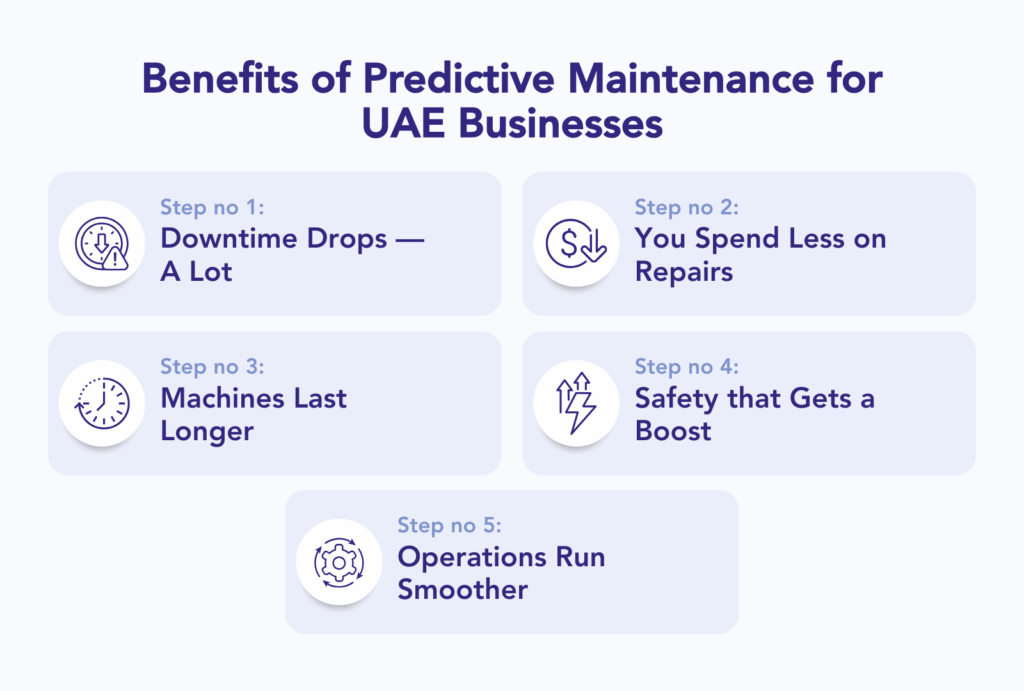
Benefits of Predictive Maintenance for UAE Businesses

It’s not just about avoiding breakdowns. Predictive maintenance is reshaping how UAE businesses manage their assets, operations, and budgets. For companies using fixed asset management services in Dubai and across the Emirates, the advantages are immediate and measurable.

Downtime Drops — A Lot

Things break — that’s normal. But with predictive tools built into fixed asset management software in Dubai, businesses can catch issues early. This reduces unplanned downtime by 30 to 40%, keeping operations smooth and clients happy. It’s especially valuable for companies relying on asset management services in sectors like logistics, energy, and infrastructure.

You Spend Less on Repairs

Emergency fixes are expensive; parts, labor, and wasted time all add up. But with fixed asset management service providers offering real-time monitoring, companies can avoid unnecessary costs. Predictive insights show what needs attention and when — no guesswork, no wasted maintenance.

Machines Last Longer

Harsh weather and high demand wear down equipment fast in the UAE. But with continuous monitoring and asset tagging services in Abu Dhabi or Fujairah, businesses can track asset performance and extend the life of critical gear. It’s a smart way to protect investments and increase ROI.

Safety Gets a Boost

In sectors like oil, gas, and construction, safety is non-negotiable. Using risk and asset management services, predictive tools detect potential failures before they become safety hazards, ensuring compliance with the UAE’s strict industrial standards.

Operations Run Smoother

By eliminating unexpected breakdowns, teams can schedule maintenance in advance. This is a major win for firms using asset reconciliation services in the UAE or working within zones like DTEC and Meydan Freezone. It streamlines workflows and keeps projects on track.

It Makes Financial Sense

Fewer repairs, smarter scheduling, longer asset life — it all leads to real savings. And when you link predictive systems with your fixed asset management services, you start seeing the bigger picture: where money’s going, what’s performing, and where the risks are hiding. That’s what drives ROI.

Industry Applications of Predictive Maintenance in the UAE

This stuff isn’t stuck in labs. It’s being used right now all across industries in the UAE. Here’s where it’s showing up and why it matters.

Oil and Gas

This sector can’t afford surprise failures. Pumps, turbines, compressors — if one goes down, it hits hard. ADNOC’s predictive maintenance project uses AI and IoT to keep track of over 160 critical machines. It’s already cut downtime and saved 20% in maintenance costs. That’s not a side benefit. That’s the whole point.

Manufacturing

Factories here are turning into smart factories. Not futuristic — just practical. Sensors collect data 24/7. AI spots problems before people can. Fewer shutdowns, fewer wasted parts, smoother production. A lot of them are starting to plug this into their fixed asset management software in Dubai to track performance across the board.

Construction and Contracting

Construction equipment breaks all the time — usually when you need it most. Some contractors are now using ADEPTS ERP tools to plan ahead. They’re not just fixing stuff after it fails. They’re tracking assets in real time, scheduling work around issues, and getting better at managing heavy gear in brutal environments.

Utilities and Smart Cities

Cities run on machines too — pumps, valves, grids, pipes. When one stops working, the whole system takes a hit. IoT sensors in these networks help predict failure early. That keeps water flowing, lights on, and complaints down. No one notices when everything works. That’s the goal.

Transportation and Logistics

Trucks and fleets get beat up in this climate. Sand, heat, long routes — they wear things down fast. Predictive maintenance lets companies see what’s falling apart before it does. Some are tying this into asset tagging services in Abu Dhabi to keep a tighter grip on where everything is and what condition it’s in.

Challenges and Considerations in Implementing Predictive Maintenance in the UAE

Of course, it’s not all smooth sailing. Predictive maintenance sounds great, but getting it up and running has real issues. There’s no point pretending otherwise.

It’s Not Cheap to Start

The upfront cost is high. Sensors, software, integration — it adds up. And most companies aren’t starting from scratch. They’ve got old systems in place. Trying to plug AI into legacy equipment? That’s not always simple. It takes time, testing, and people who know what they’re doing.

The Data Has to Be Clean and Safe

Predictive tools run on data. But bad data in equals bad predictions out. That’s a problem. Then there’s cybersecurity. You’re connecting machines to networks, exposing more surface for attacks. And let’s not forget privacy, especially in sectors like energy or transport, where sensitive infrastructure is involved.

There’s a Skills Gap

The tools are smart, but someone still needs to understand what the AI is saying. UAE companies are dealing with a shortage of people who can read the data, interpret the warnings, and make the right call. Training matters. Hiring matters. You can’t just install a dashboard and expect magic.

Local Rules Matter

Every country has its own way of doing things, and the UAE is no different. Companies need to follow local laws around data, compliance, and safety. That’s especially true when predictive tools are tied to fixed asset management services that involve financial reporting, audits, or public infrastructure.

ADEPTS’ Role in Empowering Predictive Maintenance Solutions in the UAE

If you’re serious about predictive maintenance in the UAE, you need more than just sensors and AI. You need someone who knows the region, the industries, and the systems already in place. That’s where ADEPTS comes in.


They’re not just another software vendor. ADEPTS is a UAE-based firm that understands both the financial side of operations and the reality on the ground — construction sites, industrial zones, energy plants. Their strength? Tying it all together through smart, flexible ERP solutions.


For firms managing physical assets, especially in construction and heavy industry, ADEPTS brings something crucial to the table: real-time visibility. Their ERP systems don’t just show you what’s broken. They help you see what’s coming, what’s at risk, and what it’s going to cost. It’s proactive, not reactive, making maintenance planning useful.


But here’s what really sets them apart: they don’t force generic solutions into complex environments. ADEPTS builds custom predictive maintenance tools tailored to each client’s needs, whether it’s a contractor managing 200 machines or an oil services firm juggling field assets across sites. They factor in UAE-specific regulatory needs, environmental pressures, and reporting standards from the start.


Let’s say a contracting company in Abu Dhabi wants to cut downtime on its fleet of mobile cranes and generators. With ADEPTS’ ERP-powered platform, they can track asset health, trigger service reminders based on actual wear and tear, and link it all back to cost centers. 


The result? Better decisions. Fewer surprises. And more control over how assets live, work, and eventually retire with the full weight of asset management services in Dubai integrated into the workflow.


ADEPTS isn’t just supporting predictive maintenance. They’re making it real, scalable, and useful in one of the most demanding business environments in the world.

Future of Predictive Maintenance in the UAE: Trends to Watch

This isn’t a passing trend. Predictive maintenance is only getting smarter, and the UAE is pushing it further.

AI Is Getting Better — Fast

Machine learning isn’t just spotting wear and tear anymore. It’s starting to predict entire failure chains. As digital twins evolve, we’ll see systems that simulate not just machines, but full operations. Some tools are even starting to handle scheduling fully autonomous maintenance decisions based on real-time conditions.

IoT and 5G Will Speed Everything Up

There will be more sensors, faster connections, and less delay. As 5G expands, the time between a machine heating up and someone being alerted will shrink to near zero. That kind of speed will change how teams respond and what they can prevent.

Not Just for Big Players

Until now, it’s mostly been oil, gas, and manufacturing giants. But that’s changing. As tech costs drop, SMEs in construction, logistics, and even retail warehousing are starting to plug predictive tools into their existing systems, often alongside basic fixed asset management services to stay lean but informed.

The UAE Is All In

Government strategy is helping push things forward. The Dubai Industrial Strategy 2030, for example, makes automation and digital transformation a national goal. Smart city projects across Abu Dhabi, Sharjah, and Dubai are already using predictive systems to monitor everything from water pumps to traffic signals.


What’s coming next? Fully connected ecosystems where equipment, teams, budgets, and maintenance schedules all talk to each other in real time. It’s not years away. It’s starting now.

Conclusion

Predictive maintenance isn’t just another upgrade — it’s a shift in how UAE businesses think about their equipment, their teams, and their future.


AI and IoT have changed the game. They take the guesswork out of maintenance and replace it with real-time data, smart decisions, and longer-lasting assets. For companies managing fleets, factories, or infrastructure, this shift means fewer breakdowns, lower costs, and better control.


But more than that, it’s a strategy. One that supports sustainability, sharpens competitiveness, and keeps businesses aligned with the UAE’s vision for innovation and growth.


The challenge? Getting it right. That’s where working with the right partner makes a difference. Companies like ADEPTS, with real local experience and deep ERP knowledge, help turn predictive maintenance from a buzzword into a real advantage. They don’t just plug things in they build solutions around your business.


For asset-heavy firms in the UAE, the message is simple: now’s the time. Stop waiting for problems. Start predicting them.

fAQ's

Condition-based maintenance waits for something to start going wrong, like a machine heating up too much, and then you act. Predictive maintenance is a step ahead. It watches long-term patterns and tells you before anything slips. It’s more proactive, less reactive.

It gets hot in the UAE. And dusty. So you need sensors that can take the heat. Vibration, pressure, and temperature sensors are common, but make sure they’re industrial-grade and sealed properly. Think IP67 or better. Otherwise, they won’t last long outdoors or on-site.

Definitely not just for big players. A lot of SMEs are already starting small — one machine, a few sensors, basic dashboards. It doesn’t have to be expensive upfront. You can even link it with simple fixed asset management services to track things better without a massive investment.

Plenty. A lot of companies jump in without clean data, or they don’t train their teams. Some try to bolt AI onto old systems without fixing the basics first. The biggest mistake is expecting results overnight. These systems learn over time, and they need some room to breathe.

Start tracking stuff that hurts your bottom line: breakdowns, emergency repairs, last-minute overtime, missed delivery deadlines. If those drop, you’re winning. Tools like asset reconciliation services in the UAE also help by showing you exactly what’s being saved and where.

Because not everything happens in one place, with the cloud, all your data, from sensors, machines, and teams, comes together in real time. No waiting, no messy files. It also makes scaling easier. Whether in Sharjah or Abu Dhabi, you see what’s going on live.

References


Dubai Industrial Strategy 2030. https://u.ae/en/about-the-uae/strategies-initiatives-and-awards/strategies-plans-and-visions/industry-science-and-technology/dubai-industrial-strategy-2030.

Related Articles​​

Industry Focus: Is Ajman Free Zone Right for E-Commerce Startups?

The UAE’s e-commerce engine isn’t slowing down. It’s growing at a double-digit pace, with projections pointing straight up through 2025. 


Mobile-first buyers. 


One-click logistics. 


A digital economy that’s making traditional retail sweat.


For startups chasing growth, that means one thing: pick the right launchpad — or get left behind. 


And when every dirham counts, your free zone choice can make or break your business.


So is Ajman Free Zone the one?


In this article, we’ll break down what makes it a serious contender for online entrepreneurs. From low setup costs to smooth licensing, we’ll see how AFZ stacks up — and whether it deserves a spot on your startup checklist.

What Makes a Free Zone Ideal for E-Commerce Startups?

Not all free zones are built for e-commerce. Some work well for factories. Others are better for holding companies. But if you’re running an online store, your needs are different.


You want low startup costs. Fast registration. Access to logistics. Smart tax relief. And zero red tape.


That’s where the cracks usually show.


Many founders face long waits, unclear licensing processes, and spiraling setup fees. The wrong choice can kill momentum before you even launch. That’s why understanding ajman free zone license requirements — or any zone’s rules — is a must before you commit.


For e-commerce startups, the perfect setup should offer:

  • Low-cost entry

  • A fast, digital-first process

  • Storage and logistics support

  • Easy company registration (or its equivalent)

  • And a business environment made for online selling

Generic free zones don’t cut it. You don’t want to settle for a broad package meant for anyone. What you need is a zone that truly understands the online model — not just offers a ajman free zone license and sends you off.


This is where places like Ajman Free Zone stand out. Their new initiatives are designed with online sellers in mind, not just traditional traders.


Because in a market this competitive, the right ajman free zone business setup isn’t a bonus — it’s survival.

Why Ajman Free Zone is worth looking at

Ajman Free Zone is not another business park that is hidden somewhere in the Emirates. It is quickly emerging as one of the most startup-friendly regions in the nation, in particular, the e-commerce entrepreneurs.


First, we should discuss about geography.


It is only 30 45 mins drive from Dubai. On the right of the Sharjah International Airport and Port Khalid. This implies that you have direct hook-ups in major shipping and delivery systems. Keeping track of inventory returns or other inventory that is directly shipped to your warehouse, location advantage will save money and time.


It is not all about access. The government has been going all the way on infrastructure ever since 2019. Well-designed office premises, intelligent warehouses, electronicized services have made Ajman Free Zone a formidable competitor to the contemporary online enterprise.


Legal clarity? Check.


In the zone, there is 100 percent foreign ownership, no personal and company taxation, and no custom duty on imported goods and exports. It is one of the best places where company formation in ajman free zone does not pose a challenge at all, nothing is grey, nothing is legally tricky.


It is also very easy to commence. To founders who require information about the requirements of a license in the ajman free zone, the procedure is transparent and virtual. You are allowed to apply online, select any of the business activities you want and you can launch without entering the UAE.

Ajman Free Zone’s E-Commerce License: What You’re Really Getting

In 2024, Ajman Free Zone made a bold move — launching exclusive e-commerce licenses built for startups. They rolled it out at Seamless Middle East, and it was clear: this isn’t just another trade license. It’s a tailored toolkit for online sellers.


If you’re thinking about ajman free zone business setup, the new e-commerce packages are worth a close look.


Let’s break it down.


Your ajman free zone license includes more than just registration. It can cover:

  • Online trading activity

  • Access to storage or warehousing

  • Delivery partnerships

  • And in some cases, visa quotas and shared workspaces

The best part? Everything is bundled to reduce startup friction. No need to chase ten vendors for the basics. And promotional discounts are often available if you sign up during campaign windows.


Here’s what typically affects your total cost:

  • Business registration and ajman free zone trade license fees

  • Number of visas

  • Size and type of workspace or warehouse

  • Optional services like accounting or legal add-ons

When compared to other hubs like DMCC or Sharjah Airport Free Zone, ajman free zone company setup stands out for its affordability. While DMCC has strong infrastructure, its license fees are higher and usually geared toward more mature companies. In contrast, ajman free zone company formation cost stays startup-friendly without cutting corners.


For early-stage e-commerce founders, that pricing flexibility matters.

Built for E-Commerce: AFZ’s Infrastructure Advantage

Running an online business means more than just a website. You need a base — and Ajman Free Zone delivers one that’s actually built for e-commerce.


Let’s start with storage.

  • AFZ offers smart warehouses with temperature control, 24/7 security, and easy access to major freight forwarding providers. Whether you’re storing skincare products or electronics, the space adapts to your inventory needs. That’s a game-changer compared to traditional storage units in other zones.


  • For early-stage startups, AFZ also cuts the cost of office space. You can pick from flexi-desks, coworking options, or virtual offices — all designed to keep your ajman freezone company setup lean without losing credibility.


  • Tech support is solid, too. Fast internet. Cloud services. And partnerships that make e-payment gateway integrations much smoother. You don’t have to spend weeks chasing vendors just to get your checkout page working.


  • On the logistics side, AFZ shines again. You can manage both B2B and B2C deliveries from one location. Even better? It supports cash-on-delivery, still the go-to payment method across many parts of the MENA region.

Put simply, if you’re thinking of ajman free zone business setup, you’re not just getting a license. You’re getting the tools to run and scale a real online business.

The Business Edge: Why E-Commerce Entrepreneurs Choose AFZ

It’s not just the location or the warehouses. Ajman Free Zone gives e-commerce startups a full business edge — one that simplifies operations and keeps your books clean.


Start with the obvious: zero corporate and personal tax. That alone takes a massive load off your monthly calculations. Add full capital and profit repatriation, and managing your money becomes way simpler — especially for founders working from abroad.


If you’re eyeing ajman free zone company formation, you’ll also appreciate the flexible visa options. Whether you’re going solo or hiring a small team, you can choose from single-visa to multi-visa packages and upgrade as you grow.


There’s more. Your ajman free zone license automatically includes membership in the Ajman Chamber of Commerce. That gives your startup local legitimacy and a network of other businesses to connect with, from logistics partners to wholesalers.


Need to trade beyond the UAE? AFZ supports cross-border e-commerce and helps with customs facilitation — making it easier to sell across the GCC. That kind of access is critical if you’re aiming to scale quickly.


And if you’re thinking bigger, AFZ lets you go beyond a basic entity. You can set up a holding company, register a branch office, or even restructure your ajman company registration later on to suit your expansion plans.


In short, this isn’t a one-size-fits-all solution. It’s flexible, founder-friendly, and built for scale.

Ajman Free Zone’s Place in the UAE’s E-Commerce Future

Industry Focus: Is Ajman Free Zone Right for E-Commerce Startups?

Ajman isn’t just keeping up with the UAE’s digital shift, it’s helping lead it.


Through Smart Ajman, the emirate is rolling out digital trade tools, e-government platforms, and paperless licensing. And Ajman Free Zone is right at the center of it.


AFZ has gone beyond just offering licenses. It’s building an entire startup ecosystem. That includes:

  • Innovation hubs
  • Incubators for early-stage founders
  • And accelerator programs geared toward e-commerce and tech startups

If you’re considering ajman freezone company setup, this ecosystem can give your startup more than a legal presence — it gives you mentorship, support, and a platform to grow.


The zone also works closely with fintech companies and payment facilitators, making it easier and safer for startups to set up payment gateways and manage online transactions. That’s a huge win in a region where trust and payment friction can still slow sales.


AFZ’s role in the UAE’s broader digital transformation makes it stand out from older, more traditional zones. It’s not just about land and licenses anymore — it’s about building fast, connected, scalable businesses.


And it’s already happening.


Several successful startups — from niche online stores to regional e-commerce platforms — have launched from ajman free zone company setup plans and grown far beyond what they expected. These aren’t unicorns yet, but they’re proof the zone works.

How ADEPTS Empowers E-Commerce Startups in Ajman Free Zone

Let’s be honest, setting up a business in a free zone can feel like a maze. One form missed, one wrong license type, and you’re stuck.


That’s where ADEPTS comes in.


ADEPTS has built a reputation for being the go-to team when it comes to ajman free zone company formation — especially for e-commerce businesses. Their team doesn’t just tick boxes. They understand the nuances of selling online in the UAE and what that means from day one.


They help startups choose the right ajman free zone license, prepare business plans that get approved fast, and handle visa processing with zero guesswork. Whether you’re a solo founder or building a team, they guide you through ajman free zone license requirements without the overwhelm.


Need the most cost-effective package? ADEPTS knows what’s on offer, what’s hidden in the fine print, and how to get startups the best value for their budget. For founders worried about ajman free zone company formation cost, this insight saves serious money.


But it doesn’t stop at setup.


ADEPTS offers post-launch support, too — from financial advisory and corporate tax guidance to local market strategies and compliance help. Their ongoing support means you’re not left figuring things out alone once your business is live.


Bottom line: if you’re serious about ajman free zone business setup, working with ADEPTS is more than helpful. It’s smart business.

Step-by-Step: How to Launch Your E-Commerce Business in Ajman Free Zone

Ready to get started? Here’s how to move from idea to launch — fast and with minimal red tape.

1. Define Your Business Activity and Choose the Right License

First, confirm that your planned e-commerce activity is allowed in the zone. Then select the best-fit ajman free zone license. This step is crucial — the wrong activity code can delay approvals later. ADEPTS helps you match your offering to the right license with zero trial-and-error.

2. Gather and Submit Your Documents

You’ll need passport copies, a basic business plan, and a tenancy contract (if you’re not using a virtual office). This is where working with experts familiar with ajman free zone license requirements saves time — the paperwork needs to be clean and complete.

3. Get Initial Approvals and License Issuance

Once submitted, the process moves fast. Most ajman free zone company registration cases are approved in a few working days. Your trade license is issued digitally, which means you don’t need to be physically present in the UAE to get started.

4. Choose Your Workspace and Apply for Visas

Pick between a flexi-desk, private office, or warehouse — depending on your needs. Then apply for visa quotas as needed. ADEPTS helps align your ajman free zone company setup with the right visa structure, so you don’t overspend early on.

5. Open a Corporate Bank Account and Set Up Payments

With your license and visa in hand, you can open a UAE bank account. ADEPTS connects clients with e-commerce-friendly banks and payment gateway providers, helping speed up transaction setup.

6. Launch Your Store

Now it’s go-time. Upload your products, activate marketing, and tap into Ajman Free Zone’s logistics ecosystem. Whether it’s last-mile delivery or cash-on-delivery setup, you’ll find partners ready to support your launch.

Some Things to think about Before You Commit

Ajman Free Zone is good, indeed, it has a lot going on its side but a free zone will not suit every person.


Provided you are creating a brand that would be recognized internationally, you may see that Ajman Free Zone lacks the weight and authority that Dubai has in the best-tier hubs. Although this does not change your licence and legal status, brand perception is relevant in terms of collaboration with heavy-hitters and securing investments in foreign countries.


One has also to consider geography.


Even though Ajman is only 30-45 minutes away from Dubai, the physical distance that Ajman is may also influence how long it takes to deliver last-mile completions, particularly when your most important market is within the regions of Dubai with fast delivery. In the case of certain logistics-intensive e-commerce schemes, the additional leg is important.


Once you have decided to secure yourself an ajman free zone business setup, sit back and evaluate scalability. Is it possible to expand your existing model throughout the UAE and GCC based on this base? Will your configuration allow future growth or will you have to change shape in the future?


Getting legal advice in advance is also a good idea too especially in regard to import/export regulations. There are product types with limitations or added customs procedures. Notice of small detail now, to avoid big delay later in your process of company registration in the city of ajman.


As it were, Ajman Free Zone is a formidable offer, but obviously, as is with the case in making a wise decision, it should complement your business, not the opposite.

Final Thoughts: Is Ajman Free Zone the Right Launchpad?

If you’re a startup founder or small online retailer looking to break into the UAE’s booming digital economy, Ajman Free Zone offers serious upside.


Low setup costs. Simple processes. A strong logistics base. And government-backed support designed specifically for e-commerce.


Whether you’re testing your first product or scaling a niche store, the zone checks all the right boxes — especially for cost-conscious SMEs and first-time entrepreneurs who need to get moving fast without draining their budgets.


From flexible ajman free zone license requirements to bundled packages and visa support, AFZ removes the friction most founders face. And when paired with expert support, the journey gets even smoother.


That’s where ADEPTS makes a difference.


They know the setup inside out — from picking the right license to navigating corporate tax, trade regulations, and real-world growth strategy. If you want your ajman free zone company setup to be clean, fast, and future-ready, a conversation with ADEPTS is a smart first step.


The opportunity is here. The tools are in place. All that’s left is to start.

fAQ's

AFZ allows a wide range of e-commerce activities, including retail, wholesale, digital services, and marketplace models. During your ajman free zone company formation, you can choose the activity that best fits your store — from fashion and electronics to niche subscription boxes.

Yes. AFZ offers virtual office and flexi-desk options that allow full online operations without needing a physical storefront. It’s ideal for lean startups and remote founders looking for affordable ajman free zone business setup options.

License renewal is usually quick and fully digital. If your documents and payments are in order, the ajman free zone license renewal can be completed in 1–3 business days, often without in-person visits.

AFZ supports cross-border trade, including exports to the GCC. However, depending on your product type, you may need customs clearance or permits. It’s best to consult ADEPTS to ensure your ajman company registration covers your full operational scope.

While AFZ doesn’t run marketing campaigns for startups, it does offer access to startup accelerators, digital advisors, and events that help build visibility. ADEPTS also connects founders to trusted partners for SEO, ads, and branding.

Yes, foreign founders can legally register more than one business across multiple zones. Just ensure each ajman free zone company registration or other license is compliant with its zone’s rules, and manage tax obligations accordingly.

Both models are supported. You can set up a dropshipping operation using a digital license, or opt for warehouse facilities if managing stock. ADEPTS helps you select the most efficient ajman free zone license for your model.

Once your revenue hits the UAE VAT threshold, registration is mandatory. AFZ provides basic guidance, and consultants like ADEPTS help manage VAT registration, invoicing, and tax filing — essential as corporate tax rules expand across e-commerce.

References

Related Articles​​

UAE’s FTA Doubles Down: 85,500 Inspections, Dh357 Million Collected in H1 2025

The UAE’s Federal Tax Authority (FTA) made its mark in the first half of 2025. It doubled inspections and raked in Dh357.22 million in taxes and fines. The push was clear: boost compliance, protect consumers, and squash tax evasion.


That Dh357 million haul isn’t just a bigger number , it’s indeed a massive 86% jump from the same period last year. Behind it were 85,500 inspections carried out across every emirate, more than twice the 40,580 checks in early 2024. This scale of enforcement, paired with record seizures of non-compliant goods, shows how aggressively the FTA is moving to tighten tax compliance in the UAE’s evolving regulatory landscape.

Inspection Campaign Surge

The FTA’s inspection teams have been everywhere this year. In the first six months of 2025, they carried out 85,500 field visits. That’s not just a busy schedule, it’s 110.7% more checks than in the same period last year, when the number stood at 40,580.


This wasn’t confined to one hotspot. The campaign stretched across all seven emirates, from big commercial hubs to smaller markets. Inspectors targeted retailers, warehouses, distribution centres, and any corner of the supply chain where non-compliant goods could appear.


The sheer volume of visits signals intent. It shows a national-scale operation that leaves little room for tax evasion to hide. Whether you run a small shop in Fujairah or a logistics hub in Dubai, the message is the same: the FTA is watching, and it’s watching everywhere.

Significant Increase in Tax Collection

The inspections didn’t just make noise. They brought in money. In the first half of 2025, the FTA collected Dh357.22 million in taxes and fines. That’s Dh165 million more than the same period last year, an 86 per cent jump.


It’s not a small gain. It’s a big injection into national revenue, the kind that funds services, infrastructure, and future projects. And it sends a clear message: if you dodge tax rules in the UAE, you’ll pay—one way or another.

Seizure of Non-Compliant Excise Goods

Non-Compliant goods have no relaxation this time. They were seized with the greatest zeal. The FTA nabbed over 17.6 million packs of illegal or dodgy excise goods. That’s up 144.4% from 7.2 million packs in the previous year.


Breakdown:

  • 11.52 million tobacco packs without digital tax stamps or registration—double the previous year’s 5.52 million.

  • 6.1 million excise goods—soft drinks, energy drinks, sweetened beverages—3.5 times more than the 1.74 million seized in H1 2024.

These aren’t minor infractions. They’re wholesale attempts to bypass regulation.

Technology and Inspection Strategies

FTA has used the latest technologies in its recent operations. Sending out its people would not have been enough. Especially when technology is so advanced and businesses can easily evade the old policies and catching mechanisms. 


FTA decided to lean on digital monitoring tools to track down smuggled and untaxed products effectively. That includes smart scanning and tracking systems integrated into field operations 

The goal was simple – Transparent markets. Better consumer protection. Cleaner compliance.


Sara AlHabshi, Tax Compliance Executive Director at the FTA, put it in human terms:


“We use the latest digital tech to strengthen compliance and boost action speed. Continuous inspections – with partners across the UAE – raise governance and transparency. We’re focused on keeping non-compliant products off our shelves.”

Wider Tax Environment in UAE 2025

This crackdown comes against a backdrop of broader reform. UAE is strengthening its business environment. New Corporate tax rolled out in 2023. Mandatory e-invoicing is now active. Firms are navigating a new landscape in tax compliance. There is no room for tax evasion anymore. The UAE is trying to build a safe and trustworthy safe haven for international businesses and tax compliance is a big part of the process.


FTA is sending a message: flouting the rules won’t be tolerated in this new era.

Conclusion

FTA’s crackdown in H1 2025 was no half-step. Doubled inspections. Dh357 million collected. 17.6 million excise goods seized. It’s enforcement powered by tech and resolve. Tax compliance matters. It funds services, keeps markets clean, and protects people. Expect FTA to stay sharp and keep pressure high through the second half of 2025.

Related Articles​​

Step-by-Step Guide: Setting Up Your Ajman Free Zone Company Remotely

Sick of paperwork, endless calls, and unclear rules just to launch a business?


You’re not alone.


Starting a company in the UAE shouldn’t feel like a maze. And guess what? It doesn’t have to.


Ajman Free Zone (AFZ) is built for people who want speed, control, and zero-nonsense company setup, even from thousands of miles away. Whether working from Karachi, London, or Toronto, remote setup is not only possible — it’s designed for you.


With low costs, full ownership, and flexible activities, AFZ has become a go-to launchpad for global entrepreneurs. And because of recent digital upgrades, getting your Ajman Free Zone license is now faster than ever. No embassy runs, no courier delays.


But here’s where most people get stuck:

  • They’re not sure where to start.
  • They’re unsure about the Ajman free zone license requirements.
  • They don’t know how much the Ajman free zone company formation cost will actually be.
  • And navigating the Ajman company registration process remotely? That alone can feel overwhelming.

That’s where ADEPTS comes in. We cut the clutter and walk you through every step of your Ajman free zone business setup. We help you choose the right package, submit the right documents, and make your Ajman free zone company setup a breeze — all without leaving your couch.


In this guide, you’ll learn exactly how remote Ajman free zone company formation works — minus the jargon. Let’s turn your business idea into a real company. Remotely.

What Sets Ajman Free Zone Apart?

Let’s be real. Most business zones make things harder than they should be. Ajman Free Zone flips the script.

Here’s why smart founders are choosing AFZ for remote setups:

  1. Full control, no middlemen

You get 100% foreign ownership. No local sponsor. No silent partner. Your company stays yours.

  1. Business freedom, your way

Whether you’re into digital services, e-commerce, trading, or manufacturing — the Ajman free zone license requirements cover a wide range of activities. That means fewer restrictions and more room to grow.

  1. Start lean, scale smart

No need to rent an office or pump in big money. You can register with minimal capital and no physical presence — ideal for startups testing the waters.

  1. Logistics that actually work

AFZ is positioned close to Ajman Port, and just a short drive from both Dubai and Sharjah airports. That’s a serious plus for importers, exporters, and international service providers.

  1. Built for remote founders

The entire Ajman free zone company formation process is digitized. From registration to banking and visas, you can handle it all online. AFZ also offers value-added services, like help with corporate bank accounts, VAT registration, and business insurance, to keep you moving forward.

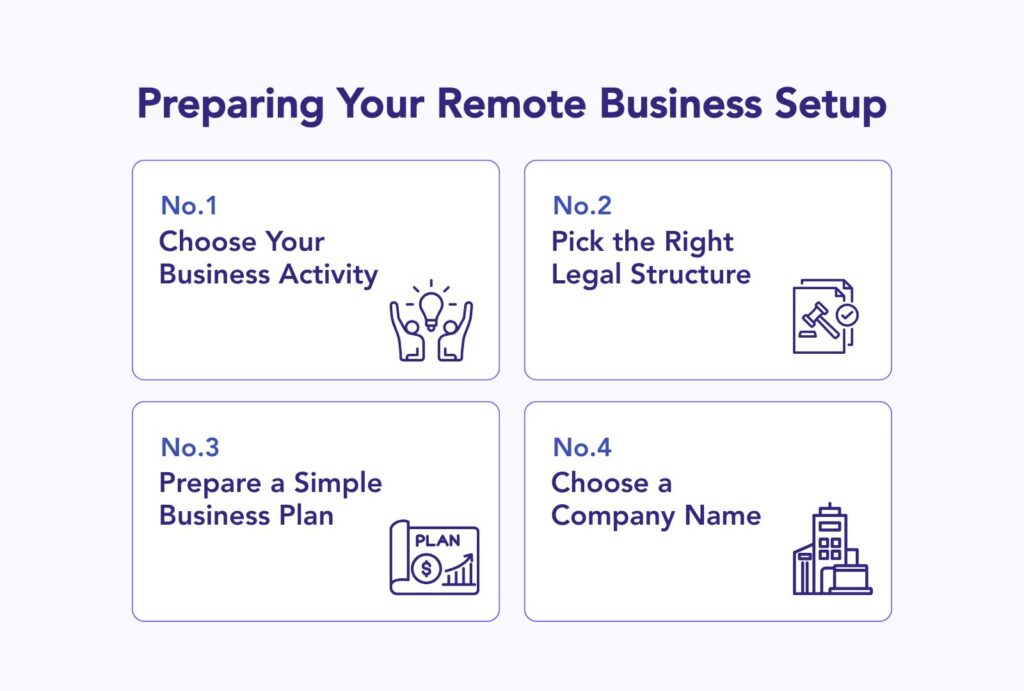
Preparing Your Remote Business Setup

Step-by-Step Guide: Setting Up Your Ajman Free Zone Company Remotely

Before you fill out a single form, you need to make a few smart decisions. These early steps shape everything, from what kind of license you’ll get to how fast your business can launch. 


Let’s break it down:

1. Choose Your Business Activity

The first step in your Ajman free zone company formation is selecting what your business will actually do.


Ajman Free Zone allows a wide range of activities, including trading, industrial, service-based, and e-commerce. But you can’t just pick anything. Your chosen activity must be listed in AFZ’s approved list. 


For example:

  • Selling clothing online? You’ll need an e-commerce or trading activity.

  • Offering graphic design services? That’s a professional service.

Getting this part right ensures that your license covers what you want to do and that you stay compliant with the Ajman free zone license requirements.

2. Pick the Right Legal Structure

This is about how your company will be owned and managed. In Ajman Free Zone, you have three choices:

  • Free Zone Establishment (FZE) – For solo entrepreneurs. Just one shareholder.

  • Free Zone Company (FZC) – For partnerships. You can have 2 to 50 shareholders.

  • Branch – If you already own a company elsewhere (in the UAE or abroad), this lets you open a branch under the same name.

Each structure has its own pros and cons depending on your funding plans, ownership, and long-term goals. But the good news? All options still offer 100% ownership — no local sponsor needed.

3. Prepare a Simple Business Plan

You don’t need a 50-page pitch deck. But you do need a clear plan.


Think about:

  • What does your business offer?

  • Who are your customers?

  • How will you deliver your product or service remotely?

  • How will you market and grow?

A good business plan helps speed up your Ajman company registration and makes it easier to open a bank account later. We help our clients draft solid, clean plans that check all the right boxes.

4. Choose a Company Name

Your company name matters — and yes, the UAE has rules.


Here’s what to keep in mind:

  • No religious, political, or offensive words

  • No abbreviations (e.g., “A.J. Tech” won’t fly)

  • It must reflect your business activity if possible

  • You’ll need to submit 2–3 name options for approval

Once the name is cleared, you can reserve it and move ahead with the application.

Documentation Required for Remote Registration

Step-by-Step Guide: Setting Up Your Ajman Free Zone Company Remotely

One of the biggest perks of Ajman free zone business setup is that you don’t need to be physically present. But remote or not, your paperwork needs to be in order. Here’s what you’ll need to submit to get started with your Ajman free zone company formation :

1. Passport Copies

All shareholders and the company manager must submit valid passport copies. The passports should not be close to expiring. Ideally, they should have at least 6 months left.

2. Passport-Size Photos

You’ll need clear passport-size photos (with a white background). These are used for your file, Emirates ID (if applying for residency), and visa processing.

3. Basic Contact Details

This includes your:

  • Residential address (anywhere in the world is fine)

  • Mobile number

  • Email address
    This information is used for official communication and will be part of your Ajman free zone registration file.

4. Business Activity and Name

You must confirm your chosen business activity (which should align with Ajman free zone license requirements) and provide 2–3 preferred company names for approval. Make sure the name follows UAE naming rules — no offensive or religious terms, and nothing misleading.

5. Power of Attorney (POA)

If you’re using a consultant or PRO service like ADEPTS to handle the registration on your behalf, you’ll need to issue a Power of Attorney. This lets us submit your documents and act as your representative throughout the Ajman free zone company setup process.


Once your documents are ready, you’re good to move forward. The exact list might change slightly depending on how your company is set up — whether it’s just you, a few partners, or a branch of an existing business. But for most people setting up remotely, this list covers it.


Not sure how to organize it all? ADEPTS guides you through it, step by step.

Step-by-Step Remote Company Registration Process

Setting up a company remotely in Ajman Free Zone is easier than most people expect. If your documents are ready and you’ve chosen the right structure, the entire process can take as little as 1 to 3 working days.


Here’s how it works — step by step.

Step 1: Submit Your Application Online

Start with the basics. Visit the Ajman Free Zone’s digital portal and submit your initial application. You’ll choose your business activity, legal structure (FZE, FZC, or branch), and upload your key documents. This is the first move toward your Ajman company registration.

Step 2: Wait for Preliminary Approval

Once the AFZ team reviews your submission, you’ll receive an approval email. This confirms that your business activity and proposed trade name meet the zone’s requirements, giving you the green light to move forward.

Step 3: Sign and Send Your Documents

You’ll now need to sign a set of legal documents — digitally or on paper, depending on your situation. If you’re overseas, you can notarize and courier them to Ajman. Using a PRO service like ADEPTS? We handle this step for you under Power of Attorney.

Step 4: Pay the Fees Online

Now comes the financial part. You’ll pay the company registration fee, licensing cost, and your office lease fee — all online. Don’t worry, the total Ajman free zone company formation cost is still one of the most competitive in the UAE.

Step 5: Get Your Trade License

Once payment clears, your Ajman free zone license will be issued — usually within 1 to 3 business days. You’ll receive it in digital format, ready to download and use. This is the moment your company officially exists.

Step 6: Complete Business Registry

Your business now gets added to the official AFZ registry. This finalizes your Ajman free zone company formation and makes you fully compliant with local regulations. From here, you can start operating right away.

Step 7: Open Your Bank Account

Next up is opening your corporate bank account. Some UAE banks now support non-resident openings, and ADEPTS works with trusted banking partners who specialize in Ajman free zone business setup. We’ll help you prepare the paperwork and choose the right bank for your needs.

Step 8: Apply for Visas Remotely

If you need a UAE residency visa — for yourself or your team — you can apply online. ADEPTS handles visa documentation, medical appointments, and Emirates ID processing. The number of visas depends on your license type and office space.


Setting up your company remotely doesn’t have to be stressful — not when you know each step and have a team backing you up. Whether you’re launching a side hustle or building a full-scale operation, Ajman free zone company setup offers the speed, control, and cost advantage most founders are looking for.

Choosing Your Office Space and Lease Remotely

Starting a business in the Ajman Free Zone doesn’t mean you have to be physically present from day one. One of the biggest advantages here is flexibility, especially when it comes to choosing your office space.

What Kind of Office Can You Get?

Your business setup should match the way you operate, whether you’re starting lean or going big from day one. Here are a few practical options you can explore:

  • Flexi-Desks
    Ideal for businesses that don’t need a physical office every day. These shared workstations give you a business address, access to meeting rooms, and a legal base without the cost of a full-time setup.

  • Private Executive Offices
    If you’re after a dedicated space to work, meet clients, or just maintain a more established presence, these fully furnished offices offer comfort, privacy, and everything ready to go.

  • Warehouses and Ready Units
    Perfect for companies in logistics, distribution, or light manufacturing. These units are designed for storage, operations, or processing and come with the infrastructure you need to get started quickly.

  • Industrial Land Plots
    Planning to build your own facility or expand on your own terms? You can lease plots of land for long-term development, tailored to large-scale manufacturing or custom setups.

Can You Do All This Remotely?

Yes, you can lease an office without ever flying in. Ajman Free Zone offers virtual office options, which means:

  • You can get a registered business address

  • You’re eligible to apply for licenses and visas

  • You don’t need to be in the UAE during setup

How ADEPTS Helps

Our team at ADEPTS walks you through this entire process. We help you:

  • Shortlist the most suitable options

  • View office layouts and videos

  • Finalize your lease agreement—digitally

We also make sure you’re getting a fair deal. From negotiating terms to reviewing contracts, we represent your interests like we’re part of your own team.


So even if you’re halfway across the world, you’ll feel like you’ve made a confident, informed decision, without ever leaving your couch.

After Registration and Launch

Once your company is officially up and running, what comes next? This is where the real work begins, but thanks to Ajman Free Zone’s remote-friendly ecosystem, you can manage most post-launch tasks from anywhere.

Keeping Your Business Compliant

Staying compliant is more than just a one-time task. It’s about:

  • Setting up proper bookkeeping and accounting systems

  • Making sure your business meets the UAE’s legal and tax obligations

  • Renewing your license and visas each year on time

ADEPTS helps you stay ahead of deadlines and takes care of filings so you never miss a renewal window.

Support Services That Keep You Moving

Ajman Free Zone offers a range of support services to help you scale smoothly:

  • Bank account setup: We help guide you through the process, even with remote onboarding for select banks

  • Insurance coverage: From health to asset insurance, you can get what your business needs with expert help

  • PRO and immigration assistance: Whether you’re applying for visas or dealing with government approvals, help is just a call away

ADEPTS coordinates directly with these services so you can focus on growing the business while we handle the local red tape.

Building Your Brand Online

Now it’s time to let the world know you’re open for business. Whether you’re targeting UAE customers or international ones, your digital presence matters. Start by:

  • Launching a clean, mobile-friendly website

  • Creating business pages on LinkedIn, Instagram, and Google Maps

  • Optimizing your content to reflect your offerings and attract the right audience

Need help? ADEPTS partners with digital specialists who understand how to position new UAE-based businesses online, giving you a head start in competitive markets.

Why Work with ADEPTS When Setting Up Remotely in Ajman Free Zone?

Forming a business from overseas sounds complicated, but it doesn’t have to be. With ADEPTS, you’re not just hiring a service provider; you’re teaming up with professionals who’ve done this hundreds of times for entrepreneurs just like you.


We walk you through the entire process, without any delays. Every step, from choosing the right company type to getting your license, is handled carefully and quickly.

Here’s what working with ADEPTS feels like:

  • Everything’s Handled for You
    You don’t have to fly in, run around, or figure out government portals. We take care of all the paperwork, submissions, and follow-ups—remotely.


  • We Know the System Inside Out
    Our consultants are based in the UAE and understand every shortcut and requirement. That means less time wasted and faster approvals.


  • Beyond Setup: We Stay with You
    Banking, visa support, office selection, contract negotiations—we’re here for all of it. You’ll never be left figuring things out on your own.


  • Solutions That Fit You, Not the Other Way Around
    Every business is different. We tailor our packages to suit your goals, whether you’re setting up a small online service or a distribution company.


  • Always Available, Always Clear
    You’ll never wonder what’s next. Our team is responsive, transparent, and ready to jump on a call, no matter your time zone.


ADEPTS isn’t just about getting your company registered. It’s about making sure you have the confidence, tools, and support actually to run it—and grow it—from wherever you are.

fAQ's

Yes, you can. As long as your Ajman Free Zone company meets renewal deadlines and stays compliant, you’re good to go. Many expats and non-residents run their UAE-based businesses completely online without ever needing to move here.

Each year, you’ll need to renew your trade license, pay the renewal fee, and ensure your lease agreement is active. If visas are attached, those need updates too. It’s a straightforward process and can be handled remotely.

Ajman Free Zone offers fast licensing, flexi-desk options, and e-commerce-friendly services. They’ve made it easy for digital businesses to get started, especially for tech entrepreneurs who want quick access to payment gateways and low-cost setup packages.

There’s no corporate or income tax for most Ajman Free Zone businesses. VAT may apply depending on your business type. Many companies also use their Ajman Free Zone license to apply for a UAE Tax Residency Certificate.

You sure can. Ajman Free Zone allows activity changes online. It involves updating your license and documents, but the process is quite smooth—especially if you’re working with a consultant who knows the steps inside out.

Ownership changes are doable, even from outside the UAE. You’ll need to submit new shareholder documents and get approval from the Ajman Free Zone authority. With the right guidance, it doesn’t take long to process.

References

‘Types of Business & Registration at Ajman Free Zone’. AJMAN FREE ZONE, https://afz.gov.ae/en/start-your-business/type-of-business.html.

Related Articles​​

The Role of Financial Flexibility in Capital Structuring for Startups and SMEs: A UAE Perspective

Starting a business in the UAE isn’t a straight shot. One month you’re growing fast, then suddenly you’re stuck chasing payments or shifting rules. That’s why financial flexibility matters so much. Being able to reshape your mix of business funding, adapt to shocks, and grab new chances on the fly is what keeps businesses breathing here.


Founders across the Emirates are now learning that it’s not just about money, it’s about control and timing. Knowing how to get funding for a business without locking yourself in or giving up too much too early is gold. A setup that lets you bend without breaking gives you power. That’s what real growth needs now.

The UAE Startup and SME Ecosystem

Everyone talks about unicorns and big money, but that’s not the real picture. What’s happening in the UAE is all the small guys quietly building stuff that works. Cafés, logistics tools, health apps, even street fashion. These aren’t backed by millions. Most of them are just figuring out business funding week by week, hoping something clicks before they burn out.

SME Significance

Right now, more than 94 percent of all businesses in Dubai fall under the SME tag. They feed over 60 percent into the non-oil economy. That’s wild. But even with that size, most of them are just trying to survive. No deep runway, no investor calls. Just invoices, expenses, and the grind.

Funding Landscape

The truth? Small business funding here is a slow game. Banks want to see three-year reports and clean statements. Most startups barely have one year figured out. Without some kind of help early on, many never scale or even get noticed. The ones who do usually had a backup or got lucky.

Government Initiatives

Okay, so the government is trying. There’s Vision 2030 stuff, grants, innovation hubs. You’ve got programs for clean energy, fintech, even food tech. Sounds solid on paper. But most founders don’t even know where to begin. The process? Kinda messy. And the awareness? Still too low.

Capital Structuring: Key Concepts

Most people chase money without really asking what kind of money they’re chasing. That’s where things go sideways. Building the right capital structure means you don’t just grab whatever’s available, you shape it to fit. The mix could be debt, equity, even weird in-betweens like royalty-based capital. What matters more is how it reacts when pressure hits.

Flexible Capital Structures

A smart setup doesn’t rely on just one lifeline. The best founders blend equity with non-dilutive funding, like grant money or support from UAE innovation programs. You’ve got revenue-based financing too, where payback is tied to performance, not fixed dates. This is where solid investment advisory really matters like this business investment consultancy in Dubai that helps founders understand how to stack options without losing control.

Dynamic Adjustment

No capital plan should stay frozen. What works during early traction won’t hold when you’re scaling or hitting a dry quarter. Retail moves differently than SaaS, and deep-tech demands way more patience. Great founders learn to adjust. Some even loop in proper business valuation services early on, just to keep a pulse on their worth as they reshape their stack.

Why Financial Flexibility Matters

The Role of Financial Flexibility in Capital Structuring for Startups and SMEs: A UAE Perspective

Let’s face it, things rarely go as planned. That’s where financial flexibility becomes your best asset. You can pause, shift, rebuild, and go again without scrambling for survival. It’s not just about having more money. It’s about having options when you need them most, whether that’s scaling fast or cutting back without falling apart.

Resilience

When downturns hit or markets shift, flexible business funding helps you move, not freeze. It’s what separates brands that hold the line from those that crash and burn. Whether you’re cutting costs or jumping into new opportunities, you need a setup that bends, not breaks. This is something UAE SME governance models are starting to take seriously not just structure but adaptability.

Growth

Funding too early can kill your leverage. Flexibility lets you grow without signing off equity to misaligned backers. You want capital that matches your stage, not just cash with strings. The smartest founders are playing the long game, scaling when they’re ready, not just when investors say so.

Innovation

When capital isn’t tied up in rigid terms, you can actually build. You can test new tech, hire better people, chase new markets. Innovation doesn’t thrive under stress, it needs space. A flexible setup creates that space, and often, founders who work with strong feasibility and planning teams stay far ahead of their competition because they plan with breathing room built in.

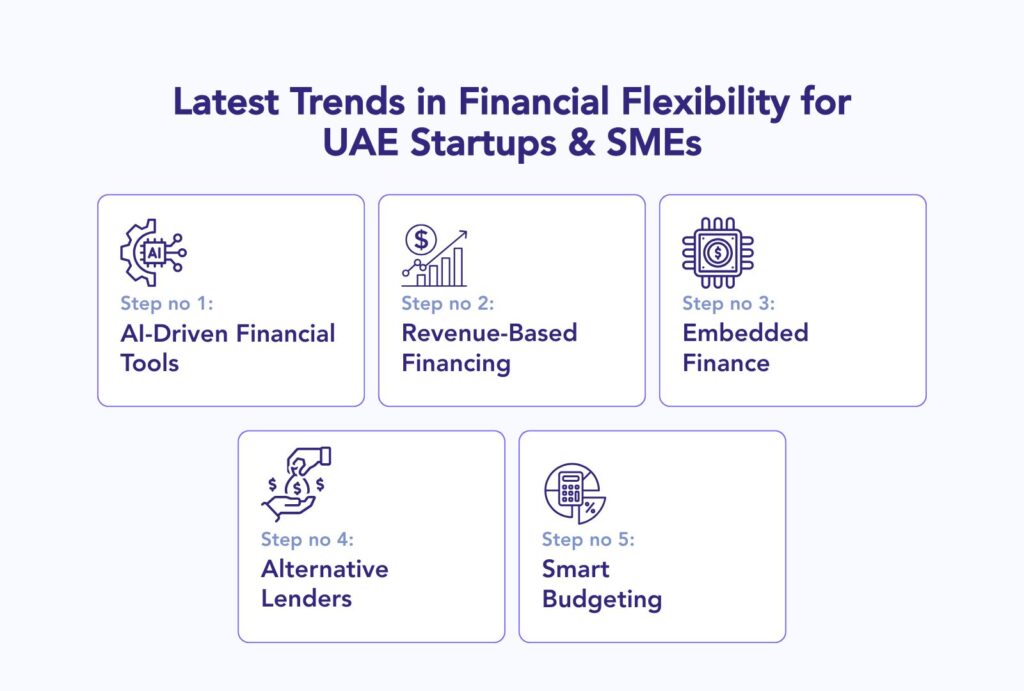
Latest Trends in Financial Flexibility for UAE Startups & SMEs

The Role of Financial Flexibility in Capital Structuring for Startups and SMEs: A UAE Perspective

Across the UAE, the shape of financial flexibility is shifting. Startups and SMEs are no longer boxed into static loan agreements or fixed capital paths. Instead, a layered approach is emerging, one that adapts to growth cycles, revenue patterns, and platform-based integration. These trends reflect both global momentum and local readiness, especially within Dubai’s expanding SME landscape.

AI-Driven Financial Tools

Predictive dashboards and real-time cash tracking tools are increasingly used by UAE founders. These systems don’t just monitor flows, they guide decisions. For SMEs operating with slim margins, this accuracy helps prevent overspend and protects liquidity. With support from structured business planning services, such tools are now seen as essential for risk-adjusted growth.

Revenue-Based Financing

As flexible repayment gains ground, this model has found strong relevance in e-commerce, SaaS, and service startups. Instead of rigid monthly cycles, payments rise or fall with business performance. It limits strain during low cycles and rewards strong months. Many expert investment advisory consultants now cite this as a middle path between equity and conventional debt.

Embedded Finance

Accessing credit is no longer tied to a separate application process. Within UAE platforms, especially in logistics and fintech, credit lines are being embedded directly into payment and billing systems. This speeds up decision-making while improving access, especially for startups too new for bank-grade vetting.

Alternative Lenders

Private credit firms and digital lenders are becoming key players across the region. Their lending models move faster, ask for less in guarantees, and often come with terms shaped for specific industries. A growing number of UAE SMEs now lean on business investment consultancies to break things down, compare options, and move quickly when the window’s short and flexibility really matters.

Smart Budgeting

Budgeting isn’t what it used to be. Models like the 50/30/20 rule are being tailored for SME use in the UAE, balancing operational expenses, strategic reinvestment, and emergency buffers. With uncertain payment cycles and high growth demands, a structured internal allocation system supports both control and agility.

Practical Strategies for Building Financial Flexibility

In today’s shifting UAE landscape, financial flexibility is foundational. Startups and SMEs must go beyond survival thinking and build funding strategies that bend without breaking. That means layering resources wisely, reacting early, and knowing when to shift course. It’s no longer about just raising capital, but about managing the right kind of capital at the right time.

Diversify Funding Sources

The most resilient firms tend to avoid putting all their capital eggs in one basket. Instead of leaning too heavily on equity or loans, UAE companies are creating smart mixes. That might mean debt blended with alternative financing, or equity topped up with innovation grants. Some seek help through business investment consultancy to shape a more balanced stack. The goal? Spread risk and open doors to quicker pivots when needed.

Optimize Cash Flow

Even with strong revenue, poor cash flow can sink a firm fast. That’s why startups are automating core finance functions, invoicing, collections, expense control. But tools alone aren’t enough. It’s the insights from real-time tracking that matter. Many firms align this process with business plan and feasibility advisory to stay one step ahead of shortfalls or slowdowns.

Tailor Capital Structure to Business Goals

Your funding strategy should echo your business path. Early-stage firms often lean on grants for R&D. Scaling firms might pick revenue-based loans to avoid pressure. One mistake many make? Giving away equity too early. UAE ventures are learning to avoid over-dilution by blending non-dilutive and milestone-based tools instead. Some even lean on investment advisory services to shape longer-term capital maps that flex with growth.

Strengthen Financial Planning

Financial planning has evolved from fixed budgets to fluid frameworks. The 50/30/20 rule now echoed in UAE policy circles gives startups a solid base to track cost categories. Still, it only works when reviewed often. Leading SMEs revisit structure quarterly, tweaking allocations as markets shift. When synced with modern SME governance models, this planning approach builds stability and room to move.

Overcoming UAE-Specific Challenges

Funding isn’t just about raising capital in the UAE. It’s about knowing where the roadblocks lie and how to navigate them without losing momentum. From rigid banking criteria to rapidly evolving compliance rules, the challenges can feel baked in. But UAE firms that learn to adapt early tend to scale faster and smarter.

Collateral Barriers

Banks here still prefer hard collateral, which early-stage firms rarely have. But many are now shifting to cash-flow-based lending, where revenue history plays a bigger role. A solid business valuation often boosts a firm’s credibility, unlocking better terms and fewer personal guarantees. This creates room for founders to borrow without risking personal assets too early.

Regulatory Complexity

Rules shift fast across federal and free zones, especially in tech-heavy sectors. Delays happen when teams miss legal changes or fail to plan licensing paths. That’s why more founders rely on feasibility studies and structuring services to stay ahead and reduce compliance friction. Proactive planning turns red tape into an edge, not a roadblock.

Investor Alignment

UAE capital is deep, but not always patient or aligned. Some investors rush exits or lack domain insight. The smarter route is guided selection. With investment advisory experts, firms now match with partners who fit sector pace, especially in digital or sustainability-led growth. It’s about raising the right ones.

How ADEPTS Empowers UAE Startups and SMEs

In a market as dynamic as the UAE, financial strategy needs to be sharp, timely, and deeply informed. ADEPTS works closely with startups and SMEs to unlock smarter capital structuring and future-ready funding strategies. From regulatory hurdles to investor negotiations, our support spans all angles of financial flexibility and resilience.

Tailored Financial Solutions

We develop customized strategies that blend equity, debt, and non-dilutive funding. Every firm is different so we study business models deeply before advising. Through business investment consultancy, we match structure with ambition, ensuring agility in fast-changing sectors. The goal is simple: unlock growth without overexposure.

Advisory and Compliance

Staying compliant is not just a legal need, it’s a market signal. We guide clients across deal structuring, audit readiness, and evolving UAE laws. Our team supports both federal and free zone engagements with precision. With UAE SME governance frameworks, we ensure no blind spots remain.

Sector Expertise

Whether you operate in healthcare, tech, real estate, or logistics, ADEPTS brings sector depth. We factor in local buyer behavior, policy shifts, and investor appetite unique to each domain. Using insights from business buyer behavior, our strategies are always anchored in the real economy, not theory.

Innovation Support

We help SMEs adopt tools like embedded finance, smart dashboards, and automated cash flow systems. For firms pushing into AI, green tech, or SaaS, this flexibility is game-changing. Through tailored investment advisory, we connect innovation with the right funding mechanisms not just money, but momentum.

Step-by-Step Guide: Building Financial Flexibility in Your Capital Structure

Getting capital structure right is not a one-time move. It’s a cycle, assess, align, adapt, repeat. Businesses in the UAE need this agility more than ever, especially with rising sector-specific challenges and evolving financial instruments. This guide breaks the process into real-world steps.

Assess Current Capital Structure

Start by reviewing how much equity, debt, and non-dilutive capital you’ve stacked. This mix should reflect your company’s risk appetite and growth horizon. Our business valuation services often reveal hidden inefficiencies in capital layers. Knowing your starting point is the launchpad for change.

Identify Funding Needs

Map out upcoming milestones, product rollouts, hiring, or tech upgrades. Then estimate what kind of capital you’ll need to reach each. Matching capital to goal type helps prevent over-borrowing or early equity dilution. A strong feasibility study will make these forecasts sharper.

Explore Funding Options

Once gaps are clear, explore grants, innovation funds, or even fintech-based revenue loans. UAE startups have growing access to government programs that don’t require traditional collateral. Embedded finance, private credit, and even sovereign channels can be viable too.

Engage with Advisors

Financial flexibility isn’t just a spreadsheet exercise, it requires regulatory foresight. Engage seasoned partners like ADEPTS who understand UAE compliance frameworks and structuring norms. Our business investment consultancy ensures each funding path meets both your goals and governance needs.

Implement Real-Time Monitoring

Adopt AI dashboards that forecast cash flows, alert on burn rates, and simulate capital needs. With today’s volatility, real-time visibility is not a luxury. Our investment advisory services help businesses plug in systems that flag risks before they turn critical.

Review and Adjust

Market conditions change. So should your capital strategy. Set quarterly check-ins to evaluate performance, fund costs, and investor dynamics. Use benchmarks from outbound M&A trends to understand where your structure stands. Flexibility is not built once, it’s built continuously.

Conclusion

Financial flexibility is no longer a luxury — it is a core strategy. For UAE startups and SMEs navigating evolving markets, it defines who adapts and who gets left behind. The right capital structure, backed by smart planning and real-time tools, becomes your silent edge. Whether you’re raising funds or rebalancing risk, ADEPTS stands ready to help. Ready when you are.

fAQ's

Financial flexibility is your ability to pivot, raise funds, shift capital, or adapt to change. Liquidity is just about cash or near-cash on hand. Flexibility is strategic. Liquidity is operational. The smartest SMEs manage both, often using tools from our financial advisory solutions to strike a balance.

Startups can tap into non-dilutive funding through government grants, accelerators, and innovation-based subsidies. These options help preserve ownership during early stages. Explore UAE SME programs and pair them with expert-led feasibility reviews to maximize approval chances.

Over-relying on equity financing means giving up too much control too early. Founders often dilute ownership before revenue even stabilizes. Strategic firms use a mix including revenue-based loans or structured investment advisory to avoid early over-dilution.

AI tools enhance financial planning by tracking cash flows in real-time, flagging risks, and offering predictive insights. These dashboards empower quick decisions and reduce human error. Many SMEs use them alongside embedded finance solutions to stay one step ahead.

Yes, sector-specific funding is growing, especially for climate tech, fintech, and health innovation. UAE vision plans support high-impact sectors through special incentives. Our business buyer behavior analysis helps identify which sectors attract the most capital.

Embedded finance integrates loans, credit, or payments directly within the tools SMEs already use, like e-commerce or POS platforms. It reduces steps, improves cash flow, and requires less paperwork. Adoption is growing fast across retail and services sectors.

Firms like ADEPTS help design custom capital structures aligned with growth and compliance. This includes funding mix, timing, and regulatory fit. From valuation services to governance, we ensure UAE businesses grow smart, not just fast.

Related Articles​​

Exit Options: Preparing Your UAE Acquisition for a Future IPO or Trade Sale

Buy business low. Scale fast. Exit smart. That’s the real game in M&A and in the UAE, exits are getting sharper by the day. New businesses are popping up, old ones are going down or are merging for a bigger identity.


Whether you’re eyeing an IPO or selling your business to the next big player, your future return is decided way earlier than you think. Long before the roadshow. Before the sale teaser. It starts the moment you close the deal.


Smart founders, PE funds, and family offices know this: you don’t wait for the market to “feel right.” You build for the exit from day one. This guide unpacks how to do exactly that right here in the UAE. Clear steps. No fluff. Just strategy you can actually use.

Understanding Exit Strategies in the UAE

Planning an exit isn’t about guesswork. It’s about knowing your options and choosing the one that fits your goals, timeline, and market reality.


Here’s a breakdown of the most common exit routes in the UAE and when each one actually makes sense.

IPO: Listing Your Business on the Stock Market

Going public means offering shares of your company on a stock exchange like DFM, ADX, or Nasdaq Dubai. It’s a major milestone.

Why choose this route? Because it opens the door to long-term capital, brand visibility, and global credibility.

But it’s not for everyone. You’ll need rock-solid financials, audited statements, a scalable model, and a story the market believes in. If your company is mature, profitable, and built for growth then this might be the path.

Trade Sale: Selling to a Strategic Buyer

This is the most common exit for selling business in Dubai or UAE. You sell to another company or a private equity firm. Usually someone who wants your customer base, team, or market position. It’s faster than an IPO, and often less complex.


If you’re thinking about selling a business in Dubai, chances are this will be the most realistic and profitable option.

Secondary Buyout: Passing the Baton

Here, one investor sells the company to another. Often from one PE firm to another with a different growth mandate. It’s a clean handover that works well when the business still has room to grow, but the current investor is ready to exit and realize gains.


It’s not flashy, but it’s smart. And in the UAE, this happens more than people think.

Management Buyout or Buy-In

Sometimes, the people best suited to run the company already work there. A management buyout (MBO) happens when your existing leadership team buys the business. A management buy-in (MBI) brings in an external team with new capital and new ideas.


These work well for founders who want to step back without making noise or for family-owned businesses preparing for the next generation.

Startups: Fast Exits Through M&A

Startups don’t usually go public. Instead, they aim for early M&A deals before they reach scale. These are quick exits where the acquirer wants your tech, team, or IP. You cash out, join the buyer, and skip the IPO path entirely. It’s a smart move when your startup has traction but isn’t built for the long haul on its own.

Private Equity & VC: Value, Timing, and Clean Exits

PE and VC firms don’t exit by accident. They plan every move. They watch markets. Improve valuation. Drive governance. And then they exit when conditions are right, usually through an IPO or trade sale.


For them, exit is about maximizing return and minimizing friction. And it all comes down to preparation.

Family Businesses: Keep Control, Raise Capital

An exit doesn’t have to mean walking away. If you observe and analyse, you’d see a trend for partial exits. Most families prefer that. It is a lot more convenient to sell a stake and raise capital. It’s a smart way to fund growth. You also bring in strategic partners and may even set the stage for succession. This way the family legacy is not lost either. The emotional side of the business stays intact too. 

Key Differences: IPO vs Trade Sale

All exits are exits essentially but they are not identical twins. They are different and a comparison can teach a lot. IPOs and trade sales are the two most common strategies in the UAE, but they work very differently.


Here’s how they compare:

Timeline

IPO: Expect a long runway. Preparing for a public listing typically takes 12 to 24 months.


Trade Sale: Much quicker. A deal can close in as little as 3 to 9 months, depending on readiness and buyer interest.

Due Diligence

IPO: Highly detailed and regulatory-heavy. You’ll go through multiple layers of financial, legal, and compliance reviews.


Trade Sale: Still thorough, but more focused on what the buyer cares about—like your financials, contracts, and customer base.

Valuation

IPO: Your value is set by the market. Public investors determine your worth based on demand, pricing, and comparables.


Trade Sale: It’s a negotiation. Your price depends on what the buyer is willing to pay—and how much they need what you’ve built.

Regulatory Oversight

IPO: You’ll deal with bodies like the Emirates Securities and Commodities Authority (ESCA), DFM, ADX, or Nasdaq Dubai. The process is formal and closely regulated.

Trade Sale: Handled under the UAE’s Mergers & Acquisitions laws, with fewer public requirements and more flexibility.

Disclosure Requirements

IPO: Transparency is mandatory. You’ll publish audited financials, business risks, and operational details for the world to see.


Trade Sale: Disclosures are private. You only share detailed info with the potential buyer, usually under NDA.

Stakeholder Impact

IPO: You’re opening your business to a wide base of public investors. Expect more opinions, more scrutiny, and higher expectations.


Trade Sale: Fewer people involved. You’re selling to a focused group—often just one buyer or a small team of investors.

Structuring Your Acquisition for a Clean Exit

Exit Options: Preparing Your UAE Acquisition for a Future IPO or Trade Sale

The way you structure your acquisition on day one affects how easy (or painful) your exit will be later. If you’re serious about selling a UAE business, these are the pieces you need to get right upfront.

Corporate Setup: Jurisdiction Matters

Choosing the right legal base is very important. It is not just a matter of compliance. It shapes your future access to investors, capital, and buyers.

  • Mainland entities come with a lot of flexibility. Operating across the UAE is allowed with this setup but it comes with local licensing and ownership rules.

  • Free zones can provide tax perks and full foreign ownership, but watch for limitations on onshore business.

  • ADGM and DIFC are top picks for IPO-ready businesses and international investors. They offer global credibility, strong regulatory frameworks, and easy SPV structuring.

The right setup depends on your exit target. Know where you’re headed, and build accordingly.

Tax Positioning: Don’t Leave Money on the Table

UAE corporate tax is real now. And how you plan around it matters. Set up your group to be tax-efficient, not just operationally smooth. That means avoiding permanent establishment risks, minimizing unnecessary exposure, and staying alert to cross-border tax traps.


Poor planning here can kill your valuation during due diligence.

Transfer Pricing: Get Your Intercompany Story Straight

If your group involves multiple entities or jurisdictions, you need clear, compliant transfer pricing policies. Document your intercompany transactions. Show that pricing is fair and arms-length. UAE corporate tax rules are still evolving, but investors and acquirers already expect this level of readiness.

IP and Asset Holding: Put the Crown Jewels in the Right Place

Where you hold your IP, brand, or real estate can dramatically impact your future deal.

Smart acquirers look for clean asset structures. That means centralizing key assets in holding entities that are easy to value, easy to sell, and tax-efficient.


If your IP is scattered across random entities, fixing it later will cost time and money.

What This Means in Practice

  • Startups: Use DIFC SPVs to raise funds, hold IP, and give global investors a familiar structure. It also signals that you’re exit-ready.

  • PE/VC Firms: Build regional holding companies that make it easy to scale, acquire bolt-ons, and exit cleanly when the time is right.

  • Family Businesses: Consolidate ownership. If shares are spread across five cousins and a holding company in another emirate, buyers will hesitate. Clean structure, clean valuation.

Financial Readiness Checklist

If your numbers don’t make sense, your exit won’t either. Whether you’re going public or planning on selling a UAE business, buyers will rip through your financials. Make sure they’re solid.

What You Need in Place

  • Audited financial statements, fully aligned with IFRS, covering the past three years

  • Up-to-date rolling forecasts, clear business plans, and independent valuation reports

  • A solid working capital analysis that explains seasonal trends and cash cycles

  • Clean, documented shareholder loan agreements—no surprises or off-book liabilities

  • Clear separation of operating revenue vs. one-off or non-core income

Tailored Tips

  • PE and VC firms: Clean up your EBITDA. Strip out non-recurring costs. Buyers want to see sustainable profit, not padded performance.

  • Startups: Be honest and accurate about your burn rate, runway, and how you recognize revenue. Messy books scare off acquirers fast.

  • If you’re preparing to buy and sell business in Dubai, treating your financial data like deal ammunition is non-negotiable.

Legal and Compliance Preparation

Now for the part no one loves but everyone needs. Legal and compliance work may not be exciting, but it’s often what makes or breaks a deal.


Here’s what smart sellers get right.

Lock Down Your Legal House

  • Solid board structure, clear governance rules, and up-to-date shareholder agreements

  • Full compliance with UAE’s latest UBO, Economic Substance (ESR), Anti-Money Laundering (AML), and Corporate Tax (CT) regulations

  • Verified IP ownership and clean title over critical assets—no hidden co-founders or split rights

  • Pre-agreed exit triggers in your shareholder agreements, including drag-along and tag-along clauses

Specific Moves to Consider

  • Family businesses: Add a family constitution or formal succession plan. It reduces internal drama and gives buyers confidence.

  • Startups: Get your ESOP, SAFE notes, and convertible instruments clearly documented. Don’t let ambiguity kill your valuation.

If you’re serious about selling business in Dubai, this is where a clean legal profile builds buyer trust and protects your asking price.

Operational Streamlining

A business that runs well sells well. Whether you’re prepping for an IPO or selling a UAE business to a strategic buyer, your operations need to look less like a hustle and more like a company.

Here’s What to Tighten Up

  • Create monthly management reports (MIS), dashboards, and clear investor updates

  • Cut reliance on the founder or any single person buyers don’t want to inherit key-person risk

  • Standardize your contracts, billing, and client onboarding processes

  • If you’re going public, align your operations with ISO, ICV, or ESG benchmarks. It shows maturity and future readiness

Tailored Advice by Type

  • PE firms: Build KPI-driven systems. Investors want measurable performance, not gut decisions

  • Startups: Move away from “everyone-does-everything” mode. Build a real org chart with functions and ownership

  • Family businesses: Outsource finance, HR, and legal. It adds clarity and removes internal bias from key decisions

If you’re planning to buy and sell business in the UAE, smooth internal systems help you stand out in a crowded deal room.

Red Flags That Kill Deals

Even great businesses get passed over if the basics aren’t right. Buyers and IPO advisors look for risk and walk away when they see too much of it.

Common Deal Breakers

  • Ignoring UAE tax laws like Corporate Tax, Economic Substance, or VAT compliance

  • Missing paperwork on related-party transactions, or not having them at all

  • Employing people without contracts, clear terms, or official records

  • Ongoing disputes among shareholders, partners, or founders

  • No written client contracts. No formal IP registration. No proof of ownership.

Any one of these issues can delay, devalue, or completely derail your exit. Fix them early before they cost you real money.

Case Examples from the UAE

These aren’t theories. These are real exits from real UAE businesses, each with its own structure, strategy, and story.

Burjeel Holdings IPO
  • Exit Type: IPO on ADX (10 October 2022)

  • Value Raised: USD 300 million

  • Persona Fit: A family-owned healthcare giant transitioned into a public company after internal restructuring

  • Takeaway: Legacy businesses can go public if they clean up structure and governance first

PureHealth’s Acquisition of Circle Health
  • Exit Type: Strategic trade sale across borders

  • Value: USD 1.2 billion

  • Persona Fit: A PE-backed firm expanded rapidly, then exited to a major healthcare player

  • Takeaway: PE firms can scale and sell into larger ecosystems—trade sales aren’t just local plays

YAP Fintech Pre-IPO Round
  • Exit Type: Series B fundraising using DIFC SPV, pre-IPO planning

  • Value: USD 45 million (2024)

  • Persona Fit: A high-growth startup prepping for IPO within 24 months

  • Takeaway: Structuring matters—DIFC SPVs offer credibility, control, and access to global capital

Al Ansari Exchange IPO
  • Exit Type: Public listing on ADX (2023)

  • Value: AED 773 million (USD 210 million)

  • Persona Fit: A family business with deep roots opened up to public investors while retaining control

  • Takeaway: It’s possible to go public without giving up your legacy—if you plan it right

These cases prove that no matter your size or sector, the UAE gives you multiple ways to sell your business in Dubai or scale it for a future IPO.

Timeline to Exit: Roadmap for UAE Acquisitions

Exits don’t happen overnight. They take planning, clean execution, and the right timing. Here’s a simple roadmap for a 3-year exit plan:

Year 1
  • Internal due diligence

  • Fixing compliance issues

  • Cleaning up corporate structure and governance

Year 2
  • Align valuation with market realities

  • Prepare investor materials

  • Improve margins and forecasting

Year 3
  • Final due diligence

  • Buyer negotiations or IPO filing

  • Signing the SPA or listing publicly

Adjustments by Business Type
  • Startups: You can move faster. With clean data and structure from day one, exits in 18–24 months are realistic

  • PE/VC Firms: Time your exit to match fund cycles and IRR goals

  • Family Firms: Leave room for emotional decisions, board alignment, and succession planning

Whether you’re planning an IPO or preparing for a trade sale in the UAE, this roadmap helps you stay focused and exit-ready.

The Role of Professional Advisors

You don’t have to figure it all out alone. Great advisors can add real value and save you from costly mistakes.

Corporate Finance Advisors

They help you understand your valuation, restructure equity, and position your business for funding or sale.

Tax & Compliance (ADEPTS)

This is where things can get messy unless you’ve got the right support. Experts like ADEPTS help with UAE Corporate Tax, transfer pricing, VAT, ESR, and AML compliance. No hidden liabilities. No tax surprises during the deal.

Legal Advisors

From shareholder agreements to IP protection and exit rights, they make sure your legal setup is watertight and buyer-proof.

IPO Sponsors

If you’re heading for ADX, DFM, or Nasdaq Dubai, an IPO sponsor helps you navigate the listing process, deal with regulators, and avoid costly delays.

Conclusion: Exit Like You Mean It

Whether you’re a startup hunting liquidity, a PE firm chasing returns, or a family business planning a transition, exit readiness starts early.The businesses that sell well are the ones that are built to sell. From tax structuring and due diligence to full deal support, ADEPTS helps you position your UAE business for the kind of exit that investors respect and buyers pay for.


Reach out today. Let’s make your exit strategy a success story.

fAQ's

Yes, but it depends on the free zone. Companies in DIFC and ADGM are best positioned due to their international legal frameworks. Others may need restructuring or listing through a holding entity.

There’s no one-size-fits-all answer. IPOs offer visibility and scale. Trade sales offer speed and flexibility. The right choice depends on your business maturity, goals, and timeline.

Directly. Non-compliance, poor transfer pricing, or unclear tax exposure can hurt your valuation. Buyers subtract risk from the price. Clean tax planning adds value.

Healthcare, fintech, logistics, and education are hot. Tech-enabled services and clean energy are also gaining investor attention.

Ideally, from day one. But 12 to 36 months ahead of your target exit is the practical window. The earlier you start, the fewer surprises later.

A strategic sale means selling to a company that wants to integrate your business. A PE-led exit means selling to an investor focused on returns and future resale.

Yes. Many buyers prefer it, at least short term. Founders may stay as advisors, board members, or operational leaders during the transition.

They matter a lot. A well-planned structure can reduce capital gains tax and simplify the deal. A messy one can delay or damage the sale.

Related Articles​​

Cost Savings vs. Strategic Growth: The True Value of CFO Outsourcing in UAE

Let’s be honest, doing business in the UAE is exciting. But it’s also messy. 


Fast growth, constant change, and a market that never sits still. You’ve got to deal with shifting regulations, aggressive competition, and pressure to scale without falling flat.


Now more than ever, financial leadership matters. 


Not just someone who looks at spreadsheets, but someone who knows what the numbers actually mean, what you’re supposed to do next, how to grow, or when to slow down.


Big companies have CFOs for that. 


But what if you’re not “big”?


That’s where CFO outsourcing comes in. 


And no, it’s not one service for all. It’s lean, flexible, and laser-focused on what your business really needs.


More and more founders are skipping the in-house hire and getting smart with CFO services in the UAE. And it’s working, especially for startups and mid-sized firms trying to grow without tripping over their own books.


A lot of companies are rethinking how they handle their finances, and honestly, it’s overdue. Clean systems, sharper decisions, real strategy. All of that matters more than ever. 


That’s where firms like ADEPTS quietly step in. 


Not just offering CFO advisory services, but helping businesses get unstuck, stay focused, and move forward without the burden of a full-time hire they may not need.

What Does CFO Outsourcing Mean?

CFO outsourcing is exactly like it sounds. You hand over your finance leadership, fully or partly, to experts outside your company. That’s it.


Instead of hiring a full-time CFO, you bring in someone who does the job when needed. There is less overhead, but the impact is the same.


Did you know there’s more than one way to do it?

  • Some companies choose a fractional CFO, available a few days each month for ongoing support.

  • Others go with a virtual CFO who works remotely and checks in regularly.

  • If the need is more specific — like preparing for investors or fixing cash flow — a project-based CFO can be the right fit.

You get what you need, when you need it. Simple.


Now compare that to hiring a full-time CFO. It’s not just a salary that you will be paying. There are benefits, bonuses, long-term contracts, and all the internal costs that you will also have to deal with. That might make sense for a large firm. But for growing companies, CFO services in the UAE offer the same brainpower with way more flexibility.


So, what do outsourced CFOs actually do?


They take care of the tough stuff: financial planning, forecasting, risk management, budget control, and reporting. They’re on it if it affects your money or big decisions.


The smart ones don’t just hand you spreadsheets. They explain what the numbers mean. And what you should do next.

Key CFO Services Offered Through Outsourcing in the UAE

Outsourced CFOs don’t just clean up your books. They reshape how your business thinks about money.

Financial Planning and Strategy

This is where long-term thinking starts. A good CFO doesn’t just track what you’re spending; they shape where you’re headed. With the UAE’s fast-moving economy, planning needs to be sharp, local, and built for scale. That’s the foundation of CFO services in the UAE.

Budgeting and Forecasting

When outsourcing CFO services in the UAE, one of the biggest advantages is getting budgeting and forecasting done right. These numbers aren’t just reports — they guide your decisions. Solid forecasts help you plan for growth, spot potential issues early, and move with purpose. Because let’s face it, guesswork isn’t a strategy.

Cash Flow Management

Cash is everything. Without control over your inflows and outflows, even profitable companies can crash. A solid fractional CFO helps you stay liquid, align spending with income, and prepare for dry spells, which are especially important in the UAE’s seasonal business cycles.

Risk Management and Internal Controls

From missed invoices to compliance mistakes, risk lives in the details. A strong CFO builds checks into your system so nothing gets overlooked. That includes managing regulatory compliance for CFO UAE, from VAT to corporate tax to ESR.

Financial Reporting and Analysis

Transparent, timely reports keep everyone aligned — from your internal team to external stakeholders. And when you’re raising funds or talking to banks, those numbers need to be sharp, clean, and investor-ready. This is where experienced CFO advisory services really prove their worth. They make sure your reports are accurate, clear, and ready for the people who matter.

Investor Relations and Fundraising Support

Raising capital takes more than confidence. You need solid data, clean financial models, and a clear story that makes sense on paper. A good CFO helps shape that narrative — and makes sure you’re speaking the language investors actually respect.

Regulatory Compliance

This part isn’t optional. UAE regulations are changing fast, and staying compliant is non-negotiable. A solid CFO helps you stay ahead without adding friction to your operations. VAT, corporate tax, ESR, and audits are all handled smoothly through experienced CFO consulting services in Dubai.

Technology Integration

The right tools make everything faster and cleaner. Smart CFOs bring in automation, cloud-based platforms, and real-time dashboards that actually work. No more digging through spreadsheets or chasing numbers across Excel tabs — just clear data, when and where you need it.

Why ADEPTS Stands Out

Not all CFO outsourcing partners are created equal. Some provide templated advice, and others disappear when things get messy. Many CFO outsourcing firms offer surface-level support. ADEPTS goes deeper by working closely with decision-makers to bring clarity, strategy, and real financial control.


From investor prep to turnaround plans and compliance cleanups, the focus stays on outcomes. Tools like Xero, Zoho Books, and QuickBooks are fully integrated, with real-time dashboards and forecasting built in.


With strong UAE market knowledge — corporate tax, VAT, ESR, FTA, ADEPTS delivers precise, proactive support. This isn’t just cost-saving. It’s a smarter way to lead finance.

Cost Savings: Why UAE Businesses Choose CFO Outsourcing

CFOs are essential but don’t have to come with a full-time price tag. In fact, for many UAE companies, outsourcing is a smarter way to get expert support without the heavy overhead.

The Real Cost of a Full-Time CFO

Hiring a full-time CFO in the UAE isn’t cheap. You’re not just paying the salary. You’re paying for health insurance, annual flights, end-of-service benefits, training, a visa, a desk, maybe even a housing allowance for a skilled candidate. And all that adds up fast, often AED 50,000 to 80,000 per month once everything’s factored in.


And here’s the real problem: you may not even need a full-time CFO. Not every business has complex financial needs every single day. But with a permanent hire, you’re paying for all of it anyway.

How Outsourcing Cuts the Waste

This is where CFO outsourcing makes so much sense. You only pay for what you need. Some companies use an hourly model. Others prefer a retainer or project-based setup. It’s flexible, and that’s the point. You don’t have to commit to a full-time package if your business doesn’t need it.


With CFO consulting services in Dubai, businesses eliminate overhead while still getting top-level financial guidance.

Big Savings for Startups and SMEs

This approach is especially useful for startups and small-to-mid-sized businesses. You get access to the same level of expertise without burning through your budget. For companies with seasonal demand or shifting growth stages, flexibility is a game-changer.


CFO services for small businesses have become more common for exactly this reason: expert input without the fixed expense.

What You Stop Paying For

When you outsource your CFO function, here’s what you don’t pay for:

  • Monthly salary

  • Employee visa and related government costs

  • Office space, laptop, and admin setup

  • End-of-service gratuity

  • Sick leaves, paid leaves, and benefits

  • In-house training and workshops

That’s money you can redirect into marketing, hiring, or product development.

ADEPTS Makes It Even Leaner

ADEPTS offers cost-efficient packages that are tailored to your company’s needs. Whether you’re looking for part-time oversight, investor reporting, or full strategic support, their pricing stays lean. You don’t get bloated retainers or vague service levels — just clear deliverables tied to business outcomes.


And because ADEPTS works with companies across industries, they know how to adjust scope, hours, and costs to match your growth stage.

Save Smarter, Grow Faster

Outsourcing your CFO isn’t just about cutting costs. It’s about reallocating resources to where they actually move the needle. With the right partner, you’re not just saving money but buying focus, speed, and smarter decisions.

Strategic Growth Enabled by CFO Outsourcing

Cost Savings vs. Strategic Growth: The True Value of CFO Outsourcing in UAE

CFO outsourcing isn’t just about trimming budgets. It’s about unlocking potential. The right CFO helps you look ahead, not just keep up. They ask better questions, challenge assumptions, and turn your financials into fuel for growth.


Here’s how outsourced CFOs help businesses in the UAE grow with clarity and confidence.

Beyond Cost Cutting

Yes, CFO outsourcing saves money. But that’s just the start. The real value kicks in when your CFO becomes a growth partner — someone who helps you see the big picture, model different paths, and make bold, informed decisions.


That’s what great outsourced CFOs do. They don’t just manage your finances. They shape your future.

Smarter Decisions, Backed by Data

When you’ve got a big move in mind, like launching a new product, entering a new market, or bringing in investors, data matters. But so does the experience behind that data.


Most founders know what they want, but not always how to get there financially. That’s where CFO consulting services make the difference. With deep experience across industries and insight into how UAE markets behave, outsourced CFOs bring fresh thinking to your strategy.


You get better decision-making tools, detailed forecasts, what-if scenarios, and clean models that show how different moves such as expansion, hiring, and fundraising could play out. That kind of clarity builds confidence.

Tailored for Growth

Growth doesn’t follow a script. Some months you’re hiring, other months you’re holding back. Your needs shift. And your CFO setup should shift too.


There’s no one-size-fits-all when you’re scaling. Your needs change month to month, sometimes faster. A full-time CFO might not keep up. However, fractional CFO services in Dubai can scale up or down as needed. You’re not locked into rigid structures. You’re choosing a partner who grows with you.


Flexibility is key to staying agile, especially in the UAE, where opportunities come fast and timing matters.

Real Growth Stories with ADEPTS

Talk is cheap. Results matter. Here’s how ADEPTS has helped clients unlock serious growth — not with fluff, but with focus.


ADEPTS works with companies that aren’t standing still. They’ve seen retail brands breaking into new emirates, tech startups preparing for Series A, and family businesses modernizing operations without losing control. They’ve seen it all — and helped make it happen.


Strategic CFO support is precise, smart, and results-driven.

Driving Big Moves

Some business moves change everything. Mergers. Acquisitions. Strategic partnerships. Tech overhauls. If you don’t have the right financial insight during these moments, things can spiral really quickly.


When it comes to partnerships, mergers, or digital transformation, a CFO’s role becomes critical. From due diligence to deal structuring to post-merger integration, the financial layer can make or break the outcome.


CFO advisory services support these big moves by giving you the financial insight, controls, and planning to do it right. No guesswork. No unnecessary risk.

Balancing Cost and Strategic Value: Realizing the True ROI of CFO Outsourcing

When businesses think about CFO outsourcing, the first thought is often cost. But that’s just one piece of the puzzle. The real win comes when outsourced CFOs drive smarter strategy, stronger performance, and sustainable growth — all while keeping costs in check.

It’s Not Just About Saving Money

Yes, outsourcing cuts overhead. But if that’s the only metric you’re looking at, you’re missing the point. Great CFOs help you avoid expensive mistakes. They guide you toward smarter investments. They catch financial red flags before they become real problems.


Focusing only on what you save ignores what you stand to gain.

How to Measure the Real ROI

The return on an outsourced CFO shows up in places that matter long term — not just your balance sheet. Think tighter cash flow, cleaner books, stronger projections, and better decisions.


Some signs you’re getting real value:

  • You stop guessing about the runway and start planning for it

  • You close a funding round with investor-ready financials.

  • You grow into new markets without losing grip on margins.

  • Your business gets acquired at a higher valuation because your numbers were bulletproof.

These aren’t hypotheticals. These are real outcomes tied to smart financial leadership.

KPIs That Actually Tell the Story

How do you track the value? Here are some KPIs to watch when working with CFO consulting services:

  • Cash conversion cycle improvement

  • Reduced burn rate without sacrificing growth

  • Successful fundraising milestones

  • Clean audit results

  • Margin optimization

  • Increased EBITDA

  • Exit or acquisition value

These metrics don’t just reflect activity. They reflect direction — and that’s what a strong CFO brings.

ADEPTS’ Approach: Strategy That Pays Off

ADEPTS doesn’t just offer CFO services in the UAE that check the box. Their focus is on value-driven growth, backed by real financial insight and tech that works. They help you set goals, build financial models around them, and track real progress — not vanity metrics.


Whether it’s navigating complex tax structures, preparing for investor scrutiny, or scaling into new markets, ADEPTS blends long-term strategy with short-term wins. They know how to speak to investors, align with founders, and keep the financial side of the business quietly powerful.


That’s where the real ROI lives — not just in what you save, but in how far you can go.

Critical Factors When Choosing a CFO Outsourcing Partner in the UAE

Not all outsourcing partners are worth your time. Some look great on paper but can’t keep up. Others overpromise and disappear when the numbers get hard.


If you’re going to hand over your financial leadership, here’s what to actually look for.

Knows Your Industry. Understands the UAE

Generic advice won’t cut it. Your CFO partner needs to understand how business works in the UAE, not just how it looks in a spreadsheet. That means knowing local regulations inside out — VAT, corporate tax, ESR, and the grey areas in between.


Also, the industry matters. A retail business needs different forecasting than a SaaS company. A trading firm has different cash flow pain points than a healthcare startup. Your partner should speak your language.

Look at Their Track Record

Forget pitch decks. Look at what they’ve actually done. Ask for references. Real case studies. Proof they’ve delivered. The best CFO consulting firms won’t hesitate to share wins and tell you where they learned the hard way, too.

Tech That Works

You’re not outsourcing for someone to build you 17 Excel sheets you can’t understand. Your CFO should bring tools like cloud-based, visual, and collaborative. Real-time dashboards. Smart automation. Clean reports you can actually use.


And they should be easy to reach. If you’re chasing them over email for days, it’s already a problem.

Custom Fit, Not Cookie Cutter

Your business isn’t a template. Why should your CFO service be?


Look for CFO services for small businesses that actually adapt to your size, goals, and team. Whether you’re testing a new product, expanding to another emirate, or prepping for exit, the service should stretch or shrink with you.

Transparent Fees. Clear Terms. No Games

Hidden fees are a red flag. So are vague deliverables. You should know exactly what you’re paying for and what you’re not. Ask for clarity on contract length, scope of work, response time, and anything that affects trust or cost.

Why ADEPTS Checks Every Box

ADEPTS isn’t a finance factory. They’re a sharp, responsive, UAE-based team that actually listens. You won’t get a generic deck and a distant consultant. You get personal attention, clear advice, and flexible engagement models, from fractional CFO setups to full strategic overhauls.


Their tech stack makes collaboration easy. Their team knows the UAE inside and out. And most importantly, they don’t talk over you. They sit beside you.


If you want numbers that make sense, strategy that fits your business, and a partner who shows up when things get tough — ADEPTS is the team.

Future Trends Shaping CFO Outsourcing in the UAE

The way businesses handle finance in the UAE is shifting fast. It’s not just about balancing books anymore. It’s about keeping up with change and staying a few moves ahead.


Here’s what’s shaping the future of CFO outsourcing in the region.

More Rules. More Pressure

The UAE’s regulatory landscape is evolving. Corporate tax is here, ESR is being enforced, and VAT audits are getting tighter. It’s a lot to keep up with, especially for businesses without a full in-house finance team.


Outsourced CFOs now need to do more than just interpret the numbers. They need to understand the law, stay updated, and make sure they’re not missing anything that could cost them later.


This is where regulatory compliance for CFO UAE is turning into a must-have, not a bonus.

Finance is Going Full Tech

Automation. Real-time dashboards. Smart alerts. The tools are changing very fast. And they’re not just for the big players anymore.


Modern CFO consulting firms are heavily embracing fintech. They’re using software that doesn’t just report the past but also helps predict what’s next. This means less admin, more insight, and faster decisions.


If your CFO partner is still buried in spreadsheets, it’s time to move on.

Startups Want Flexibility

More startups and growing businesses are skipping full-time hires and going straight to fractional CFO services in Dubai. It’s leaner. It scales. And it lets you tap into real expertise without loading up on fixed costs.


This shift is growing, especially in tech, logistics, and service sectors — where agility is everything.

Strategy, Not Just Finance

Another shift? Founders don’t want siloed advice. They want someone who can discuss cash flow, operations, fundraising, hiring, and growth in the same meeting.


That’s why the best CFOs are becoming integrated advisors. They help shape the bigger picture, not just the bottom line. This drives demand for CFO services in the UAE that blend financial leadership with smart, operational guidance.

ADEPTS Is Already Ahead

While others are playing catch-up, ADEPTS is building what the next wave of businesses needs. Their services are tech-enabled but people-first. They stay sharp on new laws, adapt fast, and keep improving because the market isn’t slowing down.


Whether you’re a startup figuring things out or a mid-sized firm ready for the next level, ADEPTS is already built for what’s next.

How ADEPTS Delivers Unmatched Value in CFO Outsourcing

If you’ve made it this far, you already know what good financial leadership looks like. Now here’s what it looks like with ADEPTS.

A Team That Actually Gets It

ADEPTS isn’t just another consulting firm ticking off deliverables. It’s a UAE-grown team of financial specialists, tax advisors, and business analysts who understand what it takes to survive and thrive in this market. 


It knows what DIFC expects, how corporate tax rules shift, what investors look for, and where companies waste money without even knowing it.


The team brings decades of combined experience in CFO services in the UAE, serving everyone from family businesses in Sharjah to tech startups in Dubai to international firms scaling into the region.

Built Around You — Not the Other Way Around

Adept doesn’t sell “packages.” They build partnerships. Whether you need fractional CFO support, help with investor reporting, or full-on strategic planning. ADEPT tailors its offering around what actually moves the needle for your business.


The approach isn’t fixed. Your industry, stage, and internal setup all shape how ADEPTS work. That’s the point of CFO consulting services done right — no fluff, no overengineering, just results.

We Don’t Just Deliver. We Stick Around.

Trust builds over time. And ADEPTS is in it for the long haul. The clients don’t just come for short-term fixes. They stay because they get clarity, reliability, and a financial partner who actually listens.


ADEPTS believes in full transparency, from pricing to timelines to what happens if things don’t go as planned. There is no jargon, no hidden fees, just honest work done well.

Getting Started Is Straightforward

Thinking about working with ADEPTS? Here’s how it goes:

  1. Free consult — Understanding where you’re at and what’s needed. No pitch. Just clarity.

  2. Custom scope — Building a flexible, focused plan based on your goals.

  3. Fast onboarding — Getting into the numbers, cleaning what needs cleaning, and starting to deliver.

From the first meeting, ADEPTS’s goal is simple: to make the financial side of your business lighter, sharper, and more useful. Whether it’s cost control, growth strategy, or both, ADEPTS is built for it.

Conclusion

CFO outsourcing isn’t just about trimming expenses. Done right, it delivers two wins at once — serious cost savings and a sharper, more strategic financial roadmap. You get the clarity and control of a top-tier CFO, without the overhead of a full-time hire.


But the value only shows up when you’ve got the right partner. Someone who understands the UAE market. Someone who can adapt fast. Someone who sees the bigger picture and doesn’t disappear after the first report.


That’s what ADEPTS brings to the table — tailored solutions, honest advice, and a team that treats your business like their own.


If you’re running a business in the UAE and know your financial side could be tighter, clearer, or just smarter — it’s probably time to talk.


Let’s figure out where your business is going — and build the numbers to get you there.


Contact ADEPTS today for a personalized consultation and discover how the right CFO services in the UAE can unlock your next stage of growth.

fAQ's

Honestly, all sorts. Startups do it because they can’t afford a full-time CFO. Family businesses want structure. Tech companies are looking to scale. Even well-established firms bring someone in during a growth phase or when stuff gets messy. If money matters and time’s tight, CFO outsourcing starts making sense.

In the UAE, CFO outsourcing isn’t limited to one type of business. Tech startups use it to get investor-ready. Retail and e-commerce brands need it for better forecasting and margin control. Logistics and trading firms rely on it to manage complex cash flows and stay compliant.


Healthcare, construction, real estate, and hospitality all benefit. The truth is, if a business is growing, dealing with regulations, or making big financial decisions, the right outsourced CFO can make a real difference.

The good ones do. If you’re in a Dubai or Abu Dhabi free zone, you’ve got tax rules, compliance stuff, ESR reports, etc. An experienced outsourced CFO knows how to handle all that without making it your headache. They’ll keep you clean and avoid fines.

One common challenge with CFO outsourcing is getting generic, copy-paste advice that doesn’t fit the business. Another is slow communication, where updates and reports take too long. Sometimes, there’s also a mismatch in expectations — what you think you’re getting versus what’s actually delivered.

The fix is simple but important: choose a partner with UAE experience, ask for a clear scope of work, and agree on communication timelines before starting. When both sides know what’s expected, outsourcing becomes far more effective.

They keep you from making expensive mistakes. Whether you’re buying, selling, or merging, there’s a ton of financial stuff happening under the surface. An outsourced CFO will run the numbers, spot the red flags, and make sure you’re not walking into a bad deal with your eyes closed.

Most will plug into tools you already have — QuickBooks, Xero, Zoho, whatever’s working. The better ones bring dashboards or real-time reports you can actually read without needing a finance degree. It’s not about flashy tools. It’s about seeing your money clearly and fast.

References

Related Articles​​

Top CFO Skills in Demand for UAE Businesses: Digitalization, Strategy, and Compliance

CFO is no longer the CFO of the old times. He isn’t the person in the corner office, looking after the budget, compliance, and the overall financial health of a company. Today, they’re part technologist, part strategist, part watchdog. And in the UAE, where ambition meets acceleration, the CFO services’ evolution is being felt even more.


Over the last five years, economic shifts, new taxes, and digital disruption have rewritten the job description. It’s not just about financial reporting or budgeting anymore. It’s about guiding the whole business forward, smartly, legally, and competitively. 


With technology, globalization and unprecedented economic integration globally, businesses now face different and more complex types of problems. This makes CFOs strategically more important than ever where they have to help businesses navigate through complex situations. 


This is why UAE businesses now expect more. They want CFOs who can spot risks early, make growth decisions with data, and help lead the company through tech transitions and tax reforms.


And three skill pillars are non-negotiable:

  • Digital know-how

  • Strategic thinking

  • Compliance mastery

CFOs who can balance all three are valuable assets for any company. They are more than necessary even, they are vital. 

The UAE's Economic Trajectory: A Strategic Context for CFOs

The UAE is charging ahead in terms of business, and that means CFO services UAE are becoming in demand here. They need to live up to the new demands. The numbers speak volumes. Real GDP growth hit 3.7% in 2024 and is projected to climb to 4% in 2025. Some estimates, like ICAEW, even expect 5.1%. The message is that things are moving fast, and they are only going to get faster. 


Big visions are backing it. The UAE 2031 plans to double GDP to AED 3 trillion. Dubai’s D33 Agenda goes even further with AED 32 trillion in cumulative economic output by 2033, one million new jobs, 30 unicorns, and links to 400 global cities. All of it is tied to making Dubai a top 3 city worldwide for business, innovation, and quality of life.


This isn’t just talk. Major funding is also flowing in to enable the economy:

  • $11 billion is going to industrial firms over five years

  • Dh1 billion is earmarked for SME growth

  • Make it in the Emirates” unlocked AED 160 billion in sector opportunities

The question is which sectors are driving this shift? 

  • AI. 
  • Fintech 
  • Advanced manufacturing
  • Tourism. 
  • Health
  • Food security
  • Logistics

All of them high-growth, high-compliance, and deeply data-driven. Then there’s the tax evolution. The 9% corporate tax rolled in mid-2023. And in January 2025, a 15% domestic minimum top-up tax will take effect. Compliance strategy is very real in the UAE and the government has very strict measures to make it happen. Evasions are impossible so businesses need to stay on track.


Dubai wants to rank among the top four global financial centers. Abu Dhabi is positioning itself as the “Capital of Capital.” That’s not just branding. It raises the bar for everyone in finance, especially for CFO consulting services.


In this landscape, finance leaders aren’t just reacting. They’re shaping strategy, making digital moves, and keeping their companies on the right side of regulation.

The Modern CFO: Beyond Traditional Financial Stewardship

Top CFO Skills in Demand for UAE Businesses: Digitalization, Strategy, and Compliance

The scope and extent of the job has changed  a lot and especially in places like UAE where business is spreading like an epidemic. Today’s CFO isn’t just watching the numbers, they’re shaping the game plan.


In the UAE, where companies are scaling fast and shifting toward innovation-first models, CFO services Dubai are very crucial. Not just financial stewards. Think of them as architects of resilience who are balancing speed with control, growth with scalability. 


They now sit at the strategy table, driving profitability and long-term value. That means rethinking cost structures, making smarter capital plans, and asking tough questions about ROI.


But the job goes beyond spreadsheets. Modern CFOs accounting services work with cross-functional teams. They speak fluently across departments, operations, marketing, HR, tech. And they know how to communicate. Not just in numbers, but in stories. They translate financial data into business impact. That takes emotional intelligence. Executive presence. The ability to be persuasive without drowning people in jargon.


They’re also the company’s conscience.


When compliance gets complicated and risk is high, the CFO in Dubai is the one ensuring transparency, maintaining accountability, and keeping reporting clean and sharp. In short, the UAE CFO of today is a strategist, a communicator, a collaborator, and a watchdog. All in one.

Pillar 1: Digitalisation – Harnessing Technology for Financial Foresight

Businesses here are growing fast. And they need CFOs who can do more than track financials. They need leaders who understand systems, spot risks before they explode, and pull insights from complex data.


Here’s what modern CFOs are using to get ahead:

  • AI & Machine Learning: Not just for automation. These tools help detect fraud, spot trends, and predict risk. Automation saves precious time and effort. At the same time, it also eliminates a lot of human errors. Machines have their own limitations, but human errors are eliminated with AI and ML.

  • Big Data & Analytics: Technology is making massive data analysis easy and fast. That means see patterns early. Act before problems scale. Build smarter forecasts.

  • Cloud Computing: Enables real-time insights and flexible integration. Everything now works in a flow and together. No rifts in parts.

  • ERP Systems: Keep operations lean. Close books faster. Improve audit trails.

  • Blockchain: Adds transparency, speeds up payments, and builds trust in cross-border transactions.

The benefits are big: real-time dashboards, cleaner reporting, faster closings, predictive planning, and lower costs through automation. But adopting tech isn’t always smooth. There’s a growing digital skills gap inside many finance teams. Some CFOs struggle to hire the right talent or even to reorganise in ways that let digital talent thrive. Others hit roadblocks measuring the ROI of new tools, especially when the gains are soft (like time saved or better decisions).


Then there’s culture. Digital adoption isn’t just about installing software. It’s about changing how teams think, act, and learn. And that’s hard. To make it work, CFOs need to create an integrated financial tech ecosystem, where systems talk to each other, data flows cleanly, and there’s one clear version of the truth.


No silos. No guesswork. Just visibility, speed, and smarter decisions.

Pillar 2: Strategic Acumen – Architecting Growth and Value Creation

Numbers tell a story. Strategic CFOs know how to read it and rewrite it. In the UAE’s high-growth climate, CFOs are under pressure to do more than track financials. They’re expected to build them. That means aligning budgets with business goals, funding smart bets, and preparing for what’s next.


Strategic planning is step one. CFOs must move beyond yearly budgets and embrace rolling forecasts, flexible models, and scenario testing. You can’t steer a business through uncertainty with static spreadsheets.


Capital planning? Critical. It’s not just about raising money, it’s about spending it wisely. CFOs today are looking at every dollar spent and asking: Will this move the needle? Will it scale?


That’s especially true in M&A. CFOs are now central to dealmaking, sourcing opportunities, structuring transactions, and managing risk. They also have a quarterback exits. That means getting the books spotless, building clean data rooms, and driving valuation when it’s time to sell.


And it all hinges on smart data. Business intelligence tools let CFOs predict performance before it happens. With the right KPIs, think CAC, LTV, gross margin, not just top-line revenue—they make sharper decisions.


The job also comes with risk. But forward-looking CFOs don’t just react. They anticipate. They blend data with instinct to spot red flags early. That’s strategic acumen. And it’s what separates a finance manager from a true growth architect.

Pillar 3: Compliance & Governance – Navigating a Complex Regulatory Environment

Compliance in the UAE is serious business. Between corporate tax, VAT, AML laws, UBO rules, and IFRS mandates, CFOs today aren’t just financial leads. They’re the nerve center of regulatory risk.


Start with taxes. Since 2023, UAE companies are subject to a 9% corporate tax. In 2025, a new 15% domestic top-up tax comes into play. That means every CFO must know how to structure finances strategically, file accurately, and avoid overstating income. One mistake? You’re looking at penalties, audits, and blown investor trust.


VAT compliance is just as unforgiving. Invoicing errors, missed deadlines, or blocked input VAT can cause cash flow headaches—and attract unwanted attention from the FTA. Then there’s AML. CFOs must own due diligence, monitor transactions, and ensure contracts align with regulations. If not? Delayed banking, frozen accounts, and regulatory red flags.


And let’s talk IFRS. Financial statements must align with standards like IFRS 9 (financial instruments), IFRS 16 (leases), and IFRS 18 (presentation of financial statements). The cost of non-compliance is real, rejected deductions, reassessments, penalties.


Need more? UBO registers must be maintained. ESG disclosures are gaining steam. Wage Protection Systems need to be followed. And every contract must stand up to scrutiny—licensing, AML, UBO, all of it.


But here’s the upside: compliance is now a competitive edge.


Companies that get it right build trust. They win better deals. They attract global partners. CFOs who master governance aren’t just reducing risk. They’re boosting reputation and helping the business grow on solid ground.


And yes, tech plays a role here too. AI-powered compliance tools, real-time dashboards, predictive alerts—these aren’t luxury items. They’re becoming standard gear in the CFO toolkit.

Overcoming Challenges: Talent, Data, and Adaptation

The modern CFO isn’t just crunching data. They’re managing people, tech, and culture singlehandedly.

The Talent Crunch Is Real

Hiring finance talent who understand both money and machines is tough. The best candidates? They’re in demand and they know their worth. Salaries are going up. Expectations are changing. And remote work has rewritten the rules of the workplace.

Old Systems Chase Good People Away

Too many finance teams are stuck in the past. Outdated org charts, clunky tools, and rigid workflows make it hard to attract or retain top-tier digital talent. If the environment doesn’t support growth, great people leave.

The Skills Gap Can’t Be Ignored

Here’s the truth: a lot of finance professionals still aren’t comfortable with tech. Data analytics, cloud platforms, AI tools—they’re not second nature. That gap isn’t going to close on its own. CFOs need to champion training, support upskilling, and make digital confidence a team-wide priority.

Bad Data = Bad Decisions

Siloed spreadsheets. Manual reports. Inconsistent formats. Many companies still operate like it’s 2010. When leaders don’t trust the numbers, strategy suffers. CFOs must fix the flow, integrate systems, clean up data, and create one reliable source of truth.

Don’t Wait—Lead

Change doesn’t need perfect conditions. It needs bold leadership. The best CFOs don’t sit back; they drive transformation from the front.

Partnering for Success: Resources and Support for CFO Development

No CFO is an island. And smart leaders know when to call in backup.


Virtual and outsourced CFO services are booming in the UAE. For startups and mid-sized companies, they offer expert financial leadership—without the full-time cost. Think strategic planning, investor relations, M&A support, and cash flow guidance when you need it most.


CFO consulting services in Dubai and Abu Dhabi are helping companies navigate tax changes, regulatory pressure, and global expansion. These partners bring experience, structure, and clarity—exactly when internal teams are stretched thin.


Training programs are also key. The best CFOs never stop learning. Courses focused on IFRS, AML, ESG, data analytics, and digital leadership can be game-changers. But it’s not just about technical skills. Leadership, negotiation, communication—these are just as critical.


One standout? ADEPTS.


For CFOs in the UAE, ADEPTS offers deep expertise in areas that matter most:

  • Risk consulting


  • AML and compliance


  • Fraud prevention


ADEPTS helps CFOs stay ahead of regulatory shifts, strengthen financial integrity, and focus on what truly drives value—strategy, growth, and long-term resilience.


The landscape is demanding. But with the right partners and the right tools, UAE CFOs don’t just adapt. They lead.

Conclusion: The Future-Ready CFO in the UAE

The CFO role isn’t just evolving. It’s expanding. In the UAE, where change is constant and ambition runs high, the CFO has become a key driver of resilience and growth. Not a support role. A strategic one. They’re spotting opportunities. Managing risk. Navigating tax laws. Leading digital change. And doing it all while keeping the business sharp, lean, and future-proof.


To stay ahead, CFOs must keep learning. Mastering data. Embracing tech. Owning compliance. Thinking like investors. Acting like founders. This isn’t about ticking boxes. It’s about building companies that last. The future-ready CFO doesn’t just manage money—they move the business forward.

fAQ's

Stop chasing numbers quarter by quarter. Build flexible plans that leave room for big bets—especially in AI, logistics, and fintech. Smart CFOs in Dubai use scenario modeling, cash flow mapping, and capital filters to make every dirham count, today and tomorrow.

ESG isn’t a side project anymore. It’s core strategy. Green investments need new metrics—carbon impact, sustainability ROI, disclosure timelines. If your reports don’t speak ESG, investors will move on. UAE CFOs must bake sustainability into both funding and reporting.

Start with communication. If you can’t explain the numbers simply, you’ll lose the room. Add emotional intelligence, negotiation, and influence. And yes, executive presence matters. You’re not just reporting—you’re shaping strategy.

Don’t build from scratch. Use the cloud. Outsource your CFO. Tap into plug-and-play finance tools that scale with you. In Abu Dhabi and Dubai, CFO services help SMEs get enterprise-grade dashboards, forecasts, and controls—without burning cash.

Know the numbers, yes. But also know the policies. The D33 plan backs sectors like fintech, advanced industry, and tourism. That means tax perks, incentives, and faster approvals. CFOs should weigh upfront spend, market timing, and local demand before greenlighting anything.

Clean your data. Automate your systems. Ditch the silos. Then train your team to read patterns, not just tick boxes. Forward-thinking CFOs are already using AI to spot problems before the auditors do. That’s how compliance becomes a competitive edge.

Related Articles​​

Understanding UAE's AML/CFT Framework: What Every Applicant Needs to Know for Compliance

Money laundering isn’t just a crime. It’s a silent enabler of terrorism, corruption, and global fraud. It hides in plain sight. Moves fast. Hurts everyone.


That’s why countries are tightening their grip—and the UAE isn’t playing soft.


Whether you’re trying to open a Dubai offshore company bank account or setting up a mainland company bank account, AML/CFT rules aren’t some paperwork you breeze through. They’re the gate you pass through before anything else moves forward.


Regulators in the UAE—like the Central Bank, the Financial Intelligence Unit, and the Securities and Commodities Authority—aren’t just checking forms. They’re watching. They expect applicants, especially those seeking bank account opening assistance in Dubai, to show that they understand the risks. And that they know how to stay clean.


Mess it up, and your application doesn’t just get delayed. It might never leave the ground.


If you’re not aligned with the UAE’s anti-money laundering playbook, your application might never be approved. This guide clearly and simply explains what you need to know.

The Legal and Regulatory Framework of AML/CFT in the UAE

Understanding UAE's AML/CFT Framework: What Every Applicant Needs to Know for Compliance

If you’re planning to open a mainland company bank account, set up a free zone company bank account, or go with an a Dubai offshore company bank account, you’ll need to deal with the UAE’s anti-money laundering laws. They’re strict. And they apply from day one.


The main law is Federal Decree-Law No. (20) of 2018. That’s where the definitions and penalties are laid out. It tells you what counts as money laundering and what happens if your business gets caught in it.


To explain how that law works in practice, there’s Cabinet Decision No. (10) of 2019. It’s where the rules come to life. It covers reporting, internal controls, customer due diligence—basically, how you’re expected to stay compliant day-to-day.


Then came changes in 2021 through Federal Decree Law No. (26). These updates gave more power to regulators. They also raised expectations. If you’re applying for bank account opening assistance in the UAE, these updates might affect what documents you need or how banks review your file.


Ownership transparency is another major piece. Through Cabinet Decision No. 58 of 2020 and No. 109 of 2023, companies must declare who really owns them. Not the front face—who’s actually in control. This matters if you’re going for offshore company bank account opening or setting up layered structures. The authorities want full visibility.


Who checks all this? Several players. The Central Bank deals with financial institutions. The Financial Intelligence Unit (FIU) looks into suspicious transactions. The Securities and Commodities Authority (SCA) watches over the markets. Depending on your setup, other regulators might get involved too.


And no, the UAE isn’t doing this in isolation. Its framework lines up with FATF guidelines. That matters. It signals to banks and the world that compliance here follows global standards. If you’re applying for a non-resident offshore bank account or using bank account opening services in Dubai, this alignment strengthens your case.

Who Must Comply? Entities and Applicants Subject to AML/CFT

AML/CFT laws in the UAE aren’t just aimed at banks. A wide range of businesses are covered. Some know it. Others find out the hard way.


Start with the prominent: financial institutions. This includes traditional banks, insurance companies, fintech firms, and money exchange services. If you’re offering digital wallets, remittance apps, or dealing with crypto as a VASP (virtual asset service provider), you’re in.


No exceptions.


But it doesn’t stop there.


There’s a whole group called Designated Non-Financial Businesses and Professions (DNFBPs). These are companies that don’t handle money directly but are still exposed to high-risk transactions.

Who’s on that list?

  • Real estate agents — because property deals can be used to hide funds

  • Dealers in precious metals and stones — easy targets for layering and movement of illicit money

  • Lawyers, accountants, auditors — especially those setting up offshore company bank account opening  structures or managing client assets

  • Company formation agents and trust service providers — because shell companies often start here

Even if you’re just offering bank account opening services in Dubai, these rules can still affect your work.


And then there’s goAML. If you fall under AML supervision, you’re required to register on the goAML portal run by the UAE’s Financial Intelligence Unit. It’s not just a formality. It’s how you report suspicious activity. If you’re not registered, you’re already out of line.


This applies to new and existing businesses, especially those seeking bank account opening assistance in the UAE or planning to operate as non-resident offshore bank account holders.


In short, AML/CFT doesn’t care what your business card says. You’re expected to follow the rules if you’re exposed to financial risk.

Core AML/CFT Compliance Requirements for Applicants

So you want to open a mainland company bank account or a non-resident offshore bank account in the UAE? Good. 


Now let’s talk about what the banks and the regulators expect from you.

1. Risk-Based Approach (RBA)

Not all customers carry the same level of risk. That’s the whole point of the risk-based approach. You’re expected to assess your clients, services, and markets. If something feels risky, you handle it differently. The UAE doesn’t want a one-size-fits-all model—it wants decisions based on actual risk.

2. Customer Due Diligence (CDD) and Enhanced Due Diligence (EDD)

Basic ID checks aren’t enough. You need to collect proper documents, verify them, and understand the purpose behind the client’s business. High-risk clients? That’s where enhanced due diligence comes in—more questions, deeper checks. If you’re offering bank account opening assistance in the UAE, this part is non-negotiable.

3. Identifying the Beneficial Owner (UBO)

No hiding behind layers. You must identify the beneficial owner—the real person behind the company, even if there are holding firms involved. Especially true if you’re handling offshore company bank account opening or helping with trust setups. UAE regulators want to know who’s in charge.

4. Suspicious Transaction Reporting (STR)

If something doesn’t feel right, if you suspect wrong amounts, strange timing, inconsistent documents, you’re required to report it. That’s your job. The Financial Intelligence Unit (FIU) handles these reports through the goAML platform. 


Ignoring red flags can land you in trouble, fast.

5. Sanctions and PEP Screening

Before onboarding a client, you check international sanctions lists. You also screen for Politically Exposed Persons (PEPs)—individuals with high public profiles who pose a greater risk. The process isn’t optional. It protects your business and satisfies regulators.

6. Record-Keeping and Monitoring

The UAE wants you to keep records. Not just invoices, but client profiles, transactions, internal reviews, and risk ratings. For a minimum of 5 years. These records must be ready in case of an audit, even if the client is no longer active.

7. Ongoing Reviews

AML compliance isn’t a one-time exercise. You reassess risk regularly, review your controls, and update your compliance program. That applies to everyone—from those managing free zone company bank account portfolios to firms offering bank account opening services in Dubai.

Sector-Specific AML/CFT Controls

Some industries attract more risk than others. That’s not an opinion, it’s how regulators think. If you work in one of these sectors, your compliance burden increases. So do the checks, paperwork, and penalties for getting it wrong.

Real Estate

Property is a known vehicle for money laundering. Large sums. Complex ownership. Fast transactions. It’s all there. Real estate firms are expected to go beyond surface-level checks. If you’re helping a client open a mainland company bank account to buy property, due diligence must dig deeper—especially on the source of funds and the people involved.


One challenge? Identifying shell companies used to buy units. The solution? Always verify the beneficial owner, not just the name on the contract.

Precious Metals and Stones

Cash-heavy deals. Cross-border buyers. Valuables that can move quietly. That’s what makes this sector a red flag zone.


Dealers in gold, diamonds, and other precious items must screen clients thoroughly. That includes checking sanctions lists and flagging unusual purchase patterns. Keeping records for all large transactions is also mandatory—no matter how well you know the client.


If your business supports bank account opening assistance in Dubai for clients in this sector, expect more questions. Banks know the risks too.

Virtual Asset Service Providers (VASPs)

Crypto adds another layer of complexity. Transactions can be anonymous, fast, and global. The UAE allows VASP operations, but they are done under strict licensing and AML rules.


KYC (Know Your Customer) checks must be ironclad, and transactions must be monitored in real time. If your company is helping VASPs open offshore company bank accounts, make sure all documentation is transparent—regulators are watching closely.

Common Compliance Challenges

  • Verifying the real buyer behind a property sale

  • Identifying cash-intensive trades that bypass formal channels

  • Explaining the source of crypto-related funds to a traditional bank

Practical Solutions

  • Always screen for Politically Exposed Persons (PEPs), even in non-financial sectors

  • Use external tools or platforms for real-time risk scoring

  • Educate staff. Many compliance gaps start because people don’t know what to look for

Whether you’re setting up a free zone company bank account or advising a dealer in high-value goods, the same rule applies: higher risk means tighter controls.

Consequences of Non-Compliance

AML compliance isn’t a “nice to have” in the UAE. It’s non-negotiable—and increasingly enforced. Regulators aren’t just watching anymore; they’re acting.

Real Penalties. Real Money

In 2024 alone, the UAE Central Bank fined several financial institutions for weak AML frameworks—penalties ranging from AED 500,000 to over AED 5 million and potentially 14% annual penalties for repeat violations. The Securities and Commodities Authority (SCA) also issued warnings and sanctions, particularly in cases involving vague beneficial ownership or missing transaction trails. 


The DFSA wasn’t far behind, handing out heavy fines to firms registered in DIFC for poor due diligence and gaps in suspicious transaction reporting.


One crypto platform was fined AED 100,000 in Q1 2025 for failing to verify user identities. A real estate brokerage faced temporary license suspension for not reporting suspicious cross-border transfers.

The Risks Run Deep

It’s not just about fines. Here’s what’s at stake:

  • Financial risk: Penalties, frozen assets, denied access to local banking

  • Reputational risk: Once you’re on the radar, trust disappears. So do clients.

  • Licensing risk: Miss enough red flags and you risk suspension or full deregistration.

This applies across the board, whether you’re helping clients open a free zone company bank account, setting up an offshore structure in Dubai, or operating as a VASP or property agent.

Proactive Beats Reactive

Don’t wait for a knock on the door. Build your AML compliance framework early. Keep it updated. Train your team. Audit regularly. It’s cheaper to prevent than to defend.


You don’t want to be the next name in a headline.

Emerging Trends and Future Outlook of AML/CFT in the UAE

AML/CFT compliance in the UAE isn’t just tightening—it’s evolving. Fast. The rules aren’t static, and neither are the tools used to enforce them.

Regulatory Eyes Are Getting Sharper

The Central Bank, DFSA, and FSRA are digging deeper into firms’ operations. Expect more surprise inspections, data-driven audits, and no tolerance for half-baked policies. The trend is clear: compliance frameworks need to work in real life, not just sit on paper.


Supervisors now expect firms to justify their Risk-Based Approach (RBA), not just list risks in a file. “Why didn’t you report that transfer?” is a question you’ll be asked—not “Did you file the STR?”

Tech Is Now Part of the Compliance Stack

Gone are the days of manual checks and spreadsheets. More companies are moving to AI-driven screening systems—scanning thousands of transactions and names in seconds. Automated transaction monitoring, PEP flagging, and real-time alerts quickly become baseline expectations, not future upgrades.


Virtual asset platforms are especially under pressure. Many deploy blockchain analytics tools to track wallet behavior and suspicious flow patterns. If you’re offering crypto services, you can’t afford to lag here.

Global Standards Are Getting Local Muscle

The UAE isn’t just nodding to international AML frameworks anymore—it’s weaving them into daily compliance life. CRS, FATCA, FATF—they’re not checklists; they’re expectations. And regulators now expect you to actually understand how cross-border transparency works, not just have a form on file.


One clear shift: ultimate beneficial ownership (UBO) scrutiny has ramped up. Authorities want to know who is really behind a company, not just what’s written in the license file. If your client is a shell with vague offshore links or unclear source of funds, that’s going to raise red flags—fast.


There’s also more collaboration between regulators and tax bodies. Firms must be ready for data-sharing, especially when dealing with high-risk clients or non-resident bank accounts.

How ADEPTS Supports AML/CFT Compliance for Applicants

Operating in the UAE—especially if you’re opening a mainland company bank account, a free zone company bank account, or even a Dubai offshore company bank account—means facing serious anti-money laundering (AML) expectations. That’s where ADEPTS comes in.


We help applicants and businesses build tailored AML/CFT compliance frameworks that make sense for their operations—not just something to tick off. Whether you’re a startup in fintech or managing real estate investments, we assist with every step: risk assessments, registration, policy drafting, and ongoing monitoring that satisfies both UAE regulators and international standards like FATCA, CRS, and FATF.


Our process includes advanced sanctions and PEP screening tools, so you’re not missing red flags. And we’re not just here to help you meet a requirement—we’re here to make sure your operations are smooth, your reputation is protected, and you avoid expensive penalties.


With ADEPTS, AML compliance in the UAE becomes less about guesswork and more about clarity and confidence.

Conclusion

Regulators in the UAE are taking anti-money laundering and counter-terrorism financing more seriously than ever. For applicants—whether you’re opening a free zone company bank account, exploring a Dubai offshore bank account, or setting up a mainland entity—understanding AML/CFT rules is now a core part of doing business.


Compliance isn’t just paperwork. It protects your operations, reputation, and access to financial services. It’s not worth risking fines or delays over avoidable gaps.


That’s where ADEPTS comes in. We help applicants build strong AML/CFT systems that actually work—customised policies, proper risk checks, and real support that makes a difference. If you’re unsure where to start or want to avoid setbacks, now’s the time to reach out.


Let’s talk. ADEPTS is here to help you stay ahead—practically and confidently.

fAQ's

AML is about stopping money made from crime. CFT deals with stopping money that funds terrorism. Both are serious in the UAE, and companies need to follow rules for both.

At least once a year. But if your business deals with risks, like handling cash or crypto, it’s smarter to train more often so staff know what to watch out for.

Yes, if they offer services like real estate, legal help, or finance. Even in a free zone, they’re expected to report suspicious activity and follow UAE’s AML/CFT rules.

You register your business on the goAML portal, log in, fill out the suspicious transaction form, and submit. It’s important to report quickly—delays can lead to trouble.

Yes. If you’re dealing with crypto or digital assets, you must follow AML rules like KYC and reporting. UAE sees it as a risk area, so don’t ignore it.

At least 5 years. That means customer info, transaction details, and internal reports. You’ll need it if authorities ask to check your compliance.

Keep it simple: use free templates, do basic training, and maybe get advice from a local consultant. You don’t need fancy software to follow the rules properly.

References

Related Articles​​

Adepts View Stats