Pillar Two Compliance: Why Your Due Diligence Must Include a “Top-Up Tax” Assessment

For years, UAE transactions followed a simple assumption. Free Zone meant low tax. Often zero.That assumption no longer survives scrutiny. The global move to a 15% minimum tax under Pillar Two has reshaped how UAE acquisitions must be evaluated. Especially from 2025 onward. What appears tax-free under UAE Corporate Tax can still generate a real cash tax cost once Pillar Two is applied at the group level.


This shift matters most in UAE Free Zones. A target may show a 0% ETR locally. Yet, once acquired by a large multinational group, that same profit can trigger a 15% top-up tax.


The problem is not visibility. It is valuation. Traditional models still rely on headline ETRs. Pillar Two forces deal teams to confront the difference between a reported tax position and post-acquisition tax leakage. That difference flows straight into cash flows, IRR, and pricing.


This is why top-up tax assessment is no longer a compliance exercise. It is a deal lever. If Pillar Two is ignored during due diligence, it will still appear – just later, and at a higher cost.

Pillar Two Explained for Dealmakers (Not Tax Technicians)

Pillar Two is often described as technical.  For dealmakers, it is structural.

Who is in scope

Pillar Two applies to multinational groups with consolidated revenues of €750 million or more. The threshold is tested at the group level. Not the target level.


This is critical for acquiring UAE company tax risks. A UAE business may be fully domestic today. The moment it becomes part of a large group, Pillar Two exposure can arise.

How the 15% minimum ETR is tested

The effective tax rate is calculated at the jurisdiction level. All UAE entities are aggregated. Free Zone and mainland are not tested separately. Incentives under UAE Corporate Tax law do not change this calculation.

The three moving parts that matter in deals

Income Inclusion Rule (IIR)
Allows the parent jurisdiction to collect the top-up tax where local tax is insufficient.


Undertaxed Profits Rule (UTPR)
Acts as a backstop. If the tax is not collected under IIR or locally, other group jurisdictions can collect it.


UAE Domestic Minimum Top-Up Tax (DMTT)
Introduced to ensure the UAE collects the top-up tax before foreign tax authorities do.


Together, these rules determine whether the tax arises, where it is paid, and when cash leaves the group. That is why Pillar Two directly affects IRR, valuation, and post-deal cash flows.
It is now central to serious m&a services and m&a advisory in uae engagements.

UAE Domestic Minimum Top-Up Tax (DMTT): What Changed From 2025

The UAE Domestic Minimum Top-Up Tax (DMTT) applies to large multinational groups and ensures that UAE profits are effectively taxed at 15%, even where local corporate tax incentives reduce the headline tax rate.


From financial years beginning 1 January 2025, the UAE implemented a 15% Domestic Minimum Top-Up Tax (DMTT).


This was not a defensive move. It was strategic. By introducing DMTT, the UAE ensured that top-up tax on UAE profits is collected locally rather than being ceded to foreign jurisdictions under UTPR.

Which UAE entities are in scope

The DMTT applies to UAE entities that are part of in-scope multinational groups. This includes:

Free Zone status does not exclude an entity from DMTT.

Why the UAE chose DMTT over IIR

The UAE is often a subsidiary jurisdiction, not the ultimate parent location. An IIR-only approach would have shifted taxing rights abroad. DMTT reverses that outcome. For foreign buyers, this means the tax is paid in the UAE. But paid nonetheless.

The strategic purpose

The policy objective is clear. Prevent erosion of the UAE tax base. Provide certainty to inbound investors. For deal teams, the implication is equally clear.


DMTT must be modelled before signing, not discovered after closing.


This has become a core issue in m&a tax & reorganisation services in uae and increasingly appears in lender and IC questions during acquisition reviews.

4. UAE Free Zones: Why 0% Still Becomes 15% Under Pillar Two

UAE Free Zones were designed to attract capital, talent, and regional headquarters.
They were not designed with a global minimum tax in mind.


Under UAE Corporate Tax law, a Free Zone entity that qualifies as a Qualifying Free Zone Person (QFZP) can continue to apply a 0% rate on qualifying income. From a domestic perspective, this remains valid.


Pillar Two looks at the same profit very differently.

Pillar Two’s view of Free Zone profits

Pillar Two ignores incentives. It tests outcomes.


If a UAE Free Zone entity earns profit and pays little or no covered tax, that profit is tested against the 15% minimum ETR at the UAE jurisdictional level. If the ETR falls short, a top-up tax arises.


This is where many buyers misunderstand the risk. They rely on domestic tax positions. Pillar Two operates above them.

Why QFZP status does not override the minimum ETR

QFZP status affects UAE Corporate Tax. It does not exempt the entity from Pillar Two. For M&A purposes, this means that Qualifying Free Zone Person top-up tax exposure must be modelled even when the target is fully compliant locally.

The Free Zone “ETR trap”

Certain profiles are consistently high risk:

  • High-margin trading or IP entities

  • Limited employees or tangible assets in the UAE

  • Key decision-makers located offshore

  • Profits booked in the UAE for commercial or historical reasons

From a Pillar Two lens, this creates a mismatch between profit and substance. The result is a low ETR and an unavoidable top-up tax.


This is why Acquiring free zone company ETR analysis is now a core part of advanced m&a advisory in uae work.

Common misconception corrected

“Free Zone = outside Pillar Two.” It does not.


Free Zones still matter. But under Pillar Two, they must be defended with data, modelling, and substance – not assumptions.

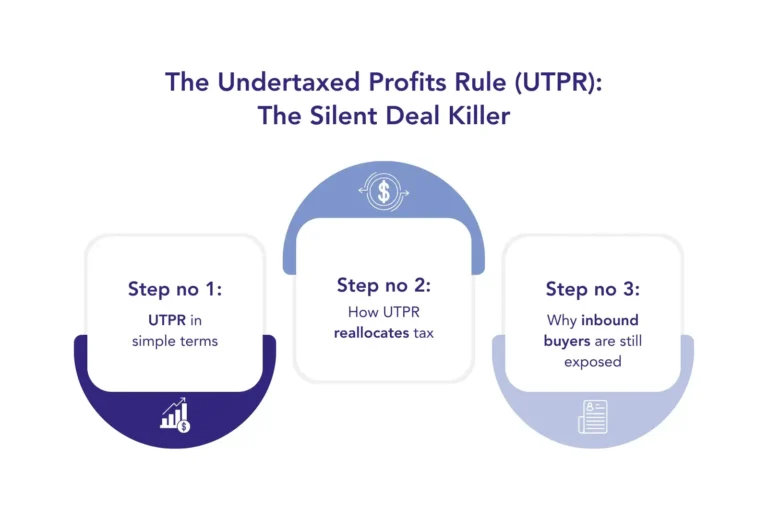
The Undertaxed Profits Rule (UTPR): The Silent Deal Killer

UTPR is the least understood Pillar Two rule. It is also the most dangerous in transactions.

UTPR in simple terms

If a group does not pay the minimum tax in one jurisdiction, other jurisdictions are allowed to collect it instead.


This means that if UAE profits are undertaxed and the UAE Domestic Minimum Top-Up Tax (DMTT) does not fully absorb the exposure, the tax can be reallocated to other countries where the group operates.


The tax will be paid somewhere.

How UTPR reallocates tax

UTPR does not follow ownership. It follows presence. Countries where the group has employees, assets, or payroll can be allocated a share of the top-up tax. This often creates unexpected liabilities in jurisdictions that were never part of the original valuation model.

Why inbound buyers are still exposed

Some buyers assume the UAE DMTT solves everything. It does not.


If the DMTT calculation differs from foreign interpretations, or if transitional rules apply, UTPR exposure can still arise. In cross-border acquisitions, this creates uncertainty that lenders and investment committees increasingly scrutinise.


This is why deal teams must model where the 15% tax will be paid, not just whether it exists.


Failing to do so is one of the fastest ways to misprice a transaction.

Why Traditional Tax Due Diligence Misses Pillar Two Risk

Most tax due diligence processes were not built for Pillar Two.

What standard tax DD focuses on

Traditional reviews typically cover:

  • Corporate tax and VAT registrations

  • Filing history and penalties

  • Transfer pricing documentation

  • VAT due diligence in UAE including historic compliance

  • Exposure under Federal Decree-Law No. 17 of 2025 and UAE Tax Procedures Law 2026 amendments

These checks remain essential. But they do not answer the Pillar Two question.

What Pillar Two DD requires instead

Pillar Two analysis looks forward, not backward. It requires:

  • Jurisdictional ETR calculations

  • GloBE income adjustments

  • Identification of covered taxes

  • Interaction with UAE Domestic Minimum Top-Up Tax DMTT

  • Impact on post-acquisition group structure

This is fundamentally different from compliance-based reviews.

The core mismatch

The seller sees a 0% tax profile.
The buyer inherits a 15% minimum tax obligation.


That mismatch explains why boards, lenders, and ICs now ask a new question:


“What is the post-deal Pillar Two ETR?”


This question increasingly drives purchase price adjustments, deal structure decisions, and even go/no-go outcomes.


Traditional tax due diligence checklists simply do not capture this risk.

The Core Solution: Post-Acquisition ETR & Top-Up Tax Modelling

Pillar Two does not punish poor compliance. It punishes poor modelling.


For M&A, the real risk is not misunderstanding the rules. It is failing to translate those rules into post-deal cash flow projections. This is where Post-Acquisition ETR & Top-Up Tax Modelling becomes indispensable.

What a Post-Acquisition ETR Simulation actually means

A post-acquisition ETR simulation is not a compliance calculation. It is a valuation tool.


It answers one question: What is the effective tax rate of the group after the deal closes, once Pillar Two is fully applied?


This requires moving beyond entity-level analysis. The model must reflect the buyer’s group structure, jurisdictional footprints, and profit allocation after acquisition.


Without this, any headline tax rate used in valuation is incomplete.

Modelling steps that matter for M&A

Pre-deal jurisdictional ETR


The first step is to calculate the standalone UAE ETR under Pillar Two rules. This involves adjusting accounting profit to GloBE income and identifying covered taxes. For many Free Zone entities, the result is a materially lower ETR than expected.


This is where Acquiring free zone company ETR risk becomes visible.


Post-deal profit and substance alignment


The second step is structural. Once the target joins the group, profit may shift due to:

  • Management re-alignment

  • Centralised decision-making

  • Changes in transfer pricing

  • Integration of shared services

Pillar Two is highly sensitive to substance. A post-deal structure that increases profit in the UAE without a corresponding increase in people or assets increases top-up exposure.


This is why ETR simulation UAE M&A must be forward-looking, not static.


DMTT vs foreign IIR / UTPR outcomes


Finally, the model must determine where the tax will be paid.

  • How much is absorbed by UAE Domestic Minimum Top-Up Tax DMTT

  • How much remains exposed to foreign Income Inclusion Rule or Undertaxed Profits Rule UAE allocations

This distinction affects cash timing, withholding considerations, and even covenant calculations in financing documents.

How a “hidden” 15% cost reshapes deal economics

Once modelled correctly, Pillar Two reshapes the deal in measurable ways:

  • IRR declines due to higher recurring tax

  • NPV reduces as future cash flows are compressed

  • Payback periods extend, affecting investment committee thresholds

These impacts are often large enough to change pricing negotiations or structure choices.

Why safe harbours cannot be relied on for valuation decisions

Safe harbours are transitional. Valuations are permanent. While UAE QDMTT Safe Harbour rules may reduce compliance burdens in certain periods, they do not eliminate economic exposure. No serious buyer relies on temporary relief to justify a long-term investment thesis.


For M&A, modelling must assume full Pillar Two application. Anything less is optimistic at best.

Red Flags That Signal a Pillar Two Problem in UAE Targets

Some Pillar Two risks are subtle. Others are visible the moment the data is reviewed.


Experienced deal teams now recognise specific red flags during tax due diligence checklist reviews.

High-profit 0% entities with limited people or assets

This is the most common risk profile.


Entities earning substantial profits under 0% regimes, particularly in Dubai free zone company setup structures, attract immediate Pillar Two scrutiny. High margins without operational depth almost always lead to top-up tax exposure.

Profit booked in the UAE while key decision-makers sit offshore

Decision-making matters. Pillar Two does not ignore governance.


If profits are booked in the UAE but strategic control sits elsewhere, substance challenges arise. This is increasingly relevant in regional headquarters structures and holding companies.

No Pillar Two readiness or DMTT analysis

Targets that have not undertaken any Pillar Two assessment signal a broader governance gap. This often correlates with weak reporting, limited data quality, and underdeveloped tax controls.

Weak CbCR or group reporting data

Pillar Two relies on consistent, reconciled group data. Weak Country-by-Country Reporting or inconsistent segment reporting complicates ETR calculations and increases uncertainty.


This risk frequently emerges in mid-market acquisitions where compliance infrastructure has not kept pace with growth.

Heavy reliance on Free Zone incentives without substance alignment

Free Zone incentives remain valid. But reliance without substance is no longer defensible.


This is particularly relevant in dubai free zone business setup structures used for trading, IP, or financing activities.


When multiple red flags appear together, Pillar Two exposure is almost guaranteed.

Deal Structuring & SPA Protections in a Pillar Two World

Pillar Two has not changed deal-making. It has changed deal protection and tax competition.

Share deal vs asset deal - Pillar Two consequences

A share deal typically transfers historical and structural Pillar Two exposure to the buyer. An asset deal may allow partial ring-fencing, but it rarely eliminates group-level ETR effects post-integration.


Deal structure alone does not solve Pillar Two risk. It must be combined with modelling.

Pillar Two-specific reps, warranties, and indemnities

SPAs increasingly include representations covering:

  • Accuracy of Pillar Two calculations

  • Completeness of data used for ETR modelling

  • Absence of undisclosed UAE Domestic Minimum Top-Up Tax DMTT exposure

Where uncertainty remains, indemnities are negotiated. This is now standard practice in sophisticated mergers and acquisitions (m&a) services.

Purchase price adjustments linked to ETR outcomes

Some buyers link pricing to post-deal ETR thresholds. If the ETR falls below an agreed level, adjustments apply.


This shifts Pillar Two risk back to the seller – where it often belongs.

Escrow and holdbacks for future DMTT / UTPR exposure

Where modelling uncertainty cannot be eliminated, escrows provide protection. Funds are released once Pillar Two outcomes are confirmed.


This approach is increasingly used in cross-border acquisitions involving abu dhabi m&a consulting and international sponsors.

Covenants to preserve Free Zone status and substance

Post-closing covenants now address:

  • Maintenance of substance

  • Preservation of qualifying activities

  • Restrictions on restructuring that increases Pillar Two exposure

These covenants reflect the reality that Pillar Two risk continues well after closing.

Conclusion

UAE M&A has entered a new phase.The market has not become less attractive. But it has become more honest. What was once marketed as “tax-efficient” must now be tested against a global minimum standard. Under Pillar Two, profits cannot hide behind incentives, Free Zone labels, or historic assumptions. The system looks through structures and measures outcomes.


This is the real shift. Pillar Two is no longer a compliance topic. It is a valuation variable. Deals no longer fail because tax was unknown. They fail because tax was unmodelled. For buyers, ignoring top-up tax distorts IRR and pricing. For sellers, failing to address it weakens credibility and negotiating power. For boards and lenders, it introduces risk that should have been visible at signing.


The message is simple and unavoidable: If Top-Up Tax is not in your due diligence, it is already in your IRR – you just have not seen it yet.

Final Thought

Pillar Two has not made UAE deals riskier. It has made weak analysis more expensive. In today’s market, Top-Up Tax assessment is not optional. It is the difference between a priced deal and a mispriced one.

FAQs:

Yes. Pillar Two operates independently of UAE Corporate Tax. A target can be fully compliant, pay 0% tax as a Qualifying Free Zone Person, and still generate UAE Domestic Minimum Top-Up Tax DMTT exposure once it joins an in-scope multinational group.

Not reliably. While an asset deal may reduce historical exposure, Pillar Two applies at the group level post-acquisition. If profits generated by the acquired assets contribute to a low UAE ETR, top-up tax can still arise. Asset deals are not a Pillar Two shield.

No. DMTT significantly reduces exposure, but it does not guarantee elimination. Differences in interpretation, timing, or transitional rules can still trigger Undertaxed Profits Rule UAE reallocations. This is why modelling where the tax is paid matters as much as whether it exists.

Yes. The threshold is tested at the group level. A target that is out of scope today may fall within Pillar Two immediately upon acquisition by a larger buyer. This is a common blind spot in mid-market deals.

Generally, no. Top-up tax is a current cash tax under Pillar Two. Treating it as deferred understates its impact on cash flows, IRR, and debt service capacity. Valuation models must reflect it as a recurring operating cost.

Significantly. If earn-outs are based on EBITDA or net profit without adjusting for top-up tax, sellers may benefit from a tax cost borne entirely by the buyer. Sophisticated SPAs now include Pillar Two-adjusted metrics or tax-neutralisation clauses.

Indirectly, it affects several areas. Pillar Two interacts with transfer pricing, substance requirements, group reporting, and even VAT due diligence in UAE where profitability and operational alignment are reviewed together. It also increases reliance on accurate group data and controls.

No. Domestic incentives remain valid under UAE law, but Pillar Two ignores them for minimum tax testing. Incentives reduce local tax – they do not reduce Pillar Two exposure.

Early. Ideally at the pre-LOI stage, and certainly before binding pricing decisions. Introducing Pillar Two analysis late limits structuring options and weakens negotiating leverage.

Rarely. Because Pillar Two is calculated at the jurisdictional and group level, exposure often affects the wider group ETR. Ring-fencing is complex and requires deliberate structural planning.

Yes. Even where no top-up tax is ultimately payable, Pillar Two requires ongoing calculations, data reconciliation, and reporting. This increases recurring compliance costs and internal resource requirements.

Holding company structures must now be assessed for substance and profit alignment. Passive holding entities with minimal activity are particularly exposed under Pillar Two, especially in Free Zones.

Yes, contractually. Through indemnities, price adjustments, escrows, and earn-out recalibrations, sellers can retain part of the Pillar Two risk – particularly where exposure arises from pre-closing structures.

Yes. Comparisons now focus on post-Pillar Two ETR, not headline tax rates. This changes how UAE targets are positioned relative to other jurisdictions with higher statutory rates but similar effective outcomes.

Yes. Even minority stakes can affect group-level ETRs depending on consolidation and accounting treatment. Pillar Two analysis is increasingly included in minority and JV due diligence.

References

Related Articles​​

15 Hidden Liabilities On Your Balance Sheet (and How Actuaries Find Them)

Most balance sheets look neat. Assets on one side. Liabilities on the other. Numbers tied back to invoices, contracts, and payments already made. Audited. Signed off. Filed. But that neatness is misleading.


Traditional accounting is backward-looking. It records what has already happened. What has been paid. What has been invoiced. What has been legally crystallised. Real risk does not work that way. Real liabilities form quietly, over time, long before cash ever leaves the bank.


In 2026, that gap matters more than it ever has in the UAE.


With Corporate Tax firmly in place under Federal Decree-Law No. 47, enhanced audit activity by the Federal Tax Authority, and increasing alignment with IFRS substance-over-form principles, “hidden” no longer means “unnoticed.” It means exposed. It means questioned. Often retroactively.


This is where actuarial thinking enters the balance sheet. An actuary does not ask, “What did this cost last year?” An actuary asks, “What has already been earned, promised, incurred, or triggered, even if payment happens later?”


That distinction is the difference between a stable balance sheet and a sudden earnings shock. Or worse, an audit adjustment with penalties. Throughout this article, we examine 15 hidden liabilities commonly missed or understated in UAE financial statements, across people, contracts, regulation, tax, and emerging risks and explain how actuarial services uncover, quantify, and defend them using probability, modelling, and forward-looking assumptions.


We begin where most hidden liabilities start. With people.

Category A: The “People” Risks (HR & Benefits)

Employee-related liabilities are the most underestimated risks on UAE balance sheets.


They accumulate quietly. They grow with time. And they are often misunderstood because they sit at the intersection of HR, finance, tax, and regulation.


From an actuarial risk management perspective, people are long-duration liabilities. You are not paying for today’s workforce. You are paying for future resignations, retirements, medical claims, incentives, and benefits already earned through service.

1. The Salary Inflation Gap in End-of-Service Benefits (EOSB)

Most companies calculate EOSB based on current salary. The gratuity accrual looks reasonable. It matches payroll records. It ties neatly to HR data. It passes a surface-level review.

The reality

Employees do not resign or retire on today’s salary. They leave in five, ten, or fifteen years, on a higher salary. Sometimes significantly higher. Promotions, merit increases, market adjustments, and inflation all compound over time.


If you ignore future salary growth, you understate the liability today. Under IAS 19, EOSB is a defined benefit obligation. The obligation accrues with service. The value must reflect the future benefit, discounted back to today.


This is where many balance sheets quietly drift out of compliance.

The actuarial fix

A qualified pension actuary applies a salary escalation assumption based on historical data, industry benchmarks, and expected inflation.


Using actuarial models, the future gratuity payout is projected for each employee. That future amount is then discounted to present value using a compliant discount rate. The result is a liability that reflects economic reality, not just payroll convenience.


Done correctly, this also protects tax positions. Under Corporate Tax, properly valued IAS 19 liabilities support accurate deductions. Understated liabilities today often mean overpaid tax tomorrow. This is classic actuarial consulting value: precision now, stability later.

2. Medical Insurance IBNR (Incurred But Not Reported)

Companies assume their medical cost equals the premium paid. Once the invoice is settled, the liability feels complete.

The reality

Healthcare costs do not stop at the policy renewal date. Claims occur continuously. Many are reported late. Others are still being processed when financial statements close. These are known as IBNR, incurred but not reported.


In the Northern Emirates, this risk has intensified. As of January 2025, mandatory dependent coverage tied to visa renewals has materially increased utilisation. Insurers price this risk later, usually at renewal, not when it is incurred.


That lag creates a hidden liability. A company may show clean medical costs today, only to face a 20–30% premium increase next year driven by claims already incurred.

The actuarial fix

A healthcare actuary uses utilisation data, claim lag patterns, and demographic profiles to estimate IBNR. This is not guesswork. It is a statistical projection. By recognising IBNR as a provision, companies gain early visibility into true healthcare costs and avoid sudden budget shocks. This is a practical application of actuarial risk analysis, translating data into foresight.

3. The “Voluntary” Savings Scheme Transition Deficit

Many employers moved employees to the new Voluntary Alternative End-of-Service Benefits Savings Scheme under Cabinet Resolution No. 96 of 2023. The old gratuity was “frozen.”


On paper, the problem looked solved.

The reality

A frozen liability is still a liability. The accrued gratuity up to the transition date remains payable when the employee exits. If it is not funded, it becomes a deferred cash outflow. For long-serving employees, that outflow can be significant. Companies that ignore this face a cash flow cliff years later, precisely when senior employees retire together.

The actuarial fix

An actuary performs a settlement valuation. This calculates the exact amount required today to fully extinguish the legacy EOSB obligation, without triggering accounting or tax disputes. This approach converts uncertainty into certainty. It allows management to decide whether to fund now, fund gradually, or carry the liability knowingly. That decision should be deliberate. Not accidental.

4. Unvested Long-Term Incentive Plans (LTIPs)

Retention bonuses. Phantom shares. Share options vesting in three or five years. Many companies only recognise the cost when the benefit vests.

The reality

Under IFRS, LTIPs must be accrued over the service period. The obligation builds as the employee renders service, not when the cheque is finally written. Failing to accrue creates an artificial profit today and a sudden P&L hit later.

The actuarial fix

A risk management actuary applies probability-weighted attrition modelling. Not all employees will stay to vest. That matters. Using actuarial modelling software, expected payouts are adjusted for resignation risk and recognised proportionately over time.


This produces smoother earnings and defensible financials. And it keeps surprises out of the vesting year.


People-related liabilities are long-term, compounding, and audit-sensitive. They sit under IAS 19 scrutiny. They affect tax deductions. They influence cash flow planning. Most importantly, they are already earned. Ignoring them does not remove the obligation. It simply delays recognition, usually to the worst possible moment.

Category B: Operational & Contractual Risks

Operational liabilities rarely feel theoretical. They are tied to leases, customers, warranties, and long-term commitments. Everyone knows they exist. The problem is timing. Cash leaves later. Risk exists now.


From an actuarial risk management perspective, these liabilities are created the moment a contract is signed or a product is sold, not when the bill arrives.

5. Lease Restoration Costs (Dilapidations)

Most commercial leases in the UAE require the tenant to return the property to its original condition. Fit-outs removed. Flooring restored. Cabling stripped. Warehouses repainted. Offices handed back as a shell. Because this happens years later, many companies ignore it entirely.

The reality

Dilapidation is not optional. It is a contractual obligation triggered on day one of the lease. The only uncertainty is the amount and timing. When lease terms end, companies often face a large, sudden construction bill that was never provisioned. Under IFRS 16, restoration obligations must be recognised as part of the lease liability.

The actuarial fix

An actuary estimates the future restoration cost using current construction pricing, expected inflation, and lease-specific conditions. That future amount is then discounted back to present value. This produces a defensible provision that reflects economic reality, not optimism.


When documented correctly, these provisions may also support Corporate Tax deductibility, provided they meet IAS 37 criteria. This is a practical example of actuarial services turning contractual fine print into measurable numbers.

6. Warranty Claims and the “Bathtub Curve”

Revenue is booked immediately when products are sold. Warranty costs appear later – scattered, unpredictable, and often treated as a rough percentage of sales.

The reality

Product failures do not occur evenly over time. They typically follow a “Bathtub Curve.” High failure rates early (manufacturing defects). Low failure rates in the middle. Rising failures again as products age. Simple averages miss this pattern completely. The result is under-provisioning early and sudden spikes later.

The actuarial fix

Using survival analysis, a core actuarial modelling technique, actuaries estimate when failures are most likely to occur. This creates a time-specific warranty provision rather than a blunt percentage. More importantly, it converts a vague reserve into a specific, defensible provision under IAS 37. Specific provisions are generally deductible. General provisions are not.


This distinction matters.

7. Onerous Contracts

Long-term fixed-price contracts. Construction. Facilities management. IT services. Outsourcing agreements. At signing, margins look healthy.

The reality

Inflation changes everything. Labour costs rise. Materials increase. Energy prices move. When future costs exceed contracted revenue, the contract becomes a liability. Under IAS 37, expected losses must be recognised immediately, not spread over the remaining contract life. Many companies delay recognition, hoping conditions improve. Auditors rarely share that optimism.

The actuarial fix

An actuary projects all remaining costs using updated assumptions and compares them to fixed future revenue. The full expected loss is recognised today. This forces management visibility. It also provides the data needed to renegotiate, exit, or restructure contracts before losses deepen. This is actuarial risk analysis applied to operational decision-making.

8. Customer Loyalty Program “Breakage”

Points issued to customers sit on the balance sheet as a deferred liability. In many companies, that number grows quietly every year.

The reality

Not all points will ever be redeemed. Customers forget. Accounts lapse. Programs change. This unused portion is called “breakage.” Failing to model breakage overstates liabilities and understates profit.

The actuarial fix

Actuaries analyse redemption behaviour using historical data and customer segmentation. Expected breakage is estimated and recognised under IFRS 15. This legally reduces the liability and improves reported profitability, without aggressive accounting. It is simply better measurement.


Operational liabilities are contract-driven. Auditors read contracts carefully. Tax authorities do the same. If an obligation exists, ignoring it does not make it disappear. It simply delays recognition, often into a year when profits are already under pressure.

Category C: Regulatory & Tax Risks

Regulatory liabilities are different. They are not driven by contracts with customers or employees. They are driven by interpretation, of law, intent, substance, and probability. In the UAE’s post-Corporate Tax environment, these risks have moved to the centre of audit focus. Tax authorities do not ask whether a position was convenient. They ask whether it was defendable.


From an actuarial risk management perspective, regulatory liabilities are uncertainty problems. The question is not “Will this be challenged?” It is “What is the probability it will be challenged and at what cost?”

9. Uncertain Tax Positions (IFRIC 23)

Aggressive deductions. Management fees. Related-party charges. Timing differences. Positions that technically work, until they are reviewed.

The reality

Under IFRIC 23, companies must assume the tax authority will examine positions with full knowledge of all facts. If it is not probable that the authority will accept the treatment, a provision is required. This is where many balance sheets fall short. Companies often take an “all-or-nothing” view: either fully provide or not at all. That is not what the standard requires.

The actuarial fix

An actuary applies probability-of-acceptance modelling. Each tax position is assessed for challenge likelihood and potential outcome. The provision reflects a weighted average, not a worst case, and not blind optimism. This approach produces smoother earnings and stronger audit defence. It is also aligned with how regulators think.

10. Transfer Pricing True-Ups and Interest-Free Intercompany Loans

Intercompany services charged at flat rates. Loans advanced with little or no interest. Historically tolerated. Increasingly questioned.

The reality

The Federal Tax Authority is focusing on substance. From 2026, specific interest deduction limitations and enhanced transfer pricing scrutiny will target structures designed to suppress taxable profit. A pricing adjustment does not arrive quietly. It comes with tax, penalties, and interest.

The actuarial fix

Using actuarial modelling software, actuaries apply Monte Carlo simulations to test pricing ranges under arm’s length conditions. Rather than defending a single number, companies defend a statistically justified range. This shifts the discussion from opinion to probability. It also provides early warning of exposure, before audits begin.

11. VAT Audit Exposure and Statistical Extrapolation

Minor errors in individual invoices. Incorrect VAT treatment applied consistently over time. Often dismissed as immaterial.

The reality

VAT audits do not assess errors one invoice at a time. The FTA applies statistical sampling. An error identified in a small sample can be extrapolated across multiple years, up to the five-year statute of limitations. A small issue in Year 5 can become a large liability overnight.

The actuarial fix

Actuaries use the same statistical techniques regulators rely on. Sampling methods estimate maximum probable exposure across the population of transactions. This allows companies to quantify risk accurately and decide whether to submit a voluntary disclosure. Voluntary disclosures usually mean lower penalties. Waiting for an audit rarely does.


Regulatory liabilities do not give second chances. Once an audit starts, probabilities collapse into outcomes. Interest and penalties compound quickly. Companies that quantify exposure early control timing, messaging, and cash flow.

Category D: Financial & Emerging Risks

These liabilities rarely sit neatly in accounting checklists. They emerge from markets, macroeconomics, technology, and regulation evolving faster than financial statements. They are also the risks boards worry about most because when they crystallise, they do so suddenly.


From an actuarial risk management standpoint, these are volatility risks. The task is not to predict the future perfectly, but to quantify plausible downside and prepare for it.

12. Expected Credit Losses (IFRS 9)

Trade receivables recorded at face value. Minimal provisions based on historical default rates. Comfortable assumptions drawn from calm years.

The reality

IFRS 9 is forward-looking. Historical losses are only a starting point. In an economic slowdown, customer behaviour changes. Payment cycles stretch. Defaults cluster. Correlations rise. If provisions rely solely on the past, assets are overstated.

The actuarial fix

Actuaries build Expected Credit Loss (ECL) models incorporating macro-economic overlays. GDP growth, sector stress, interest rates, and customer concentration are layered onto historical data. The result is a probability-weighted estimate of future defaults, not a reactive write-off after the damage is done. This protects both asset values and audit credibility.

13. Currency Devaluation Risk

Assets or liabilities denominated in volatile regional currencies. Common examples include EGP, PKR, and TRY exposures. As long as exchange rates remain stable, the risk feels theoretical.

The reality

Currency devaluations are not gradual. They occur in steps. A single policy decision can erase years of operating profit overnight. Accounting standards recognise translation differences, but they do not quantify risk.

The actuarial fix

Actuaries apply Value-at-Risk (VaR) modelling to foreign exchange exposures. This estimates the maximum expected loss over a defined period at a given confidence level. VaR does not predict the exact outcome. It defines the scale of plausible damage. That insight guides hedging decisions, pricing strategy, and capital buffers.

14. Environmental Remediation and ESG Obligations

Industrial sites. Storage facilities. Legacy operations. Environmental risk often sits outside finance, until it does not.

The reality

The UAE’s sustainability agenda is tightening expectations. Polluter-pays principles are gaining force. Environmental obligations are increasingly enforceable. Clean-up costs are uncertain. Legal exposure is asymmetric. Ignoring these risks does not reduce them.

The actuarial fix

Actuaries model environmental remediation using probabilistic cost distributions. Scenarios reflect contamination severity, regulatory response, remediation technology, and legal penalties. The output is not a single number. It is a range with confidence levels. This supports compliant provisioning today and prevents sudden balance sheet shocks tomorrow.

15. “Key Person” Risk Valuation

Founder-driven businesses. Executives holding client relationships, regulatory knowledge, or strategic control. The risk is obvious but rarely quantified.

The reality

If a key individual exits unexpectedly, the impact is financial. Revenue disruption. Delayed decisions. Client attrition. Recruitment costs. Yet most companies treat this as an operational issue, not a balance sheet risk.

The actuarial fix

Actuaries quantify key person risk by modelling replacement timelines, revenue dips, and recovery periods. This analysis supports appropriate key person insurance coverage levels. When structured correctly, such coverage can be tax-efficient. More importantly, it forces boards to confront concentration risk honestly.


Financial and emerging risks are no longer distant possibilities. They are live exposures shaped by global markets, regional policy, and business concentration. Companies that quantify them early control outcomes. Those that do not react under pressure. In the final section, we bring everything together. What this means for balance sheets, enterprise value, and 2026 readiness.

Conclusion

A balance sheet is often treated as a record. In reality, it is a forecast. Every liability represents a future outflow that has already been triggered, by service rendered, contracts signed, risks taken, or positions adopted. What differentiates resilient organisations from fragile ones is not whether these liabilities exist. It is whether they are understood. 


Without actuarial insight, a balance sheet becomes a list of hopes:

  • Hope that staff turnover stays low

  • Hope that inflation remains stable

  • Hope that auditors interpret contracts kindly

  • Hope that regulators do not look too closely

Hope is not a control framework. Actuarial analysis replaces hope with probability. It forces forward-looking recognition. It aligns accounting with economic reality. And in the UAE’s 2026 compliance environment, it increasingly determines whether profits are sustainable or illusory.


Do not attempt to fix everything at once. Start with one category, most organisations begin with Category A (People Risks) because the data already exists and the impact is material. Run a focused actuarial diagnosis this quarter. What you uncover will shape tax planning, cash flow strategy, audit outcomes, and enterprise value.

FAQs:

There is no single answer. The recommended approach depends on workforce age profile, turnover, profitability, and access to liquidity. From an actuarial risk management perspective, partial pre-funding combined with accurate IAS 19 valuation offers the best balance. It smooths cash flow while preserving flexibility.

Hidden liabilities reduce EV directly. Buyers adjust valuation for unrecognised obligations, often applying conservative assumptions. Companies with robust actuarial consulting reports face fewer price chips and faster deal execution.

Management owns the financial statements. Auditors assess reasonableness. Well-documented actuarial models, aligned with IFRS and supported by data, significantly reduce dispute risk.

No. SBR affects Corporate Tax liability, not financial reporting standards. IAS 19 still applies for compliant financial statements.

A legal obligation arises from contracts or law. A constructive obligation arises from established practice or expectation. Both require provisioning if payment is probable and measurable.

Higher attrition reduces long-term liabilities like EOSB. However, assumptions must be evidence-based. Overstating attrition to suppress liabilities invites audit challenge.

The lease liability must be remeasured for exchange differences. This creates P&L volatility, which actuarial risk analysis can help quantify and manage.

Yes. Actuaries model breach frequency, severity, regulatory fines, and recovery costs to support provisioning and insurance decisions.

Allocation should follow economic substance. Actuarial valuation clarifies each party’s share based on service, funding, and exit terms.

High-quality corporate bond yields are preferred. Where unavailable, government bond proxies adjusted for duration are commonly used. Consistency and documentation matter most.

References

Related Articles​​

7 Common Audit Pitfalls in the UAE & How to Avoid Them in 2026

Most audit failures in 2026 don’t come from non-compliance.


They come from blind spots.


Not the obvious ones. The familiar gaps businesses stop challenging once Corporate Tax is filed, VAT returns are submitted, and AML policies are approved. Assumptions that survived earlier audits. Controls that “worked before.” Numbers that reconcile just enough. 


On their own, they look manageable. Together, they form patterns that regulators are now actively trained and technologically equipped to detect.


This is the consequence of a changing audit landscape in the UAE. Corporate Tax has tightened profit scrutiny, VAT audits now operate at the transaction level, and enhanced AML/CFT enforcement tests decisions, not declarations. With advanced digital tools driving risk selection, audits are no longer triggered by mistakes; they are triggered by misalignment.


That’s why audit readiness in 2026 is no longer about gathering documents when an audit begins. It’s about whether your compliance holds up continuously, under automated scrutiny, without explanation or context. Many businesses believe they are prepared until an audit shifts from procedural to punitive.


Below are seven common audit pitfalls UAE businesses continue to overlook. If even one feels uncomfortably familiar, it’s not theoretical. It’s already a risk.

Pitfall 1: Incomplete or Incorrect Accounting Records

This is the most common failure, even though it is the easiest one to avoid.


Auditors do not seek perfection; instead, they seek clarity. When records are missing, inconsistent, or outdated, questions start building up. These questions are not only slowing the audit but also increasing risk and, in many cases, leading to penalties.


Accurate books are the foundation of all financial audit services. With Federal Decree-Law No. 17 of 2025, digital record-keeping is no longer optional. Records must be accessible, traceable, and complete. 


If your data cannot be reviewed quickly, it is treated as a red flag.


Strong records also support wider audit readiness. They show that numbers were not patched together at year-end, but appropriately maintained throughout the year.


The fix is simple; all you have to do is update ledgers regularly and reconcile accounts on time. Use reliable accounting software instead of manual files. Every transaction should have a clear trail, including Corporate Tax and VAT adjustments.


Many businesses work with an audit firm in Dubai or audit firms in Abu Dhabi to review records before an audit begins. That early review often catches gaps long before the auditor does.


Clean records prevent audits from becoming problems.

Pitfall 2: Late or Incorrect Tax Filings

Nothing attracts attention faster than a late return or a wrong one.


Tax filings are one of the first things authorities review. Delays and errors signal weak controls. In many cases, they trigger audits that go far beyond the original return.


From 2026 onward, the cost of getting this wrong is higher. Under Cabinet Decision No. 129 of 2025, late filings are subject to a flat 14% annual penalty. That charge adds up quickly, especially when multiple periods are involved.


Timely and accurate filings are a core part of any audit readiness process. Returns should reflect properly reviewed data, not last-minute estimates. VAT and Corporate Tax filings must match underlying records. Any mismatch invites deeper scrutiny.


The solution is discipline. 


Set automated reminders for every filing deadline. Lock in internal review dates well before submission. Use official platforms like EmaraTax to reduce technical errors and submission delays.


Many companies rely on audit readiness services or external reviewers to stress-test filings before they go out. That extra check often prevents issues that would otherwise surface during a financial audit services review.

Pitfall 3: Insufficient Supporting Documentation

Audits often break down not because figures are incorrect, but because they cannot be supported. Auditors expect every number to link back to clear evidence. Invoices, receipts, contracts, and payroll records are not optional. They are the proof behind the accounts.


When documentation is incomplete or scattered, it raises immediate concerns about control and transparency. This directly weakens audit readiness and increases the likelihood of extended reviews or follow-up questions, especially in a stricter 2026 audit environment.


The solution lies in structure, not volume. A digital document management system helps businesses store, label, and retrieve records quickly. It also ensures continuity when staff change or roles shift.


FTA guidelines require digital records to be retained for seven years for Corporate Tax and five years for VAT. Following this as part of a consistent audit readiness process reduces risk and keeps audits focused and efficient.

Pitfall 4: Weak Internal Controls and Compliance Procedures

Strong internal controls are the backbone of a smooth audit. Segregation of duties, explicit authorizations, and well-maintained audit trails help prevent errors and reduce fraud risk. Without these, even accurate records can be questioned, creating unnecessary audit complications.


The UAE’s changing tax environment demands more than basic checks. Corporate Tax, VAT, and AML/CFT requirements all expect robust control frameworks. Gaps in internal procedures can quickly trigger extended audits or penalties.


To stay ahead, businesses should regularly review and update internal control policies. Aligning them with Federal Decree-Law No. 17 of 2025 ensures compliance with the latest FTA enforcement powers.


Engaging a trusted audit firm in Dubai or audit firms in Abu Dhabi to test internal controls can uncover weaknesses before they become audit issues. This proactive approach is a core part of any audit readiness process.

Pitfall 5: Delayed Responses to Auditor Queries

Auditors ask questions. Fast. Hence, you need to answer fast, as well. If you take days, they notice. Slow answers make audits bigger. Sometimes they even trigger extra penalties. FTA’s AI systems quickly detect delays.


Pick one person to handle all audit questions. Make sure answers go out within 24 – 48 hours. Keep it simple. Don’t wait for perfect answers. Give what you have, clearly.


Being ready helps a lot. A proper audit-readiness process means that documents and explanations are already in order. Working with an audit firm in the UAE also helps. They can guide you on what to answer and how to answer it, so audits don’t drag on.

Pitfall 6: Ignoring Industry-Specific Red Flags

Some industries get more attention than others. E-commerce, real estate, and construction all have tricky rules. VAT mistakes, transfer pricing errors, or missing documentation in these sectors get flagged fast.


You can’t rely on generic rules. You need to know the risks for your industry. Check updates regularly. Watch for changes in VAT on imports, corporate tax, and other rules under Federal Decree-Law No. 17 of 2025.


Being aware helps you avoid surprises. A simple audit readiness process that considers your industry’s risks can save time and fines. Working with an audit firm in Dubai or audit firms in Abu Dhabi that are familiar with your sector makes it easier to spot these red flags early.

Pitfall 7: Lack of Proactive Compliance Reviews

Many companies wait for the auditor to find problems, which can be a big mistake. Doing internal checks before an audit can catch issues early. This is especially true for AML rules, e-invoicing, and other complex requirements.


Set up regular reviews. Quarterly checks work well. Go through records, reports, and processes. Ensure everything aligns with UAE tax laws and other regulations.


A simple audit readiness process makes this easy. You know what’s missing before the auditor does. Teams that do this, often with help from audit-readiness services or an audit firm in the UAE, spend less time under pressure and face fewer penalties.

Conclusion

Audits are not once-a-year events anymore. They are continuous. Waiting for a notice to scramble documents is risky. Businesses need to keep their processes up to date year-round, track compliance, and stay on top of changes.


Proactive effort pays off. Regular reviews, internal checks, and staying up to date on new rules make audits smoother and less stressful. Working with audit readiness services or a trusted audit firm in the UAE helps spot gaps early and fix them before they become problems.


2026 is about staying prepared, not reacting. 


Make audit readiness part of daily operations, and audits stop being a headache; they become just another routine task.

FAQs:

FTAGPT cross-checks submitted VAT returns against reported Corporate Tax figures. It flags mismatches in revenues, expenses, or tax credits. Any difference that doesn’t reconcile triggers an alert for review or audit.

Records must be stored electronically, be easily retrievable, tamper-proof, and include audit trails showing creation and modification dates. They should cover all invoices, contracts, and financial statements.

The 14% flat rate applies per annum on the unpaid tax. It is calculated on a daily basis but capped at the annual rate. Delays accumulate interest until payment is settled.

Failure to produce records can lead to fines, penalties, or extended audit investigations. Businesses are expected to have backups and disaster recovery plans to ensure compliance.

Auditors check for inconsistent VAT reporting, mismatched sales and bank records, unrecorded discounts or returns, and unusually high refunds. Any transaction without supporting invoices is flagged.

It is a recommended best practice. There is no legal mandate for 48 hours, but quick responses reduce audit scope and demonstrate strong audit readiness.

E-invoicing requires all sales and purchase invoices to be digital, standardized, and linked to the FTA system. Businesses must maintain proof of submission and reconciliation with accounting records.

An adequate audit trail shows who performed each transaction, when, and what approvals were obtained. Digital logs, system timestamps, and access records are key.

No major differences in retention periods. Corporate Tax requires seven years, and VAT requires five years across both Free Zones and Mainland. Some Free Zones may have additional reporting rules.

Segregation can be demonstrated by role-based access controls, approval workflows, and audit logs that show multiple individuals review or authorize key transactions.

Master files, local files, intercompany agreements, pricing policies, and benchmarking studies should be available. They should support that transactions between related parties are at arm’s length.

Yes. Auditors may flag AML gaps if they relate to financial transactions under review. Penalties depend on severity and regulatory findings.

Common errors include uploading incomplete invoices, mismatched VAT amounts, wrong document formats, and missing attachments. Lack of reconciliation between source records and portal entries is another frequent issue.

Businesses should review transactions continuously, reconcile accounts, and identify anomalies quickly. Real-time AI means gaps or errors are detected faster, so quarterly reviews must be more proactive.

Auditors focus on supporting invoices, journal entries, contracts, and calculations showing how adjustments were made. Any mismatch between VAT returns and Corporate Tax adjustments is closely examined.

References

Related Articles​​

10-Step Audit Readiness Checklist for UAE Businesses in 2026

The New Era of Audit Compliance in the UAE

Audits rarely fail on audit day. 


They fail much earlier due to missing records, weak controls, and assumptions that were never tested. By the time a notice arrives, most outcomes are already decided.


The year 2026 marks a turning point for UAE businesses. 


It follows the first complete corporate tax filing cycle, after which regulators have shifted focus from education to enforcement. Reviews are now active across Corporate Tax, VAT, AML, and UBO frameworks, making FTA audit preparation 2026 a practical necessity, not a theoretical one.


This change raises expectations across the board. Audit readiness in the UAE is no longer about reacting to regulators when required. It is about maintaining systems, documentation, and controls that can withstand review at any point in time.


Treating audit preparation as a year-end task now carries real risk. 


Businesses that rely on last-minute reviews face longer audits, deeper questioning, and higher chances of reassessment. A structured audit readiness checklist in the UAE is increasingly the difference between a controlled audit and a costly one.


In this environment, continuous preparation matters. 


Strong internal audit readiness in the UAE keeps records current, responsibilities clear, and issues visible before regulators find them. 


In 2026, readiness is no longer a preference. It is the baseline.


To help your business stay ahead, the following 10-step checklist outlines exactly what you need to do to ensure full audit readiness in the UAE.

Step 1: Understand the Full Scope of Regulatory Requirements

The first step is knowing exactly what regulators can review. UAE audits now cover multiple areas at once, and even a small oversight can trigger deeper scrutiny. Getting a clear picture of obligations is essential for any audit readiness checklist UAE.


For Corporate Tax and VAT, ensure filings are accurate, complete, and easy to access. Understand the FTA’s authority to request information, reassess previous filings, and verify positions. This strengthens corporate tax audit UAE and VAT audit readiness.


AML and UBO compliance is equally critical. Keep risk assessments current, apply controls consistently, and ensure UBO records are correct and defensible. Following these practices demonstrates strong AML audit UAE controls and reliable governance.

Step 2: Maintain Accurate and Defensible Financial Records

Financial records are the backbone of any audit. Your systems should capture every transaction and maintain a clear trail. Structured accounting ensures that data is accurate, traceable, and ready for review, which supports internal audit UAE efforts.


Perform monthly reconciliations. Match ledgers with bank statements, VAT returns, and tax calculations. Regular checks prevent errors from accumulating, reduce the chance of reassessments, and keep audits on track. This also improves VAT audit readiness and corporate tax audit UAE compliance.


Records must be defensible, not just complete. Each entry should have supporting documents, be explainable, and adjustments should be justified. Maintaining data this way strengthens the audit readiness checklist in the UAE and makes inspections smoother.

Step 3: Document and Organize Audit Evidence

It’s not enough to have records; they must be organized and accessible. Gather invoices, contracts, payroll data, intercompany transactions, tax workings, and financial statements. Arrange them logically for easy review, which is central to audit readiness in the UAE.


Retention is key. Keep digital and physical records in line with UAE rules for Corporate Tax, VAT, and AML. Each regulation may have different retention periods. Missing or outdated files can slow audits and trigger additional questions.


Accessibility matters. Link documents to the relevant transactions and make them easy to verify. Businesses that maintain organized and defensible evidence strengthen internal audit in the UAE and can respond to inspections efficiently.

Step 4: Strengthen Internal Controls and Governance

Controls reduce errors and fraud. Separate responsibilities so no one person approves, records, and reviews transactions. Even lean teams can divide tasks enough to minimize risk. This is a core aspect of internal audit readiness in the UAE.


Document policies and procedures clearly. Keep them current and update them whenever regulations or processes change. Clear, consistently maintained policies show regulators that your business operates consistently and responsibly, supporting overall audit readiness in the UAE.

Step 5: Automate Tax and Compliance Processes Where Possible

Automation saves time and reduces mistakes, but it must be implemented carefully. Use reliable tools for VAT, Corporate Tax, and reporting workflows. Automated calculations and filings help prevent missed deadlines and errors, improving FTA audit preparation 2026.


Automation does not replace judgment. Every automated report should be reviewed, and all entries should be properly documented. Internal oversight remains essential. Automation supports compliance and strengthens internal audit UAE, but it does not replace human checks.

Step 6: Conduct Periodic Internal Audits

Don’t wait for an external audit to spot problems. Plan internal audits in advance, either quarterly or twice a year. This helps you check your compliance health and address any issues early. Regular reviews are a key part of internal audit readiness in the UAE.


Pay special attention to high-risk areas. Review VAT treatment, deductible expenses, intercompany transactions, and gaps in documentation. Catching and fixing these issues before an external review makes audits smoother and lowers the risk of penalties. Consistent internal audits strengthen your audit readiness UAE and give the team confidence in the accuracy of financial and tax records.

Step 7: Build an Audit-Ready Workforce

Your team is the first line of defense in any audit. Make sure finance, operations, HR, and management staff understand what triggers audits, what documentation is required, and how to respond. Training key staff this way is essential for strong internal audit readiness in the UAE.


Audit readiness shouldn’t be a last-minute effort. It needs to be part of everyday operations. When compliance becomes a habit rather than a reaction, the business can respond quickly to regulators and maintain confidence in its controls. Building this mindset strengthens overall audit readiness in the UAE and reduces stress during inspections.

Step 8: Review Contracts and Legal Agreements

Contracts can create hidden risks if they aren’t aligned with tax rules. Review all agreements for VAT clauses, withholding obligations, related-party pricing, and cost allocation terms. Ensuring this alignment is essential for corporate tax audit in the UAE and VAT audit readiness.


Don’t ignore legacy contracts. Revisit older agreements to make sure they reflect current UAE tax laws and compliance requirements. Updating contracts helps maintain control, reduces audit risk, and strengthens your overall audit readiness checklist in the UAE.

Step 9: Verify Inventory and Asset Controls

Accurate inventory and asset records are critical for audits. Keep inventory registers, depreciation schedules, and asset classifications up to date and fully supported. This practice supports internal audit in the UAE and helps demonstrate control over company resources.


Conduct regular physical verifications of inventory and fixed assets. Checking stock and assets periodically prevents disputes during audits, ensures valuations are correct, and strengthens the audit readiness checklist in the UAE. Routine verification gives regulators confidence in your systems and reduces the risk of adjustments.

Step 10: Engage Professional Advisors Strategically

Bring in auditors and tax advisors before an audit notice lands. Don’t wait until problems appear. Early collaboration helps you check your readiness and spot areas of risk before they become issues. This is a key part of the FTA audit preparation 2026.


Use professional guidance for tricky areas. Corporate Tax positions, VAT disputes, AML obligations, and restructuring can be complex. Advisors help you navigate these challenges and ensure your audit readiness checklist in the UAE is solid, reducing surprises and strengthening compliance.

Conclusion

Being ready for an audit is about more than avoiding penalties. It’s about protecting your business, keeping operations smooth, and making decisions with confidence. Companies that prepare ahead face fewer questions from regulators, finish audits faster, and reduce disruption. That is the real value of audit readiness in the UAE.


Achieving this takes consistent effort. Regular internal reviews, ongoing staff training, careful monitoring, and expert guidance build a strong foundation. Following these practices strengthens internal audit readiness in the UAE and ensures your UAE audit compliance checklist is solid. In 2026 and beyond, this approach separates businesses that are merely compliant from those that are truly in control.

FAQs:

The FTA has shifted from offering guidance to actively reviewing businesses. They can request detailed information, reassess past filings, and examine Corporate Tax, VAT, AML, and UBO records in depth.

Waiting until year-end is risky. Keeping records current and spotting issues early prevents mistakes from piling up, reduces audit stress, and lowers the chance of reassessments.

Regulators focus on inconsistent AML controls, outdated risk assessments, and inaccurate UBO filings. These are the areas most likely to attract scrutiny.

Both digital and paper records are acceptable if they are organized, complete, and accessible. Digital records often make audits faster and easier to manage.

Spreadsheets are useful but not sufficient by themselves. They must be backed up with supporting documents and internal controls to be credible.

The most common gaps include invoices, contracts, payroll records, intercompany agreements, and tax calculations. Missing evidence slows audits and increases risk.

Even small teams can separate responsibilities. For example, one person approves, another records, and a third reviews transactions. Peer checks or occasional oversight can reduce errors or fraud.

Without written policies, processes can be inconsistent and harder to prove to regulators. This increases exposure and can lead to audit challenges.

No. Automation reduces manual errors and ensures consistency, but it doesn’t replace professional judgment, reviews, or proper documentation.

Automation ensures transactions are recorded at the right tax point, highlights inconsistencies, and maintains clear records. This reduces errors and simplifies audits.

Internal audits aren’t required by law in all cases. However, performing them regularly helps identify issues early and shows regulators that controls are in place.

Training should cover proper documentation, recognizing audit triggers, understanding compliance requirements, and responding effectively to regulator queries.

Accurate inventory and asset records prevent valuation disputes and unexpected adjustments. Regular checks make audits smoother and more predictable.

Contracts should reflect VAT clauses, withholding obligations, and related-party pricing. Misaligned contracts can lead to disputes, reassessments, or compliance questions.

Tax advisors should be consulted for complex matters like Corporate Tax positions, VAT disputes, AML compliance, or restructuring. Statutory auditors handle formal filings and audit

References

Related Articles​​

100% Ownership & Tax Exemption: The Hamriyah Advantage for Steel and Heavy Industry

Steel plants. Heavy machinery. Big ambitions. 


Setting up in the UAE isn’t just about finding space, it’s about choosing the right base. 


For industrial players, Hamriyah Free Zone is more than a location. It’s a hub where businesses thrive, offering 100% ownership, tax perks, and infrastructure designed for heavy industry.


The UAE is positioning itself as a global industrial leader, and steel and heavy industries are central to this vision. 


Companies need freedom to operate, room to grow, and cost efficiency that protects margins. Company formation in Hamriyah Free Zone provides all of this, making it a strategic choice for serious investors.


From simple incorporation to the advantages of a corporate tax freezone, Hamriyah is designed to make operations smooth. Modern warehouses, strong transport connections, and utilities ready for heavy machinery let businesses start producing immediately. Regulations and tax structures are built to give companies a real operational edge.


This guide shows why a Hamriyah company setup is the preferred choice for steel and heavy industry investors. 


We’ll cover ownership structures, tax benefits, infrastructure strengths, and setup costs, demonstrating why Hamriyah is the smart choice in a competitive market.

What is Hamriyah Free Zone?

Hamriyah Free Zone is at the heart of Sharjah’s industrial landscape. It’s a hub designed for serious industrial activity, making it one of the most attractive locations for investors in steel, manufacturing, and heavy industry.


The zone was established in 1995 under a Royal Decree with a clear industrial mandate. Its goal is to provide businesses with the space, infrastructure, and freedom they need to operate efficiently.


Permitted activities include manufacturing, industrial production, and steel fabrication. Whether you’re setting up a fabrication plant or a heavy machinery operation, a Hamriyah company setup gives you a practical and ready-to-use framework.


The Hamriyah Free Zone Authority manages licensing, enforces regulations, and invests in ongoing development. Their focus is keeping operations smooth so investors can concentrate on growth. A Hamriyah Free Zone company formation ensures you have legal clarity, operational support, and the infrastructure to scale your business confidently.

100% Ownership: A Game Changer for Foreign Investors

Achieving full foreign ownership is a key advantage in Hamriyah Free Zone. This unique benefit allows investors to take full control over their business without the need for a local sponsor or nominee.

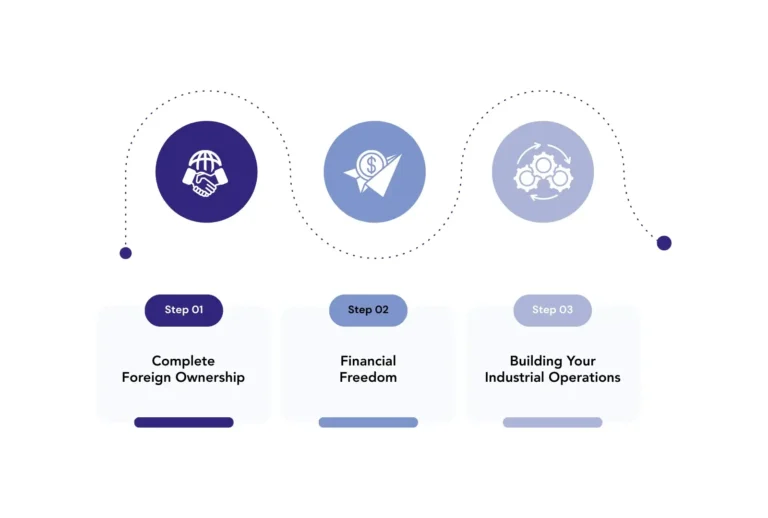
Complete Foreign Ownership

One of the biggest advantages of setting up a business in Hamriyah Free Zone is the ability to have full foreign ownership. You won’t need a local sponsor or nominee. You retain complete control over your business, which is a significant benefit, especially for steel manufacturers and heavy industry players. Capital-intensive operations require decisions that need to be fast, precise, and fully under your control.

Financial Freedom

With 100% ownership comes full freedom over your money. You can repatriate both capital and profits without the concern of currency restrictions. Every dirham you invest or earn stays entirely under your control. This level of financial certainty is rare in industrial hubs worldwide, making Hamriyah a highly attractive destination for foreign investors.

Building Your Industrial Operations

Having full control over ownership and finances is crucial, but setting up your operations efficiently is equally important. In Hamriyah Free Zone, setting up a steel fabrication plant or heavy machinery operation is straightforward. Whether you choose a fully-owned industrial company or an international joint venture, the zone’s regulatory framework supports both options. The right structure for your business will depend on aligning operations, risk management, and long-term growth.

Tax Exemptions that Maximize Profitability

When you invest in Hamriyah Free Zone, it’s not just the infrastructure and ownership that matter. Taxes have a direct impact on your bottom line. Understanding how the zone treats corporate and personal tax can change the way you plan projects, allocate capital, and forecast returns.

Corporate and Personal Tax

Companies established in Hamriyah Free Zone have access to a predictable corporate tax regime. If a business meets the defined criteria to be a Qualifying Free Zone Person, income that qualifies under UAE tax law can be taxed at 0%. This allowance means more revenue stays in the business for reinvestment, expansion, and growth, with no hidden costs or surprises.


The UAE also does not levy personal income tax. Shareholders, directors, and employees keep their full salary, dividends, and bonuses, which simplifies administration and reduces financial friction.


For capital‑intensive sectors such as steel and heavy manufacturing, these tax efficiencies matter a lot. Projects in these industries often involve tight margins and long timelines. With 0% tax on qualifying income, you free up critical cash that can be reinvested into equipment, workforce expansion, or ramping up production.


In short, the tax environment in Hamriyah isn’t just an added benefit — it’s a strategic advantage that strengthens the financial foundation of industrial operations and supports sustainable growth.

VAT and Customs Exemptions

Operating in Hamriyah Free Zone comes with more than just corporate tax benefits. The zone is classified as a Designated Zone, which changes how VAT applies. For qualifying transactions, companies benefit from special VAT treatment that keeps compliance simple and predictable. You don’t waste time chasing paperwork, and your cash flow remains stable.


Customs duties are another area where the zone shines. Imported raw materials for production and re-exported finished goods are typically exempt from customs duty. For steel manufacturers and heavy industry players, this is a major advantage. Lower input costs directly improve margins, and exporting becomes far more competitive.


These benefits have a tangible operational impact. Steel import, fabrication, and supply chain processes run smoother when you don’t have to account for unnecessary taxes or duties. Every shipment, every batch of raw material, and every finished product can move efficiently through the system. 


A Hamriyah Free Zone company setup ensures you capture these advantages from day one, keeping operations lean, cost-effective, and globally competitive.

Strategic Infrastructure Built for Heavy Industries

Ownership and tax advantages are important, but even the best incentives won’t matter without the right infrastructure. Hamriyah Free Zone is purpose-built for heavy industry. Every aspect of its layout and facilities is designed to support large-scale operations and complex industrial processes.

Ports and Harbour Facilities

The zone features deep-water ports capable of handling bulk steel and oversized cargo with ease. Shipments move quickly, reducing delays and downtime. Inner harbour facilities include on-site customs clearance, which speeds up import and export operations. For businesses dealing with heavy materials, this is a real competitive advantage.

Industrial Plots and Warehouses

Hamriyah company setup gives you access to large industrial plots, ready-to-use warehouses, and factory units. You don’t need to compromise on space or scale. Whether you’re handling fabrication, assembly, or storage, you can design operations exactly as your business requires.

Operational Efficiency

Infrastructure in Hamriyah isn’t just functional—it drives efficiency. Manufacturing flows smoothly, storage is optimized, and logistics run with minimal friction. A Hamriyah Free Zone company formation ensures your operations aren’t held back by facilities. You have the space, tools, and support to expand, scale, and compete globally without worrying about bottlenecks.

Why Hamriyah is Ideal for Steel & Heavy Industry

Logistics matter. If moving materials and products is slow or complicated, it hurts your business. Hamriyah Free Zonesolves that. Sea, road, and air connections are all right there. Bringing in raw materials or shipping finished steel is straightforward and predictable.

Logistics and Market Access

From Hamriyah, you can reach the GCC, Africa, Asia, and Europe with ease. That means faster deliveries, lower costs, and fewer headaches. You’re not just near a port, you’re at a crossroads of some of the region’s busiest trade routes.


The zone is also close to key raw material suppliers and steel demand centers. That keeps your supply chain efficient and reduces unnecessary delays. A Hamriyah Free Zone company setup lets your business run smoothly, scale confidently, and compete effectively in international markets.

Cost Efficiency

Running a steel or heavy industry operation is expensive. Hamriyah Free Zone helps keep costs under control. Corporate tax advantages and customs duty exemptions reduce overhead and improve margins. Money that would normally go to taxes stays in your business, ready for reinvestment.


Cross-border transactions are simple too. There are no restrictive currency controls, so moving capital in or out of the UAE is straightforward. On top of that, industrial land and facilities come with competitive long-term lease options. You get space that fits your operations without breaking the budget. A Hamriyah company setup isn’t just about getting started, it’s about running efficiently from day one.

Skilled Workforce & Business Ecosystem

You can’t produce steel or heavy machinery without the right people. Hamriyah gives you access to a workforce experienced in heavy manufacturing, fabrication, and industrial operations. That expertise is immediately available, so you don’t waste months on training or recruitment.


The zone also hosts an established cluster of steel fabricators and allied service providers. Suppliers, logistics partners, and industrial support services are all nearby, creating a true ecosystem. Everything from raw material supply to finished product delivery is integrated. 


A Hamriyah Free Zone company setup places your business right in the middle of this ecosystem, giving you the tools, partners, and talent to operate smoothly and grow confidently.

Step-by-Step: Setting Up in Hamriyah Free Zone

Starting a business in Hamriyah Free Zone is easier than it seems if you follow the right steps. Here’s how investors typically approach it:

Step 1: Pick the Right Business Licence

Choose a licence that matches your activities. Whether it’s steel manufacturing, heavy industry, or fabrication, make sure it covers everything you plan to do. This is the first step in any Hamriyah Free Zone company formation.

Step 2: Set Ownership and Capital

With a Hamriyah company setup, you can own 100% of your business. No local sponsor is needed, and all decisions stay in your hands. Plan your capital structure and profit repatriation early. Knowing exactly how your money moves keeps operations smooth.

Step 3: Gather Documents

Collect all required paperwork for your Hamriyah company incorporation. Include shareholder information, proof of capital, and your operational plan. Complete and accurate documents speed up approvals and avoid delays.

Step 4: Get Approvals

Submit your application to the Hamriyah Free Zone Authority. The process is straightforward, and timelines are clear. Once approved, your company formation in Hamriyah Free Zone is official, and you can move forward with confidence.

Step 5: Understand Compliance

Stay on top of corporate tax, VAT, and designated zone rules. Using corporate tax freezone benefits ensures your business runs efficiently and avoids penalties.

Step 6: Secure Facilities and Begin Operations

Choose your industrial plot, warehouse, or factory unit. Set it up, hire your team, and start production. A Hamriyah free zone business setup gives you the infrastructure and support to operate efficiently and scale smoothly.

Step 7: Track Costs and Optimize

Monitor your Hamriyah free zone company setup cost and ongoing expenses. Regular reviews keep your business competitive and help you make the most of the zone’s benefits.

Hamriyah vs. Other Free Zones: What Industrial Investors Should Know

Not all free zones are built for heavy industry. If you’re in steel or manufacturing, location, space, and logistics make a big difference. Hamriyah Free Zone stands out when compared to Dubai or Ajman zones, especially for companies looking for efficient growth and strong operational support.


Port access is a major advantage. Deep-water ports and inner harbour facilities with on-site customs clearance make moving bulk steel and oversized cargo faster and simpler. Other zones may require extra steps that slow operations.


Space and scalability matter too. Hamriyah Free Zone business setup offers large industrial plots, ready-to-use warehouses, and factory units. In other zones, you might face smaller plots or long waits, which can limit expansion.


Cost efficiency is another differentiator. From Hamriyah free zone company setup cost to operational savings, the zone is designed to keep your margins healthy. Combined with corporate tax freezone benefits, investors enjoy financial clarity and reduced overhead.


Setting up is straightforward. A Hamriyah Free Zone company formation or Hamriyah company incorporation ensures clear ownership, full foreign control, and 100% repatriation of profits. A hamriyah company setup positions your business to operate smoothly, scale efficiently, and compete internationally.


Choosing Hamriyah isn’t just about a location, it’s about having the infrastructure, tax benefits, and business framework that make growth possible. For anyone serious about steel or heavy industry, it’s a choice that pays off.

Conclusion

Choosing Hamriyah Free Zone for steel or heavy industry isn’t just about regulations or taxes. It’s about control, efficiency, and long-term growth. With a Hamriyah company setup, you can own 100% of your business and repatriate profits without restrictions. The corporate tax freezone status keeps overheads low, while VAT and customs exemptions make operations smoother.


Infrastructure is built for heavy industry. Deep-water ports, on-site customs, large plots, and ready-to-use warehouses let you move materials, store inventory, and produce without bottlenecks. Being close to raw material sources and key markets gives your supply chain a clear advantage.


When you consider setup costs, regulatory clarity, and growth potential, company formation in Hamriyah Free Zonestands out. It’s not just a location. It’s a platform that puts you in control, helps you scale efficiently, and positions your business for global competitiveness.


A Hamriyah Free Zone company formation today is more than starting a company—it’s making a strategic decision that supports every stage of your industrial journey.

FAQs:

Yes, but you need a local distributor or a mainland trading licence to sell directly. Many companies use Hamriyah as a production hub and work with UAE mainland partners to reach clients.

Not necessarily. Some government projects require mainland registration. However, for export or free zone-specific contracts, Hamriyah companies can participate without restrictions.

Yes. You can structure your Hamriyah company setup to include both manufacturing and trading activities, provided your licence covers these operations.

Yes. Audited financials are usually required for regulatory compliance, corporate governance, and sometimes for banking or trade finance purposes.

Hamriyah has deep-water ports and inner harbour facilities with on-site customs clearance. Oversized steel or project cargo can be handled efficiently, reducing delays and costs.

Yes. Companies conducting relevant activities must comply with ESR and maintain records demonstrating sufficient economic presence in the UAE.

Yes. Hamriyah allows foreign investors to open accounts in multiple currencies, which helps manage international trade and repatriation of profits.

Approvals usually include environmental clearances, health and safety certifications, and compliance with local industrial safety standards. The Hamriyah Free Zone Authority guides companies through this process.

Yes. Investors can lease additional plots or upgrade warehouses and factory units as operations grow, subject to approvals from the Free Zone Authority.

Hamriyah offers long-term lease options with clear terms. Compared to some other UAE free zones, it provides flexibility for expansion and stability for industrial operations.

Absolutely. Its strategic location, port access, and logistics network make it ideal for regional distribution and export-focused operations.

No. Banks and financial institutions recognize Hamriyah Free Zone company incorporation, making trade finance, LCs, and international banking accessible.

No. Hamriyah allows companies to hire skilled foreign labour, subject to UAE visa and labour regulations. This makes it easier to recruit experienced staff for heavy manufacturing.

Common mistakes include: choosing the wrong licence, underestimating VAT or corporate tax compliance, ignoring logistics planning for oversized cargo, and not aligning ownership or capital structure with business goals.

Yes. Hamriyah’s port access, customs exemptions, and free zone benefits make it ideal for export-driven operations. Companies focused solely on UAE mainland sales may need additional licences or partnerships.

References

Related Articles​​

Warehouse Compliance 2026: Avoiding the ‘Designated Zone’ Trap for Excise Goods

Imagine this: your warehouse is full of excise goods, but one small mistake lands you in trouble. A misfiled shipment, a wrong storage zone, or missing documentation can trigger excise tax penalties in the UAE overnight.


In 2026, excise tax compliance in the UAE is stricter than ever. Designated zones, UAE excise tax rules are tighter, and FTA excise audits in the UAE are more detailed. Businesses that ignore these updates risk fines, delays, and even confiscation of goods.


Warehouse operations are no longer just about storing products; they’re about staying audit-ready. 


Understanding the rules, keeping precise records, and preparing for inspections isn’t optional anymore; it’s survival.

The Strategic Context: Designated Zones Under Scrutiny in 2026

Designated zones in the UAE have long been attractive due to their promise of simplified storage, deferred taxes, and easier movement of excise goods. However, with stricter regulations in 2026, the landscape is changing. The Federal Tax Authority (FTA) is intensifying its focus on excise tax compliance in the UAE, and mistakes can lead to costly consequences.


The new volumetric tax rules in UAE 2026 add complexity to warehouse operations, as taxes are now calculated based on product volume, not just value. This shift means that businesses must track product quantities with precision to avoid significant excise tax penalties in the UAE.


While designated zones still offer tax deferrals and simplified storage, the increased scrutiny from the FTA makes non-compliance a high-risk issue. Designated zones UAE excise tax regulations require businesses to meet increasingly stringent compliance standards. Mismanagement of stock could quickly lead to an FTA excise audit in the UAE, resulting in financial penalties or operational disruptions.


Moreover, the rising costs of compliance, including additional checks, documentation, and staff training, demand that businesses adjust their internal processes to meet the new excise tax audit preparation requirements in the UAE. Warehouse operations must align with warehouse compliance in the UAE, ensuring all procedures adhere to the latest guidelines and prevent future issues.

The Regulatory Landscape: What’s Changing in 2026

In 2026, the UAE’s excise regulations are undergoing significant changes. 


The Federal Tax Authority (FTA) is shifting from paper-based checks to physical inspections, placing greater emphasis on real warehouse practices. Businesses can no longer rely solely on records; they must now demonstrate excise tax compliance in real-time.


The definition of Designated Zones under the UAE excise law has been clarified, with clear criteria outlining which areas qualify for deferred tax and storage benefits. 


This clarification underscores the importance of accurate documentation and the need to follow designated zone rules closely to ensure warehouse compliance in the UAE.


Another significant change is the shift to volumetric tax rates in the UAE 2026, where businesses will now track product volumes rather than just values. 


This change means warehouse operations must be more precise than ever, particularly in managing warehouse losses and stock deficiencies. The FTA will scrutinize consumption events within designated zones in the UAE excise tax, focusing on unexplained variances and misreported volumes.


With heightened enforcement and stricter excise tax penalties in the UAE for non-compliance, businesses need to prioritize accurate record-keeping, robust audit trails, and physical controls to avoid costly fines. 


The FTA’s increased focus on warehousekeeper responsibilities in the UAE demands that businesses establish comprehensive systems to ensure the traceability and verification of every shipment and movement of goods. 


Proper excise tax audit preparation in the UAE is essential for businesses to stay ahead of these changes.

How the FTA Audits Designated Zone Warehouses in 2026

In 2026, auditors are no longer relying solely on paperwork; they are walking the warehouse floor to verify excise tax compliance in real-time. Understanding the audit process is crucial to staying ahead and avoiding costly mistakes.

Typical Triggers for Audits

Audits can be triggered by several factors:

  • Complaints or tip-offs from employees, competitors, or clients.

  • Discrepancies in filings or unusual patterns in excise tax compliance reports.

  • Random selection as part of the FTA’s enhanced risk-based monitoring.

  • Sudden stock movements or repeated loss events.

Inspection Sequence

Once an audit is triggered, here’s what businesses can expect:

  • Perimeter checks to ensure the warehouse is secure and that the designated zones UAE excise tax are physically enforced.

  • Documentation review, including verification of invoices, movement logs, and volumetric records.

  • Physical stock counts, comparing actual quantities with reported volumes, critical under the 2026 volumetric tax rules in the UAE.

  • Registry tie-out to ensure inventory records align with physical stock counts.

  • Sampling of loss events to assess if the loss was documented, correctly reported, and compliant.

Common Findings Leading to Penalties

Audits often escalate to penalty cases when the following are found:

  • Unapproved destruction or write-offs of excise goods.

  • Repeated unexplained variances across multiple periods.

  • Weak access control or poor chain of custody over goods.

  • Delayed notifications for loss events or discrepancies.

  • Gaps between WMS/ERP systems and excise tax declarations in the UAE.


Tip:


Conducting regular internal audits and reconciling physical stock with your WMS/ERP can help prevent issues during the FTA excise audit preparation in the UAE and make the process smoother.


It’s a common misconception that goods inside the UAE-designated zones are always tax-free. However, excise tax can become payable even before goods leave the warehouse. Understanding the triggers for tax liability can help businesses avoid unexpected penalties.


In 2026, several scenarios can cause excise tax to crystallize, even within designated zones in the UAE. 

  • Goods that are no longer fit for export or transfer, such as damaged or expired products, immediately trigger tax obligations. 

  • Similarly, goods that are destroyed, damaged, or written off without approved relief will incur excise tax. 

  • Products sampled, tested, or used internally also face tax unless proper exemptions apply. 

  • Missing stock or unexplained discrepancies for which the warehouse keeper cannot provide a legitimate cause will also result in taxable events.

  • High-risk operational situations, such as forklift damage to products or temperature-control failures affecting goods like tobacco or beverages, further increase the likelihood of tax liability. 

  • Additionally, expired stock awaiting destruction approval or re-labelling/packing activities without a clean audit trail are often flagged as taxable events.

  • With the introduction of tiered volumetric tax rates in the UAE in 2026, even small amounts of wastage incur higher tax costs.

  • Immediate tax liability arises if goods lose their exportability, and penalties are compounded when notifications or approvals are missing, making non-compliance significantly more expensive.

What Is Stock Deficiency Under the UAE Excise Tax Law?

A stock deficiency occurs when the actual inventory in your warehouse doesn’t match what’s recorded in your Warehouse Management System (WMS) or excise registry. 


Under the UAE excise tax law, this isn’t just an operational issue; it can lead to excise tax penalties. 


The Federal Tax Authority (FTA) treats missing or mismanaged stock as a serious compliance issue, especially in designated zones where rules are more stringent.


A stock deficiency is essentially seen as an indication that tax may be due or that records haven’t been properly maintained. 


This can quickly escalate into fines, penalties, or even more extensive audits. Proactively managing stock and maintaining accurate records is vital to avoid costly penalties and stay audit-ready.


Common Scenarios where stock deficiencies arise include:

  • Missing or damaged stock discovered during cycle counts or inspections.

  • Discrepancies between physical stock and WMS/ERP records, or between the excise registry and actual stock.

  • Unrecorded goods that were damaged, returned, or destroyed but weren’t properly logged.

  • Stock that’s misplaced within the warehouse, leading to discrepancies during audits.

The Presumption Risk: Why Deficiency Turns Into a Penalty Case

When stock discrepancies occur, the FTA typically assumes that the goods have leaked into the UAE market. This triggers excise tax liabilities at the applicable tier, plus administrative penalties. 


Repeated deficiencies increase the risk that the FTA will escalate audits, possibly spanning multiple periods and locations, which could uncover further issues.

What Builds a Defensible “Legitimate Cause” File

In the event of a deficiency, businesses must be able to provide a clear and comprehensive audit trail to defend against penalties. 


This includes:

  • Incident evidence, like photos, CCTV footage, and incident reports.

  • Technical evidence such as temperature logs, QA reports, and contamination certificates.

  • Inventory evidence, including sealed count sheets, batch traceability logs, and picker logs.

  • Approval evidence, such as timely destruction approvals, notifications, and relief documentation.

Why “We Don’t Know What Happened” Is Not a Defense

The burden of proof rests with the warehouse keeper. Without clear audit trails and supporting documentation, the FTA will treat the goods as deemed released for consumption, resulting in excise tax penalties. The absence of proper records can quickly escalate into more serious financial and operational consequences.

Warehouse Keeper Responsibilities: Staying Compliant Under UAE Excise Tax Law

Managing a warehouse with excise goods goes beyond simply storing products. Warehouse keepers are at the forefront of warehouse compliance in the UAE and play a critical role in avoiding excise tax penalties. 


Maintaining good habits and accurate records not only streamlines audits but also reduces the risk of costly errors.


Key responsibilities include:

  • Excise Goods Duty Deduction Registry: Maintain a registry with batch/lot-level integrity, tracking every good that enters, exits, or is destroyed. Ensure it aligns with WMS/ERP and physical stock.

  • Real-Time Stock Tracking: Log all stock movements as they occur, including receipts, internal moves, picking, transfers, and export staging. Accuracy is essential to prevent discrepancies.

  • Chain-of-Custody Controls: Implement strict access control and segregation of excise goods. Use sealed areas and an authorisation matrix to control who handles the stock and where it is stored.

  • Loss, Damage, and Destruction Governance: Any losses, damages, or destructions must be logged and reported immediately. Ensure notifications and approvals for relief or destruction are in place to avoid penalties.

  • Reconciliation Readiness: Be prepared for inspections by keeping WMS/ERP data, the excise registry, and physical stock reconciled at all times. This ensures smooth audits and avoids discrepancies.

  • Declaration Discipline: Submit accurate and timely excise declarations for all stock movements and designated zone (DZ) events. Misreporting or delayed submissions can result in penalties.

Pro Tip: Small record-keeping errors can quickly escalate into major issues during FTA excise audits. Consistent, accurate tracking and adherence to compliance processes are crucial for minimizing risks and ensuring audit success.

The Designated Zone Trap: Operational Losses Are Taxable Events

Many businesses believe that goods stored in designated zones are exempt from excise tax, even if something goes wrong. However, tax suspension does not mean tax immunity. 


In 2026, operational losses, such as damaged or missing stock can trigger immediate tax liability. 


The Federal Tax Authority (FTA) is focusing on physical reality, not intent, and is cracking down on violations more than ever before.


Operational losses are now taxable events if not properly managed or documented. Even minor mishaps can escalate into excise tax penalties if they aren’t addressed quickly and correctly.

Common Risks in Designated Zones:

  • Damaged stock: Broken or spoiled goods are treated as taxable events.

  • Missing inventory: Lost cartons, pallets, or unaccounted items can trigger tax payments.

  • Temperature failures: Excise goods requiring controlled conditions (e.g., tobacco, beverages) may become taxable if storage conditions fail.

  • Incorrect reporting: Errors in volumetric tax calculations can lead to fines, particularly with the new rules in 2026.

Pro Tip:


Treat every operational loss as a potential taxable event. 


Immediate tracking, reporting, and reconciliation are crucial to staying compliant and audit-ready. Weak controls in designated zones amplify risks, underscoring the need for robust systems and accurate records.

ADEPTS Risk-Mitigation Framework: How to Prepare for 2026 Compliance

Preparing for an FTA excise audit in the UAE doesn’t have to be stressful. With the right framework, you can spot potential risks early and avoid costly excise tax penalties. 


ADEPTS recommends a simple, practical approach to staying audit-ready and maintaining compliance with UAE excise regulations.

Steps to Stay Compliant

  1. Physical Inventory Count & Reconciliation

    Regularly conduct independent physical stock checks (cycle counts and full counts) to ensure your inventory matches the records in WMS/ERP and the Excise Goods Duty Deduction Registry. Any discrepancies, such as shortages, damages, or timing mismatches should be flagged early for correction.

  2. Loss & Damage Relief File

    Build a defensible file for each loss event, mapping it to a legitimate cause category. Ensure you have supporting evidence such as incident logs, CCTV footage, temperature records, and disposal records. Make sure all timely notifications and approval trails are in place to support excise tax relief claims. This is particularly important under the enhanced FTA excise audits in the UAE, where the FTA is scrutinizing all loss events for compliance.

  3. Destruction & Write-Off Governance

    Manage the destruction process end-to-end, including authorizations, witness logs, and disposal certificates. Prevent unapproved write-offs that can trigger deemed consumption and result in excise tax penalties in the UAE. The excise tax compliance requirements demand that businesses adhere to strict governance over stock destruction, as any deviation could lead to substantial penalties under UAE excise law.

  4. Pre-FTA Inspection Readiness

    Before an FTA inspection in the UAE, ensure variance corrections are completed, particularly under the tiered volumetric tax rates in UAE 2026. Conduct a mock inspection walkthrough to identify potential gaps and create a remediation plan to address any issues. This preparation will ensure compliance during the excise tax audit preparation in the UAE, reducing the risk of penalties for discrepancies in warehouse operations.

  5. Ongoing Compliance Support

    Continuously monitor variance trends and conduct periodic stock audits to stay ahead of FTA excise audits. Regularly assess the tax implications of any losses and continually optimize warehouse processes. Provide training to warehouse staff to ensure they understand their role in compliance with warehouse compliance in the UAE and the volumetric tax requirements. Regular checks and staff education are essential to ensure that businesses remain compliant with the excise tax regulations in the UAE.

Practical Controls Checklist: Getting Ready for FTA Audits

Preparing for an FTA excise audit in the UAE requires implementing robust controls to ensure excise tax compliance and avoid costly penalties.


Following these practical steps will help you stay organized, compliant, and ready for the stricter 2026 excise regulations.


Key Actions for 2026 Readiness:

  1. Monthly Cycle Counts + Quarterly Full Counts

    Conduct monthly cycle counts and quarterly full counts, adjusting frequency based on risk. This ensures real-time accuracy in your stock levels and prepares you for any potential discrepancies during an FTA excise audit in the UAE. Regular stock checks are vital to stay ahead of the excise tax compliance requirements and mitigate any risks during inspections.

  2. Batch/Lot Traceability & Location Mapping

    Implement a system for batch/lot traceability and location mapping to ensure every product in the warehouse is accounted for. This is critical for ensuring compliance, especially for goods in designated zones UAE excise tax areas. Proper excise tax declarations require clear visibility over product movements and location details to maintain compliance with UAE excise law.

  3. Incident Logging SOP

    Establish a Standard Operating Procedure (SOP) for logging incidents of damage, shortage, or discrepancies. Ensure each incident is documented with clear evidence, such as CCTV footage, incident reports, and any other relevant records. This documentation is essential for defending against potential excise tax penalties in the UAE and ensuring all actions are traceable under excise tax audit preparation.

  4. Segregation of Damaged/Expired Stock

    Segregate damaged or expired stock in controlled areas with restricted access to avoid unapproved destruction. This ensures compliance with UAE excise tax law and avoids triggering excise tax penalties. Managing expired or damaged stock correctly is key to preventing unexpected tax liabilities within designated zones UAE excise tax.

  5. Temperature and Quality Logs

    For goods requiring specific storage conditions (e.g., temperature-controlled products like tobacco and beverages), ensure temperature and quality logs are maintained, reviewed regularly, and kept available for audits. This is especially critical under the volumetric tax rules in UAE 2026, where discrepancies in handling such goods can lead to penalties during FTA excise audits.

  6. Role-Based Approvals for Movements and Write-Offs

    Define role-based approval processes for all stock movements and write-offs. Ensure that only authorized personnel can approve movements or write-offs to maintain a strong audit trail and prevent unauthorized transactions. This helps ensure adherence to warehouse compliance in the UAE and maintains the integrity of the excise tax compliance records.

  7. Alignment Controls Between WMS/ERP and Excise Declarations

    Regularly verify that your Warehouse Management System (WMS) and Enterprise Resource Planning (ERP) are aligned with excise declarations. This ensures that all movements, losses, and stock changes are correctly reported in excise tax compliance records. Aligning these systems is critical to passing the FTA excise audits and staying compliant with evolving UAE excise regulations.

  8. Internal Mock Audits

    Conduct regular mock audits to identify and correct any gaps in your systems, processes, or documentation before an FTA inspection. This proactive measure helps prepare for potential discrepancies during FTA excise audits in the UAE, ensuring that your warehouse operations are audit-ready and compliant with all excise tax regulations.

Key Takeaways for 2026

Designated Zones are no longer just a passive compliance option. How you manage stock inside them directly affects your tax obligations. Every damaged unit, missing carton, or unrecorded loss carries a financial cost. 


Stock accuracy has become a measurable risk, not just an operational metric. Proactive reconciliation and careful monitoring of inventory are far cheaper and safer than dealing with penalties after an audit. 


Businesses that stay organized, maintain records, and follow compliance processes will be best positioned to navigate the stricter 2026 rules with confidence.

Conclusion

2026 is a turning point for warehouse compliance in the UAE. The rules around designated zones, UAE excise tax, operational losses, and volumetric tax UAE 2026 make it clear that businesses can no longer take compliance lightly. Every damaged unit, missing carton, or reporting error carries real financial consequences in the form of excise tax penalties in the UAE.


Being proactive is key. 


Regular stock checks, accurate documentation, and internal audits not only reduce risk but also make FTA excise audits in the UAE smoother and less stressful. By understanding the rules, carefully monitoring inventory, and maintaining proper records, businesses can avoid surprises, protect their bottom line, and operate with confidence under the stricter 2026 regulations.

FAQs:

Excise tax becomes payable when goods are consumed, lost, damaged, destroyed, or otherwise leave the zone outside approved procedures. Internal sampling, testing, or unapproved destruction also triggers immediate tax liability.

Yes, damaged or expired stock is treated as consumed unless proper approvals and documentation are in place to claim relief.

Relief can be applied if each loss is documented, mapped to a legitimate cause, and approved by the FTA. Evidence such as incident logs, CCTV footage, QA reports, or disposal certificates is required.

Deficiency includes missing cartons or pallets, variances between physical stock, WMS/ERP, and excise registry balances, incomplete destruction or write-off records, or timing mismatches in stock movements.

Losses are now measured by volume rather than value. Even small shortages of high-volume products like sugar-sweetened drinks or tobacco can lead to significant excise tax liability.

FTA expects incident reports, CCTV footage, QA and temperature logs, contamination certificates, sealed count sheets, and timely approvals or notifications for tax relief.

Warehouse keepers must maintain accurate registries, track stock in real time, implement chain-of-custody controls, log and approve losses or destruction, and ensure WMS/ERP aligns with excise declarations.

Unexplained shortages are presumed consumed and taxable. Repeated deficiencies can trigger deeper audits across periods or multiple warehouse locations.

Both warehouse keepers and goods owners can be held accountable. Warehouse keepers are responsible for operational controls, documentation, and stock integrity, even if the goods belong to another party.

The registry records all excise-liable stock at batch and lot level. It must reconcile with WMS/ERP data and physical stock counts to prevent deficiencies and demonstrate compliance.

Formal authorisation is required before any destruction or write-offs. Witness logs, disposal certificates, and timely notifications must also be documented.

Inspections are usually triggered by complaints, anomalies in filings, sudden stock movements, repeated loss events, or discrepancies identified in prior inspections.

Yes. Penalties can apply if goods are lost, damaged, or mismanaged within the Designated Zone, even if they were never released into the local market.

Monthly cycle counts and quarterly full counts are recommended, or more frequent for high-risk stock, to detect discrepancies early.

Common mistakes include unapproved destruction, poor documentation, delayed notifications, weak access control, misalignment between WMS/ERP and registry, and missing or damaged stock.

Businesses can prepare by conducting pre-audit reconciliations, verifying physical stock against registries and WMS/ERP, documenting all loss or damage events, building evidence packs, and performing mock inspections to address gaps before regulators arrive.

References

Related Articles​​

Islamic Finance Accounting 2026: AAOIFI vs IFRS — What UAE CFOs Must Change

2026 marks the year Islamic financial institutions must speak multiple accounting and regulatory languages at once.


As IFRS, AAOIFI, CBUAE, and ESG frameworks converge, CFOs can no longer rely on single-framework reporting models.


The landscape has shifted from optional alignment to mandatory multi-framework fluency. 


Islamic Finance Accounting 2026 moves from conceptual debate to operational reality. IFRS 18’s new performance presentation requirements come into force in 2027, with retrospective comparatives required, meaning Islamic banks must rebuild their internal reporting structures now.


At the same time, AAOIFI’s FAS 43 overhauls Takaful accounting starting 2025, while draft Shari’ah Standard 62 is already influencing sukuk structuring decisions before its final release. 


In addition, the UAE Federal Decree Law 2025 finance restructures the supervisory architecture of the UAE financial system and elevates the Shari’ah Compliance Function UAE to a formal control function.


This convergence creates a reporting ecosystem where no single framework dominates. 


Instead, CFOs must produce, defend, and reconcile multiple valid representations of financial performance — each required by regulators, auditors, boards, investors, and Shari’ah committees.

New Supervisory & Shari’ah Governance Architecture

Before considering accounting standards, CFOs must understand the regulatory environment that oversees and tests them. The 2025–26 governance reforms tie financial reporting, risk management, and Shari’ah oversight together in ways that materially reshape institutional control frameworks.

Federal Decree-Law No. 6 of 2025: The Consolidated Supervisory Perimeter

The new CBUAE law replaces historically segmented oversight with a unified supervisory environment covering banks, insurers, Takaful operators, fintech entities, virtual-asset intermediaries, money service businesses, and digital service providers. 


For Islamic institutions, this consolidation is profound. Previously, accounting, Shari’ah governance, risk, and compliance functions could operate semi-autonomously. The new regime eliminates those silos.


Prudential reporting, Shari’ah controls, governance expectations, financial disclosures, and risk frameworks must now align across the entire group. 


CFOs need integrated systems capable of reconciling Shari’ah-aligned treatments under AAOIFI, prudential expectations under CBUAE rulebooks, and statutory obligations under IFRS. Partial alignment is no longer viable in an environment where regulation explicitly connects governance failures with financial reporting weaknesses.

A New Enforcement Environment

Regulatory change is no longer just a future risk.


The CBUAE is now carrying out deeper reviews, shortening inspection cycles, and moving quickly from identifying issues to requiring formal fixes. 


Penalties are no longer limited to financial fines — reputational impact is also becoming a real concern. Regulators expect institutions to show clear, well-documented remediation plans supported by testing and internal reviews.


This means CFOs can no longer rely on reactive compliance. Waiting for supervisory findings before acting is no longer sufficient. Instead, institutions must design controls in advance and maintain forward-looking remediation plans that connect governance, finance, and compliance functions to regulatory expectations — well before inspections begin.

Shari’ah Compliance Function as a Second-Line Control

Under the updated Shari’ah governance rules, the Shari’ah Compliance Function is no longer just an advisory role. It is now a formal control function with clear oversight responsibility. 


This changes how accountability works across the organisation.


Business teams are expected to spot and report any issues that could affect Shari’ah compliance. Finance teams must build Shari’ah checks directly into day-to-day accounting processes, rather than treating them as a separate review. Internal audit is also expected to test Shari’ah controls with the same level of seriousness as financial and regulatory controls.


As a result, Shari’ah compliance is no longer separate from financial reporting. It directly affects how income is recorded, how non-permissible income is handled, how profits are calculated and distributed, and how financial information is presented. These are all areas that now sit firmly within the CFO’s responsibility.

Automation of NSCI, Purification, and Shari’ah Audit Trails

Non-Shari’ah-compliant income should not be tracked using manual spreadsheets. Institutions need automated systems that can clearly identify income that may not be Shari’ah-compliant, spot contract issues, flag missed purification entries, and record any system overrides.


Purification processes must be fully traceable. Each entry should show when it was made, why it was required, and who approved it. This ensures that the process can be reviewed and verified at any time.


Every Shari’ah-related decision, whether it is an exception, an internal judgement, or a ruling by a Shari’ah committee, must be recorded properly. These decisions should be clearly linked to the related accounting entries and show how they affect distributable profit, AAOIFI UAE. This clarifies and makes transparent the link between Shari’ah oversight and financial reporting.

CFO Action Points for New Supervisory & Shari’ah Governance Architecture

The Federal Decree-Law No. 6 of 2025 introduces a unified regulatory framework that consolidates oversight for banks, insurers, Takaful operators, and other financial entities under the CBUAE.


CFOs need to ensure that financial reporting, Shari’ah governance, and compliance functions are aligned with the new supervisory environment and to prepare for enforcement and audit requirements proactively.

  1. CFOs should review and upgrade their reporting systems to handle IFRS requirements, AAOIFI treatments, and regulatory reporting across the group. This helps remove silos and ensures financial and compliance information flows smoothly under the CBUAE’s unified framework.

  2. Governance and compliance should work as one. Shari’ah oversight, prudential reporting, and financial disclosures need to be aligned to eliminate gaps, overlaps, or inconsistent practices that could raise regulatory concerns.

  3. CFOs also need to prepare for audits and inspections in advance, rather than reacting after issues are identified. Simple monitoring processes should be in place to spot potential compliance or governance issues early and address them before CBUAE reviews.

  4. Clear remediation plans should already exist for likely risk areas. This allows issues to be fixed quickly if needed and reduces the risk of penalties or reputational damage during regulatory reviews.

  5. Finally, Shari’ah controls should be built directly into everyday accounting processes. Teams should be able to identify and report Shari’ah-related issues; internal audit should test these controls regularly; and systems should automatically track non-Shari’ah-compliant income and purification entries, so all decisions are properly recorded and reflected in profit calculations under AAOIFI.

By taking these steps, CFOs will be well-positioned to meet the CBUAE’s increasingly stringent regulatory expectations, ensuring proactive compliance while maintaining strong Shari’ah governance and financial reporting integrity.

The Multi-GAAP Reporting Stack

2026 forces institutions to recognize that Islamic financial performance cannot be expressed through a single accounting lens. IFRS, AAOIFI, and CBUAE rulebooks each produce legitimate but different views of the same business. 


The role of the CFO is to harmonize, explain, and reconcile these views without diminishing their distinct purposes.

A Reporting Environment with No Single “Truth”

Islamic institutions must simultaneously comply with:

  • IFRS, for statutory and investor reporting

  • AAOIFI, for Shari’ah-aligned financial treatment and profit-allocation logic

  • CBUAE supervisory standards and governance expectations

  • ISSB and sustainability disclosure frameworks, where climate and ESG factors intersect with Islamic finance ethics

This requires multi-tag ERP systems, modular reporting engines, and governance structures that can support multiple interpretations of the same transaction.

IFRS 18 and the Reconstruction of Islamic Bank Reporting

IFRS 18 introduces three mandatory subtotals: operating profit, profit before financing and income taxes, and profit or loss, while imposing strict classification rules across operating, investing, financing, tax, and discontinued categories. 


For Islamic institutions, this reshapes how Murabaha income, Ijarah structures, Mudaraba returns, and sukuk portfolios are positioned within the income statement. Some Islamic products differ from their conventional counterparts, requiring judgment and documentation to justify categorization.


This classification determines how external stakeholders interpret performance, affecting cost-of-funds metrics, efficiency ratios, margin analysis, and the visibility of Islamic financing structures. 


IFRS 18 is not merely a presentational change; it is a narrative reset.

Management Performance Measures and the Distributable-Profit Debate

IFRS 18 also requires Management Performance Measures (MPMs), including those derived from Islamic structures, to be reconciled with IFRS subtotals. This is especially significant for Islamic institutions where:

  • Profit-sharing pools

  • PER/IRR mechanisms

  • Smoothing techniques, and

  • AAOIFI-defined distributable-profit policies

CFOs must now provide transparent bridges explaining how internal AAOIFI-aligned performance measures relate to IFRS results — a core friction in AAOIFI vs IFRS UAE reporting.

Takaful Reporting Under FAS 43 and IFRS 17

AAOIFI’s FAS 43 requires Takaful funds to be kept separate and clearly explains how Qard Hasan works and how operators should record their income through Wakala fees and Mudarib shares. This approach follows Shari’ah principles but differs from IFRS 17, which may require participant funds to be included in the group financial statements when control exists.


Because of this difference, CFOs need to maintain two views of the same business: one set of records for AAOIFI and Shari’ah reporting, and another for IFRS group reporting. To do this properly, finance systems must be able to handle both treatments simultaneously without errors or loss of control.

The End of the IFRS 9 Prudential Filter

As the UAE removes the prudential adjustment for IFRS 9, credit losses now fully impact regulatory capital. This means changes in expected credit losses will directly affect CET1 capital.


For Islamic institutions, this creates a challenge because IFRS 9 and AAOIFI FAS 30 look at risk differently. IFRS 9 focuses on how cash flows behave, while AAOIFI FAS 30 looks at the economic sharing of risk. 


Because of this, sukuk, profit-sharing contracts, and other Islamic financing arrangements may yield different impairment results under each framework.


As a result, there can be noticeable differences between IFRS profit, distributable profit under AAOIFI, and regulatory capital figures. 


CFOs must clearly explain these differences and show how each number is calculated.

Sukuk, Balance Sheets & Draft AAOIFI Standard 62

Sukuk structures are undergoing a structural re-evaluation as Standard 62 pushes the market toward genuine asset backing. This has immediate implications for derecognition, consolidation, SPPI outcomes, and investor expectations.

A Turning Point in Sukuk Design

Draft Shari’ah Standard 62 shifts the definition of Shari’ah-compliant sukuk from asset-based exposure toward enforceable, beneficial ownership of underlying assets. 


This introduces new expectations on legal transfer, risk allocation, and asset-backed substance. Some jurisdictions may struggle with asset-transfer laws, creating fragmentation, but the trend is clear: sukuk must demonstrate genuine risk transfer, not merely formal arrangements.

Issuer Accounting Under the New Regime

For issuers, sukuk structures must now be evaluated against IFRS derecognition and consolidation tests. Asset-backed arrangements may satisfy IFRS criteria for derecognition, but structures that retain significant risks and rewards will continue to be consolidated. 


Accounting outcomes, therefore, depend not only on legal form but on the economic reality of risk transfer — a central question where AAOIFI expectations and IFRS principles intersect.

Investor Classification and SPPI Outcomes

On the investor side, asset-backed sukuk may fail IFRS 9’s SPPI test, pushing them into Fair Value Through Profit or Loss (FVTPL) and introducing measurement volatility. 


This marks a departure from the traditional amortized-cost treatment and further intensifies the differences between IFRS 9 and AAOIFI’s FAS 30 impairment models. This divergence demands dual-model tracking and transparent classification policies.

The Practical Market Adjustment (2025–2027)

Issuers are already redesigning sukuk documentation, involving legal, Shari’ah, IFRS, and AAOIFI specialists from the earliest structuring stages. 


Rating agencies are signaling that more equity-like structures will require enhanced disclosure and may fall outside traditional fixed-income mandates. 


CFOs need to look at sukuk as more than just funding instruments. Each structure affects financial reporting, capital ratios, disclosures, investor messaging, and how credit risk is viewed. 


To manage this, CFOs should review the existing sukuk portfolio, understand the true economic substance of each structure, test how outcomes differ under IFRS and AAOIFI, and ensure Shari’ah decisions are clearly reflected in accounting results. 


Although Sukuk Standard 62 is not yet final, it is already influencing how sukuk are structured and reported, and CFOs need to prepare now.

Digital Assets, Tokenisation & ESG

Digital finance and sustainability sit firmly inside the supervisory perimeter. CFOs must now evaluate digital instruments and ESG-linked structures with the same rigour applied to sukuk and Takaful reporting.

  • Article 62 and the Expansion of the Regulatory Perimeter

Article 62 of the new CBUAE law formally brings digital-asset activities, including tokenised financial instruments, virtual-asset payments, digital platforms, wallets, and DeFi systems, within the scope of regulated financial services. 


Islamic institutions must determine whether their digital initiatives constitute regulated activity and how these innovations intersect with Shari’ah and IFRS requirements.

  • Digital Custodianship and Shari’ah-Screened Digital Products

Digital custodians must demonstrate asset segregation, secure key management, and reserve validation. For Islamic institutions, Shari’ah screening introduces an additional layer of due diligence, particularly where digital rights resemble underlying financial claims.

  • Multi-Framework Valuation Challenges

Under IFRS, digital instruments are usually treated either as intangible assets or as financial assets, depending on what rights they give to the holder. 


Under AAOIFI, the treatment differs depending on whether the instrument is Shari’ah-compliant and how risk is shared. 


Tokenised sukuk brings these two worlds together by combining sukuk structures with blockchain-based records. Because of this, CFOs need valuation systems that can track price changes under IFRS while also showing how income, profits, and losses are treated under AAOIFI rules.

  • ESG-Linked Sukuk and ISSB Disclosures

ESG-linked sukuk often include conditions or performance targets that can change how and when cash is paid. Under IFRS 9, this can affect how these sukuk are classified and may increase volatility in reported results. With the prudential filter ending, any climate-related adjustments can now directly impact capital levels.


At the same time, new sustainability reporting requirements require institutions to clearly explain how climate risks are managed, how transition plans are designed, and how ESG features align with Islamic finance principles. 


Clear documentation is now essential to demonstrate to regulators, investors, and Shari’ah stakeholders how these structures work and how risks are managed.

  • Digital Asset Governance Requirements

CFOs must implement fair-value controls, chain-of-custody audit trails, Shari’ah substantiation for digital instruments and multi-GAAP asset registers to maintain regulatory and Shari’ah credibility.


The CFO’s 2026 Roadmap — From Compliance to Translation

Compliance with individual standards is no longer enough. 


CFOs must orchestrate a transformation program that harmonizes frameworks, systems, people, and disclosure practices into a unified financial narrative. This transformation includes aligning Islamic Finance Accounting 2026  practices, bridging the gap between AAOIFI vs IFRS UAE, and ensuring comprehensive compliance with Shari’ah and IFRS requirements.

Phase 1: Diagnostic Assessment

The diagnostic phase helps CFOs clearly understand all reporting and regulatory requirements that apply to Islamic finance in the UAE. This includes statutory reporting under IFRS 18 Islamic Banks, Shari’ah-based requirements under AAOIFI standards, CBUAE regulatory rules, and Takaful consolidation models.


At this stage, CFOs need to assess how operating profit will be defined and presented for Islamic banks under IFRS 18, review sukuk structures using SPPI and consolidation tests, and evaluate Takaful entities under FAS 43 vs IFRS 17. They should also prepare a clear AAOIFI vs IFRS UAE gap analysis to show where accounting treatments differ.


This work helps quantify the scale of change, plan resources properly, and ensure the institution is ready to manage Islamic Finance Accounting 2026 in a multi-framework reporting environment.

Phase 2: Systems Architecture

A modern finance stack must accommodate multi-framework reporting, including multi-tag ERP systems, automated NSCI and purification workflows, dual-ledger capability for Takaful and sukuk, and modules that support tokenised sukuk accounting and other digital-asset treatments. 


Without system automation, institutions will not meet supervisory expectations under the UAE Federal Decree Law 2025 on finance or ensure compliance with the Shari’ah Compliance Function in the UAE. Building a system architecture that supports these diverse frameworks is crucial to maintaining compliance and operational efficiency.

Phase 3: Communication & Disclosure

CFOs must unify their reporting voice.


This includes producing IFRS–AAOIFI bridge statements, explaining sukuk structures and their classification logic, and articulating how IFRS 9 provisioning (post-prudential filter) affects CET1 and profit-distribution policies. 


The narrative must be coherent across analysts, boards, regulators, and Shari’ah scholars. Establishing a consistent communication strategy will help avoid confusion and misinterpretations while aligning with the UAE CFO’s Islamic finance compliance standards.

Phase 4: Talent & Capability Development

Finance teams require hybrid expertise in IFRS 18, AAOIFI, sukuk structuring, digital-asset treatment, and Shari’ah governance. 


CFOs must transition from number-reporters to financial translators, professionals who can interpret multiple frameworks into a single enterprise strategy. As Sukuk Standard 62 and FAS 43 vs IFRS 17 Takaful evolve, developing talent to bridge the gap between Shari’ah and financial reporting will become increasingly critical to ensuring compliance with these standards.

Where Taxadepts UAE Fits In

Institutions navigating today’s regulatory convergence need more than technical advice; they need a partner that can see the full picture. ADEPTS UAE brings together accounting, regulatory, and Shari’ah expertise in one integrated advisory platform, helping Islamic financial institutions move from compliance pressure to strategic clarity.


We support CFOs and boards across the full lifecycle of Islamic Finance Accounting 2026 — from aligning IFRS and AAOIFI frameworks to preparing for IFRS 18, navigating FAS 43 vs IFRS 17 for Takaful, and assessing the practical impact of Sukuk Standard 62 on balance sheets and disclosures. 


Our teams work closely with management to translate complex standards into clear reporting structures, defensible accounting positions, and regulator-ready documentation.


Beyond standards implementation, ADEPTS helps institutions stay ahead of supervisory expectations under the UAE’s evolving regulatory framework. 


This includes compliance diagnostics under Federal Decree-Law No. 6 of 2025, SPPI and consolidation assessments for sukuk, ESG and ISSB integration, and advisory support for emerging areas such as digital assets and tokenised Islamic instruments.


What sets ADEPTS apart is not just technical depth, but execution. We bridge theory and practice, aligning accounting outcomes with Shari’ah governance, regulatory expectations, and board-level decision-making — so CFOs can report with confidence, defend positions under scrutiny, and lead through change.

Conclusion

2026 marks a defining shift for Islamic finance in the UAE. CFOs are no longer simply responsible for compliance under individual standards; they are now required to act as financial translators, aligning IFRS 18, AAOIFI requirements, CBUAE supervisory expectations, sustainability reporting, and evolving sukuk structures into one coherent financial narrative.


Institutions that invest early in strong reporting architecture, integrated governance, skilled finance teams, and clear communication will be better positioned to manage scrutiny, explain outcomes, and maintain stakeholder confidence. 


In this environment, compliance is no longer just a regulatory obligation — it becomes a source of credibility, resilience, and long-term competitive advantage.

FAQs:

It’s the overlap of three frameworks at once: updated IFRS rules, evolving AAOIFI standards, and tighter CBUAE supervision. None fully replaces the others, so CFOs must express one financial reality through multiple reporting lenses at the same time.

The law strengthens the regulatory perimeter and expects clearer accountability for Shari’ah-aligned activities. It doesn’t redefine Shari’ah governance, but it elevates expectations around oversight, documentation and financial reporting discipline.

CFOs will need tighter audit trails, clearer segregation of Shari’ah-sensitive transactions, and more coordinated workflows between Finance, Risk and SCF teams. The mandate essentially formalises practices that were already becoming necessary.

IFRS 18 introduces a standardised “operating profit” subtotal and highlights management-defined performance measures, making Islamic banks’ core earnings more visible. Because it also brings finance costs and profit-sharing effects into focus, CFOs need to prepare early.

These contracts don’t always behave like conventional interest-based instruments, so mapping their returns into IFRS 18’s subtotals requires judgement. The challenge is aligning economic reality with the new presentation rules without misrepresenting performance.

FAS 43 keeps participant and shareholder funds strictly separate, while IFRS 17 and consolidation rules often pull them back together. This creates two valid views of the same business that CFOs must reconcile.

Because each framework treats fund boundaries differently, one ledger cannot serve both purposes. Dual-view reporting avoids conflicts between Shari’ah-aligned statements and IFRS group requirements.

Stricter asset-backing may shift risks away from the issuer and toward investors, which can affect balance-sheet recognition, collateral requirements and rating assumptions. The risk isn’t negative by default — but it does require careful structuring.

Tawarruq provides a structure that is easier to align with ownership and transfer requirements while avoiding some asset-transfer hurdles. As standards tighten, issuers may favour structures that are simpler to defend.

Capital ratios will reflect full expected-credit-loss movements with no add-backs. This makes provisioning decisions more visible and increases sensitivity to model changes.

FAS 30 looks at risk-sharing economics, while IFRS 9 focuses on cash-flow characteristics and SPPI rules. This means a contract may be compliant under AAOIFI yet still fall into a different IFRS measurement category.

Their classification depends on both financial rights and Shari’ah character. Without clear documentation, valuation and recognition can become challenging under both IFRS and AAOIFI.

Because the two frameworks allocate income and impairment differently. A bridge statement prevents misunderstandings by showing how each number is derived.

MPMs must now be disclosed consistently and reconciled to IFRS figures. Auditors will review how they are defined, calculated and used — especially when linked to Shari’ah-based distribution models.

Teams need blended IFRS–AAOIFI expertise, stronger Shari’ah coordination, and systems that support dual-ledger reporting and digital-asset classification. The capability gap is now a strategic issue, not an operational one.

References

Related Articles​​

AI vs. Actuary: 10 Things a Model Can Do Better (And 10 Things It Can't)

The debate is no longer whether AI will be used in actuarial work. That question is already settled. The real issue is control. Across insurance, banking, pensions, and enterprise risk functions, AI models now sit beside and sometimes ahead of  the actuary in the decision chain. They price policies. 


Detect fraud. Project losses. Simulate capital stress. In some firms, they do all of this faster than any human team ever could. But speed is not authority.


In the UAE, where regulatory scrutiny is intensifying and accountability is personal, the actuarial profession is not being replaced. It is being reshaped. The smartest organisations are not choosing between AI vs. actuary. They are defining where each one is strongest, and where overreach becomes dangerous.


This article is not about hype. It is about boundaries.AI brings scale, precision, and computational dominance. The actuary brings judgment, accountability, and governance.The strategic objective is augmentation, not substitution. Let machines calculate. Let humans decide.


This first section focuses on what AI models genuinely do better, not theoretically, but in practice, and why resisting these capabilities is no longer defensible for serious financial institutions.

Section 1: 10 Functions Where AI Models Drive Technical Superiority

AI does not outperform actuaries because it is “smarter.” It outperforms them because it operates without human limits. Time. Volume. Memory. Fatigue. These constraints disappear inside a model.


Below are ten areas where AI-driven actuarial models offer clear, measurable technical advantages.

1. Speed and Computational Efficiency

Traditional actuarial models are constrained by runtime. AI is not. A human-built model may take hours or days to recalibrate. A machine learning model can retrain overnight, sometimes in minutes, using parallel computing and cloud infrastructure.


In the UAE insurance and banking sectors, this matters. Fast-changing portfolios. Dynamic risk exposures. Tight reporting cycles.


AI models allow institutions to:

  • Reprice products rapidly

  • Update risk metrics in near real time

  • Respond faster to market shocks

This speed does not remove the actuary’s role. It compresses the decision window and raises the stakes of oversight.

2. Handling Massive Volumes of Data (Big Data)

An actuary is trained to work with structured, clean datasets. AI thrives in chaos. Transaction logs. Telemetry data. Clickstreams. Claims notes. Medical images. Satellite data. Social signals.


AI-driven actuarial systems can ingest and process:

  • Millions of records simultaneously

  • Unstructured and semi-structured data

  • Data streams updated continuously

In the UAE, where insurers and financial institutions increasingly integrate digital channels, this capability is no longer optional. Human-led models cannot realistically scale to this volume. The advantage here is not intelligence. It is capacity.

3. Complex, Non-Linear Calculations

Classic actuarial techniques – including GLMs – are powerful but limited by linear assumptions and predefined relationships.


AI models excel where relationships are:

  • Non-linear

  • Multi-dimensional

  • Interdependent in unpredictable ways

Neural networks and ensemble models can capture interactions that no human would explicitly specify, because no human could even see them.


This is especially relevant in:

  • Mortality improvement modelling

  • Catastrophe risk

  • Credit risk contagion analysis

However, complexity without explanation introduces risk. We will return to that later.

4. Advanced Pattern Recognition

Pattern recognition is where AI truly separates itself.


Given sufficient data, models can identify:

  • Subtle correlations

  • Emerging risk clusters

  • Early warning signals invisible to traditional analysis

For example:

  • Fraud detection in claims

  • Behavioral risk indicators in credit

  • Loss development anomalies

The actuary defines what matters. The model finds what repeats. This partnership is powerful – and dangerous if left ungoverned.

5. Automation of Repetitive Actuarial Tasks

Many actuarial workflows are not judgment-based. They are mechanical. Data cleaning. Reconciliation. Report generation. Assumption roll-forwards. Sensitivity runs.


AI-driven automation eliminates:

  • Human error from repetition

  • Time waste on low-value tasks

  • Bottlenecks in reporting cycles

In UAE-based firms under regulatory reporting pressure, this automation frees senior actuaries to focus on validation, interpretation, and governance, where their expertise actually matters.

6. Scalability Across Products and Jurisdictions

Human teams do not scale linearly. Models do. Once deployed, an AI actuarial model can be:

  • Replicated across portfolios

  • Adjusted for multiple product lines

  • Extended across jurisdictions

This is critical in the UAE, where many groups operate across:

The marginal cost of scaling AI is low. The marginal cost of scaling humans is not.

7. Consistency and Standardisation

Humans interpret. Machines execute. This matters when consistency is required.


AI models:

  • Apply the same logic every time

  • Do not fatigue

  • Do not change judgment mid-cycle

For regulatory submissions, internal capital models, and financial disclosures, this consistency reduces variability and audit friction. But consistency is not correctness. It must be supervised.

8. Predictive Modelling at Granular Levels

Traditional actuarial models often aggregate risk. AI disaggregates it.


AI-driven predictive models can:

  • Price at individual-policy level

  • Segment customers dynamically

  • Update predictions continuously

This has transformed:

  • Usage-based insurance

  • Dynamic credit scoring

  • Health and life underwriting

In the UAE’s competitive financial landscape, this granularity drives commercial advantage – but also raises fairness and ethical questions.

9. High-Frequency, High-Volume Stress Testing

Stress testing is no longer annual. It is continuous.


AI models can simulate:

  • Thousands of scenarios

  • Multiple economic paths

  • Interacting risk factors

This enables:

  • Faster ICAAP and ORSA processes

  • Better capital allocation decisions

  • Earlier detection of tail risks

Human-designed frameworks define the scenarios. Machines run them at scale.

10. Personalisation and Dynamic Customisation

Modern financial products are no longer static.


AI-powered actuarial systems enable:

  • Adaptive pricing

  • Personalized coverage structures

  • Dynamic premium adjustments

In theory, this improves risk alignment. In practice, it challenges regulatory norms. In the UAE, where regulators prioritise fairness, transparency, and consumer protection, personalisation must remain bounded by actuarial ethics and legal interpretation.


AI does not replace actuarial thinking. It replaces actuarial mechanics. Where volume, speed, complexity, and repetition dominate, AI models outperform humans decisively. Ignoring this is not conservative. It is inefficient. But technical superiority is not strategic authority.

10 Functions Where Actuarial Judgment Provides Strategic Oversight

AI models excel at execution. They struggle with meaning. An actuary is not simply a modeller. They are a licensed professional whose judgment carries legal, ethical, and regulatory weight. In the UAE, this distinction matters more than in many other jurisdictions.


Regulators do not approve models. They hold people accountable. Below are ten areas where replacing actuarial judgment with AI is not innovation – it is governance failure.

1. Interpreting Complex and Evolving Regulations

Regulation is not code. It is language.


UAE financial regulation evolves through:

  • Circulars

  • Guidance notes

  • Supervisory expectations

  • Informal regulator–industry dialogue

AI models can ingest rules. They cannot interpret intent.


An actuary:

  • Reads between regulatory lines

  • Understands how enforcement actually works

  • Anticipates supervisory reaction, not just compliance

This is critical under:

A model can calculate compliance. Only an actuary can judge regulatory acceptability.

2. Ethical Judgment and Professional Responsibility

AI does not possess ethics. It inherits them – imperfectly. Actuaries are bound by professional standards. They carry personal responsibility for:

  • Fair pricing

  • Non-discriminatory outcomes

  • Responsible use of data

When an AI model produces biased outcomes, it cannot be disciplined. The actuary can – and will be. In the UAE, where fairness and consumer protection are explicit regulatory priorities, ethical lapses are not technical issues. They are reputational and legal failures.


This responsibility cannot be delegated to software.

3. Contextual Decision-Making Beyond the Dataset

AI understands patterns. It does not understand the context. Economic policy shifts. Political risk. Regulatory signals. Cultural dynamics. Market sentiment. These are not variables. They are judgments.


An actuary contextualises model outputs by asking:

  • Does this still make sense?

  • What changed outside the data?

  • What is the second-order impact?

During market disruptions, blind reliance on models has historically produced the largest losses. This is where human inference is very important and machines just can’t put things in context.

4. Managing Deep Uncertainty and Ambiguity

AI performs best when uncertainty is probabilistic. It fails when uncertainty is structural. Pandemics. Sanctions. Regulatory freezes. Liquidity shocks.


In these moments:

  • Historical data loses relevance

  • Model assumptions collapse

  • Probabilities become guesswork

Actuaries apply professional skepticism. They override. Adjust. Suspend. Reframe. This human response is not a flaw. It is a control.

5. Interpreting the Human Element in Risk

Risk is not purely numerical. Customer behaviour changes under stress. Policyholders react emotionally. Management responds politically. AI models detect behavioural patterns after they appear. AI models cannot take these things into account as they happen. However they may affect the outcomes, they are read only after they have appeared and fed to the system. 


Actuaries anticipate them. In the UAE’s relationship-driven business environment, understanding incentives, expectations, and reactions is essential and inherently human. In fact it is true for any part of the world.


One of the biggest lag is that of emotional reading in AI systems. They cannot match the emotional brain frequencies of humans.

6. Valuing Intangible and Non-Quantifiable Risks

Risks are measurable but not all of them. Reputation. Trust. Brand damage. Regulatory goodwill. With emotions and feelings and changes, come the risks that are borne out of these factors. These risks are not quantifiable. 


These factors influence:

  • Capital adequacy

  • Business continuity

  • Market access

AI models cannot value what they cannot observe. Actuaries integrate qualitative judgment into quantitative frameworks.


This is especially important for:

  • Takaful operators

  • Family-owned financial groups

  • Institutions operating under Shariah and conventional regimes

7. Adapting to Unforeseen Events

AI models learn from the past. They do not imagine the future.


When new risks emerge:

  • New products

  • New regulations

  • New technologies

There is no training data. Actuaries construct frameworks from first principles. They hypothesise. Stress. Challenge. Adaptation requires creativity, not computation.

8. Legal Accountability and Regulatory Sign-Off

Regulators do not accept model output. They accept professional opinions.


In the UAE:

  • Actuarial sign-off carries legal weight

  • Reports are traceable to individuals

  • Liability is personal

An AI model cannot be cross-examined. An actuary can. This legal asymmetry alone ensures the actuary’s central role.

9. Scenario Design and Narrative Stress Testing

AI can run scenarios. It cannot design meaningful ones.


Scenario design requires:

  • Imagination

  • Economic understanding

  • Regulatory awareness

Actuaries build stress narratives:

  • Why this scenario matters

  • What breaks first

  • Where capital truly fails

These narratives are critical for boards, regulators, and senior management. Numbers without stories mislead.

10. Client Communication and Strategic Advisory

AI produces outputs. Actuaries produce understanding. Boards do not want dashboards. They want answers.


An actuary translates:

  • Technical uncertainty into business decisions

  • Model risk into governance language

  • Financial outcomes into strategic trade-offs

In the UAE’s boardroom culture, trust is built through clarity, not complexity. This advisory role is not automatable.


AI expands capability. It does not assume responsibility. Where interpretation, ethics, accountability, and ambiguity dominate, actuarial judgment is not a preference. It is a requirement. The real risk is not using AI. It is using AI without human authority.

Conclusion

The debate framed as AI vs. Actuary is misleading. It assumes competition where the real issue is control. AI models deliver undeniable technical superiority. They process more data, faster, and with greater computational depth than any human team. Ignoring this is no longer conservative. It is negligent.


But technical power is not a decision authority.


In the UAE, where financial systems operate under:

  • Tight regulatory scrutiny

  • Personal professional accountability

  • Increasing emphasis on fairness and transparency

Risk decisions cannot be outsourced to algorithms. The future actuarial function is not smaller.
It is sharper.


AI removes the mechanical burden:

  • Calculation

  • Repetition

  • Volume processing

This liberation is not a threat to the actuary. It is a responsibility upgrade. Actuaries must now focus on what cannot be automated:

  • Governance

  • Interpretation

  • Ethical judgment

  • Regulatory alignment

  • Strategic advisory

The institutions that succeed will not ask, “Can AI do this?”  They will ask, “Who is accountable when this goes wrong?”


Sound risk management in the next decade will belong to organisations that blend:

  • The technical dominance of AI models

  • With the professional authority of actuarial judgment

Anything else is not innovation. It is unmanaged risk.

FAQs:

Calibration is not a one-time event.


In practice, AI actuarial models require:

  • Continuous performance monitoring

  • Scheduled recalibration cycles (often quarterly or semi-annually)

  • Event-driven recalibration after material portfolio or market changes

Model drift is not always visible in headline metrics. Actuaries must design validation frameworks that detect subtle bias accumulation and assumption decay, not just accuracy loss. Regulators increasingly expect documented calibration governance, not ad hoc fixes.

The liability does not shift to the model. In regulated environments, including the UAE:

  • The actuary signing the opinion retains responsibility

  • The institution owns the decision

  • Vendors disclaim liability through contract

Using proprietary AI models does not dilute professional accountability. It concentrates on it. This is why governance frameworks must be explicit about reliance, overrides, and limitations.

Ethical risk is not solved by accuracy metrics. Effective governance requires:

  • Bias testing across protected and proxy variables

  • Independent review committees

  • Clear escalation protocols when fairness concerns arise

Most importantly, it requires actuarial oversight with authority to override model outputs. Ethics cannot be “monitored.” They must be enforced.

Black-box models are increasingly unacceptable without mitigation. Common XAI techniques include:

  • Feature importance analysis

  • Local explanation methods (e.g., sensitivity-based reasoning)

  • Surrogate models for regulatory explanation

However, explainability is not purely technical. Actuaries must translate model logic into regulatory language, not data science terminology. Transparency is about trust, not diagrams.

They don’t assume it is. Actuaries apply data provenance reviews, temporal relevance testing, and exclusion of structurally outdated periods. Historical data reflects historical behaviour, including past discrimination, outdated pricing logic, and legacy market structures. Filtering this requires judgment, not automation.

In crises, actuaries do not “adjust models.” They suspend reliance. They design extreme stress narratives, manual scenario overlays, and even capital buffers disconnected from model outputs This human intervention is not failure. It is professional control.

Actuaries are not becoming data scientists. But they must become model governors.


Increasingly expected skills include:

  • Understanding machine learning logic

  • Data governance literacy

  • Familiarity with validation frameworks

  • Regulatory technology awareness

The goal is oversight, not coding supremacy.

Validation costs are higher. AI models require:

  • More extensive testing

  • Greater documentation

  • Stronger governance controls

However, this cost reflects risk exposure, not inefficiency. Complex models demand stronger safeguards and regulators increasingly expect institutions to bear that cost.

Sandboxes are not shortcuts. They are controlled learning environments.


Actuaries use them to:

  • Test model behaviour under supervision

  • Refine governance frameworks

  • Demonstrate regulator engagement

Successful sandbox use depends on transparency, not ambition.

Responsibility is layered but not diluted. Typically:

  • Model owners manage technical risk

  • Data scientists manage implementation risk

  • Actuaries manage decision and opinion risk

  • Institutions bear ultimate commercial responsibility

Courts and regulators do not accept “the model decided” as a defence. Human accountability remains the final control.

References

Related Articles​​

Actuarial Risk Modeling Explained - What Every Business Should Know (UAE 2026 Edition)

Actuarial risk modeling is no longer niche. It’s a strategic necessity for businesses operating in the UAE in 2026. What was once the domain of insurers now matters to CFOs, auditors, and growth strategists across sectors.


Three forces have collided:

  • The UAE 9% Federal Corporate Tax regime requiring accurate reserves and inter-company pricing;

  • Nationwide Mandatory Health Insurance expansions driving future cost obligations;

  • IAS 19 End-of-Service Benefit (EOSB) valuation rules demanding actuarial precision.

These forces expose businesses to hidden liabilities. Traditional accounting tells you what happened; actuarial modeling tells you what will happen. It forces teams to forecast uncertainty – not just record history.


The result? Reactive accounting becomes a business risk. Proactive actuarial management protects cash flow, strengthens audit readiness, and optimizes long-term liabilities.

The UAE Business Landscape in 2026

For decades, many UAE companies operated in a tax-minimal environment. That era has ended. The introduction of a federal Corporate Tax, enhancements to transfer pricing rules, and widened regulatory enforcement have made statutory compliance complex.


Federal authorities have shifted from a posture of “education mode” to “audit mode.” Penalties for under-reserving liabilities, missing disclosures, or insufficient transfer pricing documentation are no longer theoretical. They are real and measurable risks for boards and CFOs.


Accounting alone, particularly cash-based, retrospective accounting, now fails to capture long-term obligations that matter for 2026 financial statements. These include multi-year workforce benefit costs, risk-adjusted provisions for inter-company arrangements, and actuarially derived reserve estimates. The pressure on executives to justify assumptions has never been higher.

What Is Actuarial Risk Modeling?

At its core, actuarial risk modeling is the discipline of making future uncertainty measurable.


Every business carries future obligations. Salaries will rise. Employees will leave. Medical costs will increase. Interest rates will move. Some risks will materialise. Others will not. The problem is not uncertainty itself. The problem is failing to quantify it.


This is where actuarial modeling differs fundamentally from traditional accounting.


Accounting looks backward. It records what has already happened. It answers a narrow but important question:


“What did we spend last year?”


Actuarial modeling looks forward. It focuses on obligations that do not yet appear as cash outflows but will almost certainly occur over time. It asks a different question:


“How much must we set aside today to meet obligations that will arise years from now?”


That distinction matters more in 2026 than it ever has before.

From Static Numbers to Probabilistic Thinking

Most financial statements still rely heavily on single-point estimates. One number for provisions. One number for employee benefits. One number for reserves.


But real-world outcomes are not single-point events. They exist across a range of possibilities.


Actuarial models replace fixed assumptions with probability distributions. Instead of assuming one future, they model many. This allows management and auditors to see not only the expected outcome, but also the downside risk.


That is why regulators trust actuarial outputs more than spreadsheet calculations. They reflect uncertainty honestly, rather than hiding it behind averages.


In practice, actuarial risk models act as predictive engines. They transform raw data into forward-looking financial insight. They help determine whether balance sheet provisions are prudent, optimistic, or dangerously thin.

The Actuarial Control Cycle - Explained in Business Terms

Actuarial work follows a disciplined framework often referred to as the Actuarial Control Cycle. This is not theory. It is how defensible numbers are produced.

Data Ingestion

The process starts with data. Not summaries. Not approximations. Actual records.


For UAE businesses, this typically includes employee age profiles, joining dates, salary histories, benefit structures, turnover patterns, and historical cost experience. In healthcare contexts, it includes utilisation rates and claims data. In tax contexts, it includes historical losses and default patterns.


Weak data leads to weak conclusions. Regulators understand this. So do auditors.

Assumption Setting

Data alone is not enough. The future does not repeat the past perfectly.


Actuaries apply professional judgment to set assumptions about inflation, salary growth, discount rates, employee turnover, mortality, and medical cost escalation. These assumptions are documented, justified, and reviewed.


This step is often where disputes arise during audits. The quality of assumptions determines whether a liability is credible or challenged.

Stochastic Modeling

This is where actuarial work moves beyond finance models.


Instead of calculating one outcome, the model runs thousands of simulations. Each simulation reflects a different combination of future events. The result is not a single number, but a distribution of outcomes.


Management can then see what happens in the best 10%, the worst 10%, and the most likely middle ground. This directly supports risk-based decision-making.

Optimization and Feedback

Finally, results are interpreted. Reserves are adjusted. Funding strategies are refined. Risk appetite is aligned with financial capacity.


The cycle then repeats as conditions change.


This structured process sits at the heart of professional actuarial consulting and defines what regulators expect from credible actuarial services.

The Three Strategic Drivers for UAE Businesses in 2026

The growing relevance of actuarial modeling in the UAE is not academic. It is driven by three concrete pressure points that now sit squarely on CFO desks.

The EOSB Timebomb

End-of-Service Benefits are one of the largest unfunded liabilities on UAE balance sheets.


They exist by law. They accrue quietly. And they grow faster than many businesses expect.


For years, many organisations relied on simplified calculations, often based on last drawn salary multiplied by years of service. That approach was tolerated in a low-scrutiny environment. It is no longer acceptable.


Under IAS 19, EOSB is a defined benefit obligation. That classification carries consequences.


It requires actuarial valuation. Not estimates. Not HR spreadsheets.


Why this matters in 2026:

  • Salary inflation has accelerated, particularly in skilled sectors. EOSB payouts are directly linked to final salary levels.

  • Workforce mobility has increased. Mass exits, restructurings, or localisation initiatives can trigger immediate cash outflows.

  • Auditors now demand transparent assumptions and sensitivity analysis. They expect evidence that management understands the risk.

When EOSB liabilities are under-reserved, the impact is rarely gradual. It arrives suddenly. Cash flow stress follows. Credibility with auditors erodes.


Actuarial modeling converts this silent liability into a visible, manageable exposure.

Corporate Tax and Transfer Pricing Pressure

The UAE’s Corporate Tax framework has moved from implementation to enforcement. With that shift comes scrutiny.


Transfer pricing documentation is no longer about form. It is about substance.


When inter-company loans, management services, or cost allocations are reviewed, authorities expect to see pricing justified by risk. Not convenience.


This is where actuarial techniques quietly add value.


Actuaries assess credit risk, default probability, and loss severity. These models help explain why a certain interest rate or markup is appropriate, especially in related-party transactions between mainland and Free Zone entities.


The same logic applies to provisions. Bad debt reserves, warranty provisions, and long-term obligations must now be statistically defensible. Probability models show that reserves reflect actual risk, not profit smoothing. This expands actuarial risk modeling from insurance into mainstream tax governance.

IFRS 17 and IFRS 18 Readiness

IFRS 17 has already reshaped insurance accounting in the UAE. Its core principle is simple but demanding: future cash flows must be measured, discounted, and risk-adjusted using actuarial methods.


But the next shift affects a much broader group.


IFRS 18, effective after 2026, changes how performance is presented. It forces companies to clearly separate operating results from financing and investing effects.


To comply, companies need clean comparative data for 2026. That data must reflect economic reality, not accounting shortcuts.


Actuarial models support this transition by decomposing liabilities into service cost, interest cost, and risk adjustment components. This clarity allows CFOs to explain results with confidence — and withstand regulatory questioning.

Why This Matters Now

These three drivers share a common theme. They all expose future obligations. They all penalise vague assumptions. And they all reward disciplined modeling. In 2026, actuarial thinking is no longer optional. It is part of financial credibility in the UAE.

Sector-Specific Applications of Actuarial Risk Modeling (Beyond Insurance)

Many UAE executives still associate actuarial services with insurers and pension funds. That view is outdated. In 2026, actuarial thinking is increasingly embedded across non-financial sectors, often quietly, but critically.


What has changed is not the math. It’s the risk environment.

Construction & Infrastructure

Construction firms operate on thin margins and long project cycles. Cash is committed years before revenue is fully realized. In this environment, actuarial risk modeling becomes a pricing and survival tool.


Key applications include:

  • Project Risk Pricing: Actuarial models quantify the probability of delay penalties, cost overruns, and variation claims.

  • Inflation Sensitivity: Material cost volatility post-2024 has made static cost assumptions unreliable.

  • Contractual Risk: Stochastic models simulate best-case, median, and worst-case outcomes instead of relying on a single forecast.

For CFOs, this shifts bidding decisions from instinct to probability-weighted outcomes. A bid is no longer “profitable” or “unprofitable.” It carries a risk curve.


This approach mirrors credit risk modeling standards used by regulated financial institutions, increasingly aligned with Central Bank guidance on risk measurement and use of models .

Retail, Distribution & Logistics

Retail margins are sensitive to inventory decisions. Overstock ties up capital. Understock loses sales. In 2026, geopolitical risk and regional supply chain disruptions add another layer of uncertainty.


Here, actuarial models are used to:

  • Optimize inventory levels using demand volatility distributions

  • Model shrinkage, obsolescence, and spoilage risk

  • Quantify downside exposure from supplier concentration

Rather than budgeting inventory based on last year’s turnover, retailers use probabilistic demand curves. This aligns reserve levels with actual risk – an approach increasingly scrutinized during tax audits. In effect, actuarial modeling transforms inventory from a static asset into a managed risk exposure.

Healthcare Providers

With mandatory health insurance expanding in the Northern Emirates, healthcare providers face a structural shift. Revenue becomes predictable. Costs do not.


Hospitals and clinics now negotiate capitation and bundled pricing models with insurers. This requires healthcare actuary expertise to:

  • Forecast patient utilization rates

  • Model disease incidence trends

  • Estimate long-term treatment costs under fixed premiums

A fixed premium does not eliminate risk. It transfers it.


Providers that fail to model utilization properly may appear profitable in early quarters, only to suffer margin collapse later. Actuarial forecasting prevents that delayed shock.


This is where actuarial risk management directly protects operating profit, not just compliance.

Family Groups & Holding Structures

Family-owned conglomerates dominate the UAE private sector. These groups often combine operating businesses, property assets, and investment vehicles under one umbrella.


In 2026, actuarial models support:

  • Liquidity planning for generational transfers

  • Scenario testing for inheritance and ownership restructuring

  • Stress-testing dividend policies against long-term obligations

Unlike listed entities, family groups often lack formal risk departments. Actuarial frameworks bring discipline without bureaucracy, translating uncertainty into numbers decision-makers can act on.

Implementation Roadmap for CFOs (Expanded with Analysis)

Adopting actuarial risk modeling is not a technology decision. It is a governance decision.


Many UAE businesses assume this journey begins with software or external consultants. In reality, it begins with leadership acknowledging a gap: the gap between reported numbers and economic exposure.


Actuarial transformation is about closing that gap, deliberately and systematically.

Phase 1: Diagnosis - Understanding Where You Are Exposed (Q1 2026)

This phase answers a single, uncomfortable question:


Where could future obligations disrupt our balance sheet or cash flow?


For most CFOs, the first shock comes from how much risk sits outside the financial statements – or is buried in simplified estimates.


Key actions in this phase include:

  • Commissioning a formal actuarial valuation of EOSB liabilities, replacing rule-of-thumb calculations used by HR or payroll teams.

  • Mapping long-term obligations that are not fully recognised or properly measured, including employee benefits, long-term provisions, and contingent exposures.

  • Reviewing inter-company pricing under the Arm’s Length Principle, focusing on whether pricing reflects actual risk or internal convenience.

The value of this phase lies in exposure, not solutions.


It often reveals that liabilities are larger than expected, assumptions are outdated, or reserves are fragile under stress. That discomfort is productive. It allows corrective action before regulators or auditors force it.


From a governance perspective, this phase establishes management’s awareness of risk – a critical expectation under modern audit and tax scrutiny.

Phase 2: Data Hygiene - Fixing the Inputs Before Trusting the Outputs (Q2 2026)

Actuarial models are precise. They are also unforgiving.


A model can produce a clean number while masking flawed assumptions – if the underlying data is weak. Regulators understand this. That is why data quality review has become a recurring theme in supervisory guidance.


In this phase, CFOs shift from diagnosis to discipline.


Critical data typically includes:

  • Accurate employee demographics, including dates of birth, joining dates, and historical turnover patterns.

  • Complete salary and benefit histories, not just current payroll snapshots.

  • Centralised loss, claim, and bad-debt data, aligned across finance and operational systems.

This work is rarely glamorous. It is also rarely optional.


Poor data creates false confidence. That is more dangerous than uncertainty. A clean dataset, even if incomplete, allows assumptions to be challenged, explained, and defended.


Operationally, this phase forces collaboration between HR, finance, and IT. Strategically, it signals to auditors that management understands the foundations of its numbers.

Phase 3: Integration - Turning Actuarial Insight into Financial Control (Q3 2026)

By the third phase, actuarial work stops being a report. It becomes a decision framework.


This is where many organisations fail – not because the models are wrong, but because the insights are not embedded into financial processes.


At this stage:

  • Actuarial assumptions feed directly into budgets, replacing static growth rates with risk-adjusted projections.

  • Long-term liabilities move to an accrual mindset, measured over time rather than recognised only when cash leaves the business.

  • Sensitivity analysis becomes standard, showing how liabilities react to changes in interest rates, inflation, or workforce movement.

This integration matters because it changes behaviour.


Management decisions start to reflect downside risk, not just expected outcomes. Boards gain visibility into exposure ranges, not just point estimates. Auditors see consistency between modeling, budgeting, and reporting.


By this stage, actuarial modeling is no longer an external exercise performed once a year. It becomes part of financial governance.

Why This Roadmap Works in the UAE Context

The UAE’s regulatory environment in 2026 rewards preparation and penalises ambiguity.


Tax authorities expect defensible reserves. Auditors expect documented assumptions. Regulators expect data integrity. None of these can be addressed in isolation.


This phased approach mirrors how risk frameworks mature in regulated industries: awareness first, discipline second, integration last.


For CFOs, the message is clear.


Actuarial capability is not about predicting the future. It is about proving that management understands it.


And in a market where scrutiny is rising, that understanding is no longer optional.

Conclusion

In 2026, uncertainty is no longer abstract. It has a cost. Inflation, regulation, workforce mobility, healthcare utilization, and tax enforcement all introduce variability into future cash flows. Ignoring that variability does not remove it. It only delays its impact.


Actuarial risk modeling converts uncertainty into structured insight. It does not predict the future. It prepares businesses for multiple futures and quantifies the cost of each. The shift is philosophical as much as technical. Don’t value the past. Value the future.

FAQs:

No. Existing End-of-Service Benefit (EOSB) liabilities do not vanish simply because a company adopts a voluntary savings scheme. The liability reflects service already rendered. Under accounting and legal principles, past obligations remain unless they are formally settled, funded, or legally transferred under an approved framework. Voluntary schemes change how future benefits accrue. They do not erase history. This distinction matters because many businesses assume a clean reset. Auditors do not. Any attempt to derecognise EOSB without proper settlement will attract challenge.

Not in all cases. But “not mandatory” does not mean “not required.” For SMEs reporting under IFRS, auditors increasingly expect actuarial valuations where EOSB is material. Size does not eliminate complexity. A smaller workforce with long tenure can still create significant liabilities. In practice, the decision is driven by materiality and audit risk, not revenue thresholds. Where estimates materially affect the financial statements, professional actuarial input becomes difficult to avoid.

Excel is a calculation tool. It is not a valuation framework. Spreadsheets can replicate formulas, but they cannot replace actuarial judgment, assumption governance, or stochastic analysis. More importantly, they lack audit defensibility. When regulators or auditors ask why a discount rate was selected or how turnover assumptions were validated, Excel has no answer. Actuarial methodology does.

Costs vary. Workforce size, benefit structure, data quality, and reporting requirements all matter. But focusing on cost misses the point. The financial impact of under-reserving EOSB, mis-pricing inter-company transactions, or failing an audit review is consistently higher than the cost of proper valuation. In 2026, actuarial work is not an expense line. It is a risk control.

Penalties depend on the nature and scale of exposure, but they can include tax reassessments, penalties, and reputational damage. More importantly, missing documentation weakens the company’s position during audits. Once credibility is lost, every assumption becomes suspect. Actuarial modeling strengthens transfer pricing defence by grounding pricing decisions in risk-based analysis rather than narrative justification.

Yes. Zero interest is still a price. Tax authorities assess whether an independent third party would have offered similar terms under comparable risk conditions. If not, the transaction must be justified, or adjusted. Actuarial credit risk models help quantify default risk, liquidity risk, and opportunity cost. Without this analysis, “interest-free” is often indefensible.

Because fixed premiums do not eliminate risk. They shift it. Under capitation or bundled payment models, healthcare providers carry utilisation risk. Higher-than-expected patient volumes or treatment intensity directly erode margins. Actuarial healthcare models forecast utilisation patterns and cost volatility. Without them, profitability becomes a matter of luck, not planning.

The difference is not hierarchy. It is perspective. Accountants record what has happened. Actuaries model what could happen. Both roles are essential. But when future obligations dominate financial risk as they do in 2026 actuarial insight becomes indispensable.

Only with careful adjustment. Economic conditions, labour mobility, healthcare usage, and regulatory frameworks in the UAE differ from global averages. Using unadjusted global assumptions weakens credibility and invites audit challenge. Local context matters. Regulators expect it to be reflected in the numbers.

Interest rates drive discount rates. Discount rates drive present values. When rates fall, long-term liabilities increase. When rates rise, they decrease. The effect can be material. Actuarial models quantify this sensitivity. That visibility allows CFOs to explain balance sheet movements instead of defending them after the fact.

Yes, where IFRS and IAS 19 apply. Free Zone status does not exempt companies from accounting standards. The Projected Unit Credit method ensures that benefits are attributed fairly over service periods – a requirement auditors enforce consistently.

Clean data. Complete data. Consistent data. Dates of birth. Joining dates. Salary history. Benefit structures. Exit patterns. Financial loss data where relevant. There are no shortcuts. Poor data undermines even the best models.

Yes – often more so. Family groups face long time horizons, succession complexity, and concentrated risk. Actuarial modeling supports liquidity planning, generational transitions, and sustainable dividend policies. Ignoring future obligations does not protect family wealth. Measuring them does.

Yes. Many organisations outsource to specialist actuarial consulting firms. What matters is not where the work is done, but how well management understands and governs the assumptions. Outsourcing analysis does not outsource responsibility.

Sensitivity analysis shows how liabilities respond when assumptions change. It answers questions like: What happens if inflation rises? If turnover falls? If discount rates move? Auditors insist on it because it reveals risk exposure. Management should insist on it because it supports informed decision-making.

References

Related Articles​​

15 UAE VAT & Tax Procedures Shaping the 2026 Compliance Landscape

2026 is not about introducing new taxes.


It is about a fundamental shift in enforcement logic. 


UAE tax authorities are moving away from flexible, open-ended approaches and toward hard statutory deadlines. Businesses can no longer rely on extensions, informal adjustments, or deferred clean-ups.


Filing obligations are evolving as well. The traditional model of periodic filings is being replaced by transaction-level visibility. Every invoice, every transaction, and every adjustment now matters. 


This is no longer a paperwork exercise. It represents a new way of managing tax compliance as an operational discipline.


VAT, Corporate Tax, and Excise cannot be treated in isolation anymore. They are now operating within a connected framework that requires integrated oversight, and procedural failures in one tax category can trigger wider reviews across the entire federal tax system. 


Therefore, companies must align their processes, controls, and systems to manage all three together.


To understand why these changes matter operationally, businesses must first grasp the three structural shifts driving the 2026 reforms.

The Three Forces Reshaping UAE Tax Compliance in 2026

2026 is reshaping how businesses manage tax. Compliance is now driven by clarity, accountability, and technology. The reforms compel companies to abandon outdated practices and adapt to three structural shifts that will define UAE tax operations going forward.

1. Financial Certainty Replaces Open-Ended Positions

Financial certainty is the new standard. The introduction of strict five-year statutes of limitation places a definitive time limit on how long tax positions can remain open. The era of indefinite accumulation of VAT credits has ended. Businesses must actively reconcile VAT balances and monitor expiry timelines to avoid unexpected losses.


Companies that continue to rely on legacy approaches risk forfeiting legitimate VAT credits. Many organizations will require professional support, including UAE VAT compliance services 2026, to manage these changes efficiently and ensure action is taken before the non-extendable deadline of 31 December 2026.

2. Due Diligence Becomes a Legal Standard

“Knew or should have known” is no longer a theoretical concept. It is now a legal compliance benchmark. Businesses are accountable not only for their own actions but also for the integrity of their suppliers and transactions. Robust due diligence has become a statutory obligation.


Failure to assess supplier legitimacy, commercial substance, or transactional integrity can create significant compliance risks. Weak controls in this area may expose companies to penalties and adverse findings during an FTA audit, even where tax calculations themselves appear technically correct.

3. Digital Systems Become the Primary Compliance Layer

Digital readiness is no longer optional. Mandatory e-invoicing provides the Federal Tax Authority with real-time transaction visibility, fundamentally changing how audits are conducted.


Compliance is increasingly determined by system integrity rather than post-period reconciliations.


Modern digital systems help businesses remain aligned in accordance with Federal Decree-Law No. 16/17 of 2025. Organizations that delay system upgrades or underestimate integration complexity risk operational disruption, delayed filings, and financial penalties.


The most immediate and irreversible impact of the 2026 reforms begins with financial certainty, specifically, how long tax positions can legally remain open.

The New Statute of Limitations Framework

2026 introduces a heightened sense of urgency into UAE tax compliance. Businesses can no longer assume that VAT credits or other tax positions may remain unresolved indefinitely. 


Financial positions are now strictly time-bound by law, and understanding the statute of limitations has become a core requirement for maintaining financial certainty, managing compliance risks, and preparing for potential FTA audit exposure. This shift marks a clear move away from flexibility and toward enforcement discipline in accordance with Federal Decree-Law No. 16/17 of 2025.

Critical Law 1: Five-Year Hard Deadline for Excess Input Tax Recovery

From 1 January 2026, recoverable VAT credits are subject to a strict five-year limitation period. The clock begins at the end of the tax period in which the credit arises. Businesses have only five years to either carry forward excess input tax or submit a refund claim. 


Once this period expires, the right to recover the credit is permanently forfeited, with no extensions or remedial options available.


This fundamentally changes how VAT balances must be managed. Indefinite accumulation of credits is no longer viable. Businesses must actively track aging balances, regularly reconcile positions, and ensure claims are filed on time. 


Many organisations will need UAE VAT compliance services in 2026 to implement system-based monitoring, including ERP alerts, to prevent credits from expiring unnoticed. 


Failure to do so directly undermines financial certainty and increases exposure during an FTA audit, especially as transaction data becomes more transparent through e-invoicing.

Critical Law 2: Transitional Relief for Expiring Refund Claims

A one-time transitional window applies to legacy VAT credits, particularly those arising during the 2018–2020 periods. Businesses whose five-year recovery period has already expired, or is about to expire shortly after 1 January 2026, are granted a final opportunity to submit refund claims before the non-extendable deadline of 31 December 2026.


This deadline is absolute. Any claim not submitted within this window will be permanently lost, regardless of its validity. This relief is not a concession or grace period; it is a structured exit mechanism designed to close historical positions and reset the compliance framework. 


Delaying action significantly increases compliance risks, particularly when documentation gaps exist or when records cannot be reconciled with system data. In the current environment, unresolved legacy balances are more likely to trigger deeper scrutiny during an FTA audit.

Critical Law 3: Alignment of VAT Procedures Under the Tax Procedures Law

As part of the 2026 reforms, VAT-specific procedural provisions have been repealed and consolidated under the Tax Procedures Law. VAT, Corporate Tax, and Excise Tax are now governed by a single procedural framework, creating uniform rules for time limits, assessments, and administrative actions.


While this alignment simplifies the legal structure, it also expands exposure. Procedural failures, documentation weaknesses, or missed deadlines in one tax area can now have cross-tax consequences. 


Businesses must treat compliance holistically, ensuring that internal controls, due diligence processes, and record-keeping standards are consistent across all tax types. For many, UAE VAT compliance services 2026 will be essential to manage this integrated framework and maintain defensible positions across the board.

Critical Law 4: Extended Audit Windows for Late Refund Claims

Although the standard statute of limitations remains 5 years, late refund claims effectively extend audit exposure. Where a claim is filed close to the expiry of the limitation period, the Federal Tax Authority gains additional time to review and assess the position. This prolongs the period during which records must be retained and increases the likelihood of extended FTA audit engagement.


In practical terms, procrastination carries a measurable cost. Late claims not only delay recovery but also extend risk. Businesses that maintain weak documentation or inconsistent records expose themselves to longer audit windows and heightened scrutiny. 


Preserving financial certainty in 2026, therefore, depends on early action, disciplined deadline management, and robust digital readiness, particularly as claims are increasingly assessed against real-time transactional data generated through e-invoicing systems.

Critical Law 5: Five-Year Limit on FTA Use of Excess Credits

The statute of limitations also introduces protection for taxpayers by limiting how long the FTA may allocate excess credits or overpayments against future liabilities. Once the five-year period expires, historic overpayments cannot be arbitrarily applied to new tax exposures.


This alignment provides predictability in cash flow planning and reinforces financial certainty for compliant businesses. However, it also places responsibility squarely on taxpayers to ensure that VAT balances are accurate, well-documented, and actively managed within the allowable timeframe. 


Leveraging UAE VAT compliance services in 2026 can help businesses validate balances, maintain defensible records, and reduce disputes during any future FTA audit.


While statutes of limitation define how long tax positions remain open, the next layer of reform determines whether those positions are defensible at all. This is where enforcement shifts from administrative timing to behavioural and governance risk.

From Administrative Errors to Behavioral Risk

2026 moves the focus from simple mistakes to the behavioral risk of non-compliance. Authorities now scrutinize not only calculation errors but also governance weaknesses, supplier relationships, and internal controls. Businesses must strengthen processes to reduce compliance risks.

Critical Law 6: The “Knew or Should Have Known” Input Tax Disallowance

From 2026, UAE tax enforcement moves decisively beyond administrative mistakes and into behavioural accountability. The “knew or should have known” standard establishes that businesses may be denied input tax deductions where a transaction is linked to tax evasion and the taxpayer failed to exercise adequate oversight. 


Liability no longer depends on intent alone. Instead, it is inferred from facts, documentation, and the robustness of internal controls.


This shift aligns the UAE with international anti-evasion frameworks designed to combat carousel fraud and aggressive tax structuring. The practical effect is significant: compliance risk is no longer limited to calculation errors. 


Weak governance, poor supplier vetting, and inadequate internal controls can now expose businesses to denial of VAT recovery during an FTA audit, even where returns appear technically accurate. 


In this environment, maintaining financial certainty depends heavily on demonstrable due diligence.

Critical Law 7: Mandatory Supplier and Invoice Integrity Verification

The “should have known” heightened expectations for supplier and invoice verification reinforce the standard. Businesses are deemed to be aware of tax evasion risks when they fail to verify the validity and integrity of supplies before claiming input tax. In practice, this introduces an implied “Know Your Supplier” obligation that goes well beyond basic registration checks.


Simple TRN verification is no longer sufficient. Authorities now expect businesses to assess commercial substance, evaluate the rationale of transactions, and confirm the physical and economic reality of goods or services supplied. 


Contracts, delivery evidence, invoices, and supporting records must align with actual operations. Weak or missing documentation can transform supplier non-compliance into direct taxpayer liability, materially increasing compliance risks.


This obligation is closely linked to digital mandates. Where transactions fail to meet e-invoicing requirements, deficiencies may be interpreted as failures of due diligence rather than technical errors. 


Many organisations are therefore relying on UAE VAT compliance services 2026 to formalise supplier review frameworks and ensure readiness ahead of increased enforcement activity.

Critical Law 8: Simplification of Reverse Charge Documentation for Imports

Certain procedural requirements for reverse charge VAT have been simplified, particularly the removal of mandatory self-invoicing for imports of goods and services. While this reduces administrative steps, it does not dilute evidentiary expectations. Businesses must still retain comprehensive documentation, including supplier invoices, contracts, and customs or import records.


This change streamlines cross-border compliance but does not reduce FTA audit scrutiny. Authorities continue to expect clear audit trails that support VAT positions and VAT balances. Administrative simplification should not be mistaken for reduced accountability. 


Proper documentation, retention discipline, and system integrity remain essential to preserving financial certainty.

Critical Law 15: The Unified Tax Procedures Law as an Integrated Audit Framework

The consolidation of VAT, Corporate Tax, and Excise under a single Tax Procedures Law represents one of the most significant governance shifts of the 2026 reforms. Procedural rules governing audits, assessments, voluntary disclosures, and administrative actions are now standardised across all federal taxes.


This unified framework simplifies internal compliance manuals and training, but it also amplifies risk. Errors, documentation gaps, or governance weaknesses in one tax area can trigger broader, integrated audits across others. Businesses must therefore align processes, reporting systems, and controls holistically, ensuring digital readiness and procedural consistency in accordance with Federal Decree-Law No. 16/17 of 2025.


In this environment, governance failures are no longer contained. A weakness in VAT controls may affect Corporate Tax or Excise, thereby increasing overall exposure. Many organisations are turning to UAE VAT compliance services 2026 to manage this integrated risk landscape and prepare for cross-tax scrutiny.


Once behaviour, documentation, and governance are under examination, enforcement no longer depends on intent. Systems, data integrity, and real-time visibility define the next phase of compliance.

E-Invoicing as a Compliance Control System

2026 transforms invoicing into a compliance control system. Filing alone is no longer enough. Authorities now expect real-time, structured reporting for all eligible transactions.

Critical Law 9: Mandatory B2B/B2G Electronic Invoicing Rollout

From 2026, electronic invoicing will become mandatory rather than an administrative preference. The obligation applies to all business-to-business (B2B) and business-to-government (B2G) transactions, covering every taxable supply within the scope of VAT. Traditional PDF invoices and manual formats are replaced by structured electronic invoices that must be generated, transmitted, and validated digitally.


The operational rollout of mandatory e-invoicing begins in July 2026, marking the start of a phased enforcement approach. All invoices and credit notes must be issued in structured electronic formats and transmitted through Accredited Service Providers (ASPs), ensuring consistency, integrity, and traceability of transactional data.


The technical architecture follows a five-corner model based on the OpenPeppol PINT framework, enabling seamless interaction between suppliers, buyers, service providers, and the Federal Tax Authority. This model supports a Continuous Transaction Control (CTC) environment, providing the FTA with near real-time access to transaction-level data.


The shift delivers clear benefits: improved compliance accuracy, reduced reporting errors, and faster identification of evasion risks. More importantly, it represents a paradigm shift in enforcement. Compliance success is no longer defined by post-period reconciliation, but by the integrity, completeness, and speed of structured data transmission at the point of transaction.

Critical Law 10: Phased Implementation Timeline for E-Invoicing

The mandatory e-invoicing regime is introduced through a staggered implementation timeline designed to accommodate different taxpayer profiles while maintaining firm enforcement deadlines.


The pilot program commences on 1 July 2026, targeting selected taxpayers to test system readiness and data flows. This is followed by mandatory adoption for large taxpayers with annual revenue of AED 50 million or more from 1 January 2027. The final phase applies to smaller taxpayers with revenue below AED 50 million from 1 July 2027, completing the nationwide rollout.


Despite the phased approach, 2026 is the critical year for preparation. Businesses are expected to select and integrate an Accredited Service Provider, modify ERP and workflow systems, and implement all mandated data fields, including unique invoice numbers, buyer and supplier TRNs, and precise date and time stamps. Large enterprises, in particular, are expected to commence IT integration projects immediately to avoid operational disruption and compliance failures.


The phased timeline creates preparation windows, not grace periods. Failure to act early increases both operational risk and audit exposure.

Critical Law 11: New Annualized Penalty Rate for Late Payments (14%)

From 14 April 2026, a new unified administrative penalty regime applies to late tax payments. The framework introduces a flat annualized penalty rate of 14%, accruing monthly on outstanding tax liabilities.


This replaces the previous complex and fragmented penalty system with a predictable, standardized structure. While the new model improves clarity and financial planning, it also makes prolonged non-payment significantly more expensive over time. The predictability of the rate removes ambiguity but demands stricter cash-flow management and tighter alignment between tax compliance and treasury functions.


The change reinforces the broader shift toward financial discipline and proactive compliance, where delays carry measurable, escalating costs.

Critical Law 12: Revised Penalty Structure for Voluntary Disclosures (VD)

The voluntary disclosure regime is recalibrated to incentivize the early correction of errors. Under the revised framework, a standard penalty of 1% per month applies to the tax difference from the date the error occurred until the disclosure is submitted.


Where a voluntary disclosure is filed after an FTA audit notification, an additional fixed penalty of 15% applies, materially increasing the cost of delayed action. This structure transforms voluntary disclosure from a reactive safeguard into a strategic timing decision.


The revised regime encourages continuous internal reviews, earlier error detection, and prompt corrective action. The paradigm shifts decisively from reactive error correction to continuous proactive compliance.

Critical Law 13: Harmonisation of the Administrative Penalty Regime

From April 2026, administrative penalties are harmonised across VAT, Excise Tax, and the Tax Procedures Law under a single unified framework. Procedural violations, such as failure to register, file, or maintain records, are applied consistently across all federal tax types.


The harmonisation introduces greater consistency and transparency, including reduced penalties for certain initial or minor violations, such as delayed registration. However, this consistency also increases overall exposure, as errors in one tax category can now trigger broader review across others.


The integrated approach elevates systemic compliance risk. While isolated mistakes may carry lower penalties, governance failures and recurring procedural lapses are more likely to result in expanded audits and cross-tax scrutiny.

Key Compliance Deadlines and Penalties (2026-2027)

Compliance Requirement Relevant Law/Decision Effective Date/Deadline Implication
Transitional VAT Refund Claim
TPL Art. 3, Cl. 1
31 December 2026
Non-extendable deadline for historical claims (2018-2020)
VAT/TPL Amendments
FD-L 16 & 17 of 2025
1 January 2026
New S/L rules and anti-evasion standards apply
Unified Penalty Regime
CD No. 129 of 2025
14 April 2026
New 14% annualized late payment penalty and VD structure
E-Invoicing for Large Taxpayers (≥ AED 50M)
Ministerial Decisions 243 & 244 of 2025
1 January 2027
Mandatory digital transaction reporting
E-Invoicing for Small/Medium Taxpayers
Ministerial Decisions 243 & 244 of 2025
1 July 2027
Final mandatory rollout date

Section 4: Sectoral and Ancillary Compliance Risks

Certain sectors and transaction types will face disproportionate scrutiny under the 2026 framework. These are not new tax categories, but high-risk operational areas where errors can cascade across VAT, Corporate Tax, and Excise, triggering integrated audits and elevated penalties.

Critical Law 14: Increased Compliance Scrutiny on Designated Free Zones (DFZ)

Designated Free Zones are entering a period of intensified oversight. Anticipated changes include mandatory digital reporting, more developed enforcement of place-of-supply rules, and the potential reclassification of certain zone activities based on substance rather than form.


The Federal Tax Authority is expected to intensify checks across supply chain integrity, invoice trails, and free zone transaction flows. These reviews will focus on whether goods movements and invoicing accurately reflect economic reality.


The primary risks arise from misclassification of goods, incomplete documentation of DFZ-to-mainland movements, and administrative errors in tracking inventory transfers. Where deficiencies are identified, businesses may face backdated VAT assessments and severe penalties, often extending beyond VAT into Corporate Tax exposure.


Action in this area is preventative. Businesses must conduct rigorous pre-emptive reviews of goods movement protocols, strengthen documentation controls, and ensure alignment between logistics, invoicing, and tax reporting systems.

Ancillary Risk: New Excise Tax System and Single-Use Plastic Ban

From 1 January 2026, excise-related compliance risks expand significantly. The revised excise framework introduces a tiered sugary drink tax, increasing complexity in pricing, classification, and reporting. At the same time, the nationwide single-use plastic ban prohibits the import, production, and trading of specific plastic items, including cups, lids, cutlery, and food containers.


The impact is immediate and operational. Businesses may face supply chain restructuring, inventory write-downs, and the need to update tax calculation and ERP systems to reflect new excise regimes. These changes also increase the likelihood of integrated audits, where excise non-compliance may trigger broader VAT and Corporate Tax reviews.

Ancillary Risk: Ongoing Scrutiny of Director Fees, Management Charges, and Zero-Rating

Director and management fee arrangements remain a high-risk area under the 2026 enforcement environment. VAT treatment varies depending on residency and registration thresholds: resident directors above the threshold are subject to 5% VAT, while non-resident director services are subject to the Reverse Charge Mechanism (RCM). Exported services outside the GCC may qualify for zero-rating, but only where strict documentation requirements are met.


Risk intensifies where intra-group management fees intersect with Transfer Pricing considerations. 


The expanded anti-evasion rules under Law 6 allow the FTA to challenge the commercial legitimacy of arrangements that lack substance. Weak Transfer Pricing documentation or insufficient commercial justification may result in denial of input VAT under the “should have known” standard, with spillover effects into Corporate Tax.


The required response is alignment. Businesses must ensure rigorous documentation, consistency between VAT treatment and Transfer Pricing studies, and clear evidence of commercial substance for all related-party service transactions.

Where Enforcement Pressure Will Concentrate

Not every transaction carries the same risk profile. In 2026, enforcement pressure will concentrate on areas where operational errors can rapidly escalate into multi-tax exposure.


Designated Free Zone transactions demand precise documentation and reconciliation. Errors in classification or movement records can trigger cross-tax consequences, making disciplined VAT balance management essential.


The expansion of excise taxes and the single-use plastic ban require immediate system updates and operational realignment. Even minor oversights can invite FTA audit scrutiny if controls are weak.


Director fees, management charges, and zero-rated services now sit at the intersection of VAT, Transfer Pricing, and anti-evasion enforcement. Without strong governance, these transactions can attract penalties across multiple tax regimes.


These risks reinforce a single message: under the 2026 framework, compliance can no longer be managed reactively.

Conclusion

2026 is a turning point. Compliance is no longer a box to tick or a department to manage. It’s woven into every transaction, every system, and every decision. To stay ahead, businesses must treat it as an operational capability, not just paperwork.

From Filing Accuracy to Transactional Integrity

Filing numbers accurately is just the starting point. What really matters is transactional integrity. Systems, ERPs, and mandatory e-invoicing now catch issues in real time. Fixing errors after the fact is too late—authorities can spot them before returns are even filed.


Governance matters more than correction. Strong due diligence reduces compliance risks and protects financial certainty. Keeping VAT balances up to date, ensuring digital readiness, and using professional help like UAE VAT compliance services 2026 can make a real difference—especially when deadlines are firm before the non-extendable deadline of 31 December 2026, and rules must align in accordance with Federal Decree-Law No. 16/17 of 2025.


In short, compliance in 2026 isn’t a task—it’s a capability. Businesses that embed it into daily operations will thrive. Those that don’t risk penalties, audits, and lost opportunity.

Prioritized Action Checklist for 2026 Compliance Readiness

2026 isn’t about theory, it’s about execution. The reforms leave little room for delay, discretion, or informal fixes. Businesses must move from awareness to action across five priority areas.

1. Financial Review and Liquidity Management

Urgently complete a retrospective review and reconciliation of all legacy VAT balances. Any VAT credits originating from the 2018–2020 periods must be assessed and, where eligible, claimed before the non-extendable deadline of 31 December 2026. Failure to act will result in permanent forfeiture, directly impacting liquidity and financial certainty.

2. Anti-Evasion System Implementation

Formalize and document systematic Know Your Supplier (KYS) procedures. TRN verification alone is no longer sufficient. Businesses must implement supply chain integrity checks that satisfy the “should have known” standard, including assessments of supplier legitimacy, commercial rationale, and transactional substance. Weak due diligence now creates direct compliance risks during an FTA audit.

3. Digital Readiness and Integration

Large and mid-sized businesses should immediately select an Accredited Service Provider (ASP) and commence ERP system integration for structured B2B and B2G e-invoicing. System design, data fields, and transmission workflows must align with mandatory requirements under Law 9. Delaying integration increases operational risk and reduces the margin for error ahead of the 2027 rollout milestones.

4. Control Update and Calendar Alignment

Internal controls must be realigned with the strict five-year statute of limitations framework under Laws 1 and 5. Compliance calendars should be rebuilt to reflect filing deadlines, refund windows, extended audit exposure, and voluntary disclosure timelines. Treasury and cash-flow management protocols must also be adjusted to account for the harmonized penalty regime introduced under Laws 11 and 12.

5. High-Risk Transaction Mitigation

Re-verify and strengthen documentation for transactions most likely to attract enforcement scrutiny, including:

  • Designated Free Zone movements

  • Reverse Charge Mechanism (RCM) applications

  • Complex intra-group and management service charges

These areas must be fully aligned with Corporate Tax transfer pricing protocols, commercial substance requirements, and VAT treatment rules. Weak documentation or misalignment can trigger cross-tax exposure.

FAQs:

The rule now requires businesses to actively verify a supplier’s commercial substance and transactional reality, not just confirm their TRN. Proper documentation, supplier audits, and checks on operational activity are expected. Weak processes can turn supplier errors into taxpayer liability, increasing compliance risks.

You must reconcile or claim any legacy credits before the non-extendable deadline of 31 December 2026. After this date, unclaimed balances are permanently forfeited.

Most B2B and B2G transactions are included. Exclusions are minimal and specific, such as certain small-value transactions under thresholds defined by the FTA. Always confirm with your UAE VAT compliance services provider for 2026.

Waiting increases penalties and exposure. Under the new regime, voluntary disclosure is a timing decision, not a formality. Filing early can reduce penalties and prevent the error from escalating during an FTA audit.

Unified procedures mean that documentation or timing errors in one tax can affect the other. Cross-tax compliance risks increase, making governance and digital readiness critical.

Structured e-invoices must be stored in a retrievable, auditable format for at least five years, ensuring digital readiness and availability for any FTA audit. Data should remain within company-controlled systems or accredited service providers in compliance with UAE regulations.

No. Once the five-year statute of limitations expires, unclaimed credits cannot be applied against new liabilities.

If the FTA does not complete the audit within the extended period, the taxpayer’s claim is generally considered accepted, though formal confirmation may be required. Proper documentation of VAT balances and due diligence ensures defensibility.

Yes, but core documentation is still mandatory. Simplification reduces administrative steps, but proper due diligence and record retention remain essential.

For short delays, the new 14% annualized rate may be lower than older compounding penalties, but it is predictable. It emphasizes financial certainty while creating clear cost implications for late payments.

Yes. Even nil-impact errors must be disclosed if they reflect governance or compliance failures. Filing early mitigates compliance risks and shows strong internal due diligence.

Minor violations, like late record updates, now carry reduced penalties. The aim is to focus enforcement on systemic failures while encouraging digital readiness and accurate reporting of VAT balances.

Document every movement, verify HS codes, and maintain transactional proof. Strong governance and due diligence reduce cross-tax compliance risks and potential penalties.

No. Credits arising after expiration are not recoverable. Businesses must proactively track VAT balances and act within statutory deadlines.

Pricing, ERP, and reporting systems must be updated to account for the ban and associated excise duties. Ensuring digital readiness and aligning processes with Federal Decree-Law No. 16/17 of 2025 is critical to maintaining financial certainty and preventing errors during FTA audits.

References

Related Articles​​

Adepts View Stats