Why Sharjah Mainland is Perfect for E-Commerce Startups: Setup Costs & Tax Benefits

E-commerce in the UAE is growing fast. More people are shopping online every day. This boom has opened the door for smart entrepreneurs.


Many look to Dubai first. But more business owners are now eyeing Sharjah Mainland, and for good reason.


It’s affordable. It’s well-connected. And it’s startup-friendly.


Company formation in Sharjah gives you access to both local and GCC mainland markets. You also get full ownership and fewer setup headaches.


In this article, we’ll talk about what are the advantages of setting up in Sharjah Mainland, what are the costs and tax benefits and why business setup in Sharjah Mainland is worth a closer look.


If you’re thinking about mainland company formation in Sharjah, this guide is for you.

Why Sharjah Mainland Works So Well for E-Commerce

If you’re starting an online business, your set up matters a lot.


Here’s why Sharjah Mainland makes sense for e-commerce founders:

1. Great Location

Sharjah is located right next to Dubai, making it easy to reach anywhere in the UAE. It’s also close to major ports like Khalid Port and important airports.


This helps your business with faster and cheaper shipping. If you sell physical products, this advantage can save you time and money.


Many choose mainland company formation in Sharjah mainly because of this convenient location. It’s a smart choice.

2. Strong Infrastructure

Sharjah isn’t just affordable. It’s well-equipped too. You’ll find good office spaces, modern warehouses, and solid internet.


Whether you need a simple desk or a full-on storage facility, it’s here.


This kind of setup makes business setup in Sharjah Mainland ideal for e-commerce brands that want to grow fast without breaking the bank.

3. Full Market Access

One of the biggest perks of a Sharjah Mainland license? You’re not limited.


You can trade freely within the UAE and even reach international markets. No extra approvals. No complicated rules.


Unlike some free zones, Sharjah Mainland company setup lets you deal directly with local customers. That’s a big win if you’re targeting the wider UAE or the GCC mainland.

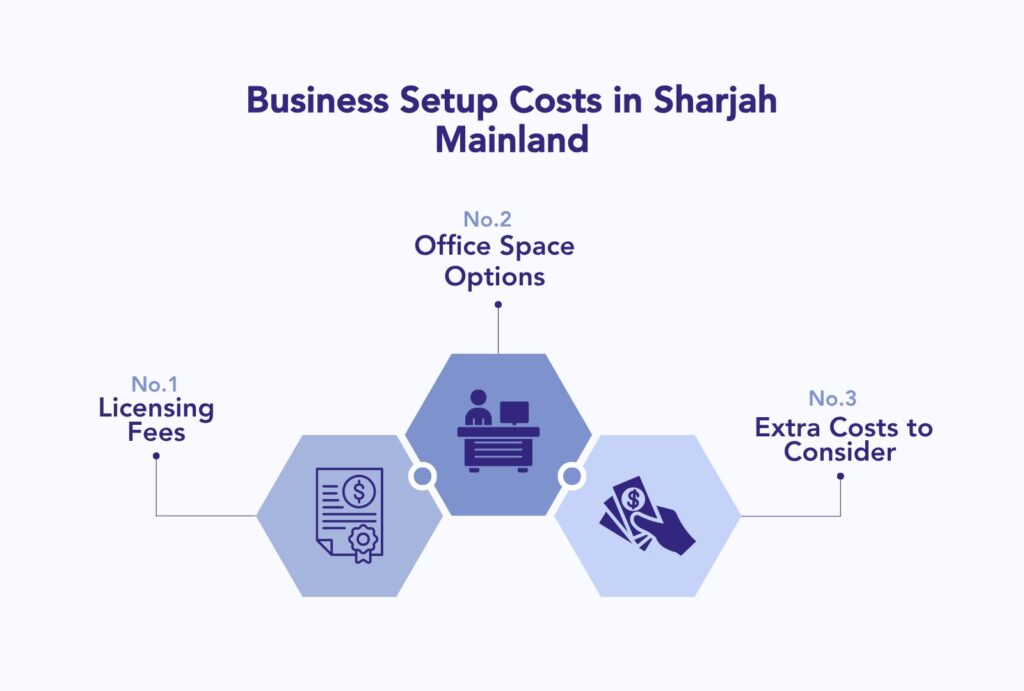
Business Setup Costs in Sharjah Mainland

Why Sharjah Mainland is Perfect for E-Commerce Startups: Setup Costs & Tax Benefits

Starting a business means planning your budget. Sharjah keeps things affordable. That’s why many choose business setup in Sharjah Mainland.


Let’s look at what you’ll need to spend.

1. Licensing Fees

You’ll need a Sharjah Mainland license to run your business legally. The price depends on your activity and setup. And here is the best thing, Sharjah Mainland license gives you access to the UAE and the GCC mainland. No extra approvals. No trade limits. That’s a major win for online sellers.

2. Office Space Options

You don’t need a huge office to get started. Sharjah Mainland company setup gives you options. 

  • Virtual offices
  • Shared desks 
  • Private spaces
  • Even warehouses.

There’s something for every budget.


Many mainland areas in Sharjah offer flexible and low-cost choices. That’s great for startups trying to grow smart.

3. Extra Costs to Consider

There are a few other costs in the mix:

  • Visa applications
  • Emirates ID
  • Medical insurance
  • Government fees

Some Sharjah company formation packages cover these. Others help you handle them step by step.


That’s why company formation in Sharjah is popular with first-time founders. It’s simple. It’s efficient.

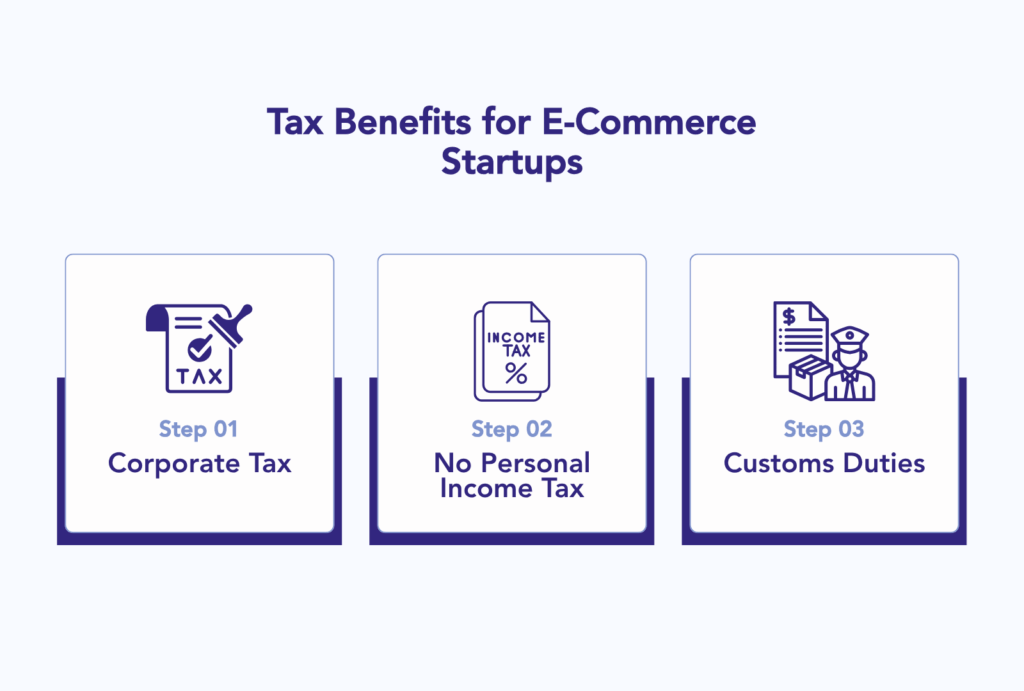
Tax Benefits for E-Commerce Startups

Why Sharjah Mainland is Perfect for E-Commerce Startups: Setup Costs & Tax Benefits

Thinking of starting your e-commerce business in the UAE? Here’s some good news. Sharjah Mainland company setup comes with major tax advantages.

1. Corporate Tax

Yes, the UAE has introduced a 9% corporate tax. But it only applies to profits over AED 375,000.


If you’re just starting out or still growing, you might not hit that number right away. So, for many small e-commerce businesses, there’s no tax burden at the beginning.


It’s one reason mainland company formation in Sharjah is still attractive to startups. You can scale first. Then pay tax only when you’re earning well.

2. No Personal Income Tax

This one’s simple. The UAE does not charge personal income tax.


Whether you’re drawing a salary, taking profits, or just running your store, what you earn is yours. That makes company formation in Sharjah even more appealing for founders.

3. Customs Duties

Customs can affect your e-commerce costs. Normally, goods coming into the UAE have a 5% customs duty.


But here’s the upside — business setup in Sharjah Mainland gives you access to some exemptions and benefits. Especially if your goods are re-exported or fall under specific trade categories. It’s worth checking with SPC Free Zone or your Sharjah company formation advisor for details.


Some packages even help you navigate customs with ease, which saves time and money.

Comparison: Sharjah Mainland vs. Free Zones

Choosing where to set up your business is a big decision. Let’s compare Sharjah Mainland company setup with free zones, so you know what fits best.

1. Ownership Structures

With a Sharjah Mainland license, you can often own 100% of your business. That’s a huge advantage for foreign investors.


Free zones also allow full foreign ownership. But keep in mind, mainland setup often lets you work directly with the local market. Free zones have restrictions on selling to the UAE mainland without a local distributor.

2. Operational Flexibility

Mainland company formation in Sharjah offers broader operational freedom. You can trade anywhere in the UAE and GCC mainland without limits.


Free zones focus on specific sectors and might restrict your activities. For example, some only allow export or international trade.


If you want to sell locally and internationally, business setup in Sharjah Mainland is usually the better option.

3. Cost Implications

Costs can vary widely. Free zones often have fixed fees that include licenses, visas, and office space.


Sharjah Mainland license cost can be lower, especially if you choose flexible office options in mainland areas in Sharjah.


Ongoing fees in mainland setups can be less, but it depends on your business size and needs.

Regulatory Environment and Compliance

Starting a business is not just about knowing how to run it, you need to know rules and abide by them as well. 

Licensing Authorities

If you’re setting up in Sharjah Mainland, your main point of contact is the Sharjah Department of Economic Development (SEDD). They’re the ones who issue your business license. You’ll have to go through them for approvals, renewals, and updates to your license. They also set the guidelines for how businesses should operate across mainland areas in Sharjah.

Compliance Requirements

Once your business is up and running, a few basic rules apply. You’ll need to:

  • Renew your license on time
  • Stick to the approved business activity
  • Keep your invoices and records clear
  • Show accurate product details and pricing on your website

If you sell online, you’ll need to be transparent about delivery, returns, and warranties. This will help you build trust with your customer base.

Consumer Protection Laws

The UAE takes consumer protection seriously. If a customer buys something from your site, they have rights. They should be able to:

  • return faulty goods 
  • know exactly what they’re paying for
  • have the confidence that their data is safe.

Support Systems for E-Commerce Entrepreneurs

Why Sharjah Mainland is Perfect for E-Commerce Startups: Setup Costs & Tax Benefits

Starting an online business isn’t easy. But with the right support, you can go far. Sharjah makes that possible.

Government Initiatives

The UAE is investing heavily in digital business. And Sharjah is keeping pace.
If you’re planning business formation in Sharjah, platforms like Sharjah Media City (Shams) are here to help.


They offer smooth licensing, fast processes, and e-commerce-friendly policies.
Whether you’re going for a Sharjah mainland license or starting out in creative industries, there’s support.


These programs are built for modern businesses—especially those selling online.

Business Communities

A good network can fast-track growth. Sharjah offers just that. Events, workshops, and forums bring entrepreneurs together.


If you’re working on your Sharjah mainland company setup, it helps to be around others doing the same.


Share tips. Find partners. Learn from others who’ve done company formation in Sharjah.

Funding and Grants

Money matters. Especially at the start.


If you’re looking at mainland company formation in Sharjah, know that funding help is available.


From SME grants to startup competitions, there are opportunities worth exploring. Sharjah supports digital entrepreneurs with more than just a license.


So whether you’re just exploring Sharjah company formation or already deep into setup, you’re not alone.

How ADEPTS Facilitates Your E-Commerce Journey

Starting an online business in the UAE? It’s exciting—but also complex.
That’s where ADEPTS comes in.


We guide you through every step of business formation in Sharjah.

Expert Consultation

Not sure where to begin? We help you figure it out.


Our team offers personalised advice on your business structure, market fit, and setup strategy.


Whether you’re going for a Sharjah mainland license or exploring free zones, we tailor the plan to your goals.


No copy-paste solutions. Just real guidance.

End-to-End Services

Licensing? Check.


Compliance paperwork? Sorted.


Financial planning? We’ve got you covered.


ADEPTS supports you with everything needed for smooth sharjah company formation.


From choosing the right trade activity to handling approvals, we simplify the process.


We’ll walk you through costs, timelines, and best practices.

Ongoing Support

Getting your license is just the start. Business success takes ongoing care.


We stay with you long after your Sharjah mainland company setup is complete. Need help with renewals, compliance, or scaling? We’re here.


We believe in building long-term partnerships—not just ticking boxes.

Conclusion

Choosing Sharjah Mainland is smart for your e-commerce business. You get easy access to local and GCC mainland markets. The location is great, and costs are fair. The infrastructure helps your business grow.


A Sharjah mainland license gives you more freedom than free zones. The rules are clear and supportive.


If you want to grow your online business with confidence, Sharjah Mainland is a top choice. Start today and tap into Sharjah’s potential.

FAQs:

There are different e-commerce licenses available. You can pick anyone based on what you want to sell or provide online. Whether it’s products or services, there’s a Sharjah mainland license for you. Picking the right one helps with smooth business setup in Sharjah Mainland.

Yes. This means you don’t need a local partner anymore. It makes company formation in Sharjah easier and more attractive.

Usually, setting up takes about two to four weeks. It depends on the type of license and paperwork. If you get help from experts, the process can be faster. That’s why many choose professional help for sharjah mainland company setup.

Yes, there are rules to keep payments safe. E-commerce businesses must follow UAE Central Bank guidelines. This means secure and trusted transactions. Your Sharjah mainland license should cover these rules to avoid problems.

Usually, yes. But there are options. You can start with a virtual office or a small space depending on your license. This helps keep the sharjah mainland license cost lower. It’s flexible to fit your business needs.

With a Sharjah mainland license, you can sponsor work visas for your employees. The number of visas depends on your office size and business type. This helps you build a strong team as your business grows.

Sharjah Mainland has business groups and government programs to support marketing. This helps your e-commerce brand reach local and GCC mainland customers. It’s a smart choice if you want to grow your online business fast with company formation in Sharjah.

References

Related Articles​​

Ajman vs. Sharjah vs. RAK: A 2026 Cost Comparison Guide for Strategic Business Setup

Everyone wants a business in the UAE in 2026. Its location is perfect. Its economy is strong. And its rules make life easier for investors. The UAE has now entered a phase of economic maturity and national connectivity, supported by major infrastructure developments and a business ecosystem with over 1.4 million active companies as of early 2026.


But, it is not that simple. Many questions, many confusions. First of all, where should you set up?


Ajman, Sharjah, and Ras Al Khaimah (RAK) are three popular options. Each offers low costs, smart policies, and great access to markets. But they’re not the same.


This guide will help you compare them. We’ll break down costs. We’ll look at the pros of each place. And we’ll show you what makes them different.


Why does this matter?


Because choosing the right emirate can save you money. It can also set you up for long-term success. In 2026, as the UAE moves from a reform phase into an enforcement and connectivity phase, these decisions matter more than ever.


Let’s find out which emirate works best for your business dream.

What’s New for 2026

  • Etihad Rail passenger services begin rolling out, strengthening national connectivity between emirates
  • Unified tax penalty enforcement across corporate tax and VAT
  • Updated visa renewal and residency rules affecting investors and business owners

Understanding Free Zones and Mainland Setups

When starting a business in the UAE, you’ll often hear two terms – Free Zone and Mainland. These are two different types of business setups.


Free Zones are special areas that offer benefits to foreign investors. You can own 100% of your company under an established regulatory framework. But you’re usually limited to doing business inside the Free Zone or internationally.


Mainland setups let you trade freely across the UAE. You can work with local markets, government contracts, and more. Under Federal Decree-Law No. 20 of 2025, mainland companies are treated as corporate citizens, allowing them to bid for government tenders on the same basis as national companies.

Ownership and Business Freedom

In Free Zone companies, you get full ownership as a foreigner. No local partner is needed. That’s a big plus for many investors.


In the Mainland, 100% foreign ownership is now the default standard for over 1,000 licensed activities under an established regulatory framework. But depending on the business type, a local service agent may still be required in limited regulated sectors.


Mainland businesses can operate anywhere in the UAE, while Free Zone businesses are mostly limited to within their zone or abroad – unless they partner with a local distributor.

Tax Perks and Other Benefits

Free Zones usually offer 0% corporate tax for qualifying businesses, full profit repatriation, and no import/export duties within the zone.


Mainland companies are now under the UAE corporate tax, but small businesses with revenue under AED 3 million can still get tax relief until the Small Business Relief sunset in 2026.


The 2026 Small Business Relief (SBR) Sunset


From 2026 onward, businesses can no longer assume automatic Small Business Relief, making early tax planning critical as enforcement tightens.


Both setups allow 100% repatriation of profits, and both offer strong legal protections.

Ajman: Affordable Entry with Strategic Access

Ajman vs. Sharjah vs. RAK: A 2025 Cost Comparison Guide for Strategic Business Setup

Ajman Free Zone is one of the most budget-friendly options in the UAE. It’s perfect if you’re thinking about ajman mainland business setup.

Licensing Costs

You can get started from just AED 5,555 for zero-visa packages. That’s one of the lowest rates in the country.

Who It’s For

Ajman mainland business setup is great for SMEs, freelancers, and e-commerce businesses. If you’re testing a new idea or running a lean operation, this zone makes sense.

What You Get

They offer smart offices, warehouses, and co-working spaces. You can scale up as your business grows. New commercial inventory has expanded further with large-scale integrated developments supporting ajman mainland company office space.

Tax Perks

No VAT when you trade within the zone or between other free zones. That means more savings on operating costs.

Business Boom

There’s been a sharp rise in new setups lately, especially among AI-integrated SMEs and fast-growing e-commerce hubs. That’s a strong sign of trust in Ajman’s business environment. Business setup in Ajman mainland is something everyone is thinking about. This momentum is further supported by the Tiger Downtown Ajman integrated city project (4.27 million sqm), updated in January 2026, which is reshaping commercial activity in the emirate.

Ajman Media City Free Zone

If your work is in media, content, or digital services, this Free Zone was built for you.


Industry Focus


It supports media-related businesses with flexible, affordable licensing options.


Why It’s Popular


You get a fast setup and low-cost packages for ajman free zone companies. Great for creatives, content creators, and agencies.


The 2026 Influencer & Solo-Entrepreneur Package


New packages now start from AED 2,500 for single-account setups, designed specifically for influencers, freelancers, and solo digital entrepreneurs.

Sharjah: Cultural Capital with Diverse Opportunities

Ajman vs. Sharjah vs. RAK: A 2025 Cost Comparison Guide for Strategic Business Setup

Sharjah is a strong player in the UAE business scene. Yes, it’s known for its rich heritage too. With multiple Free Zones and Mainland options, it offers something for almost every type of entrepreneur. Business setup in Sharjah is further supported by the emirate’s AED 44.5 billion 2026 budget, with a 17% increase in economic development spending.

Sharjah Airport International Free Zone (SAIF Zone)

SAIF Zone is one of the most established Free Zones in the UAE. It sits right next to Sharjah International Airport. This location makes it a smart choice for international businesses.

Licensing Costs

The rates are competitive, especially considering the range of services and infrastructure. You get good value—modern offices, warehouses, and even labor housing options.

Who It’s For

SAIF Zone is ideal if you’re in aviation, logistics, or manufacturing. Many cargo and trading companies pick this zone for its connectivity and speed.

SAIF Zone Liquidation Update

Company liquidation is now processed with an approximate AED 2,000 fee and an average timeline of three weeks, helping investors plan exits or restructuring more efficiently.

Hamriyah Free Zone

Ajman vs. Sharjah vs. RAK: A 2025 Cost Comparison Guide for Strategic Business Setup

This zone is known for heavy industries and large-scale manufacturing. Its biggest strength? Access to a deep-water port and its own internal road network.


If your business needs space, shipping routes, and cost control, Hamriyah is a great fit. It also offers land for long-term lease, making it a smart choice for factories and industrial hubs.

Sharjah Media City (Shams)

Shams is a newer Free Zone, but it’s growing fast. Built for the creative and media sectors, it’s ideal for content creators, marketers, designers, and tech startups.

What You’ll Like

Shams offers very affordable packages, including freelance and zero-office license options. Licenses now start from AED 5,750. You can set up quickly, even without a physical space, and upgrade later when needed. The infrastructure is sleek and digital-friendly—perfect for modern businesses.

Sharjah Mainland Opportunities

Looking beyond Free Zones? Sharjah Mainland is opening up. Commercial tenants now benefit from the Sharjah Rental Index launched for 2026, bringing more transparency to lease pricing. Connectivity is also improving with the upcoming University City Etihad Rail Station set for 2026.

  • Ownership Made Easy
    Thanks to new laws, many business types now allow 100% foreign ownership. That means you can have full control—no local partner needed in many sectors.

  • Access to Local Markets
    Unlike Free Zones, Mainland businesses can serve the entire UAE directly. If your goal is to work with local clients, retail, or government contracts, the Mainland setup gives you that reach.

Ras Al Khaimah (RAK): Industrial Hub with Cost Advantages

Ajman vs. Sharjah vs. RAK: A 2025 Cost Comparison Guide for Strategic Business Setup

RAK is rising fast as a go-to spot for serious business. It’s calm, cost-effective, and packed with potential—especially if you’re in trade, logistics, or manufacturing. The emirate is also targeting 3.5 million annual visitors by 2030, signalling long-term economic expansion.

RAK Economic Zone (RAKEZ)

RAKEZ is one of the most affordable Free Zones in the UAE. It offers strong support for all kinds of businesses, from solo entrepreneurs to big factories.

Licensing Costs

You can launch your business for as low as AED 6,000 under the RAKEZ BizStarter package. That’s great value for startups and small businesses.

Industries Covered

RAKEZ welcomes a wide range of sectors. Manufacturing, trading, services, consulting—you name it. The flexibility is a big plus.

Facilities

Need a small office or a big warehouse? RAKEZ gives you both. You can even lease land plots to build your own facility. It grows with your business. This offering is expanding further with RAK Central, a major mixed-use destination opening in 2026, featuring the largest Grade-A office district in the Northern Emirates.

Tax Benefits

Expect corporate tax exemptions and customized packages. The zone is designed to keep your costs low and profits high.

RAK Maritime City Free Zone

If your business touches the sea—shipping, logistics, marine services—this zone is built for you.

Business Focus

RAK Maritime City is perfect for maritime and logistics operations. It offers a full range of port services.

Why Choose It?

It’s in a strategic spot with direct access to shipping lanes. That means smoother trade and faster operations for export-focused businesses. Demand has accelerated due to the “Wynn Effect,” as the upcoming 2027 resort development continues to drive commercial and property interest throughout 2026.

RAK: The Emerging Tech & Blockchain Hub

RAK is increasingly positioning itself as a destination for tech, digital asset, and blockchain-focused companies, supported by flexible licensing, lower operating costs, and growing international investor interest.

Comparative Analysis: Ajman vs. Sharjah vs. RAK

So, which emirate should you choose? Let’s break it down.

Cost Comparison — 2026 Benchmark Table

Emirate License Cost (2026) Visa Package (2026)
Ajman
AED 5,555
AED 13,131 (1-Visa Package)
RAK
AED 6,000
AED 16,500 (All-inclusive Visa Package)
Sharjah (Shams)
AED 5,750
AED 11,500 (1-Visa Package)


Operational Costs


Rent, utilities, and other expenses tend to be lower in Ajman and RAK. Sharjah offers more premium facilities, which can raise costs depending on your needs. In 2026, commuter lifestyle costs in Ajman and RAK remain approximately 30–40% cheaper than Dubai and Abu Dhabi.

Industry Suitability

Ajman


Perfect for startups, freelancers, and online businesses. The ajman mainland business setup is quick, simple, and budget-friendly. This also supports early-stage founders exploring company formation in Ajman at lower entry costs.


Sharjah


Great if you’re in media, education, culture, or light manufacturing. It offers both creative and industrial zones.


RAK


Best for industrial, trading, and export-focused businesses. It’s built for scale and serious growth.

Strategic Advantages

Ajman


Close to Dubai but with much lower costs. A smart pick if you want access without the price tag. Ajman free zone companies can be started with limited budget. 


Sharjah


Well-connected to both Dubai and the Northern Emirates. It balances location with sector diversity.


RAK


Offers incentives for industrial development. Plus, it’s excellent for export-heavy businesses with port access and large-scale facilities. Rail connectivity has also improved commute times, with RAK to Abu Dhabi now achievable in approximately 70 minutes via rail in 2026.

Key Considerations for Business Setup in 2025

Before you make your move, here are a few things to keep in mind. These factors can shape your success, especially in today’s fast-moving business world.

Regulatory Changes

Rules in the UAE are changing. In 2026, more sectors now allow 100% foreign ownership under an established regulatory framework. Corporate tax is now in an active compliance enforcement phase, and businesses must plan carefully. Small Business Relief (SBR) ends on December 31, 2026, and a 14% annual interest on late corporate tax payments applies from April 2026.


Tip: Always check the latest policies before you set up. Late registration penalties may still be waived under the Labaih Initiative if the first corporate tax return is filed within 7 months. Staying compliant saves time and money.

Economic Trends

Not all industries grow the same way. Some sectors—like tech, logistics, AI, digital trade, and clean energy, are booming in 2026. Others are slowing down.


Tip: Choose a business that fits current demand. It gives you a better shot at success.

Infrastructure Developments

Big projects are shaping the future. New roads, ports, airports, and business parks are popping up—especially in RAK and Sharjah. National rail connectivity and integrated mixed-use developments are improving market access and reducing logistics costs in 2026.


Tip: Look at what’s coming next, not just what’s already built.

Talent Acquisition

People matter. Make sure your chosen emirate has access to the skilled workers your business needs. Sharjah and RAK have growing talent pools, and Ajman is catching up too. Wage structures and Emiratisation compliance are now more closely monitored.


Tip: Think about hiring early. It can affect how fast you grow.

New 2026 Visa Renewal Rules

Visa renewals now require stricter documentation, including:

  • Ejari or lease registered in the company’s trade name
  • UAE utility bill in the visa holder’s name
  • Minimum AED 50,000 corporate bank balance maintained during visa processing

How ADEPTS Can Assist You

Setting up a business in the UAE can feel overwhelming. But you don’t have to do it alone.

Expertise You Can Trust

At ADEPTS, our team of seasoned Chartered Accountants knows the ins and outs of the UAE business setup process. We make it easier, faster, and stress-free.

What We Offer

Business Advisory
We help you choose the right emirate, build smart strategies, and plan your market entry based on your goals.


Taxation and Compliance
Worried about taxes or new laws? We make sure your business meets all UAE tax and legal requirements, without the headaches. This includes 2026 Compliance Audits and proactive penalty risk assessments.


Valuation and Mergers
Thinking about growth? We provide accurate business valuations and support for mergers and acquisitions to help you scale safely.


Transfer Pricing
If you’re operating across borders or with multiple entities, we offer full transfer pricing solutions that keep you compliant and efficient.


VAT Credit Recovery
We help businesses recover eligible VAT credits before the 5-year expiry deadline, including credits originating from 2021.


Payroll & Emiratisation Compliance
With the AED 6,000 minimum wage for Emiratis in the private sector effective from January 1, 2026, ADEPTS ensures accurate payroll structuring and compliance reporting.


Golden Visa Eligibility Consultations
We guide entrepreneurs and investors seeking 10-year residency stability through Golden Visa eligibility and application assessments in 2026.

A Focus on You

ADEPTS puts your success first. Every business is different, and we offer customized services to match your exact needs.

Conclusion

Your choice of emirate can shape your future. So look at your budget, industry, and growth goals before making the call.

  • Ajman is ideal if you want low costs and easy entry.


  • Sharjah gives access to creative, industrial, and local markets.


  • RAK is perfect for larger operations, manufacturing, and exports.

FAQs:

Visa offers are quite a few in these emirates. You can get multiple visas for your business. The number will depend on the type of your business. The system is flexible. But, it’s not restrictive. In 2026, partner and investor visa renewals now require verified operational presence and stricter documentation.

Yes. Company switching is as easy as company formation in Ajman. There are quite a few things to do, though. You’ll need to de-register your Free Zone entity and set up a fresh Mainland license. New paperwork, new approvals—but totally doable. Many businesses take this step when they’re ready to expand into the UAE’s local market. This process is now more closely reviewed during visa and bank compliance checks in 2026.

Nope. You can send your profits and capital back home anytime—100%, no limits, no hassles. That’s one of the biggest perks of doing business in UAE Free Zones. This remains unchanged in 2026.

In most Free Zones, it’s fast—usually between 1 to 5 working days if your documents are in order. Mainland setups might take a bit more time due to extra approvals, but overall, UAE is known for efficient processing. However, post-setup compliance and documentation checks are more detailed in 2026.

Yes. Certain activities—like finance, insurance, or legal consulting—may require special approvals or may not be allowed in Free Zones. Always double-check with the authority before finalizing your business activity. Regulatory enforcement around activity mismatches has tightened in 2026.

Not necessarily. Many Free Zones offer flexi-desk or shared office options that still allow you to get a license and visa. However, in 2026, a physical office is mandatory for partner and investor visa renewals. But if you want more visas or plan to store inventory, a physical ajman mainland company office space like a private office or warehouse might be required.

It’s doable, but banks will ask for solid documentation—your license, passport, business plan, invoices, and maybe some client contracts. Free Zone companies can open accounts with both local and international banks, though timelines vary. In 2026, banks strictly scrutinize a minimum 6-month active account history during renewals and compliance reviews.

Small Business Relief (SBR) remains available only until December 31, 2026. After this date, businesses must prepare for full corporate tax compliance without relief.

References

Related Articles​​

The ADGM Holding Company Advantage: Why Global Corporations Are Choosing ADGM Over DIFC in 2026

ADGM is stealing the spotlight — and for good reason.


In 2026, more global companies are choosing ADGM over DIFC to set up their holding companies, as it offers greater flexibility, speed, and better streamlined regulations.


Corporate Tax is now in an enforcement phase, and the “0%” outcome is conditional — it depends on QFZP eligibility, qualifying income, and clean compliance.


Corporate Tax registration still matters even where you expect 0%, and penalties are real (with a waiver pathway available if you act within the required window).


And for larger global groups, Pillar Two and potential top-up tax considerations mean the “tax advantage” conversation needs to be viewed through a sharper 2026 lens.


If you’re starting a business or planning a restructuring, this matters.


ADGM is giving founders, investors, and operators a much smoother path, and the world is paying attention.

Overview: What’s Really Going On

DIFC has long been the UAE’s financial heavyweight. No doubt about it. But it was built with banks in mind.


It remains a major hub for financial services and private wealth, with a strong presence in banking, asset management, and structured finance. 


Today’s companies are different. They’re leaner. Faster. Digital-first. And they want fewer roadblocks.


That’s why ADGM is on the rise.


It’s attracting startups, holding groups, family offices, and investors from around the world.
They’re setting up SPVs, foundations, and holding structures with minimal friction and maximum control.


At the same time, DIFC has also evolved in 2026, particularly with the introduction of its Variable Capital Company (VCC) regime, strengthening its toolkit for investment structuring and multi-cell portfolio platforms. 


In other words, the competition isn’t static — both centres are adapting, but in slightly different ways.


And let’s not forget where it’s located: right next to ADIA, Mubadala, ADQ — some of the biggest capital pools on the planet.

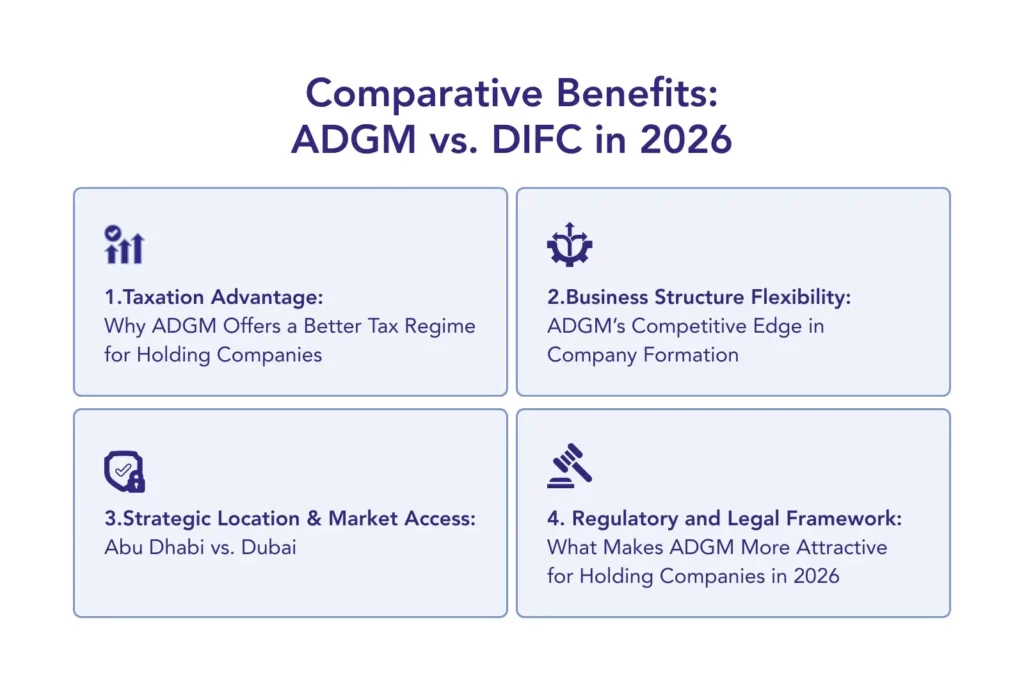
Comparative Benefits: ADGM vs. DIFC in 2026

Comparative Benefits: ADGM vs. DIFC in 2026

Looking at ADGM vs DIFC? It’s not just about geography — it’s about control, clarity, and long-term savings.


Let’s unpack what sets ADGM apart in 2026 for holding companies.

Feature ADGM Holding Company (SPV / Foundation) DIFC Holding Company (Prescribed Co)
Legal System Direct English Common Law Independent Common Law (DIFC Laws)
Registration Fee Revised fee framework (effective 2025 onward; activity dependent) Activity-based fee framework (generally higher for regulated structures)
Court System Independent Courts with fully digital filing and virtual capability Independent Courts with hybrid (digital + physical) capability
Data Protection Reciprocal adequacy recognition (ADGM–DIFC–QFC, 2026) Reciprocal adequacy recognition (DIFC–ADGM–QFC, 2026)
Capital Proximity ADIA, Mubadala, ADQ (Sovereign ecosystem) Regional HQs, Private Banks, Wealth Managers
Dual Licensing Abu Dhabi DED pathway available (subject to approval) Separate Dubai DED licensing required for mainland activity

1. Taxation Advantage: Why ADGM Offers a Better Tax Regime for Holding Companies

In 2026, taxes aren’t just numbers — they shape your entire business strategy. And when it comes to holding companies, ADGM is gaining serious ground over DIFC.


Here’s why.


ADGM offers access to the 0% corporate tax rate — but only under specific conditions. The 0% result is available for Qualifying Free Zone Persons (QFZP) on qualifying income, subject to strict conditions. Your company must earn qualifying income (like dividends or capital gains), avoid commercial activity in the UAE mainland, and meet substance requirements as defined in the UAE Corporate Tax Law. It’s not automatic, but it’s very real.


That’s not all. There’s no withholding tax on dividends, no capital gains tax, and no restrictions on profit repatriation. For holding structures with passive income, these ADGM tax advantages are hard to ignore.


What makes ADGM even more attractive is predictability. Its tax framework is defined in federal law, not just free zone policy. That means fewer surprises — and stronger investor confidence.


DIFC, meanwhile, still uses its “tax-free” positioning, but it’s under growing pressure. With global standards like OECD’s BEPS rules kicking in, the DIFC tax comparison is changing. ADGM’s alignment with international norms makes it easier for founders to stay compliant and credible across jurisdictions.


It all comes down to structure. ADGM gives holding companies legal clarity and long-term stability. DIFC’s setup depends more on internal decisions, and that could shift.


The trend speaks for itself. Holding company formation in ADGM has surged in early 2026. More founders, family offices, and global players are choosing ADGM over DIFC.


If your goal is to stay agile, compliant, and globally connected, a properly structured 0% ADGM holding company might be exactly the edge you need.

2026 Compliance Reality: QFZP Is Proven, Not Claimed

In 2026, the 0% outcome must be demonstrated and not assumed. To qualify and retain QFZP status, holding companies must show:

  • Qualifying income under the Corporate Tax framework
  • Adequate substance in the UAE
  • Arm’s length pricing for related-party transactions (transfer pricing compliance)
  • Audit-ready financial records and documentation

Registration for Corporate Tax remains mandatory, even where a 0% outcome is expected, and late registration can trigger penalties — although a waiver pathway exists where conditions are met.

2026 Update for Global Groups: Pillar Two / Top-Up Tax Considerations

For large multinational groups within the OECD threshold, Pillar Two and potential 15% minimum effective tax (via top-up mechanisms) are now part of the structuring discussion.

  • This applies only to in-scope large MNE groups
  • It can impact the practical benefit of the 0% narrative in certain structures
  • It does not remove the legal, governance, or structural advantages of ADGM for holding companies

2. Business Structure Flexibility: ADGM’s Competitive Edge in Company Formation

If you’re setting up a holding company in the UAE, structure matters. And in 2026, ADGM is giving founders more room to build what fits, and not just what’s allowed.


ADGM company formation supports a wide mix of legal setups. You’ll find everything from SPVs and family offices to VC platforms and limited partnerships. Whether you’re planning cross-border investments or raising funds, the structure can match your strategy.


The ADGM company setup process is also fast and completely digital. No long waits, no paper piles. You register online, get approvals quicker, and focus on building instead of chasing documents.


Costs? Way leaner. Especially for non-financial entities. Lower licensing fees, simpler renewals, and less red tape mean more breathing room for founders. The long-term maintenance costs are predictable and designed for scale.


It’s also worth noting that ADGM implemented a commercial licence fee revision effective 2025 onward, realigning costs for non-financial holding structures and making ongoing maintenance more commercially efficient. This was a structural fee adjustment — not a temporary incentive.


By contrast, DIFC company setup tends to be heavier. It’s well-established, yes — but the process is more layered. Licensing is stricter. Fees are higher. And holding structures often face tighter controls.


That said, DIFC also offers lean vehicles such as Prescribed Companies and, in 2026, strengthened its investment structuring framework through the Variable Capital Company (VCC) regime. For certain fund and umbrella structures, this can be strategically relevant.


That’s why ADGM is winning both startups acnd global players. Its flexible, sandbox-ready approach makes it easier to launch, test, and grow — without being boxed in.


Whether you’re early-stage or managing global assets, holding company formation in ADGM offers a setup that grows with you.


Best fit? ADGM often makes sense for digital-first holding companies, IP platforms, and sovereign-aligned investment structures, while DIFC may remain attractive for private wealth platforms and regulated financial activity.


In 2026, agility is a strategy. ADGM is built for both.

3. Strategic Location and Market Access: Abu Dhabi vs. Dubai

If you’re setting up a holding company in the UAE, location isn’t just about a pin on the map — it’s about access, alignment, and future reach.


ADGM sits in Abu Dhabi, giving founders something DIFC can’t: proximity to Europe, Asia, and Africa — all from a stable, globally connected base. That kind of geographic positioning makes a difference when your business crosses borders.


But the edge goes beyond maps. Abu Dhabi is the capital, home to sovereign wealth funds, embassies, and national regulators. That means ADGM companies don’t just operate near power, they’re woven into it. If you’re raising capital or navigating policy, being near the decision-makers helps.


That connectivity extends into trade. ADGM companies benefit from Abu Dhabi’s Khalifa Port, the Etihad Rail network, and expanding air freight corridors. For holding companies involved in import/export, supply chains, or global asset flows, this infrastructure brings speed and scale.


DIFC, meanwhile, benefits from Dubai’s deep commercial ecosystem, international brand visibility, and concentration of regional headquarters. It remains highly visible across MENA and South Asia and is widely recognised among global financial institutions.


The difference is less about limitation and more about positioning: DIFC operates within Dubai’s dynamic private-sector environment, while ADGM is closely aligned with Abu Dhabi’s sovereign capital base and national policy framework.


DIFC still carries brand value, no doubt. It’s visible in the MENA and South Asia region, and widely known among financial circles. But for many sectors, its reach can feel regionally boxed in. ADGM, on the other hand, is designed for international growth from day one.


And all of this isn’t accidental. ADGM’s positioning ties directly into Abu Dhabi Vision 2030, a bold plan to make the UAE an innovation-led, globally diversified economy. So when you base your holding company in ADGM, you’re aligning with a national strategy and gaining long-term policy momentum at your back.


For founders building across borders, the location question is simple: DIFC gives you reach across the region.


ADGM gives you reach across the world.

4. Regulatory and Legal Framework: What Makes ADGM More Attractive for Holding Companies in 2026

If you’re managing global assets, the legal foundation you build on matters, and ADGM gives holding companies an edge where it counts.


Start with the law itself. ADGM applies English common law directly, just as it’s practiced in the UK. That’s a game-changer when it comes to contracts, trusts, shareholder rights, and cross-border structuring. It gives international founders a legal language they already know and trust.


Backing that is ADGM’s independent court system. No need to rely on local federal courts. You get a dedicated judiciary that understands international commercial disputes, enforces foreign judgments, and upholds complex holding structures with global components.


This legal clarity matters, especially when you’re dealing with multi-jurisdictional subsidiaries, IP assets, or real estate portfolios. The ADGM legal system ensures that ownership structures stay clean, enforceable, and predictable, no matter how complex your setup.


Now compare that to DIFC. Yes, it also uses English common law. Both jurisdictions operate sophisticated independent court systems and internationally recognised legal frameworks. The difference often lies in structuring flexibility and strategic alignment rather than legal capability alone.


In 2026, legal strength matters most when paired with Corporate Tax governance, substance documentation, and audit-ready records. A strong court system supports your structure — but compliance sustains it.


Another important 2026 development is the reciprocal adequacy recognition framework between QFC, ADGM, and DIFC, enabling smoother data transfers between these financial centres without additional cross-border safeguards in most cases.


What this means in practice:

  • Shared service functions can move operational data more efficiently across these hubs
  • HR and payroll data transfers between group entities face fewer friction points
  • Client KYC and compliance documentation can be structured with greater cross-centre consistency

And if you’re thinking long-term? Legal predictability reduces risk, fewer disputes, cleaner intercompany transfers, and enforceable shareholder agreements. That’s what global players are really after: control, protection, and peace of mind.


So, whether you’re scaling a multinational portfolio or just laying the foundation, holding company legal requirements are easier to meet and future-proof in ADGM.

Why Holding Companies Are Choosing ADGM for Long-Term Growth

Long-term growth isn’t just about profit anymore — it’s about purpose. And ADGM is helping holding companies invest in what comes next.

Sustainability and Emerging Sectors: How ADGM Supports Green Holding Structures

The future is green. And ADGM is already there.


ADGM is supporting this shift with a powerful framework for sustainable holding companies. Its regulations are built to support green funds, cleantech investments, and ESG-aligned asset structures. Whether you’re managing impact portfolios or green infrastructure, ADGM has the right setup.


This is why family offices, VC firms, and corporate arms are choosing ADGM for their green-tech investment holdings. It offers flexibility for complex portfolios — from renewable energy to climate innovation, without the regulatory headaches.


ADGM also stands out for its proactive regulatory support. You’ll find green investment guidelines, climate disclosure frameworks, and direct partnerships with sustainability platforms. 


Yes, there is no doubting the fact that DIFC is evolving. Both ADGM and DIFC continue to develop sustainable finance and ESG-focused initiatives within their respective regulatory frameworks.


In 2026, ESG alignment increasingly forms part of governance standards and investor due diligence expectations.


Why does it matter? Because the UAE green investment is growing fast. Global capital is chasing ESG. And investors want structures that check all the boxes — governance, compliance, impact.


With ADGM, that’s built in. From ADGM fintech regulations to its support for ESG reporting, it’s a clear win for holding companies with future-focused portfolios.


If you’re planning long-term, there’s no better time to build green in ADGM.

The Future Belongs to Agile Jurisdictions — ADGM Is Leading the Way

The Future Belongs to Agile Jurisdictions — ADGM Is Leading the Way

As UAE Corporate Tax moves deeper into its enforcement phase in 2026, and registration and penalty outcomes matter more than ever (including the waiver pathway where conditions are met), cross-border holding structures are now being judged as much on proof and governance as on design.


For larger multinational groups, Pillar Two and potential top-up tax exposure also sit in the background of every “0%” conversation, shaping how global HQs assess effective tax outcomes.


And DIFC is not standing still either — its 2026 Variable Capital Company (VCC) regime is a real structural evolution for investment platforms, especially for umbrella-style and multi-cell portfolio needs.


With its clear tax framework, English law foundation, digital-first incorporation, and direct access to sovereign capital, ADGM is proving to be more than just an alternative to DIFC, it’s becoming the jurisdiction of choice for founders, family offices, private equity platforms, and multinational holding structures.


What makes ADGM especially compelling in 2026 is its ability to support businesses at every stage, from early-stage VC holdings to institutional ESG portfolios and UAE cross-border M&A hubs. It’s not just built for compliance; it’s built for scale, stability, and strategic growth.


The smartest choice, though, is always fit-for-purpose: ADGM vs DIFC depends on your structure, your scale, your compliance profile, and what you need the holding vehicle to actually do.

2026 Strategic & Compliance Checklist: ADGM vs DIFC

Use this checklist to stress-test your holding structure against 2026 enforcement, tax, and governance realities.

Jurisdiction Positioning

  • Capital Ecosystem Mapping
    Assess whether your growth strategy depends on Abu Dhabi’s sovereign capital base (ADIA, Mubadala, ADQ) or Dubai’s private wealth and financial services ecosystem. Structure alignment should reflect where your capital relationships actually sit.

  • Mainland Access Strategy
    If operational trading is expected, determine whether a dual licensing pathway (where available) or a separate DED licence is required. Do not assume free zone status automatically permits mainland activity.

Legal & Structural Framework

  • Vehicle Selection Validation
    Confirm whether an SPV, Foundation, Prescribed Company, or other structure best matches your ownership, succession, and asset-holding objectives.

  • Common Law Alignment Review
    Validate whether ADGM’s direct application of English common law or DIFC’s independent common law framework better supports your shareholder protections and cross-border enforceability needs.

  • Investment Platform Assessment
    If managing umbrella or segregated portfolios, evaluate whether the ADGM structures or the DIFC’s VCC regime is strategically more appropriate.

Corporate Tax Positioning (2026 Enforcement Phase)

  • QFZP Eligibility Assessment
    Determine whether your holding company genuinely qualifies as a Qualifying Free Zone Person (QFZP) under current Corporate Tax rules. In 2026, eligibility must be evidenced — not assumed.

  • Qualifying Income Classification Review
    Confirm that dividend, capital gain, and other passive income streams fall within qualifying income definitions under the Corporate Tax framework.

  • Substance & Transfer Pricing Readiness
    Ensure adequate substance in the UAE and maintain arm’s length documentation for related-party transactions. Audit-ready records are now part of defensible structuring.

  • Corporate Tax Registration & Timeline Control
    Verify that registration obligations are met within prescribed timelines. Late registration exposes the entity to penalties, even where a 0% outcome is anticipated.

  • Pillar Two Exposure Check (Large Groups Only)
    For in-scope multinational groups, assess whether global minimum tax or top-up exposure affects the practical benefit of a 0% Free Zone outcome.

Governance & Compliance Infrastructure

  • Board & Governance Documentation Review
    Align board resolutions, shareholder agreements, and governance records with 2026 Corporate Tax and audit expectations.

  • Corporate Service Provider (CSP) Oversight
    Confirm that your registered office and CSP arrangements are compliant and actively managing statutory, AML, and filing obligations.

  • Data Transfer & Group Operations Review
    Where operating across ADGM, DIFC, or QFC, ensure data governance practices align with reciprocal adequacy recognition frameworks and cross-centre operational flows.

ESG & Sustainability Alignment

  • ESG & Sustainability Mapping
    Assess whether your holding structure aligns with ADGM’s sustainable finance frameworks or DIFC’s ESG initiatives. In 2026, ESG alignment increasingly forms part of governance standards and investor due diligence expectations.

In 2026, a holding structure is evaluated not just on formation efficiency — but on tax defensibility, governance clarity, and regulatory alignment.

Ready to Set Up in ADGM?

If you’re considering a holding company in the UAE, start with the jurisdiction that aligns with your long-term goals. At Adepts, we guide businesses through the full ADGM setup process from selecting the right legal structure to ensuring regulatory compliance and tax efficiency.


In 2026, that also means compliance-safe structuring — including structure selection aligned to your group profile, QFZP suitability checks, Corporate Tax registration timeline management and penalty mitigation, and governance and substance documentation readiness.


Reach out for a tailored consultation and build where the future is already taking shape.

FAQs:

Dividends and capital gains can still result in a 0% outcome if the entity qualifies as a Qualifying Free Zone Person (QFZP) and earns qualifying income under the Corporate Tax framework. However, this is conditional. In 2026, eligibility must be evidenced through substance, transfer pricing compliance, and audit-ready documentation. Corporate Tax registration is mandatory even where a 0% outcome is anticipated.

Yes. ADGM permits 100% foreign ownership without requiring a UAE national shareholder or local sponsor. This applies to SPVs, Foundations, and most non-regulated holding company structures. For international founders and family offices, this ensures full control over governance, dividend policy, and succession planning.

Yes. ADGM allows redomiciliation from approved jurisdictions, including common offshore centres such as BVI and Cayman. This enables a company to maintain legal continuity while shifting into ADGM’s common law framework. Redomiciliation is often used to enhance banking credibility, align with UAE Corporate Tax governance, and strengthen institutional perception.

Yes. An ADGM SPV can legally hold UAE real estate (subject to land department rules) and global intellectual property assets. Structuring must be reviewed carefully to ensure that income classification supports qualifying income treatment where relevant. If mainland commercial activity exists, licensing and Corporate Tax implications must be assessed in advance.

Both ADGM and DIFC offer Foundations for succession planning and asset protection. ADGM applies English common law directly, while DIFC operates under its own independent common law framework. The practical difference typically lies in structuring flexibility, governance design, and ecosystem alignment rather than legal enforceability, as both are internationally recognised regimes.

ADGM entities may apply for a dual licensing pathway with the Abu Dhabi Department of Economic Development (ADDED), allowing certain activities to be conducted in the mainland while maintaining the ADGM legal structure. Approval is activity-specific and subject to regulatory conditions. Free zone status alone does not automatically permit mainland operations.

Following the Al Reem integration and fee realignment effective from 2025 onward, ADGM remains commercially competitive for non-regulated holding structures. However, costs depend on the specific activity, structure type, and service provider requirements. Direct comparisons should be made on a case-by-case basis rather than relying on headline figures.

The DIFC Variable Capital Company (VCC) regime enhances structuring flexibility for umbrella-style and segregated portfolio investment platforms. It allows asset ring-fencing within a single legal vehicle and supports fund-like structures without necessarily requiring a full traditional fund setup. For multi-cell investment platforms, this can be strategically relevant.

Yes. Reciprocal adequacy recognition between ADGM, DIFC, and QFC enables smoother data transfers between these financial centres without additional cross-border safeguards in most standard scenarios. This reduces operational friction for group entities sharing HR, KYC, and compliance data across jurisdictions.

For SPVs and many holding structures, a physical office is generally not required, provided a licensed Corporate Service Provider (CSP) supplies a registered address in line with regulatory standards. Regulated or operational businesses may face different requirements depending on activity classification and substance expectations.

It is possible, but subject to bank-specific due diligence. Banks will assess beneficial ownership, business rationale, source of funds, and governance documentation. While a physical office is not automatically required for SPVs, strong compliance records and transparent structuring significantly improve approval prospects.

Regulated entities under ADGM oversight are generally expected to maintain internal reporting mechanisms that allow confidential reporting of misconduct or regulatory breaches. Requirements vary depending on licensing category, but governance frameworks increasingly require documented whistleblower procedures aligned with international compliance standards.

ADGM applies English common law directly, as updated from time to time, which enhances predictability for cross-border contracts and dispute resolution. This alignment supports enforceability in international transactions and provides familiarity for global investors accustomed to UK legal principles.

Generally, Golden Visa holders are not required to obtain a No Objection Certificate (NOC) from a sponsor when establishing their own holding structure. However, individual visa conditions and employment status should always be reviewed to ensure compliance with residency and labour regulations.

ADGM Courts operate a highly digital system with virtual filing and remote hearing capability. Many proceedings can be conducted online, increasing accessibility for international parties. The specific format of hearings may depend on case type and judicial direction, but the infrastructure is designed for digital-first dispute resolution.

References

Related Articles​​

Why Abu Dhabi Mainland Is the Top Choice for Entrepreneurs in 2025

What if the next global startup success story came out of Abu Dhabi?

Sounds surprising? It shouldn’t.

Over the past few years, the UAE’s business scene has been picking up serious momentum, and while Dubai often gets the headlines, Abu Dhabi mainland business setup has been quietly turning into a magnet for entrepreneurs. 

It’s strategic, it’s well-funded, and it’s got a plan — not just for big corporations, but for fresh ideas and bold thinkers.

The entrepreneurial landscape in the UAE is changing fast, and 2025 looks like a major turning point. From supportive government policies to simplified Abu Dhabi mainland license procedures, it’s becoming easier than ever to take that leap into starting something of your own.

In this article, we’re diving into what’s really happening in Abu Dhabi right now: the benefits of starting a business here, the legal and financial incentives, the infrastructure backing it all up, and how the government is playing a hands-on role in helping businesses succeed, whether you’re exploring Abu Dhabi mainland company formation or just testing the waters.

Rethinking Entrepreneurship in the UAE in 2025

Things are shifting big time. Not that long ago, starting a business in the UAE mostly meant paperwork, permits, and playing by old-school rules. But now? The whole environment is different. 

We’re seeing a move from just handing out licenses to actually building real, innovation-focused ecosystems where ideas can grow.

Especially in Abu Dhabi, where the change is very much visible. What used to be a city tied to oil is now heavily investing in small businesses, startups, and tech ventures. It’s not just about resources anymore, it’s about resilience and reinvention.

If you’re thinking about Abu Dhabi mainland company formation, this is honestly one of the most interesting times to do it. The rules are getting simpler, support is getting stronger, and the focus is way more on helping entrepreneurs actually thrive, not just survive.

Plus, with Abu Dhabi mainland business setup, you’re not dealing with outdated red tape. The process is getting much more modern and aligned with what startups really need. 

2025 Outlook: What Makes an Entrepreneurial Destination a "Top Choice"?

If you are looking to start your business in 2025, it’s not just about the market size anymore. The right location has to make it easy for you to get things done, stablize, and grow.

There are a few key things people really look at and what is making Abu Dhabi a top choice:

Regulatory predictability – You don’t want the rules changing every other month. Predictable regulations mean you can plan long-term without surprises. It makes things feel stable and less risky.

Intellectual Property protection – Got a unique idea? A new product? You want to make sure nobody can just copy it. Good intellectual property laws mean your work stays yours, and that’s a big deal, especially for tech and creative startups.

Access to capital – You need money to grow. Whether it’s from investors, banks, or government programs, access to funding can either make your business fly or stall it before it even starts.

Startup-friendliness – This is all about how easy it is to get going. Are the setup steps clear? Are there support programs? Networking events? Mentors? A city that’s startup-friendly doesn’t just let you register your company, it helps you build it.

A Shift from Free Zones: Why the Mainland Wins in 2025

In 2025, more entrepreneurs are leaning toward the Abu Dhabi mainland business setup. And it’s easy to see why. When you’re growing fast, you want fewer limits. That’s where the mainland really steps up.

With Abu Dhabi mainland company formation, you’re not boxed into specific locations or industries. You can trade across the UAE and take on government projects too. That’s a big deal for startups trying to scale without getting confined.

There’s also way more flexibility in how you operate. Whether it’s team size, office location, or the kind of business you’re running, Abu Dhabi mainland setup lets you move how you need to. You’re not stuck in a narrow lane.

And if you’re looking into the Abu Dhabi mainland license, the process has become smoother. The rules are clearer, and the support services, like Abu Dhabi mainland company formation services, are better than ever. So getting started doesn’t feel like a maze anymore.

Ecosystem Depth: More Than Just Hub71

A lot of people know about Hub71. And yes, it’s a great launchpad. But in 2025, Abu Dhabi mainland business setup means more than just one startup hub.

There’s a whole rise of new clusters, focused, smart, and built for scale. AI, climate tech, healthtech, edtech, they’re not just fancy words here. These sectors are getting a lot of attention. And the setup is really helping founders build in these spaces.

You’ve also got big players stepping in. Abudhabi’s Department of Education and Knowledge is supporting education startups.  Abu Dhabi Developmental Holding Company is pushing funding and growth for health and food ventures. It’s not random. It’s all part of Abu Dhabi’s plan to open up more pathways for founders.

If you’re looking at Abu Dhabi mainland company formation, you’re getting access to this growing ecosystem. And it’s not limited to one box. Thanks to Abu Dhabi Department of Economic Development cross-sector sandbox licenses, startups can test ideas across industries without hitting roadblocks. That’s huge.

It’s more open, more connected, and more ready for what startups actually need. The Abu Dhabi mainland isn’t just an address anymore, it’s becoming a full ecosystem that moves with you.

Policy Confidence: No Surprises, Just Strategy

Why Abu Dhabi Mainland Is the Top Choice for Entrepreneurs in 2025

One of the biggest things founders want? No sudden changes. And that’s where Abu Dhabi mainland business setup really shines.

In 2025, Abu Dhabi is all about long-term thinking. There’s a clear roadmap on stuff like Corporate Tax, ESG rules, and even residency pathways like the Golden Visa. You can plan ahead without guessing what’s next.

And if you’re in tech or building digital products, the rules are straight. No weird grey zones. Just clear steps and a system that actually makes sense. That’s a big win for digital startups and SMEs setting up under an Abu Dhabi mainland license.

Compliance doesn’t feel difficult anymore. It’s more transparent, more organized. You know what to expect. That kind of predictability is why more people are going for Abu Dhabi mainland company formation this year.

Founder-Friendly Infrastructure and Local Talent Pipelines

Setting up on the Abu Dhabi mainland in 2025 isn’t just about location. It’s about who you get to work with.

There’s big support now for startups to hire locally. With Emiratization 2.0, the government’s offering real incentives to bring Emirati talent into startups. It’s not just for big companies anymore, founders benefit too.

And the talent coming in? Highly qualified. Universities like Zayed and Khalifa are working directly with tech and innovation-driven startups. If you’re hiring for STEM roles, the pipeline is there.

Also, co-working spaces are popping up beyond Hub71. Places like Flat6Labs and Krypto Labs are helping founders build in their own way. It’s more flexible, more accessible, and that’s a plus if you’re doing Abu Dhabi mainland business set up and need space without the pressure.

All this means smoother hiring, stronger teams, and infrastructure that actually works for startups.

2025 Government Co-Funding Programs & IP Grants

In 2025, the Abu Dhabi mainland business setup comes with more than just a smooth process, it’s got support to back it up.

The government’s offering smart incentives tied to things like export-readiness and innovation in IP. If you’re creating something new or planning to expand, there are grants to help fund your ideas. It’s a good way to push your business forward without draining your pocket.

For Emirati-partnered ventures, there’s even grant-matching available. The government really wants to see local talent thrive and scale, so these programs are designed to give extra support where it matters most.

And if you need fast support, the Ghadan 21 initiative and new 2025 programs have got your back. The government is speeding up processes to make sure your business gets the help it needs when it needs it.

With all this funding and support, Abu Dhabi mainland company formation isn’t just about getting started. It’s about having the resources to grow, innovate, and take your business to the next level.

Modern Governance: TAMM + Smart Contracts + AI Licensing

If you’re thinking about Abu Dhabi mainland company formation, things are moving fast in 2025.

The government’s using AI and predictive analytics to speed up the process. Licensing approvals are more automated than ever, meaning less waiting and more doing. It’s not just about getting your Abu Dhabi mainland license; it’s about doing it quickly and efficiently.

TAMM, the digital platform, is making it all easier too. They’ve expanded API access, so private companies can integrate and streamline their processes with the government. That means less paperwork, fewer hoops to jump through, and more time to focus on your business.

And for legal stuff? Things like smart contracts and blockchain MoA notarizations are becoming the norm. It’s secure, it’s quick, and it’s all part of Abu Dhabi mainland setup in 2025.

ADEPTS’ Advisory Perspective

So are you thinking about shifting to Abu Dhabi mainland? ADEPTS has been helping founders make that move smartly.

Switching from a Free Zone can feel like a lot, especially if you’re worried about protecting your IP. But with the right advice, you can hold onto what matters. ADEPTS knows how to guide that process so your work stays yours.

In fact some people are going hybrid now, ADGM plus mainland. It’s a neat setup if you want tax efficiency without giving up flexibility. You get the best of both.

One more thing, ICV compliance. It’s better to get that sorted early. ADEPTS usually recommends doing it before you even incorporate. That way, you don’t run into scoring issues later.

Conclusion

Abu Dhabi Mainland isn’t just “open for business” , it’s built for growth, regulation-readiness, and strong public-private partnerships. The government is making moves to ensure businesses have what they need to thrive long term, with a clear roadmap for the future.

In 2025, it’s not just about where you start your business — it’s about where you stay relevant. Abu Dhabi Mainland is shaping up to be the place that keeps you ahead of the curve. So, if you’re looking to scale, innovate, and stay competitive, Abu Dhabi Mainland is where you’ll want to be.

FAQs:

Abu Dhabi has aligned its intellectual property protection laws with global standards, giving startups a safer ground to innovate. If you’re building in tech, you’ll find clear pathways to register, protect, and even monetize your IP through agencies linked with ADDED and the Ministry of Economy.

Yes. AI startups and crypto-related businesses can now license on the Abu Dhabi mainland, especially with the introduction of sandbox models by ADDED. The process is clearer now, and predictive AI licensing systems are helping fast-track approvals for these emerging sectors.

Definitely. Abu Dhabi offers co-funding support for early-stage startups, especially if you’re building toward export-readiness. Platforms like Ghadan 21 and new 2025 programs offer matched grants and other backing, especially if you’re partnering locally.

Hybrid setups like consulting plus SaaS are now easier to license on the Abu Dhabi mainland. Through ADDED, you can now apply for dual activity licenses, allowing you to run both advisory and digital services legally under one structure, with room to scale operations easily.

Yes, many businesses use a hybrid ADGM–Mainland model. You can retain your ADGM IP registration while moving operations to the mainland. It’s a smart setup for tax efficiency and local procurement eligibility. Just ensure compliance with ICV if you’re targeting government contracts.

References

Related Articles​​

Buying a Business in 2026: UAE Tax Filing Requirements That New Owners Must Know

Thinking of buying a business in the UAE this year?Great move. 2026 represents the year of procedural maturity for the UAE tax framework. But there’s one thing you can’t ignore: tax. You are in troubled waters if you are ignoring the tax aspect of your business.


The transition period is over; businesses are now subject to the full enforcement of the 2026 tax amendments. With Corporate Tax (CT) now in place, new business owners have more responsibilities than ever. This stays the same when you buy a business. This is to say if you’re stepping into someone else’s business, those tax duties don’t just disappear. You inherit them!


The focus of new owners must shift from registration to maintaining “Audit-Ready” financial records.


Miss CT filing? You could face penalties. File it the wrong way? You could risk audits or legal trouble. That’s why understanding your tax obligations from day one is critical. This guide breaks it down—simple, clear, and built for new owners like you.


Let’s make sure your investment doesn’t turn into a tax headache.

Corporate Tax (CT): What New Business Owners Must Know

We are going to simplify your tax responsibilities for you. You should be able to navigate through them easily:

Registration & Data Reconciliation

Registration must occur within 3 months of license issuance for new entities, but for acquisitions, the focus is on reconciling the previous owner’s TRN data.

Understand the Tax Rate

Your business will pay 9% on profits above AED 375,000. Anything below that? Still tax-free.

Know the Filing Deadline

You must file your tax return within 9 months after your financial year ends. Mark the date!

Penalty Alert

An AED 10,000 late registration penalty applies. However, a 7-month waiver mechanism is available if the first return is filed on time.

Small Business Relief

Making less than AED 3 million a year? You may qualify for Small Business Relief (available until the end of 2026). That could mean zero tax. BUT Small Business Relief (SBR) is currently scheduled to expire for tax periods ending after 31 December 2026. New owners must plan for a 9% tax rate in 2027.

Thinking of Forming a Group?

You can file taxes as a group—but only if you meet certain rules and get pre-approval from the FTA.

Don’t Inherit Problems

Before you buy, check if the seller has unpaid Corporate Tax. If not cleared, you could be held responsible.

2026 Filing Deadline Example Table

Financial Year End Filing Deadline
31 Dec 2025 30 Sep 2026

Value Added Tax (VAT): Key Steps After Buying a Business

Once you have bought the business, you need to go through these steps swiftly:

VAT Registration Transfer

If you’re buying the business as a going concern (TOGC), you may be able to transfer the existing VAT registration. This means no need for a new VAT number—but it must be approved by the FTA.


FTA portal profile updates must be completed within 20 business days of the ownership transfer to avoid the revised AED 1,000 penalty under Cabinet Decision No. 129 of 2025.

Apply for New VAT TRN

If the business doesn’t qualify as a TOGC, you’ll need to apply for a new VAT registration. Do this within 30 days of becoming liable—usually when your taxable turnover hits AED 375,000.


Voluntary registration is a strategic tool for recovering input VAT on acquisition-related expenses.

Filing Frequency

You’ll need to file VAT returns either monthly or quarterly. The FTA decides the cycle, and you must follow it strictly.

VAT Return Deadline

Returns must be submitted by the 28th of the month following the end of your tax period. Late filing? Expect fines.

Tax Invoices Are a Must

From day one of ownership, you must issue tax invoices for all taxable sales. Make sure they include all required details, like TRN and VAT breakdown.

Keep Records for 5 Years

You must keep all VAT-related records—invoices, returns, and accounts—for at least 5 years. This applies even if you sell or close the business later.

Navigating the January 2026 VAT Amendments

VAT compliance requirements 2026

Area 2025 2026
Input VAT Credits Unlimited carry forward 5-year expiry rule applies
RCM Self-Invoicing Required Removed
Input Tax Recovery Standard checks Denied if linked to evasion (“should have known”)

The Five-Year Expiry Rule: Excess input VAT credits must be claimed within 5 years or they expire. Credits from 2021 are at risk this year.

Removal of RCM Self-Invoicing: Businesses no longer need to issue self-invoices.

Input Tax Denial: FTA can deny recovery if linked to tax evasion.

Excise Tax & Transfer Pricing: Special Cases to Watch

When buying a business, it’s not always just about income and VAT. If the company deals in certain goods or is part of a global group, there are extra layers of tax compliance you need to handle. Here’s what matters:

Excise Tax (If Applicable)

If the business you’re buying imports, produces, or stocks excise goods—like tobacco products, soft drinks, energy drinks, or electronic smoking devices—you must register for Excise Tax with the FTA before starting operations.


The 2026 Tiered Sugar Tax structure replaces the flat 50% model for sweetened drinks.
Digital Tax Stamp (DTS) compliance is now fully automated for tobacco and energy drinks.

Filing

Excise Tax returns must be submitted monthly. The due date is the 15th day of the following month. For example, your January return must be filed by February 15. Even if no excise goods were sold in a month, nil returns are still required.

Compliance

Excise goods must be clearly marked with digital tax stamps (if applicable), stored in designated warehouses, and properly declared. Check if the business already has valid warehouse approvals and registration numbers, and make sure they’re up to date.

Transfer Pricing

This applies if you or the seller is part of a Multinational Enterprise (MNE) Group—generally defined as having operations in more than one country with group revenue of AED 3.15 billion or more. However, documentation rules also apply to smaller groups once revenue crosses AED 200 million.


2026 marks a substantive audit environment where the FTA actively reviews related-party transactions.


Threshold Updates:

  • AED 40 million threshold for Transfer Pricing Disclosure Form (TPDF)
  • AED 500,000 threshold for Connected Persons transactions

Transfer Pricing Checklist for New Owners:

  • Identify related-party transactions
  • Prepare Master File and Local File
  • Review Connected Person payments
  • Ensure Arm’s Length pricing

Documentation Requirements

You may need to prepare and maintain two key files:

  • Master File – gives an overview of the global business, including structure, operations, and transfer pricing policies.

  • Local File – details related-party transactions specific to the UAE entity.

Both files must be ready to submit when requested by the FTA—so don’t wait until the last minute.

Disclosure Form

A Transfer Pricing Disclosure Form must be filed with your Corporate Tax return every year. This form outlines all related-party transactions and ensures pricing is in line with market value. Missing or incorrect forms can lead to penalties.

FTA Portal Updates

Right after the acquisition, log into the FTA portal and update the company profile. This keeps your tax records clean and avoids future issues.

Update Economic Activities, Legal Representative, and Authorised Signatories

Make sure the new business activities, along with the legal representative’s name and authorized signatories, are correctly reflected in the portal. These changes help the FTA know who’s responsible now.

  • Integrate UAE PASS and Digital Identity for Real-Time Authentication
  • Upload MoA within 20 business days of notarization to avoid penalties

Link the New Owner’s Emirates ID / Digital Signature

You must connect your Emirates ID and digital signature to the business account. This allows you to access and sign official submissions like VAT and CT returns.

Update Memorandum of Association (MoA) and Commercial License Details

If ownership has changed, you’ll likely need to amend the MoA and update your commercial license. Once done, upload the latest copies to the FTA portal for record-keeping.

Preparing for the July 2026 E-Invoicing Mandate

Businesses with revenue above AED 50M must appoint an Accredited Service Provider (ASP) by 31 July 2026.


Traditional PDF invoices will no longer meet legal standards under the Peppol 5-corner model.

Free Zone Entity Requirements

If you’re buying a Free Zone company, make sure it still qualifies for the 0% Corporate Tax rate. Not every Free Zone business gets this benefit.

Determine QFZP Eligibility

The company must meet the FTA’s definition of a Qualifying Free Zone Person (QFZP)—meaning it earns income only from approved sources (like doing business with other Free Zone entities or overseas clients) and doesn’t deal with the mainland unless allowed.


2026 Updates:

  • Ministerial Decision No. 229 of 2025 updates qualifying activities—raw form requirement abolished.
  • Adequate Substance remains mandatory for 0% Corporate Tax eligibility
  • Audited financial statements are mandatory for Qualifying Free Zone Persons (QFZP).

Comply with Substance Regulations

To keep the 0% rate, the business must have adequate presence in the UAE—like office space, active operations, and staff. This proves that the business is genuinely operating in the Free Zone.

Maintain Separate Books & File Standalone Returns

A Free Zone entity must keep separate accounting records and file its own tax return, even if it’s part of a group. This helps the FTA assess if it really qualifies for the Free Zone tax benefits.

Cabinet Decision No. 129 of 2025: A Fairer Penalty Framework

Area Old System New System
Late Payment 2% + 4% 14% annualized (monthly)
Errors 15% penalty 1% per month if voluntarily disclosed

How ADEPTS Can Assist

Buying a business in UAE is a big step—and the tax side of it can get tricky. That’s where ADEPTS comes in. Our team helps you stay compliant, avoid risks, and make smarter financial decisions from day one.

Expertise in Tax Compliance

We walk you through every step of Corporate Tax (CT) and VAT registration. From filing deadlines to portal setup, our team ensures you’re fully aligned with FTA requirements—no confusion, no delays.

Support with Transfer Pricing

If you’re part of a multinational group, transfer pricing rules can’t be ignored. ADEPTS helps you prepare the required documents—Master File, Local File, and Disclosure Forms—and ensures your related-party transactions are priced and reported correctly.

Due Diligence Support

Before you buy, we dig deep. Our due diligence covers the full tax picture—any unpaid liabilities, non-compliance risks, or missing registrations. We help you see the full truth behind the deal.

Ongoing Advisory Services

Rules change fast. We make sure you never miss a new regulation. ADEPTS provides regular updates, compliance reminders, and custom strategies to help reduce your tax burden legally and efficiently.

Additionally ADEPTS help with:

  • 2026 Audit Readiness Assessments
  • VAT Credit Recovery Audits
  • E-Invoicing System Integration and Advisory
  • Transfer Pricing Benchmark Analysis for Connected Persons
  • Corporate Tax Penalty Waiver Applications

Conclusion

Understanding your tax responsibilities when buying a business in the UAE isn’t optional—it’s essential.

From CT registration to VAT filing and due diligence, the process is full of critical steps that can’t be skipped.

Partnering with experienced professionals like ADEPTS gives you confidence, clarity, and control.

We make sure your new business starts strong—with no surprises later.

2026 is the year of operational tax excellence—where compliance becomes a competitive advantage and a core part of your business value when Buying a business in the UAE.

FAQs:

No. You’ll need to register for Corporate Tax under your own name within 3 months of the acquisition. The CT registration doesn’t transfer automatically with the business.

Yes, you could be. In many cases, tax liabilities follow the business, not the owner. That’s why due diligence is critical—always check for unpaid taxes before you sign the deal.

You must update the FTA portal with new details—like the legal representative, economic activity, and Emirates ID of the new owner. It’s best to do this right after the transfer is complete.

If the business is inactive and not earning taxable income, you may not need to register right away. But once it starts operating again—or reaches the taxable threshold—registration becomes mandatory.

Yes. If the business earns less than AED 3 million per year, you may qualify for Small Business Relief under Corporate Tax rules (available until the end of 2026). This can reduce or eliminate your tax burden.

Not always. To enjoy the 0% rate, the Free Zone company must meet strict conditions—like earning qualifying income and maintaining substance in the UAE. The tax rate could be 9% if those rules aren’t met.

You face an AED 10,000 fine, but you may qualify for a waiver if you file your first return within 7 months of the period end.

Only until 2026. Under the new 5-year rule, you must use them or lose them.

It begins voluntarily in July 2026. Mandatory implementation for smaller businesses is expected in July 2027.

Currently, it applies only until 31 December 2026. Future extensions depend on FTA announcements.

References

  • UAE Ministry of Finance. Ministerial Decision No. 229 of 2025 on Qualifying Activities. Accessed March 20, 2026. https://mof.gov.ae
  • Federal Tax Authority. Transfer Pricing Guide (UAE Corporate Tax). Accessed March 20, 2026. https://tax.gov.ae
  • UAE Cabinet. Cabinet Decision No. 129 of 2025 on Administrative Penalties for Tax Violations. Accessed March 20, 2026. https://u.ae
  • Federal Tax Authority. Tax Procedures Law and Penalties Framework. Accessed March 20, 2026. https://tax.gov.ae
  • UAE Ministry of Finance. E-Invoicing in the UAE (Framework and Rollout). Accessed March 20, 2026. https://mof.gov.ae
  • Federal Tax Authority. VAT Executive Regulations and Amendments. Accessed March 20, 2026. https://tax.gov.ae

Related Articles​​

Abu Dhabi’s Financial Centre Poised for Accelerated Growth in 2025

Abu Dhabi is gearing up for a major leap. Other than its massive oil reserves, Its financial centre is pulling in global attention and fast. Bold reforms. Big vision. A serious push to diversify the economy. As a result, global firms are rushing in.

Last year alone, the number of registered firms jumped 32%. That’s no small bump, that’s momentum.

Investment flows are picking up pace. Capital is moving. Fast. 2025 is shaping up to be a game-changer for Abu Dhabi’s finance scene.

At the centre of it all is ADGM – Abu Dhabi Global Market. A financial free zone that’s turning heads worldwide. Banks, fintechs, AI investments in Abu Dhabi, crypto platforms, asset managers; they’re all setting up here.

Why? Because ADGM offers what global players want: clarity, confidence, and serious opportunity.This is more than growth. This is transformation. And Abu Dhabi is leading the way.

Global Surge: Why Abu Dhabi’s Financial Hub is Gaining Momentum

Abu Dhabi’s Financial Centre Poised for Accelerated Growth in 2025

The world is watching as Abu Dhabi financial centre rises fast on the global financial stage. Here’s what’s driving the momentum:

Global Shift Toward Emerging Hubs

Traditional financial centres are facing regulatory pressure and slowing growth. Global investors are now eyeing safer, faster-growing markets. Abu Dhabi, with its strategic MENA position and forward-thinking leadership, is stepping into that gap. Top financial giants like BlackRock, Morgan Stanley, AXA, PGIM, and Marshall Wace have already set up or registered funds in Abu Dhabi.

Explosive Growth in ADGM

Abu Dhabi Global Market, the city’s financial free zone, is expanding at record speed:

  • 32% increase in registered firms in 2024


  • 245% rise in assets under management (AUM) This points to a thriving financial ecosystem that’s attracting serious global capital.

Business-Friendly Regulations

Abu Dhabi financial centre offers a legal framework based on English common law, providing transparency and confidence to international firms. Licensing is streamlined. Operations are flexible. It’s a place built for modern finance.

Digital-First Infrastructure

From fintech to digital asset regulation, ADGMs ahead of the curve. Its tech-driven approach is appealing to startups and global institutions alike, especially those looking for growth without red tape.

Stability and Strategic Vision

The UAE offers political stability, clear economic planning, and tax incentives. These factors are turning Abu Dhabi financial centre into a safe, high-potential base for global finance leaders.

A Magnet for International Investment

Abu Dhabi isn’t just growing, it’s attracting the big names.

Global Players Are Moving In

Heavyweights like BlackRock, Morgan Stanley, and PGIM have already landed in the capital. Their presence speaks volumes. These are not small moves; they’re strategic bets on Abu Dhabi’s future. And more are on the way. The world is watching and following.

Strategic Shifts Are Happening

PGIM opened a regional office in ADGM. Julius Baer moved its Gulf operations from Qatar to Abu Dhabi. These aren’t one-off decisions. They reflect a wider trend – global finance is pivoting toward Abu Dhabi. Smart money knows where to go.

Boost for the Local Economy

When giants set up shop, they don’t come alone. They bring capital. They create jobs. They boost demand across legal, real estate, tech, and professional services.Everyone benefits from these measures.

More global firms mean more high-skilled employment.That is great for the Abu Dhabi workforce growth. More funding. More innovation.More opportunities for work. And definitely a stronger, more connected Abu Dhabi.

Sustainability and Scale: ADGM’s Bold Next Move

It’s now a major hub for sustainable finance in the region. From green bonds to ESG funds, it’s setting the standard. In fact, it launched the region’s first full regulatory framework for sustainable finance. That includes green sukuks, carbon offsets, and ESG disclosures.

The focus is on Transparency. Good governance. Real impact.

And ADGM is expanding tenfold with Al Reem Island expansion. With Al Reem Island now under its jurisdiction, ADGM covers 14.38 million sqm, making it one of the world’s largest financial centres.

All of it ties back to one goal: Powering sustainable growth for the UAE’s future economy.

The message is clear: Abu Dhabi is open for business – and the world is buying in.

“We still have very strong growth,” said Arvind Ramamurthy, ADGM’s Chief Market Development Officer, in an interview on Monday. He noted that the pipeline of new firms looked promising for the remainder of the year, though he did not provide a specific forecast for asset growth.

“Will it be 245% again this year? I wish. Let’s see,” Ramamurthy- Chief market Development Officer ADGM, added (source)

Fostering Innovation: FinTech and AI Drive Abu Dhabi’s Financial Growth

Abu Dhabi’s Financial Centre Poised for Accelerated Growth in 2025

Abu Dhabi isn’t just playing catch-up. It’s setting the pace. It is attracting the cream of the world.

FinTech Is on Fire

The capital is fast becoming a global hub for FinTech, AI, and digital assets.
Investors are pouring in. Startups are scaling fast. Crypto platforms, robo-advisors, AI-powered trading, it’s all happening in ADGM.

Abu Dhabi is protecting its business ecosystem with strict cryptocurrency regulation UAE. Innovation isn’t a side story. It’s the headline.

Smart Regulation Is a Game-Changer

What makes Abu Dhabi stand out? Clear, forward-looking regulation. Abu Dhabi financial centre was one of the first in the region to license and regulate virtual asset firms. That includes digital exchanges, crypto custodians, and blockchain startups.

The rules are transparent. The system is secure. And the market? Wide open.

Global Partnerships in Action

ADGM isn’t working alone. It’s teaming up with leading FinTech players from the U.S., Europe, and Asia. Recent partnerships include collaborations with global blockchain firms and AI startups looking to tap into the MENA market.

All part of the UAE Vision 2030 – a bold plan to lead in digital finance and smart tech.

From sand to silicon, Abu Dhabi is building something big. The  financial institutions in Abu Dhabi are cooking something big. And the business world is taking notice.

UAE Government's Support for Financial Sector Growth

Growth like this doesn’t happen by accident. It’s backed by bold policy of the UAE Government. The MGX Fund and cryptocurrency regulation UAE are a clear signal. Many such rules and regulations are signaling to a more tech-heavy future.

Pro-Business Policies Fueling Expansion

The UAE government has created one of the world’s most business-friendly environments.
Low taxes. Zero currency restrictions. 100% foreign ownership in free zones. It’s a setup global firms can’t ignore.

Then there’s Abu Dhabi Vision 2030, the national strategy to build a smart, diversified economy.
Finance is front and center. This is long-term planning in action.

Public-Private Partnerships at Work

The government is partnering with private players. From global banks to digital startups to fast-track growth. The government is doing all they can to connect the dots for a mighty future.

Think co-hosted innovation labs. Joint investment funds. Cross-border FinTech programs.
These aren’t just buzzwords. They’re real tools shaping Abu Dhabi’s future.

The message is clear: “Come build with us.”

What’s Next? More Growth Ahead

Analysts expect the momentum to continue through 2025 and beyond. More firms. More capital. More global deals are happening right here in Abu Dhabi. As international confidence grows, so does the city’s status.

From regional hub to global powerhouse – it’s already happening.

And this is just the beginning.

Conclusion

Abu Dhabi has the right mix — smart policies, strong leadership, and future-ready infrastructure.
Its financial centre isn’t just growing — it’s transforming into a global force.

With ADGM Growth leading the charge and government backing every step, the city is on track to become one of the world’s top financial hubs.

The message to global investors is clear:


Now is the time to enter Abu Dhabi.
Opportunities are rising. Momentum is real.
And the future? It’s being built right here.

Related Articles​​

Understanding ESP (ETIP): A Comprehensive Guide

Worried About High Electricity Bills in the UAE? Electricity bills in the UAE are going up. Fast. At the same time, the country is chasing a bold goal of clean energy, green business, and less waste. Sounds great, right? But here’s the problem.

Power costs are rising so quickly, they can hurt your business before you even start. Green setups cost more in the beginning. Monthly bills are painfully high. Profit margins are crushed. That’s where ESP (ETIP) comes in.

ESP stands for Energy Support Program.
It’s designed to help businesses, especially in the industrial and manufacturing sectors—cut down electricity costs. Lower costs. Higher profits. Simple as that.

If you’re planning to launch a business in the UAE, this is something you can’t ignore.
Skip it now, and your power bills could eat into your profits later. So let’s make it easy.

What is ESP formerly known as ETIP? How does it work? And why could it be the smartest move for your business? Let’s break it down.

What is ETIP?

ESP stands for Energy Support Program. It helps energy-heavy businesses cut electricity costs. The UAE launched this program to make sure industries stay sustainable and cost-efficient. The goal? Use energy better while keeping the UAE a top choice for business.

Running a factory in the UAE isn’t cheap. Electricity bills can skyrocket. ESP offers lower electricity rates to eligible companies. But ESP isn’t just about saving money. It’s part of a bigger plan to make industries smarter and more efficient.

The Ministry of Industry and Advanced Technology (MoIAT) is leading the charge. They’re working with key partners like:

  • Department of Energy (DoE) in each emirate

  • Local utility providers (e.g., ADDC, DEWA, SEWA)

  • Other local authorities responsible for approving and implementing the tariff reductions

Why ESP Matters for UAE Businesses

Understanding ESP (ETIP): A Comprehensive Guide

Energy means a major business cost. And in the UAE, where power demand is high, smart energy decisions can make or break your bottom line. Here’s why ESP is a strategic advantage.

Lower Electricity Bills

This is the big one. ESP gives reduced electricity tariffs to qualifying businesses. That means lower operating costs and higher profit margins, especially for energy-hungry operations like factories or data centers.

Sustainability = Business Value

Being energy efficient isn’t just good for the planet. It’s good for your brand. ETIP helps you position your business as eco-conscious, which matters more than ever, especially when dealing with global clients or partners.

Stay Ahead of Regulations

Green rules are coming. Some are already here. ETIP rewards companies that invest in energy-efficient tech and practices. So instead of scrambling to catch up, you’re already compliant—and ahead of the curve.

Made for Big Players

ESP is especially useful for manufacturers, heavy industries, and tech-focused zones.
If your business runs machines, labs, or cooling systems all day—this program was built with you in mind.

The program is aligned with Operation 300Bn, the UAE’s industrial strategy to grow the sector’s contribution to the national GDP. ESP achieves this by lowering the operative costs of manufacturing.

Basically, ETIP is about lowering costs, boosting productivity, and driving cleaner, smarter growth across the UAE’s industrial scene.

Who Can Apply for ETIP Certification?

Understanding ESP (ETIP): A Comprehensive Guide

Not every business qualifies for ETIP. It’s built for industries that use a lot of power and are ready to prove they’re using it efficiently. Before you start filling out forms, here’s what you need to know:

You Need to Be in the Right Sector

ETIP mainly targets industrial and manufacturing businesses. Think factories, production plants, and tech-heavy operations. Retail, hospitality, or small offices? Probably not eligible.

High Energy Use Is a Must

Your electricity consumption needs to hit a certain threshold. The idea is to support energy-intensive operations, not light users. Exact numbers can vary by emirate, so check with your local authority.

Watch Out for the Fine Print

Just being in the right sector isn’t enough. You’ll need to meet efficiency benchmarks, submit technical reports, and possibly upgrade outdated systems. Miss a requirement? You might lose the benefit—or never get approved in the first place.

How Does the ETIP Certification Process Work?

Understanding ESP (ETIP): A Comprehensive Guide

Getting ETIP certified isn’t instant. It’s a process—and you’ll need to show your business is serious about saving energy.

Here’s how it works, step by step:

Step 1- Initial Assessment & Energy Audit

Start with a full energy audit. This tells you how much energy your facility uses and where it’s being wasted. Most businesses work with approved energy consultants to get this done.

Step 2- Fix the Inefficiencies

Based on the audit, you’ll need to install or upgrade systems to improve efficiency. This could mean better insulation, smart meters, or more efficient machinery. You’re expected to take real, measurable action.

Step 3- Submit the Application

Once you’ve made the upgrades, submit your ETIP application. You’ll need to include technical documents, energy reports, and proof of improvements. This goes to MoIAT and your local energy department.

Step 4- Get Verified and Certified

Authorities will review your documents and may conduct site inspections. If everything checks out—you’re certified.  And that means discounted energy tariffs start kicking in.

Common Challenges in Achieving ETIP Certification

ETIP can be a game-changer but getting certified isn’t always smooth sailing.
Many businesses miss out simply because they didn’t see the roadblocks coming.

Watch out for these common pitfalls:

Missing or Messy Documents

Authorities want proof. Many applications fail because businesses can’t provide proper reports, data logs, or upgrade records. No paperwork = no savings.

Confusing Compliance Rules

The technical thresholds for ETIP aren’t always easy to interpret. Many businesses think they qualify until they hit a surprise requirement and stall mid-process. One missed spec can derail the whole thing.

How ADEPTS Supports Your ETIP Journey

Getting ETIP certified doesn’t have to be a headache. ADEPTS can guide you from start to finish with zero guesswork and no missed steps.

Here’s how we help:

Smart Pre-Assessment Strategy

We start with a readiness check. You’ll know right away if your business has ETIP potential and what needs to change. No time-wasting. No false starts.

Compliance Made Simple

We handle the hard stuff—documentation, reporting, and technical submissions.
You stay focused on your business. We keep everything ETIP-compliant.

Support Even After Certification

Getting certified is just the beginning. ADEPTS helps you maintain compliance so your discounted rates keep flowing, year after year.

Conclusion

ETIP is not just a badge. It’s a passport to real savings, stronger sustainability, and long-term growth in the UAE. If you’re planning to launch or scale an industrial business here, this is your chance to get ahead, not play catch-up.

Ready to explore your ETIP potential? Reach out to ADEPTS for a free, no-obligation ETIP pre-assessment consultation. Let’s cut your energy costs and power your business the smart way.

FAQs:

ETIP is for businesses that use a lot of energy. Think factories, manufacturing plants, and tech hubs. If your business runs on heavy machinery or high electricity, this program is for you.

It takes about 3 to 6 months. The speed depends on how quickly you upgrade your systems and submit the necessary documents. The sooner you get started, the sooner you’ll enjoy the savings.

No, ESP is not mandatory. It is a voluntary program designed to reward energy-efficient businesses with discounted tariffs. However, opting in gives you a competitive advantage, especially as energy prices rise and regulations tighten in the UAE.

You will lose your ETIP/ESP benefits in case you fail to comply with the standards. Your discounted tariff will be taken back. You will have to go through a long and complex process if you want to reapply.

SMEs can definitely benefit too. This is especially true for small businesses in the energy-intensive industries. 

ETIP or ESP certification typically requires renewal every year. Your business must show ongoing compliance with energy benchmarks. This may involve submitting updated energy reports and undergoing periodic reviews to continue receiving the tariff incentives.

You will need detailed energy audits, technical reports, equipment specs, proof of upgrades, and utility consumption data. Authorities also ask for compliance plans, photos, and in some cases, on-site inspection approvals. Documentation must be thorough and clear.

Yes, that is possible. Perhaps not in all cases but in some cases it is possible. There are specific eligibility criteria for these things. Businesses need to check requirements according to that criteria.

Inspectors will review your submitted documents and may visit your facility. They’ll check if all upgrades are in place, systems are running efficiently, and reports match real performance. If all is good, you’ll receive or retain your ETIP certification.

No stress. ADEPTS gives you a clear gap report that shows what went wrong. We guide you through the fixes, help improve your energy systems, and prepare you for a stronger reapplication. This gives you a better shot at getting certified.

ESP stands for Energy support Program. It’s a UAE government plan that gives you cheaper electricity. Only if your business is energy-efficient. It’s built to help power-hungry industries save money while going green. Less waste. Lower bills. Bigger profits.

If you run a factory, a manufacturing unit, or a tech-based business. You need to meet certain energy use and efficiency standards. And you must be in an approved sector. If you check those boxes, ETIP could seriously cut your costs.

They look at your energy use, system efficiency, upgrades, and environmental impact. Solid data and a proper energy audit give you a strong chance.

Your score depends on energy saved, efficiency ratios, and green practices. Each emirate may score it slightly differently, but the focus is on long-term savings.

 Es! ESP covers electricity and gas.

From audit to approval, the process can take between 3 and 6 months. This depends on how quickly your business can implement efficiency upgrades, complete paperwork, and pass inspections. Delays often happen due to missing documents or unclear data.

Yes, the certification must be renewed, usually every year. Your business will need to prove it still meets the energy efficiency criteria. Renewal includes updated reports, performance reviews, and sometimes a follow-up inspection by the authorities.

Yes, many free zone entities are eligible, especially those in industrial or manufacturing zones. However, eligibility and tariff discounts can vary by location and utility provider, so it’s best to check with the local energy department for confirmation.

ETIP applications are reviewed by the Ministry of Industry and Advanced Technology (MoIAT), in partnership with local Departments of Energy and utility companies. These authorities handle compliance checks and make the final decision on approvals.

Related Articles​​

10 Bookkeeping Tips for UAE E-commerce Businesses to Maximize Profitability

E-commerce in the UAE has reached a mature market volume of USD 12.30 billion in 2026. Digital adoption is high. Customers want speed, ease, and variety—and they’re getting it online. From fashion to electronics, the market is booming.


CAGR: 11.29% | Smartphone dominance: 78.67% of total sales (mobile-first economy)


But with rapid growth comes sharper competition. Profit margins are tight. Every mistake costs money. That’s why solid bookkeeping isn’t optional—it’s essential. 


Clean books mean better decisions. They also keep you compliant with VAT rules and help avoid costly errors.


A Dubai-based retailer recently avoided a 14% late payment penalty under Cabinet Decision No. 129 of 2025 by implementing automated reconciliation aligned with the new Tax Procedures Law.


Want to protect your profit? Start with your books.

1- Separate Business and Personal Finances

Mixing personal and business money? That’s an automated audit trigger for the FTA. Keep things clean by opening dedicated bank and credit accounts for your business.


This simple move brings a defensible tax position during a Corporate Tax review. It also makes your VAT filings and audits much easier.


Use digital banking solutions made for SMEs in the UAE like Wio Business and Aani instant-payment rails. They offer quick setups, smart tools, and easy tracking to keep your business finances organized from day one.


E-commerce founders in 2026 now use UAE Pass for instant digital ID verification when opening compliant business accounts. The system is becoming clearer and smarter at every step. A clear line between business and personal finances isn’t just smart—it’s necessary for long-term growth.

2- Implement Robust Accounting Software

Choosing the right accounting software can transform how you run your business. It is the central hub for your mandatory e-Invoicing integration in 2026. It’s a must for perfect accounting & bookkeeping UAE. It’s not just about tracking numbers. It’s about saving time, reducing stress, and staying compliant.

UAE-Compliant Tools

Look for platforms built with UAE rules in mind. Xero, QuickBooks, and Zoho Books are popular options that support VAT regulations and local requirements.


As of July 1, 2026, businesses must ensure software supports the PINT-AE structured XML format and direct connectivity to the Peppol network via an Accredited Service Provider (ASP).

Automation Benefits

Let the software handle the boring stuff. Automation cuts down on manual errors and frees you up to focus on sales, growth, and strategy.

Checklist Before You Choose

 Make sure your software can:

  • Handle multi-currency transactions
  • Offer built-in VAT modules
  • Integrate smoothly with payment gateways like Stripe, PayTabs, or Telr
  • Support PINT-AE structured XML format
  • Provide direct connectivity to the Peppol network via an Accredited Service Provider (ASP)

E-Invoicing becomes mandatory for large businesses in January 2027, with pilot phases starting July 1, 2026.


The right tool does more than balance your books—it supports your growth.

3- Understand and Comply with VAT Regulations

Understand and Comply with VAT Regulations

The 2026 VAT regime demands rigorous supplier due diligence. VAT isn’t just a formality in the UAE. It is a must.  Registering for VAT at the right time protects your business from penalties and builds trust with customers and partners. 

Know the VAT Thresholds

  • Mandatory Registration: Annual turnover of AED 375,000 or more

  • Voluntary Registration: AED 187,500 or more

If your sales cross these thresholds, you must register with the Federal Tax Authority (FTA).

File VAT Returns on Time

Missing deadlines leads to fines. Submit your VAT returns accurately and on schedule to avoid penalties. 


As of April 14, 2026, unpaid tax is subject to a 14% annual non-compounding interest under Cabinet Decision No. 129 of 2025.

  • AED 1,000 → first offense
  • AED 2,000 → repeated offense within 24 months

Late Payment Penalties:

  • 14% annual interest (flat rate)
  • Calculated daily from due date until payment

Stay Audit-Ready

Keep your FTA portal login details updated. Store audit files and invoices monthly. A well-organized digital record helps you breeze through tax reviews and audits without stress.


As of January 1, 2026, taxable persons are relieved from issuing self-invoices for the Reverse Charge Mechanism (RCM), provided they maintain standard supporting documentation (Federal Decree-Law No. 16 of 2025).


Warning: VAT credits now expire after five years. Credits generated in 2021 will expire in 2026 if not reclaimed.


The FTA may deny input tax deductions if the retailer “should have known” a supplier was fraudulent. Monthly TRN verification is now essential.

4- Maintain Accurate Inventory Records

Good inventory management means fewer losses, smarter purchasing, and better profit tracking. In 2026, inventory records are the primary evidence for substantiating Cost of Goods Sold (COGS) for 9% Corporate Tax reporting.

Use Inventory Tools That Sync with Your Accounting

Choose tools that integrate directly with your accounting software. This creates real-time visibility and reduces manual entry errors. Platforms like Zoho Inventory, TradeGecko (now QuickBooks Commerce), or Cin7 are great for e-commerce.

Track Cost of Goods Sold (COGS)

Your COGS tells you how much you’re really making. Accurate inventory data helps calculate it correctly—so you can price smarter and grow profits.

Quick-Commerce and the 15-Minute Delivery Challenge

With quick-commerce reaching 90% of Dubai’s urban population and AI-driven warehousing expected to triple by 2030, real-time micro-transaction tracking and partial refund accounting are critical.

5- Reconcile Payment Gateways Regularly

Selling through multiple payment gateways? Great for your customers—but a potential headache for your books if not tracked right.

Common Gateways in the UAE

Many UAE e-commerce stores use PayPal, Stripe, and local processors like PayTabs, Telr, or Network International. Each has its own fee structure, settlement timing, and reporting format.


In 2026, businesses must also reconcile Aani instant payments and Buy-Now-Pay-Later (BNPL) providers like Tabby and Tamara. BNPL is growing at 13.27% CAGR and involves staggered settlements affecting VAT reporting.

Why Reconciliation Matters

Reconciliation ensures every sale, refund, and transaction fee is properly recorded. Without it, you risk misreporting revenue, missing VAT filings, or overstating profits.


In 2026, reconciliation should be real-time API-driven reconciliation due to digital transaction volumes.


High-volume stores should reconcile weekly. Use tools like Zapier to sync transaction data, or leverage built-in automation in software like Zoho Books to reduce manual errors and save admin time.

6- Monitor Cash Flow Diligently

Monitor Cash Flow Diligently

Profit on paper is now a 9% tax liability. Strong cash flow is what keeps your e-commerce business alive—and ready for growth.

Review Cash Flow Statements Monthly

Track your cash inflows and outflows every month. It helps you spot early red flags, plan spending, and avoid last-minute cash gaps.

Forecast for Growth and Seasonality

Be ready for big moments. Events like Ramadan, Black Friday, or Dubai Shopping Festival can spike sales—but also increase spending. Forecasts help you plan with confidence.


Ramadan: Feb 18 – March 18, 2026


Eid Al Fitr: March 19, 2026


Dubai Shopping Festival (DSF): Dec 5, 2025 – Jan 11, 2026

Tool Suggestion: Use Float or Fathom

Both tools give you visual cash flow insights. Ideal for marketing-heavy brands that need quick clarity before scaling campaigns or placing big inventory orders. Without clarity, businesses face risks of financial loss. 


Tip- Reserve 9% of your monthly net profit for the September 30, 2026 Corporate Tax filing to avoid the 14% annual penalty for late payment.

7- Prepare for Corporate Tax Compliance

Corporate tax is no longer a distant concern—it’s here. The UAE’s new corporate tax (CT) framework affects most e-commerce businesses operating onshore.


For the 2026 tax cycle, the key filing deadline for most UAE businesses is September 30, 2026.Thats an important date because late filing and non-compliance have massive costs. 


Late registration penalty: AED 10,000 (temporary waiver applies only if first return is filed within 7 months of the period end).

Understand the Corporate Tax Landscape

From June 2023, businesses earning over AED 375,000 annually are subject to a 9% corporate tax. E-commerce brands must now pay closer attention to profitability and documentation. Late Corporate tax submission and registration have serious repercussions.

Record-Keeping Essentials

Stay compliant by maintaining:

  • Detailed ledgers
  • Invoices and contracts
  • Journal entries
  • Financial statements aligned with IFRS and Ministry of Finance guidance

Small Business Relief (SBR) Sunset Warning: The AED 3M revenue relief applies only to tax periods ending on or before December 31, 2026. From January 1, 2027, standard 9% CT applies unless extended.


Don’t scramble at year-end. Well-organized financial records reduce filing errors and audit risks.

8- Regular Financial Reporting and Analysis

Your numbers don’t lie—but only if you read them right. Regular reports give you visibility to act fast and stay profitable.


In 2026, financial reporting must align with Ministry of Finance IFRS standards to ensure your Tax Data Document (TDD) is accepted during e-Invoicing reporting.

Key Monthly Reports to Track

  • Profit & Loss Statement (P&L)

  • Balance Sheet

  • Cash Flow Statement

These three give a full view of financial health, profitability, and liquidity.

Data-Driven Strategy in Action

A Dubai-based e-store increased its return on ad spend by 28% after spotting underperforming SKUs in its quarterly P&L. The fix? Product bundling and better inventory allocation.


Don’t just report—analyze. Use insights to cut costs, refine pricing, and optimize marketing spend.

2026 Audit Readiness Ratios:

VAT Sales vs Corporate Tax Revenue Reconciliation


Gross Margin Stability


Refund Ratio Monitoring

9- Plan for Seasonal Demand and Promotions

Sales come in waves. The smart move? Ride the highs by planning early.

Study Sales Trends

Look at last year’s numbers. When did orders spike? Ramadan, Black Friday, and Dubai Shopping Festival (DSF) are major traffic drivers in the UAE. Use historical data to prepare inventory and campaigns.


Global social commerce spending is projected to surpass $100 billion by 2026, influencing UAE seasonal campaigns.

Allocate Budgets Strategically

Seasonal promotions need fuel—plan your marketing spend, ad budgets, and stock purchases ahead of time to avoid last-minute panic or overselling.


Quick-Commerce Stress Tests during Ramadan: Iftar-driven 15-minute delivery surges require automated bookkeeping and real-time reconciliation.


Seasonal Success Checklist

  • Track ROAS (Return on Ad Spend)
  • Monitor inventory turnover
  • Analyze offer performance in real time

Use these KPIs to fine-tune strategies and boost margins during peak periods.

10- Engage Professional Bookkeeping Services

Not every founder needs to be a numbers expert. But every business needs expert books.

Why Bring in the Pros?

A good bookkeeping UAE partner keeps your accounts clean, reduces risk of FTA penalties, and ensures tax and VAT compliance—so you can scale with peace of mind.


Protect your business from the 14% non-compounding interest rate on unpaid tax and the AED 2,500 e-Invoicing non-compliance fine per violation (effective April 14, 2026).

Focus on What You Do Best

Outsourcing frees up your time to work on the business, not just in it. From product dev to marketing, your energy goes where it matters most.

Real Testimonial from the UAE

Since outsourcing to ADEPTS, we cut 40% of time spent on reconciliations and passed FTA audits seamlessly. UAE-based home décor brand. All the more important In 2026, because now, only ASPs can legally transmit structured e-invoices to the FTA.

How ADEPTS Chartered Accountants Can Assist

Running an e-commerce business in the UAE? Don’t let bookkeeping slow you down. Use our smart tips and awesome services to make it all smooth for you.

Tailored Services for E-commerce

ADEPTS understands the unique challenges UAE online sellers face. From managing multi-channel revenues to VAT intricacies, their services are designed for fast-paced digital businesses like yours.

Full-Spectrum Financial Support

Get end-to-end help with:

  • VAT filing and audit prep

  • Strategic monthly reports

  • Corporate tax compliance

  • Payment gateway reconciliation

 All aligned with UAE’s IFRS standards and Ministry of Finance guidance.

Real Results, Real Businesses

One UAE-based fashion brand shaved off AED 35,000 in tax exposure.


A home decor e-store cut reconciliation time by 40% after switching to ADEPTS.


The difference? Specialized support that actually understands your industry.

FAQs:

You risk overpaying taxes, failing audits, and expiration of 2021 VAT credits under the 5-year rule (Federal Decree-Law No. 16 of 2025).

Real-time reconciliation including Aani reconciliation and BNPL settlement tracking (Cabinet Decision No. 129 of 2025).

Inconsistent invoice records, e-Invoicing data mismatches, and unverified supplier TRNs.

14% per annum interest, AED 10,000 penalties, and disallowed deductions.

Record them as marketing expenses or deferred revenue depending on when they’re redeemed. Always consult a professional.

Shipping documents, customs declarations, and valid TRNs of overseas buyers. Keep digital copies ready for audits.

Monitor declining margins, VAT-CT mismatches, and 5% de minimis thresholds for Free Zone entities.

Clean records help you evaluate payment cycles, order accuracy, and discount opportunities, improving negotiation power.

FIFO or weighted average can change your COGS, directly impacting taxable profit. Pick one method and stay consistent.

Log them as adjustments to revenue and match them against original transactions to keep VAT filings accurate.

Pilot begins July 1, 2026. Large businesses prepare for full enforcement January 2027.

VAT credits expire after five years. Credits from 2021 expire in 2026.

Relief applies only to periods ending on or before December 31, 2026. Standard 9% CT applies after that.

References

Related Articles​​

Comprehensive Tax Challenges in the UAE Energy Sector (2026)

The UAE energy sector is a powerhouse. From oil to gas to refined fuels, it’s a key engine of the economy. But things are changing. Fast. The UAE is pushing hard to diversify. That means more focus on non-oil sectors—and big changes in tax policies.


In 2026, the sector has officially moved from a “Ready” phase to an “Active Compliance” phase.


If you’re planning to enter the energy market in 2026, you need to know what’s coming.


This article breaks down the biggest tax challenges facing the energy sector right now.


Not boring theory. Real issues. Real impact.


In 2026, tax compliance is no longer based on periodic manual filings. It is driven by real-time digital transparency and Continuous Transaction Controls (CTC), with tax data increasingly integrated with environmental and operational reporting.


Let’s dive in.

Regulatory Framework

Regulatory Framework

Tax rules in the UAE have shifted, and energy businesses need to keep up. Here’s what you need to know:

Federal Corporate Tax Regime (Effective 2023)

For the first time, mainland companies in the UAE face a federal corporate income tax.

  • Rate: 9% on net profits above AED 375,000

  • Who it applies to: All businesses, including energy companies, unless specifically exempted

  • Free Zones: Some entities may still benefit from 0% tax, but only if they meet the conditions for a “Qualifying Free Zone Person.” Many energy-related activities may not qualify.

Implications for Energy Businesses:

  • Exploration, production, refining, and trading companies now face direct taxation.

  • High profits mean high tax exposure, especially for major players in oil and gas.

  • Companies must maintain detailed financial records and file tax returns annually.

  • Tax grouping, transfer pricing, and deductible expenses must be considered strategically.

Pro tip: Planning ahead matters—poor structuring can lead to high tax bills or penalties.

Excise Tax: Not Yet, But Maybe Soon

At present, Excise Tax is not levied on crude oil, refined fuels, or natural gas in the UAE.

But there’s a growing global trend to tax carbon-heavy products.
And the UAE is under pressure to rethink its approach.

Here’s what could happen:

  • The government might introduce a carbon tax or expand the Excise Tax regime to cover certain fuels.

  • This could be part of the UAE’s climate commitments and sustainability goals (especially after hosting COP28).

  • It would directly impact cost structures for businesses involved in energy import, production, and sales.

If you’re planning a fuel-based business in the UAE, monitor this closely. It could hit profit margins overnight.

In 2026, A Tiered Volumetric Excise Tax model effective January 1, 2026 now applies to qualifying beverages based on sugar-content thresholds, directly impacting convenience retail operations attached to fuel stations.

OECD Alignment – BEPS and Global Minimum Tax

The UAE has committed to implementing international tax standards from the OECD. Two major developments are especially important:

a. BEPS (Base Erosion and Profit Shifting)

  • Designed to stop companies from shifting profits to low-tax jurisdictions.

  • Energy companies with international structures must now justify economic substance in each country they operate.

  • The UAE has strict Economic Substance Regulations (ESR)—and energy activities like oil & gas are considered “relevant activities.”

b. Pillar Two – Global Minimum Tax (15%)

  • Starting soon, large multinational groups (with €750 million+ revenue) must pay at least 15% tax, globally.


  • Even if a UAE entity pays just 9% here, the group may need to “top up” the difference elsewhere.


  • This reduces the UAE’s advantage as a low-tax jurisdiction for big energy players.

Large multinational energy groups must now complete their first official Pillar Two / Domestic Minimum Top-Up Tax (DMTT) Information Return cycles, with jurisdictional Effective Tax Rate (ETR) calculations replacing prior modeling exercises.

What this means for you:

  • Tax planning across borders is getting more complex.

  • You’ll need stronger documentation, risk analysis, and legal backing.

  • Local advisors with global expertise will become a must-have.

Key Challenges

Key Challenges

The tax environment in the UAE energy sector is shifting.
Let’s break down the major challenges you need to know before stepping in.

1. Domestic Minimum Top-Up Tax (15%)

Big companies are under new pressure. If your group makes over €750 million globally, you’re affected by the OECD’s Global Minimum Tax rules.

Here’s how it works:
Even if your UAE entity pays just 9% Corporate Tax, your group might have to pay the extra 6% elsewhere. That’s the top-up.

This hits international oil and gas giants the hardest. It also complicates global tax planning—and reduces the tax benefit of being based in the UAE.

What it means for you:
If you’re part of a multinational group, your global structure needs a full tax rethink.

Note: Oil and Gas sector is primarily taxed by the relevant emirate based on slab rates issued by the emirate. CT and Top up tax does not apply to Extractive and Non-extractive businesses which are taxed at emirate level not CT Law.

2026 represents the first live DMTT compliance year, with formal filing obligations replacing theoretical impact assessments.

2. Complex VAT Compliance

VAT sounds simple, but in the energy sector, it’s anything but.

You need to carefully manage:

  • Input vs. output VAT


  • Zero-rated vs. standard-rated goods


  • Reverse charge mechanism for imported services or cross-border energy flows
    Incorrect application of the reverse charge mechanism can lead to underreported VAT, triggering penalties and interest charges under the FTA’s enforcement framework.

One mistake in classification or reporting can lead to heavy penalties.

And here’s the catch:
Energy transactions often involve multiple jurisdictions, contracts, and pricing structures.
This makes VAT filing a major headache—especially for businesses new to the UAE.

VAT reporting is increasingly aligned with digital validation systems, reducing tolerance for manual reconciliation errors.

3. Dual Compliance Requirements (Federal + Emirate)

Yes, the UAE has federal tax laws now. But each emirate still enforces rules differently.

This creates:

  • Confusion in licensing and operational tax duties

  • Delays in approvals and filings

  • Gaps in enforcement — which can turn into surprise penalties

For energy companies operating across Dubai, Abu Dhabi, and Sharjah, compliance isn’t uniform.

You’ll need local advisors who understand jurisdiction-specific requirements. Not just one-size-fits-all consultants.

4. Foreign Direct Investment (FDI) Friction

The UAE wants FDI. But the new tax regime has raised concerns.

Why?

  • Higher compliance costs

  • Uncertainty around future tax rules

  • Complex licensing and approval processes

This can scare off new investors—especially small to mid-sized energy firms that can’t afford tax teams and lawyers.

If you’re entering the market for the first time, you’ll need strong local support to navigate the system. It’s not “plug and play” anymore.

5. VAT on Petroleum Products

Here’s the simple version:

  • Fuel and energy products are subject to 5% VAT in most cases. 
  • crude oil and natural gas are taxed at 0% VAT. 
  • Refined or unnatural forms of oil are taxed at 5% and mostly on an RCM basis.

But here’s the problem:
In energy-heavy sectors, 5% can kill margins—especially in retail fuel, logistics, and manufacturing.

These businesses are price sensitive. They can’t always pass the cost to customers.

Result?
Profitability drops. And that 5% starts to feel a lot heavier than it looks.

6. Pressure to Go Green — With Little Tax Support

The UAE is shifting toward clean energy. Solar, hydrogen, and hybrid solutions are gaining attention.

But here’s the challenge:
Tax incentives haven’t fully caught up.

  • No clear tax breaks for renewable energy investments
  • Few deductions or reliefs for hybrid models
  • Licensing for new tech is still a grey area

So, if you’re running a dual model (oil + renewables), the tax system may still treat you like a traditional fossil fuel player.

But keep in mind, Mandatory Greenhouse Gas (GHG) reporting deadlines effective May 30, 2026 under Federal Decree-Law No. 11 of 2024 now integrate environmental disclosures with potential tax implications.

7. Fuel Subsidy Phase-Out

Subsidies are going. Prices are rising.

This affects:

  • Electricity generation
  • Transport fleets
  • Industrial heating and processing

Operational costs are increasing, and tax planning can’t do much to offset them.


Add inflation to the mix? Your margins get squeezed.


Companies now face a double hit: higher taxes and higher energy costs.

8. Cross-Border VAT Complexity (Place of Supply Rules)

Selling or buying energy across borders? Then you’re dealing with Place of Supply rules under UAE VAT law.

These rules decide where the tax applies. Sounds simple—but it’s not.

  • Energy contracts often span multiple countries.

  • Products may be shipped through free zones or offshore facilities.

  • Misjudging the “place of supply” can trigger double taxation—or audits.

Imports and exports also come with their own complications.
You’ll need to manage:

  • Customs VAT

  • Reverse charge application

  • Proof of export documents

Miss a step? You could lose input VAT recovery—or worse, face penalties.

Digital invoice tracking and customs data integration increase automated mismatch detection and audit flagging.

9. Documentation and Record-Keeping Standards

The UAE is serious about tax audits now.

Energy companies must keep:

  • Sales and purchase records


  • Invoices with correct VAT/tax treatments


  • Transfer pricing documentation


  • Evidence of cross-border transactions

The Federal Tax Authority (FTA) can audit you for up to 5 years back. To clarify further, 5 years for VAT purposes and 7 years for CT purposes. And for Real estate, it is 15 years. The FTA requires you to maintain records accordingly.

Penalties for mistakes? They can stack up fast—thousands of dirhams for late filing, missing data, or wrong reporting. To be exact:

Penalties for non-compliance include AED 10,000 for incorrect returns, AED 1,000–2,000 for late VAT filings, and a 14% annual interest charge on unpaid tax amounts. These can escalate quickly in high-volume energy operations. 

Good records aren’t just good practice anymore. They’re your first line of defense.

Under Federal Decree-Law No. 17 of 2025 (New Tax Procedures Law), refund limitation under Article 9(3) enforces permanent forfeiture of VAT or CT credits from 2021 or earlier if not claimed by December 31, 2026.

Audit powers may extend up to 15 years in cases of suspected evasion or non-registration, and a two-year extension may apply where refund claims are filed in the fifth year.

Electronic Tax Registration Certificates (TRCs) are increasingly required as primary proof for supply contracts and compliance verification.

10. Influence of Global Tax Policy Changes

The UAE isn’t isolated anymore. It’s reacting to changes from:

  • The OECD

  • The EU

  • Neighboring countries in the Gulf and MENA region

With Pillar Two rules coming in, the UAE wants to stay globally competitive—but still meet international tax expectations.

What this means:

  • More updates to local tax laws are coming.


  • Businesses may face sudden policy shifts.


  • UAE might introduce new taxes or rules to stay in line.

If you’re building a long-term energy business, you’ll need to watch the global tax landscape—not just local headlines.

11. Transfer Pricing in Related-Party Energy Transactions

Have other companies under your group? You’ll need to follow transfer pricing rules—especially in energy.

That means:

  • All intra-group sales or services must follow arm’s length pricing

  • You must document how prices are set, using OECD-approved methods

  • Submit Local Files and Master Files if your group meets revenue thresholds
  • Company by company reporting is a mandatory requirement for companies with turnover above Euro 750 million.

Energy firms often share:

  • Equipment

  • Infrastructure

  • Management services

All of these need to be priced fairly, or the FTA could make adjustments—and raise your tax bill.

Alignment between transfer pricing documentation and e-invoicing transactional data is now a high-risk audit trigger area.

12. Tax Implications of Carbon Trading or Emissions Reporting

Carbon trading is still new in the UAE—but it’s coming fast.

If your business:

  • Buys or sells carbon credits

  • Uses emission offsets

  • Invests in carbon reduction tech

Then you’ll need to understand the tax treatment of those credits.

  • Are they deductible?

  • Are they taxed as income?

  • How are they reported in VAT filings?

No clear guidance yet—but it’s likely coming. The global trend is to tax pollution and reward green investments.

If you’re betting on clean energy, you need to track both carbon rules and tax effects.

With mandatory GHG reporting in force, carbon-related transactions face increased cross-verification between environmental reporting systems and tax filings.

13. Withholding Tax on Cross-Border Energy Services

Hire a contractor from abroad? License tech from another country?
You might owe withholding tax—even in the UAE.

While the UAE doesn’t have domestic withholding tax yet, tax treaties with other countries could trigger obligations.

You’ll need to:

  • Check Double Tax Treaties for relief options

  • Submit residency and tax forms on time

  • Track income sourced from the UAE

If not managed right, foreign governments may demand extra taxes—and your UAE company could be liable.

This matters most in engineering, consulting, and drilling services brought in from overseas.

Certain Voluntary Disclosures (VD) may reopen audit periods depending on circumstances under expanded procedural rules.

14. Tax Technology and Digital Filing Requirements

Manual processes won’t cut it anymore.

The FTA is pushing for:

  • E-invoicing

  • Digital tax return submissions

  • Automated compliance tools

Energy companies with high transaction volumes need to invest in tax tech:

  • ERP integration

  • E-filing platforms

  • VAT and CT automation systems

This is especially important for groups with complex supply chains or multiple legal entities.

Skip tech? You’ll struggle to stay compliant.

From July 1, 2026, the UAE begins technical rollout of its Peppol-based decentralized e-invoicing model for B2B and B2G transactions, requiring ERP mapping to FTA-approved XML formats via Accredited Service Providers (ASPs). Non-compliant digital invoices may result in blocked input VAT recovery.

15. Municipal Taxes and Regulatory Fees

Beyond federal tax, energy companies also face local costs—depending on the emirate.

These include:

  • Municipal fees on fuel sales

  • Environmental levies

  • Infrastructure use charges

  • Sector-specific regulatory fees

These can vary widely between Abu Dhabi, Dubai, and other emirates.

If you’re operating in multiple zones, your cost structure might not be the same in each. That can affect everything—from pricing to profit forecasts.

Always factor in local taxes before launching operations.

ADEPTS & TaxAdepts Expertise

Navigating tax in the UAE energy sector isn’t easy. But you don’t have to do it alone.

ADEPTS and our platform, TaxAdepts, are built to guide energy businesses through the most complex tax landscapes.

We’re not generalists. We’re specialists—with deep focus on:

Whether you’re launching a fuel-based operation, expanding into renewables, or managing cross-border energy flows, we help you stay compliant, profitable, and future-ready.

Here’s how we add value:

  • Spot tax risks before they become costly mistakes

  • Build efficient tax structures tailored to your business

  • Stay ahead of OECD rules, BEPS updates, and UAE law changes

  • Support your team through audits, filings, and digital reporting

Operational DMTT Filing – Managing first jurisdictional Top-Up Tax calculations and Information Return submissions.

E-Invoicing ASP Onboarding – Acting as the bridge between energy ERPs and Accredited Service Providers under the Peppol model.

Legacy Credit Recovery – Specialized audits to reclaim pre-cliff 2021 VAT and CT credits before the December 31, 2026 deadline.

Audit Representation – Technical defense in FTA risk-based digital assessments under expanded audit authority.

At ADEPTS, we don’t just file your taxes—we optimize your position and protect your bottom line.

Conclusion

The UAE energy sector is full of opportunity—but also full of tax complexity.

With rules changing fast, from corporate tax to carbon reporting, staying compliant isn’t enough. You need to stay ahead.

From VAT challenges to global tax shifts and ESG-linked requirements, the risks are real—but so are the rewards. Smart businesses plan early. They adapt quickly. And they don’t wait for penalties to learn the rules. That’s where the right partner makes all the difference.

2026 represents a hard start for the UAE’s fully digital tax economy, where survival depends on real-time reporting accuracy, integrated ESG-tax data, and timely recovery of aging credits before expiration.

ADEPTS helps you cut through the noise, stay fully compliant, and build a tax strategy that works for today—and tomorrow.

FAQs:

At the moment, carbon trading in the UAE is not fully regulated from a tax perspective. However, this is expected to change soon. As the country moves toward its Net Zero 2050 goals, transactions involving carbon credits and emission offsets may be brought under the VAT system. This means companies could face new reporting obligations and possibly a 5% VAT on credit sales or purchases.


Even though it’s still early, energy firms involved in carbon offsetting or planning to enter the carbon market should start preparing now. Keep clear documentation, assess potential costs, and ensure your accounting systems are ready to handle these new asset classes. It’s not just a green move—it’s a compliance step too.


Update 2026: Mandatory GHG reporting effective May 30, 2026 increases scrutiny on the tax classification of carbon credit transactions.

Double taxation becomes a serious risk when services are provided across borders—especially in the energy sector, where engineering, consulting, drilling, and logistics often involve foreign contractors or overseas entities.


If a UAE-based company hires services from abroad or provides services to another country, that income might get taxed in both jurisdictions—unless a Double Tax Treaty (DTT) is applied correctly. To avoid this, businesses must properly classify income, submit tax residency certificates, and file relevant forms on time.


Failure to do so can lead to withholding tax deductions abroad and corporate tax liability in the UAE. That means the same income could be taxed twice. Careful tax planning and legal coordination are essential to avoid this trap.

Yes, under the UAE’s corporate tax rules (in effect from June 2023), tax losses can be carried forward and used to offset taxable income in future years. However, there are some conditions.


The key rules include:

  • Continuity of ownership: The same shareholders must continue to hold at least 50% of the company.
  • Same business activity: The loss must relate to the same or a similar business that generated the profit.
  • Maximum offset cap: You can use up to 75% of your taxable income in a future year to absorb losses.

This is a powerful tool, especially for capital-intensive energy projects that might report losses in early years due to setup costs or infrastructure investment. Just ensure your loss calculations are well documented and compliant with FTA guidelines.

Currently, fuel products like gasoline and diesel are not subject to excise tax in the UAE. The country has applied excise taxes to products such as tobacco, sugary drinks, and energy drinks—mainly due to public health concerns.


That said, fuel excise taxes could be on the horizon. As the UAE pushes its environmental agenda forward, especially under the Paris Agreement and national clean energy policies, the government might introduce new taxes on carbon-intensive fuels.


Such a move would align with global trends and help drive the shift toward cleaner alternatives. But it would also increase costs for fuel-dependent businesses. Energy firms should be aware of this potential change and build some flexibility into their pricing and forecasting models.


Update 2026: A tiered volumetric excise model now applies to qualifying beverages in energy retail environments, signaling structural expansion capacity of the regime.

Digital tax tools have become essential for managing compliance in today’s fast-changing tax environment. For energy firms—especially those operating in multiple emirates, across borders, or in complex supply chains—manual processes just don’t cut it anymore.


With the UAE pushing for e-invoicing, real-time VAT filing, and automated reporting, digital solutions are a must. These tools:

  • Automate VAT return calculations
  • Flag errors before submission
  • Maintain audit-ready records
  • Help with reverse charge and input-output classification
  • Support integration with ERP and accounting systems

They also reduce the time your team spends on manual tracking, lower the risk of fines from filing mistakes, and make audits far smoother. In short: they’re an investment that saves money, time, and stress.


Update 2026: Integration with the Peppol-based e-invoicing ecosystem is becoming mandatory for high-volume B2B and B2G energy transactions.


Keep the formatting same as original if there is a difference in headings or anything.

References

Related Articles​​

Differences Between Excise Tax Audits and Other Tax Audits in the UAE

In the UAE, tax rules are tight, and the FTA doesn’t leave much room for error. Doesn’t matter if you run a small setup or a big company, an audit can still come your way. And it’s not just about looking at numbers. It’s really about checking if you’re sticking to the rules.

The FTA runs tax audits to catch mistakes, find gaps, and make sure everyone’s playing fair. These audits can be about VAT, Corporate Tax, Excise Tax, and even Withholding Tax. But not all audits are the same. Each one has its own rules, triggers, and risks.

A lot of businesses don’t realize this. They treat all audits the same way and that’s where problems start. If you don’t know what kind of audit you’re dealing with, you might miss something important. And that can cost you.

In this article, we’ll walk through what excise tax is, how an excise audit is done, how it stands apart from audits like VAT or Corporate Tax, and what to expect if you’re ever facing an excise tax auditor.

Purpose and Scope of Audits

Not all tax audits work the same way. Some go deep into your finances, others focus more on how you handle specific goods. It all depends on what kind of tax is involved.

Excise tax audits are a bit more targeted. They deal with specific products—things like tobacco, sugary drinks, and vapes. The goal here isn’t just about your accounting books. It’s about how these goods move, how you declare them, and whether you’re paying the right excise tax on time. A lot of this is self-declared, so the FTA steps in to double-check if businesses are being honest. 

Other tax audits, like those for VAT, Corporate Tax, or Withholding Tax, usually go wider. These look at your overall finances. The FTA might go through your systems, track your income and expenses, check intercompany deals, and see if everything adds up the way it should.

No matter which audit it is, the core reason is the same: to find any under-reporting, wrong interpretations of the law, or straight-up tax evasion.

Regulatory Framework in the UAE

Different taxes in the UAE follow different rules, so if a business is being audited, it helps to know which law applies to what.

Excise tax rules come under Federal Decree-Law No. (7) of 2017. The detailed steps are covered in Cabinet Decision No. (52) of 2019. These explain how businesses should handle goods like tobacco, energy drinks, and other items that fall under excise audit applicability.

For VAT, everything is based on Federal Decree-Law No. (8) of 2017. Along with the VAT Executive Regulations, it talks about how to charge, record, and report VAT—right down to how invoices should look and how often you need to file returns.

Corporate Tax is the newest one. It’s under Federal Decree-Law No. (47) of 2022. This law pushes businesses to meet international standards, especially on things like Transfer Pricing. If your business has connections outside the UAE or deals with group entities, this becomes even more important.

Triggering Events

An excise tax audit usually starts when there are discrepancies in your monthly excise tax declarations. This could happen if there are mismatches in your import or export records, inconsistencies in warehousing documentation, or if the FTA spots issues through its risk profiling system.

For VAT and Corporate Tax, a variety of things can trigger an audit. If you make a voluntary disclosure or submit a refund claim, that could raise some questions. Audits may also happen if you make changes to your returns after they’ve been filed, or if you miss deadlines for submitting returns. Another red flag is if your financial statements show mismatches between your reported revenue and expenses—this gets the FTA’s attention.

Documentation and Record Requirements (UAE-specific)

Differences Between Excise Tax Audits and Other Tax Audits in the UAE

For excise tax audits, businesses need to have certain documents in place. These include:

  • inventory records that track excise goods, 
  • warehouse registration papers, 
  • customs clearance data
  • excise pricing list 
  • electronic declarations submitted through the FTA portal.

When it comes to VAT, you’ll need to keep

  • tax invoices, ensuring your input and output taxes match up, 
  • Ensure that all imports are clearly identified as either for business purposes or not. 
  • During the FTA audit, properly disclose any imports subject to reverse charge mechanism, with supporting documentation to substantiate the VAT treatment applied

If you deal with e-commerce, you’ll need records related to those transactions as well as proof for any exempt or zero-rated supplies.

For Corporate Tax, the FTA will expect businesses to provide

  • audited financial statements, along with their General Ledger and Trial Balances
  • justified expenses, 
  • disclosure of any transactions with related parties, 
  • Transfer Pricing reports if applicable 

If your business opts for a group tax election, that documentation will be needed too.

Audit Methodology by FTA

When it comes to excise tax audits, the Federal Tax Authority (FTA) takes a more hands-on approach. Auditors will often carry out physical inspections of warehouses or manufacturing sites where excise goods are stored or produced. 

They track the movement of excise goods, ensuring that these items are properly documented and taxed. Auditors will also reconcile stock with customs and import data to confirm that goods entering the country match what’s being declared.

This helps prevent underreporting or overreporting of excise goods. Finally, excise tax auditors will validate excise tax declarations to ensure that businesses are properly reporting the amount of tax owed on the goods.

For VAT and corporate tax audits, the approach is a bit different. The FTA relies heavily on data analytics to analyze financial records and flag any discrepancies. They often request supplier and customer confirmations to verify the accuracy of the tax reports.

If something looks off, they may sample high-risk transactions to dig deeper into the numbers. For companies that use an ERP system (Enterprise Resource Planning), auditors will conduct a walkthrough to check for any automatic tax postings, ensuring everything is correctly recorded and processed according to the regulations.

Risk and Penalty Exposure

Differences Between Excise Tax Audits and Other Tax Audits in the UAE

When it comes to excise audit, the penalties can vary. If a business incorrectly declares excise goods, fails to register properly, or leaves out items that should be taxed, they can face administrative penalties. These could be fixed amounts or percentage-based fines depending on the violation. The FTA takes these errors seriously, as they can lead to a loss of tax revenue.

For VAT and corporate tax, the risks are a bit broader. If a business makes mistakes, they may face re-assessments from the FTA. This means the FTA could adjust your tax amounts based on their findings. 

If a business ends up claiming more input tax than they should or just delays their payments, they can face interest and penalties as per the rules in Decision No. 40 of 2017. And if things look even more suspicious, like tax evasion, the FTA may decide to take it to court or even start criminal proceedings.

Duration and Frequency in UAE Context

Differences Between Excise Tax Audits and Other Tax Audits in the UAE

Excise audits are often conducted for businesses like manufacturers, importers, or anyone storing excise goods. Sometimes the FTA gives a heads-up, sometimes they just show up unannounced. It’s mostly to make sure you’re following the right steps when it comes to excise tax management.

Now for other tax types, like VAT or corporate tax, audits are more about patterns. They’re planned based on how risky your industry is, when your last audit happened, and how your business scores on the FTA’s compliance checks.

These audits aren’t always about what’s happening right now. The FTA can go back as far as 5 years to review past records and dig into any red flags.

Required Expertise and Advisory Involvement

Excise audits aren’t just about crunching numbers—you need someone who really gets how logistics work, knows the ins and outs of customs papers, and understands all the rules around storing and moving excise goods. That kind of operational know-how matters a lot.

For VAT and corporate tax audits, the game’s a bit different. You’ll need experts who are solid with financial reporting, familiar with IFRS, and can handle stuff like ERP systems, international tax rules, and Transfer Pricing. It’s more about how your finances are set up and reported.

Either way, being ready before an audit hits and keeping things in check as you go is what really helps avoid trouble later on.

Real-World Examples

Here are some examples of how a simple audit resulted in multiple problems.

1. Soft Drink Manufacturer Flagged for Broader Review

A UAE-based beverage company initially went through a routine excise tax audit due to their product category. However, during the review, inconsistencies were found in their VAT invoices and unreported intercompany expenses. This led to an extended audit covering both VAT and corporate tax obligations.

2. Tobacco Distributor Cleared in Excise, Triggered VAT Check

After successfully completing an excise audit, a tobacco distributor was later selected for a VAT review when the FTA noticed gaps in documentation—particularly around exempt sales. This case highlights how clearing one audit doesn’t necessarily shield a business from others.

3. Electronics Importer Penalized Over Undeclared Stock

A business registered for excise tax faced penalties when an audit uncovered discrepancies in reported inventory. The case escalated to a corporate tax review, focusing on their related party transactions and capital structuring.

Conclusion

Not all tax audits are created equal. Excise tax audits aren’t exactly like other tax checks. They’ve got their own set of rules and paperwork, and the process can feel different compared to VAT or corporate tax reviews. So, trying to use the same approach for every audit just doesn’t work. It really depends on what kind of tax you’re dealing with and how risky your industry looks from the FTA’s point of view.

Advisory tip: Working with experienced, UAE-based tax professionals, like the team at ADEPTS can make a big difference. They understand the ins and outs of excise tax management while also keeping an eye on the bigger compliance picture.

Want to avoid surprises during an audit? Let’s talk. Reach out to ADEPTS for a customized tax audit readiness check and a deep dive into your compliance risks.

Whether you’re gearing up for an excise audit, a corporate tax review, or just want to stay one step ahead of the FTA, our expert-led support is built around UAE law and your business needs.

FAQs:

Excise tax audits aren’t just for manufacturing businesses. If your company imports, distributes, or even just stores items like tobacco, sugary drinks, or vape products, the FTA can still audit you. They look at whether things are declared right, taxed properly, and follow the rules.

Yes, excise tax audits can be conducted at any given time by the federal tax authorities without any prior warnings. if the FTA is suspicious of your records it will not warn you and will conduct a surprise visit. This is why businesses who are dealing with excise goods need to stay very vigilant and audit ready at all times.

The tax audits are not only limited to financial paperwork. like in case of excise tax audit, the FTA can check warehouse records, stock levels, customs data, and even the physical inventory. Tax audits cover the whole supply chain and not just one aspect.

No, using a third party logistics provider does not reduce your risk in any way and the FTA will still hold your business accountable. your business if dealing with excise goods is expected to have an accurate record and always stay compliant.

Yes, the FTA reviews different kinds of tax together especially if there are overlapping issues in reporting, stock levels, or declarations. Staying compliant across all tax areas helps avoid trouble during combined reviews.

Even if your declarations are fine, the difference in stock levels can raise questions and concerns during your company’s audits. Having inaccurate records of stocks means there are underreporting or unrecorded movements. This leads to deeper checks, penalties, or reassessment. 

Yes, even occasional importers of excise goods like tobacco or sugary drinks must register for Excise Tax in the UAE. The law doesn’t differentiate between frequent and one-time activities but if you bring in excise goods, you’re required to register and comply with all related excise tax obligations.

To prepare for a random excise tax audit, businesses should maintain clean and updated records. They need to keep inventory logs, tax invoices, customs papers, and system backups. Conducting regular internal checks, training employees on excise tax management, and consulting with an excise tax auditor can help spot issues early and stay compliant.

Yes, corporate tax audits in the UAE often look closely at related party transactions. The FTA checks if prices between connected entities follow fair market value rules. If not, they may apply Transfer Pricing adjustments to prevent profit shifting or tax avoidance, especially in group structures.

Yes, submitting voluntary disclosures before an audit can sometimes reduce or even prevent penalties. The FTA may view early correction as a sign of good faith. But timing matters—if the excise tax auditor finds the issue first, the chance to avoid fines gets smaller.

References

Related Articles​​