The Ultimate Guide to Year-End Financial Audit and Accounting in the UAE 2026: Compliance, Best Practices, and Strategic Financial Management

As the UAE enters the 2026 financial year, year-end accounting and audit preparation have become more than routine closing. They are a compliance requirement, a financial hygiene exercise, and a strategic moment to review business performance under a fully matured tax regime.


With the full implementation of the 9% corporate tax in the UAE, growing regulatory focus on transparency, and tighter documentation expectations from auditors, UAE companies must approach year-end with structure, accuracy, and clear records. From corporate tax return filing to VAT return filing, every figure, invoice, and ledger entry now carries weight. 


Furthermore, 2026 marks the first year where the Federal Tax Authority (FTA) shift focus from education to active enforcement and tax audits.


A well-prepared year-end close does more than satisfy rules.


It strengthens financial control, supports business planning, builds investor confidence, and ensures a smoother financial audit process. As reporting standards rise, partnering with experienced professionals and adopting disciplined accounting practices are no longer optional — they’re essential.


This guide breaks down everything UAE businesses need for a seamless, compliant, and strategic year-end close in 2026.

Pre-Year-End Preparations (October – December)

Before numbers get locked and reports go to external auditors, smart businesses use the final quarter to prepare. This stage decides whether year-end will be smooth, strategic, or rushed and stressful.


A disciplined start sets the pace for compliance, accuracy, and hassle-free financial statement audit reviews later.

Planning and Organizing

Year-end runs smoothly when the groundwork is set early. That starts with a clear closing calendar. Block out time for reconciliations, internal reviews, document gathering, and key filing dates like corporate tax return filing and VAT return filing. If the calendar lives only in the finance team’s head, it’s already too late — put it on paper, share it, and make it real.


Next step is to decide who owns what. Finance can’t chase every invoice, salary detail, or supplier confirmation alone. HR handles payroll and end-of-service records. Operations supports inventory and vendor files. Admin brings in contracts and approvals. Everyone carries a piece of the close, and when that’s understood early, it shows in the numbers.


Here’s the part most businesses skip: talk to your advisors before the rush. A quick check-in with your corporate tax UAE consultant can save you from messy adjustments later. The same goes for your VAT specialist and your internal audit services in Dubai partner. Ask questions now, not when auditors are already in your inbox. 


Early alignment means no scramble or surprises and a cleaner hand-off when external auditors start reviewing your books.


Think of this stage as priming the engine. When the plan is tight and everyone knows the destination, audit readiness stops being a stress point and becomes part of the regular routine. 


And when the financial audit begins, you walk in prepared, not hopeful.

Reconciliation Processes

This is where the year-end really starts to take shape.


Numbers mean nothing until they match, and reconciliation is the part that reveals what’s real and what needs fixing. Begin with your bank accounts. Every line on the statement should match your books if it doesn’t, find out why immidiately, not when external auditors ask about it later. The same rule applies to company credit cards. Review charges, match receipts, and double-check vendor payments so you’re not discovering stray expenses in January.


Next comes the heartbeat of business activity: receivables and payables. Ensure your customer balances are accurate and follow up on overdue invoices while the year is open. On the supplier side, confirm outstanding bills and clear discrepancies so your closing numbers actually reflect what you owe and what you’re owed. 


Clean ledgers here make life easier when preparing for corporate tax return filing because there’s no confusion around bad debt, doubtful balances, or adjustments.


Don’t forget your fixed assets. 


Track additions, disposals, and depreciation for the year. Ensure your register isn’t just a spreadsheet that no one has touched since last year. Assets should match reality and if something was sold, scrapped, or sitting idle, account for it. This is one of those areas financial audit teams love digging into, and having it ready shows control, not chaos.


The goal is simple: no unexplained differences, no mystery balances, no “we’ll figure it out later.” Reconciliations are the quiet work that keeps everything else solid. When these numbers line up, the rest of the year-end process feels a whole lot lighter and you walk into audit readiness with confidence, not hope.


In 2026, pay special attention to the “5-year rule” for VAT. Any excess refundable VAT or input tax credits from 2021 that have not been claimed or utilized will permanently expire by the end of their respective tax periods in 2026. Systematic reconciliation is now a race against forfeiture.

Error Detection and Corrections

This stage is less glamorous, but it’s where the truth lives.


Before you close the year, look for mistakes, not because you expect chaos, but because even good systems miss things. Scan your books for posting errors, duplicates, and anything sitting in the wrong account. A quick sweep now saves hours of explanation later, especially when external auditors start asking questions you’d rather not answer under pressure.


Once the obvious issues are spotted, move to adjusting entries. Clean up accruals, prepaid expenses, depreciation, provisions — all the quiet accounting work that ensures your numbers reflect reality, not wishful timing. These adjustments matter, especially when preparing for corporate tax return filing and VAT return filing. 


One wrong timing entry can distort profitability and tax positions, so accuracy here isn’t optional. It protects your reporting and keeps you safe when your financial audit rolls in.


Note that as of April 14, 2026, the UAE has introduced a unified penalty framework. Late payments no longer face compounding monthly penalties but are instead subject to a flat annualized rate of 14% accrued monthly. Detecting errors early via Voluntary Disclosure (VD) is now significantly more cost-effective under this new regime.


If you operate multiple entities, pause and review intercompany transactions. Make sure both sides tell the same story. Your ledger shouldn’t say one thing while your sister company’s books say another. Misaligned balances create unnecessary questions and delay audit readiness, and they’re one of the first things auditors look at in group structures.


The mindset here is simple: catch issues early, adjust confidently, and close clean books. 


Mistakes happen. Professionals find them before someone else does.

Inventory Management

Inventory is one of those areas where discipline saves you from headaches later. 


Start with a proper physical count and not guesses, not “it looks about right.” Count what’s on shelves, in storage, in transit, and anything written as stock but sitting in someone’s drawer. Compare it with your system records, investigate differences, and document everything. When the financial audit begins, auditors don’t just want numbers; they want evidence that those numbers came from real checks, not assumptions.


Next is valuation. Follow IFRS guidance on costing methods and net realizable value. This isn’t about choosing what “looks better”; it’s about consistency and accuracy. If pricing fluctuated during the year, or if you handle imported goods, ensure your costing method has been applied correctly. Proper valuation isn’t just an accounting exercise, it influences profitability, tax calculations under corporate tax in the UAE, and future planning.


Finally, be honest about stock that isn’t earning its keep. Obsolete, expired, damaged, or slow-moving items shouldn’t linger in your books. Write them off or adjust them based on clear evidence. It might sting in the moment, but it’s better than pretending it’s still valuable and dealing with questions later during audit readiness checks. 


Clean inventory numbers signal control and operational awareness; reviewers, especially external auditors notice that instantly.


The goal is simple: know what you own, value it correctly, and clear out anything that doesn’t belong. When inventory stands on solid ground, the rest of your financial story becomes easier to defend and much simpler to explain.

Financial Statement Preparation

Once the books are clean and reconciled, it’s time to turn numbers into a story. 


Start with the balance sheet. Review each line and ask yourself the simplest question: Does this truly reflect the business today? Assets that don’t exist, liabilities that aren’t real, and balances nobody can explain have no place here. A solid balance sheet is the backbone of year-end reporting and sets the tone for your financial audit.


Move to the income statement. 


Look at revenue, expenses, and margins with a critical eye. Numbers tell a story about pricing, cost control, efficiency, and scale. If something swings too high or drops too low without a clear reason, dig into it. This is the moment to understand your profitability before regulators, banks, or investors ask. It also helps ensure your corporate tax return filing reflects accurate results — not surprises.


Then review your cash flow. 


Profits don’t keep the lights on, cash does. Map inflows and outflows, check liquidity, and assess whether working capital cycles are healthy. Cash flow clarity is a powerful tool, especially in today’s planning environment where lenders, investors, and external auditors look closely at liquidity strength.


Finally, compare your actual performance against your budget. 


Not to point fingers — but to understand the year. Where did spending drift? Which goals exceeded expectations? What assumptions proved wrong? Variance analysis isn’t about blame; it’s about awareness. It prepares leadership to make sharper decisions and supports audit readiness by showing disciplined financial management instead of reactive accounting.


Put simply: these statements aren’t paperwork. They’re your business in numbers. When they reflect reality clearly and confidently, every next step, tax, strategy, investment, audit becomes easier, cleaner, and far more credible.

Tax Compliance Readiness

Tax season in the UAE isn’t just paperwork anymore — it’s scrutiny.


Start by reviewing your VAT records and making sure your ledgers match the returns you’ve filed throughout the year. Pull invoices, check input tax claims, and confirm output tax calculations. If something looks off, fix it now so your VAT return filing at year-end is clean and supported.


Note that starting January 1, 2026, the requirement to issue self-invoices for the Reverse Charge Mechanism (RCM) has been eliminated to simplify compliance. Instead, businesses must now ensure they strictly retain original supplier invoices and customs documentation to support these transactions during an audit.


Next, estimate your corporate tax position. For the 2026 cycle, ensure your revenue calculations are precise: if your revenue exceeds AED 50 million, or if you are a Qualifying Free Zone Person (QFZP), audited financial statements are now a mandatory requirement for your tax filing. Additionally, keep in mind that the Small Business Relief (SBR) for entities with revenue below AED 3 million is currently set to expire for tax periods ending on or before December 31, 2026.


Don’t wait until the last week to figure out what you owe. Look at taxable income, adjustments, reliefs, and any available incentives. Early calculation helps you plan cash flow and avoid surprises when preparing your corporate tax return filing. With corporate tax in the UAE now fully in effect, accuracy here isn’t optional – it shapes your financial decisions and keeps you compliant.


Gather your paperwork as you go. Tax authorities don’t just care about numbers — they care about proof. Contracts, invoices, bank statements, payroll files, and expense records should be organized and accessible. If the Federal Tax Authority asks, you should be able to provide documents without scrambling.


Before closing the year, make sure every required return is ready to go: VAT, corporate tax, and any adjustments from the year-end review. A well-prepared file doesn’t just meet deadlines. It makes your life easier when working with external auditors, internal reviewers, or tax advisors – and it reinforces real audit readiness instead of hoping everything lines up later.

Legal and Regulatory Documentation

Before you close the books, take a good look at what the business really owns and owes. Don’t just trust the system numbers, but verify assets and liabilities in the real world. That means checking your fixed asset register, confirming equipment and property actually exist, and making sure every loan, payable, or accrued cost matches supporting paperwork. If something feels off, fix it now. Waiting only makes it messier.


Then move to your agreements. Pull out key contracts, supplier terms, leases, loan documents, and anything else with financial consequences. You’re looking for two things: commitments you must carry into next year, and any contingent liabilities you might need to account for. Legal case in progress? Customer dispute? Bank guarantee floating in the background? Document it. UAE auditors don’t like surprises, and neither do the tax authorities.


Speaking of rules, make sure you’re aligned with UAE compliance. This part isn’t glamorous, but it protects you. Double-check that you’re on top of Corporate Tax, VAT, Economic Substance Regulations (ESR), and AML obligations. Licenses valid? Filings ready? Paperwork organized? Because in the UAE, compliance isn’t optional — it’s a non-negotiable part of doing business.


No fluff. No panic. Just clean records, clear documentation, and confidence walking into year-end review.

Internal Audit and Controls

This is where you shift from “closing numbers” to making sure the business is actually running the way you think it is. A strong internal review isn’t just for big corporations — even a lean team benefits from stepping back to see whether controls are tight or if things are slipping through cracks. Treat this as a mini health check before your external auditing firms in the UAE come in.


Walk through your core workflows. 


How are expenses approved? Who has payment authority? How are customer receivables followed up on? Are duties appropriately segregated, or is one person doing everything from invoicing to cash handling? When roles blur, mistakes happen. Sometimes fraud, too. Document what works and what doesn’t. If you spot a control weakness, don’t panic — note it, assign responsibility, and build a fix.


Next, test your controls in real life. Did that approval matrix actually work this quarter, or did everyone bypass it in a hurry? Were reconciliations done on time? Are access rights updated when someone leaves? This isn’t about blame; it’s about tightening the system so you walk into audit season prepared, not scrambling. The goal is simple: show that the company doesn’t rely on luck but on discipline.


A solid internal review now saves you headaches later, especially when you’re dealing with internal audit services in the UAE and gearing up for an annual audit in the UAE. It also strengthens your story when your financial statements preparation in the UAE begins and ensures you’re already aligned with best practices — not fixing things at the last minute.

Year-End Closing Procedures (December 31)

Year-end closing isn’t just accounting admin; it’s where your books get finalized, every number is validated, and your financial story becomes official.

Final Adjustments

You start by closing temporary accounts and clearing out all revenue and expense balances so they roll into retained earnings and reflect the actual performance for the year. Then come the year-end accruals and prepayments — recognising costs that belong to this financial year even if the invoice arrives in January and reversing anything prepaid that spills into the next period. 


Once that’s clean, update depreciation for all fixed assets and record any disposals, so your asset register stays aligned with reality, not just memory. Finally, you recognise provisions and contingencies, bonuses due, warranty obligations, doubtful debts, potential legal exposures, and anything that can affect year-end numbers. 


These steps prep your books for a smooth financial audit, reduce friction with external auditors, and help you stay fully aligned with UAE reporting expectations as you lock in final tax liabilities.

Auditing Preparation

This phase is basically about proving your numbers can stand on their own. Start by gathering every supporting document and ledger file, bank confirmations, invoices, contracts, payroll sheets, and reconciliations so nothing feels scattered or last-minute. When your paperwork is clean and easy to follow, your financial audit team can move faster, and you look in control rather than scrambling.


Once the files are ready, do your internal review and get management sign-off. This is leadership saying, “Yes, we understand our numbers and we’re confident in them.” It’s also your chance to double-check that your statements align with UAE standards and your disclosures make sense. Businesses that invest in strong internal checks or even tap into internal audit services in Dubai walk into audit season with zero fear.


Finally, sync with your financial statement audit team and share timelines early. Open communication means fewer follow-up requests and less stress. It also helps ensure everything ties neatly into corporate tax UAE calculations and positions, supporting smooth corporate tax return filing and accurate VAT return filing. Do this prep right, and the audit won’t feel like an interrogation; it’ll feel like validation.

Final Financial Statements

This is where everything comes together, and your year becomes a clear financial story. You take all your work, from reconciliations and adjustments to provisions and audit prep, and lock it into the final balance sheet so it shows exactly what the business owns, owes, and retains at year-end. 


Then you shape the income statement to reflect actual performance, not drafts or assumptions. Real revenue, real costs, real profit. Next is the cash flow statement, which tells the truth about how money moved, not just how profitable things looked on paper. Finally, you prepare the statement of changes in equity to show how ownership value evolved throughout the year.


When these statements are clean and consistent, they stand firm during your financial audit and give confidence to banks, investors, and regulators. They support smooth financial statement audit review, keep your numbers aligned with corporate tax UAE requirements, and make corporate tax return filing and VAT return filing far easier. Strong year-end financials are not just paperwork. They are proof of discipline, credibility, and control and set the tone for how confidently you enter the new financial year.

Post-Year-End Activities (January – February)

The books may be closed, but the real-world obligations kick in now, when numbers turn into filings and regulatory submissions.

Tax Filings and Regulatory Reports

Once the year closes, you move straight into tax and compliance mode. The first task is submitting your VAT return filing for the year’s final period and ensuring every figure aligns with your ledgers. 


Clean books always make VAT smoother, so this part feels simple if your reconciliations were tight. Then you prepare and submit your corporate tax return filing, following the UAE’s corporate tax law requirements. This is where accurate numbers matter most because misstatements can impact your tax liabilities and trigger avoidable headaches.


At the same time, double-check that all submissions comply with both federal and emirate-level rules. 


Some businesses also lean on corporate tax services during this phase, especially when complex transactions involve group structures. Good documentation and early prep also make the handover to external auditors much easier. Think of this period as your final layer of audit readiness and proof that your reporting is consistent, transparent, and fully aligned with UAE expectations. When done right, this phase wraps up the year with clarity and confidence, setting a clean foundation for the new one.

Performance Review and Analysis

Once the books are wrapped and the team has satisfied the external auditors, the focus shifts from compliance to clarity. This stage is where numbers become insight. Many companies in the UAE also trip this stage as they rush their financial audit, send files, breathe, and then miss the real value hidden in their statements.


We dig into performance like business people, not bookkeepers. 


Ratios, margins, cash flow trends, receivable cycles, and KPIs aren’t just “finance tasks.” They tell you whether your operations supported growth, whether pricing strategies held up, and whether working capital discipline kept pace with your plans. If a dip shows up, we don’t blame “market conditions.” We examine sales motion, spending efficiency, execution gaps, and how well audit readiness practices held up across the year.


Then comes alignment with strategy. Did the business achieve what leaders set out to do? Or did everyday operational fires, regulatory changes like corporate tax law in the UAE, and deadlines around VAT return filing and corporate tax return filing hijack priorities? 


In the UAE, smart finance teams use compliance routines as planning anchors and not distractions, especially with corporate tax in the UAE now in full effect and financial statement audit scrutiny increasing across sectors.


Finally, insights turn into forecasts and budgets. We stress test assumptions, anticipate tax liabilities, and incorporate lessons into resource planning. Budgets aren’t “wish lists.” They are commitments backed by past data and reinforced by strong governance. This is where internal audit and performance planning intersect. Companies that leverage internal audit services in Dubai and proactive corporate tax services build operating discipline instead of reacting to surprises in the next reporting cycle.


Strong businesses don’t move on from year-end. They build from it.

Process Improvements and Technology Adoption

A strong year-end isn’t just about closing books. It’s about asking, “How do we run smarter next year?” That starts with upgrading how your finance engine works. 


Most businesses in the UAE still operate with half-manual systems, spreadsheets that only one person understands, and processes that depend on memory instead of structure. That’s risky, especially in a market where financial audit scrutiny is rising and regulators expect maturity, not excuses.


So we review every workflow. How fast did reconciliations happen? Were month-ends smooth or chaotic? Did the team feel confident walking into meetings with external auditors, or did it feel like firefighting? 


This is where accounting procedures get refined and anchored into everyday routines. Policies tighten. Approvals become cleaner. Documentation becomes a habit, not a scramble. That’s real operational strength.


Technology comes next. Automation isn’t a luxury anymore; it’s your competitive edge. 


Tools integrating banking, invoicing, VAT return filing, reporting, and even corporate tax services are transforming back-office productivity in the corporate tax UAE era. 


In 2026, businesses must prepare for the UAE Electronic Invoicing System (EIS). With the pilot phase launching in July 2026, upgrading to a system that can generate structured XML or JSON data is essential for those who will be part of the mandatory Phase 1 rollout in 2027.


Cloud accounting platforms, automated reconciliation tools, and real—time dashboards reduce human error and free your finance team to think rather than chase data. With more businesses preparing regularly for financial statement audit cycles, real-time accuracy matters.


But technology alone doesn’t solve problems. People do. So we invest in them. 


Training isn’t just about software tutorials. It’s about strengthening financial judgment, refining the internal audit mindset, and developing instincts that support compliance and performance. Whether you’re working with internal audit services in Dubai or building capability in-house, the goal is simple: turn your finance team into strategic partners, not task machines.


The businesses that win aren’t just compliant. They evolve before the market forces them to. And that’s how you stay ready — not only for audits, but for growth.

Internal and External Audit Follow-ups

Once the books close, the real work begins. Audits aren’t just box-ticking exercises. They’re mirrors. They show what’s working, where cracks exist, and how prepared you are for scrutiny. A mature finance team doesn’t fear those findings; they use them. Whether insights come from your internal audit review or from external auditors conducting your financial audit, each comment is fuel for improvement, not criticism to defend against.


This stage is about execution: fixing what needs fixing, strengthening weak controls, documenting policies the way regulators expect, and, yes, sometimes rewriting old habits. 


Maybe the team needs stronger segregation of duties, reconciliations need more apparent timelines, or your audit readiness didn’t feel as smooth as it should have. It’s time to tighten reporting cycles. The goal isn’t perfection. It’s progress that compounds.


Control enhancements matter even more in the UAE corporate tax environment, where compliance is directly tied to governance credibility. With corporate tax law in the UAE now shaping behavior, companies that treat audit points seriously build long-term trust with authorities and investors. This is also when teams revisit their corporate tax return filing, review any tax liabilities, and ensure documentation supports every number. Clean records today mean fewer surprises tomorrow.


And then we prepare for the future. Audit cycles aren’t one-off events; they’re rhythms. You take lessons from this year and build systems around them so next year feels smoother, sharper, and more predictable. Some companies bring in internal audit services in Dubai to reinforce discipline. Others invest in tech or upskill staff. The smartest ones blend all three.


A good audit year doesn’t end with a report. It ends with confidence. Systems are stronger than before. People are sharper than before. A business is more prepared than before. That’s how you walk into the next financial statement audit cycle, not hoping you’re ready, but knowing you are.

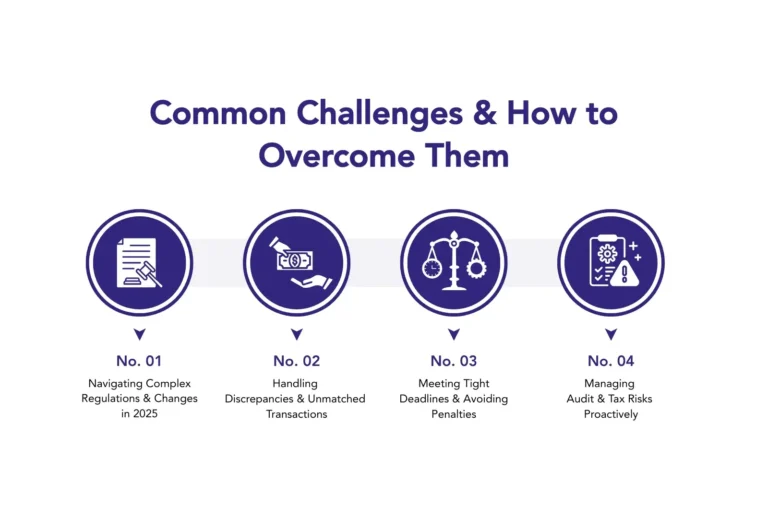
Common Challenges & How to Overcome Them

Year-end can be messy for many businesses in the UAE, but most challenges are predictable and fixable when you know where to look.

Navigating Complex Regulations & Changes in 2026

Regulations in the UAE evolve fast. Between updates to corporate tax UAE rules, clarifications under corporate tax law in the UAE, and stricter compliance expectations around VAT return filing, even established businesses can feel overwhelmed. 


Finance teams often don’t struggle because rules are difficult — they struggle because rules change and nobody updates processes in time.


The fix starts with awareness and structure. Assign someone to monitor regulatory updates, hold quarterly compliance check-ins, and document every control change. Partnering with the right advisors also helps; firms offering corporate tax and internal audit services in Dubai track regulatory shifts for you and ensure nothing slips through the cracks. Staying compliant is not about chasing information but building systems that absorb change smoothly.

Handling Discrepancies and Unmatched Transactions

Uncleared bank entries, supplier balances that never reconcile, random suspense accounts — this is where stress begins. And yes, financial statement audit season exposes every little mismatch. Businesses get into trouble because they wait until year-end to clean up what should have been reviewed monthly.


The solution is rhythm. Strict monthly reconciliations, cut-off discipline, digital audit trails, and automated matching tools. When something doesn’t reconcile, deal with it immediately, not later. The more real-time your books are, the less drama at the finish line. Cleaner ledgers also improve audit readiness, making discussions with external auditors straightforward instead of defensive.

Meeting Tight Deadlines and Avoiding Penalties

Year-end is a race — closing books, final adjustments, filing corporate tax return, and preparing for financial audit review, all while running day-to-day business. Delays aren’t just inconvenient anymore; they can translate into real penalties and damaged credibility.


Winning here comes down to planning and capacity. Create a timeline early. Build internal cut-offs for teams. Don’t pile everything into December. Automate repetitive tasks and outsource if needed. If you know workload spikes, bring support in advance instead of scrambling later. 


Smart businesses don’t just meet deadlines; they engineer them.

Managing Audit and Tax Risks Proactively

Most audit issues don’t appear suddenly; they simmer. They may involve weak controls, incomplete documentation, poor evidence trails, or assumptions around tax liabilities that were never validated.


Control the risk before it controls you. Conduct periodic internal audit reviews, evaluate procedures, and fix gaps early. Use checklists. Document policies. And if you work with internal audit services in Dubai, incorporate their findings into day-to-day behavior instead of filing reports away. Proactive monitoring turned into habits is what separates companies that glide through financial audit cycles from those that panic every time a new requirement lands.

Strategic Benefits of a Robust Year-End Process

A strong year-end isn’t just compliance. It sets the tone for how prepared, credible, and future-focused your business really is.

  • Enhancing Financial Transparency and Stakeholder Confidence
    Clean books, documented processes, and smooth communication with external auditors send a powerful signal. Investors, banks, and partners trust audit-ready companies and maintain transparency throughout the financial audit cycle. When your reporting is accurate and timely, you don’t just meet requirements, you build long-term credibility and attract better business opportunities.

  • Optimizing Tax Liabilities Legally
    A solid year-end process means you aren’t scrambling. You’re planning. Reviewing your corporate tax UAE position, preparing for corporate tax return filing, and ensuring VAT return filing accuracy. This isn’t about loopholes — it’s about strategy. Structured documentation and timely adjustments help you stay compliant while positioning the company to benefit from legal tax efficiencies. Smart planning beats rushed decision-making every single time.

  • Strengthening Internal Controls and Business Resilience
    Consistent year-end discipline tightens controls, highlights operational blind spots, and pushes the organization toward better governance standards. With stronger processes and support from internal audit reviews or internal audit services in Dubai, risks are reduced and accountability increases. This leads to a culture where issues are prevented, not fixed.

  • Identifying Opportunities for Growth and Investment
    Year-end analysis isn’t only about closing books. It reveals patterns. Costs you can trim. Revenue streams worth scaling. Areas where automation could pay off. When financial reporting feeds into strategic thinking, your business shifts from reactive to proactive. You start planning expansion moves, securing funding, and reinvesting confidently because the numbers tell a clear story.

A good close isn’t paperwork. It’s clarity, discipline, and direction — the foundation for every smart business decision that follows.

Partnering with Experts — Why Your UAE Business Needs ADEPTS

Year-end in the UAE is complicated. There are corporate tax UAE deadlines, VAT return filing, and the pressure of a full financial audit. Trying to navigate all of it alone is risky. Smart businesses bring in experts who can guide them through the noise.


Advisors with experience in finance and audits don’t just check boxes. They help you interpret the rules under corporate tax law in the UAE, make your corporate tax return filing seamless, and ensure strong internal audit processes. They spot problems early, manage tax liabilities, and make sure your books are audit-ready.


ADEPTS does more than help you comply. They create clarity. They organize your reports, coordinate with external auditors, and leverage internal audit services in Dubai to tighten controls. Working with them means the year-end feels manageable, not stressful. And when everything is in order, you don’t just meet compliance requirements — you gain confidence, efficiency, and a stronger foundation for the year ahead.


With the new 2026 amendments to the Tax Procedures Law granting the FTA expanded powers to conduct audits even after the standard limitation period in certain refund cases, having expert guidance is critical.

Conclusion

Finishing the year strong isn’t just about closing the books. It’s about understanding your numbers, spotting risks, and getting a clear picture of your business. When your VAT return filing is accurate and your corporate tax UAE compliance is on point, you avoid surprises and keep tax liabilities under control. Preparing for a financial audit becomes easier, too, because everything is organized and ready.


Starting early makes a world of difference. Bring in the right experts, and suddenly corporate tax return filing isn’t stressful, your internal audit processes run smoothly, and your team can focus on planning instead of scrambling at the last minute. Confidence comes naturally when your books are solid and your numbers make sense.


A proper year-end process does more than check compliance boxes. It strengthens controls, improves accuracy, and gives you space to make smart decisions. Done right, it sets your business up to grow, stay nimble, and tackle the year ahead with clarity.

FAQs:

In the UAE, businesses usually need to submit their audited financial statements within six months after the financial year ends to their respective licensing authorities, though the Corporate Tax Law allows a window of up to nine months for tax return filings. For the 2026 cycle, companies with a December year-end must ensure their audited figures are ready to support the final tax return due by September 30, 2026.

Under the 2026 regulations, a statutory audit is mandatory for Taxable Persons with annual revenue exceeding AED 50 million and for all Qualifying Free Zone Persons (QFZPs) regardless of their revenue level. Most companies, including LLCs in certain mainland jurisdictions and regulated free zones like DIFC or ADGM, must also undergo a financial audit to maintain their trade licenses.

Auditors want complete documentation. That means financial statements, ledgers, reconciliations, invoices, contracts, and records of VAT return filing or corporate tax return filing. In 2026, there is an increased focus on “substance” documentation for Free Zone entities and Transfer Pricing (TP) files for related-party transactions to ensure compliance with the arm’s length principle.

The introduction of corporate tax in the UAE has made planning for corporate tax return filing critical. By 2026, audits are no longer just about financial accuracy; they are “tax-sensitized.” Auditors now verify the reconciliation between accounting profit and taxable profit, ensuring that non-deductible expenses and tax reliefs are correctly applied according to Federal Decree-Law No. 47.

Yes, mainland SMEs with revenue below AED 50 million are generally exempt from the federal audit mandate for tax purposes, provided they are not a QFZP. Furthermore, those with revenue under AED 3 million can elect for Small Business Relief (SBR) for tax periods ending on or before December 31, 2026, which simplifies their reporting significantly.

Errors happen when reconciliations are late or documentation is incomplete. In 2026, a critical error is the failure to align VAT returns with Corporate Tax filings. Discrepancies between the revenue reported to the FTA for VAT and the revenue declared for CT are now a primary trigger for FTA tax audits.

Preparing for VAT compliance means reconciling accounts regularly and ensuring all documents are ready. Crucially for 2026, businesses must conduct a “legacy credit review.” Under the new 5-year statute of limitations, any unclaimed VAT input tax from 2021 will expire this year. Additionally, businesses should prepare for the Electronic Invoicing System (EIS) pilot launching in July 2026.

Strong internal audit and controls prevent mistakes and catch potential fraud. In 2026, internal controls must specifically address “Supplier Due Diligence.” New anti-evasion rules mean the FTA can deny your input VAT recovery if your supplier is found to be non-compliant and you failed to perform adequate checks.

As of April 2026, the penalty structure has shifted to an annualized interest-based model of 14% for late payments. Missing deadlines for VAT return filing or corporate tax can also lead to fixed fines, such as AED 10,000 for late tax registration, and may lead to the loss of “Qualifying” status for Free Zone entities.

Working with a professional firm like ADEPTS makes life easier. They help navigate the 2026 transition into the mandatory E-Invoicing era, manage the risks associated with the new 5-year VAT expiry rules, and ensure your Corporate Tax positions are defensible during a formal FTA audit.

References

Related Articles​​

Deferred Tax Accounting 2026: IFRS Rules for Recognizing and Measuring Deferred Tax Assets & Liabilities Under UAE CT

There’s a tax most UAE companies haven’t seen coming.


It’s not on your FTA return. It’s hiding inside your numbers. In every revaluation, every provision, every timing difference you’ve booked.


That’s deferred tax.


And in 2026, it’s no longer theoretical, it is an active enforcement priority. 


With the Domestic Minimum Top-up Tax (DMTT) now effective for fiscal years starting on or after 1 January 2025, large MNEs must account for a 15% minimum effective tax rate, fundamentally shifting deferred tax balances away from the standard 9%.


Since corporate tax was enacted for IFRS in the United Arab Emirates, every accountant, CFO, and auditor has a new reality in front of them. What you thought was “temporary” is now taxable. 


Under Federal Decree-Law No. 17 of 2025, effective 1 January 2026, a strict 5-year limitation period now applies to tax credit and refund claims. Any deferred tax asset (DTA) without a clearly documented reversal path within this window faces heightened audit scrutiny and a significantly increased risk of valuation adjustments.


Deferred tax assets and liabilities are no longer silent passengers on your balance sheet; they now drive how your underlying profitability is viewed. In the 2026 audit cycle, the focus has shifted to “substantive recovery,” requiring concrete evidence that DTAs can be realised against future taxable profits within realistic timeframes.


This isn’t optional learning if you’re preparing IFRS financial statements for the UAE. It’s survival. To stay audit-ready, you’ll need clear thinking, smart modeling, and precision under IFRS accounting rules


The April 2026 unified penalty reform (Cabinet Decision No. 129 of 2025) introduces a 14% annualized penalty for late payments, making accurate deferred tax forecasting essential for cash flow management.


That’s why IFRS advisory services in Dubai are in overdrive, helping companies decode the new deferred tax playbook. Even professionals are signing up for an IFRS course in Dubai just to keep pace with what IFRS UAE now demands.


Because the truth is simple: deferred tax will tell investors, auditors, and the FTA how well you understand your own numbers.


And in this new tax era, ignorance isn’t deferred.

UAE Corporate Tax Basics That Drive Deferred Tax

To understand deferred tax, you first need to understand the corporate tax DNA of the UAE.


This isn’t just another headline reform; the rulebook decides when, where, and how your deferred tax assets and liabilities show up in IFRS financial statements in the UAE.


Under Cabinet Decision No. 116 of 2022, businesses operate on a two-tier system. Profits up to AED 375,000 are taxed at 0%, while everything above that faces a 9% corporate tax. Simple in numbers, but powerful in impact. When measuring temporary differences, these rates define your “expected tax rate” for IFRS accounting under the UAE Corporate Tax Law (Federal Decree-Law No. 47 of 2022). 


However, for MNEs in scope of Pillar Two (revenues over EUR 750m), the Domestic Minimum Top-up Tax (DMTT)—effective for years starting on or after 1 January 2025—mandates a 15% rate, necessitating a re-measurement of deferred tax for all UAE constituent entities.


Timing matters too.


For corporate tax, the law applies to financial years starting on or after 1 June 2023, but for IAS 12 purposes it was considered “enacted” as of January 2023, which is when deferred tax calculations became relevant. 


As we enter the 2026 enforcement cycle, the new Tax Procedures Law (Federal Decree-Law No. 17 of 2025) overlays a strict 5-year limitation on tax credit and refund claims, meaning DTAs now need to be assessed against realistic reversal timelines and evidenced accordingly.


Now, who’s in the tax net?


Almost everyone with a UAE footprint. Mainland entities are automatically in scope. Free zone companies split into two categories — Qualifying Free Zone Persons (QFZPs) and non-QFZPs. To maintain the 0% rate in 2026, QFZPs must strictly adhere to the de minimis threshold (the lower of 5% of revenue or AED 5 million) and the mandatory requirement to maintain audited financial statements. Surpassing this limit triggers a 5-year disqualification, forcing the entity to recognize all deferred tax at the 9% rate.


Even non-residents can fall under the UAE corporate tax regime if they have a UAE nexus — like a permanent establishment or income sourced from the Emirates. The Federal Tax Authority’s guides make it clear that if your business touches the UAE economy, you’re likely in the frame.


So why does this matter for deferred tax?


These rates, thresholds, and scope decisions shape every deferred tax entry under IFRS in the United Arab Emirates. The 2025/2026 updates to Ministerial Decisions No. 229 and 230 have further refined “Qualifying Activities,” directly shifting the tax base for commodity traders and service providers.


That’s why many finance teams are turning to IFRS services to model these impacts accurately. Getting it right isn’t easy with multiple rates, transitional rules, and zone-specific conditions. Some professionals are even enrolling in an IFRS course in Dubai to stay ahead of the curve as IFRS UAE evolves.


In 2026, precision is paramount; with the rollout of e-invoicing and the new 14% late-payment penalty (Cabinet Decision No. 129 of 2025), a miscalculation in deferred tax can lead to immediate financial exposure.


In short, your deferred tax isn’t built in isolation. It’s built on the foundation of the UAE corporate tax. And understanding that foundation is the only way to recognize, measure, and defend every number you book.

IFRS (IAS 12) Refresher for 2026

Deferred tax isn’t a guessing game; it’s math backed by principle.


IAS 12, the backbone of IFRS accounting, tells us exactly how to play it.


At its core, the rule is simple: spot the temporary differences — the gaps between how an asset or liability is treated in your books versus how it’s treated for tax. When those differences reverse, tax follows. That gives rise to deferred tax assets (future tax savings) and liabilities (future tax costs).


You then measure those differences using the tax rates expected to apply when the timing reverses. In the UAE, that means factoring in the 0% and 9% rates, and, for free zones, judging which income stays “qualifying.”


IAS 12 also demands that you consider the manner of recovery. Will the asset be used or sold? The answer can shift the rate, especially under IFRS in the United Arab Emirates, where fair value assets or investment property treatment can trigger very different tax outcomes.


But the ongoing twist for 2025–2026 is Pillar Two and the Domestic Minimum Top-Up Tax (DMTT).


In May 2023, the IFRS Foundation rolled out amendments introducing a mandatory exception for deferred tax on top-up taxes like the Domestic Minimum Top-Up Tax (DMTT), and those amendments continue to apply in full.


This means that, even though DMTT is now enacted in the UAE under Cabinet Decision No. 142 of 2024 and effective from 1 January 2025, IAS 12 still prohibits the recognition of deferred tax assets or liabilities for these top-up taxes. Instead, you disclose the exposure, how it affects your group’s effective tax rate and where those differences could hit.


This update is huge for companies preparing IFRS financial statements in the UAE. It means no deferred tax booking for Pillar Two top-ups but enhanced disclosures that make your numbers more transparent.


From 2025 onward, UAE multinationals will need to explain these effects clearly, especially if they operate in jurisdictions where top-up taxes apply.


The takeaway is clear:


IAS 12 hasn’t changed its core rules, but the IFRS UAE landscape has. Between mixed tax rates, zone-based reliefs, and global top-up taxes, deferred tax is now a story of judgment, disclosure, and detail.


That’s exactly why many firms are leaning on IFRS advisory services in Dubai or even taking an IFRS course in Dubai to keep their reporting airtight under IFRS in the United Arab Emirates.

UAE-Specific “Hotspots” That Create Temporary Differences

Not all tax differences are created equal.


In the UAE, some accounting areas trigger temporary differences faster than others and that’s where deferred tax starts to build up in your IFRS financial statements in the UAE. 


Let’s look at the main hotspots.

Interest limitation (EBITDA rule)

Corporate tax law limits the amount of interest a company can deduct each year based on its earnings. If interest expense exceeds that cap, the extra amount is carried forward.


This creates a deferred tax asset (DTA) but only if you can show enough future profit to use it. The FTA UAE guides stress that you need solid evidence, not just hope, to book that DTA.

Exempt income (participation exemption and dividends)

Dividends and certain share income are exempt from tax in the UAE. Since they’ll never be taxed, they create permanent differences, not temporary ones. In simple terms, that means no deferred tax. Any deferred tax liability (DTL) linked to these items should disappear when the exemption applies.


However, whether the exemption applies at all now depends on how the holding structure is classified for corporate tax purposes particularly in the case of family foundations, holding vehicles, and SPVs which can shift a transaction from a permanent difference to a taxable event with deferred tax implications.

Transitional rules (Article 61 and MD 120/2023)

When corporate tax began, every company had to pick an “opening balance sheet” as its starting point for tax purposes. This created a new tax baseline for assets and liabilities. Some companies also received a “step-up” in value for assets that existed before tax started, changing their future tax base. 


These shifts often create temporary differences and new deferred tax balances under IFRS accounting.


In September 2025, the FTA issued Public Clarification CTP009 on the valuation methods to be applied under the transitional rules, including for real estate developers, which can materially alter the tax base determined under MD 120 of 2023 and, as a result, the opening deferred tax recognised on qualifying immovable property.

Investment property at fair value (MD 173 election)

From 1 January 2025, companies are permitted to claim notional tax depreciation on investment properties measured at fair value.This election can flip a permanent difference into a temporary one, because now there’s a future taxable effect. 


As a result, positions that were previously treated as permanent differences now give rise to temporary differences, creating deferred tax assets or liabilities depending on the recovery profile. In practice, this has become one of the most significant and recurring sources of deferred tax for real estate and investment groups preparing IFRS financial statements under UAE Corporate Tax.


Scheduling these reversals correctly is key to accurate IFRS UAE reporting.

Other common timing differences

There are plenty of smaller book–tax gaps that pop up during the year:

  • Provisions that are deductible only when paid.
  • Impairments that aren’t tax-allowed until realised.
  • Exchange gains or losses that hit at different times for accounting and tax.
  • Revenue cut-offs that cause early or delayed recognition.

Each of these creates a temporary difference that leads to a deferred tax entry. While they seem small on their own, they are significant when they add up.


That’s why many finance teams rely on IFRS services to track these differences accurately. And for professionals keen to master these UAE-specific issues, an IFRS course in Dubai can be a smart move to strengthen their reporting confidence under IFRS financial statements in the UAE.

Free Zones & QFZP: Measuring Deferred Tax at 0% vs 9%

For entities operating in UAE Free Zones, the question isn’t whether deferred tax applies, rather it’s about which rate applies. Under the UAE Corporate Tax Law, Qualifying Free Zone Persons (QFZPs) enjoy a 0% corporate tax rate on qualifying income, while non-qualifying income is taxed at 9%.


When measuring deferred tax in 2026, management must decide which rate reflects the expected outcome when temporary differences reverse. This depends on whether the company expects to continue meeting QFZP conditions and pass the stringent de-minimis test in future years — a critical consideration in preparing IFRS financial statements in the United Arab Emirates. Crucially, the “de minimis” threshold — the lower of 5% of total revenue or AED 5 million — is now strictly enforced. Breaching it in 2026 triggers a 5-year disqualification from the 0% regime and forces a re-measurement of affected DTAs and DTLs


The manner of recovery also matters: assets held for qualifying activities (for example, manufacturing or trading within the zone) may attract 0%. In contrast, income linked to excluded activities, such as mainland sales or certain financial services will fall under 9%. 


For 2026 reporting, management must specifically segregate assets used for “Excluded Activities” to ensure their tax base reflects the 9% liability, particularly following the 2025 clarifications on mixed-use assets.


These judgments require a clear understanding of IFRS accounting principles and compliance expectations under IAS 12.


Recent updates under Ministerial Decisions No. 229 and 230 of 2025 have refined the list of qualifying and excluded activities, providing clarity for commodity traders and service providers, and those involved in structured commodity financing. These 2025 decisions, which clarify and expand the regime, have broadened the definition of “Qualifying Commodities” (now including environmental commodities such as carbon credits) and “Treasury Services” (now including services for a QFZP’s own account).As of 2026, the FTA’s “Clean Trail” 


These changes can shift deferred tax rates and increase the need for transparent disclosures — areas where professional IFRS advisory services in Dubai can help ensure alignment with FTA UAE and Ministry of Finance guidance.


Finally, if management cannot reliably demonstrate that QFZP conditions will be met over the reversal period (including the mandatory requirement to maintain audited financial statements regardless of revenue size when claiming QFZP status), deferred tax should default to 9%. 


Documenting this judgment and the sensitivity to future compliance will be key for IFRS financial statements in the UAE. As of 2026, the FTA’s increasing emphasis on traceability and substance means that weak documentation of staffing, assets, and real activity in the zone can lead tax authorities and auditors to default to a 9% rate for deferred tax measurement.


For teams seeking a deeper understanding or technical support, enrolling in an IFRS course in Dubai or consulting an IFRS UAE specialist can help strengthen in-house reporting capabilities.

Small Business Relief (SBR) through 2026: The DTA Trap

The Small Business Relief (SBR) scheme gives smaller UAE businesses breathing space but also hides a deferred tax trap that has now reached a critical “recognition window” as of 2026.


Under the Corporate Tax framework, businesses with revenues below AED 3 million can elect for SBR up to tax periods ending on or before 31 December 2026. With no extension announced for the 2027 period, 2026 represents the final opportunity to utilize this relief. Those who opt in are treated as having no taxable income, meaning no current tax and no use of tax losses or interest carryforwards during the relief period.


This has a direct impact on deferred tax accounting under the 2026 financial reporting cycle:

  • Entities electing SBR historically did not recognise deferred tax assets (DTAs) for losses or excess interest generated in those years since there’s no taxable base against which to recover them.

  • Recognising such DTAs prematurely would overstate future tax benefits and distort the balance sheet.

  • Under Federal Decree-Law No. 17 of 2025 (effective 1 January 2026), tighter audit and limitation periods make the accuracy of 2026 closing balances critical for “Day 1” 2027 compliance.

When planning for 2027 and beyond, management should revisit their forecasts:

  • If they expect to exit SBR, due to the 2027 sunset, future tax profitability now justifies recognising DTAs prospectively in the 2026 year-end accounts to reflect the probable recovery in 2027.

  • If they remain borderline or intend to maintain 0% via the AED 375,000 profit threshold instead, deferring DTA recognition until the 2027 opening balance sheet may be safer.
FeatureSBR ElectedNo SBR (Strategic Opt-Out)
Tax rate applied0% (relief)9% (0% on first AED 375k)
Losses carried forwardNot allowed (Permanently forfeited)Allowed (Preserved for 2027+)
DTA on losses/interestNot recognisedRecognised if recoverable
Admin complianceSimplified (Final Year)Full CT return and adjustments
Audit Risk (2026+)Lower (Simplified)Higher (5-Year Rule applies)

The bottom line: SBR buys time but pauses deferred tax benefits. With the 31 December 2026 deadline imminent,  Smart 2027 planning means knowing exactly when that pause ends and ensuring your 2026 financial statements reflect the 2027 tax reality.

Pillar Two / DMTT (from 2025): What Not to Book

From 2025, the United Arab Emirates (UAE) has officially joined the global tax reform wave with a 15% Domestic Minimum Top-up Tax (DMTT) for large multinational groups. Governed by Cabinet Decision No. 142 of 2024 and in full force for the 2026 reporting cycle, this tax applies to MNEs with global revenues exceeding EUR 750 million. It’s a significant shift, but the rule is surprisingly simple when it comes to IFRS accounting: don’t book it.


Under the IAS 12 amendment (May 2023), companies must apply a temporary exception for Pillar Two taxes. This means no deferred tax assets or liabilities are recognised for top-up tax exposures arising from the global minimum tax.


Instead, the focus shifts to disclosure. What regulators, auditors, and investors want to know under IFRS in the United Arab Emirates and IFRS UAE reporting frameworks:

  • The nature of exposure to top-up tax across jurisdictions.

  • Which entities or regions could fall under the 15% rule?

  • How could the effective tax rate (ETR) has evolved now that DMTT applies?

This matters for groups headquartered or operating in the UAE. Many have now completed the mandatory transition from high-level impact assessments to detailed “Safe Harbour” testing under the Transitional CbCR provisions available through 2026.


So, while the accounting entry remains a “no-book,” the narrative disclosure is necessary. Boards and auditors will expect clear explanations of exposure, uncertainty, and timing, especially in 2025 IFRS financial statements UAE.


With the UAE DMTT expected to reach “Qualified” status by late 2026, these disclosures must now specifically address the impact on the Global Information Return (GIR) and local filing obligations.


To stay compliant and audit-ready, businesses are turning to professional IFRS advisory services in Dubai, enrolling teams in an IFRS course in Dubai, and using expert IFRS services to interpret the impact of Pillar Two within their IFRS financial statements and reporting structure.

Measurement Mechanics Under IAS 12 — UAE Examples

Here’s where deferred tax gets real measurement. Under IAS 12, you must use the tax rates expected to apply when the temporary difference reverses. In the United Arab Emirates (UAE), that’s rarely a one-size-fits-all rule under IFRS accounting.


You could juggle a 0% and 9% mix, depending on your entity’s income composition, QFZP status, or Small Business Relief (SBR) election. As we move through 2026, the SBR election requires even closer scrutiny; with the current relief scheduled to expire for tax periods ending on or before 31 December 2026, many DTAs previously ignored must now be evaluated for recognition in 2027. 


The goal is simple: match each difference to the rate that will actually apply when it unwinds.


That’s where scheduling matters. You don’t just guess, you analyse when and how the underlying asset or liability will recover through use or sale. IAS 12 allows either an asset-by-asset or portfolio approach, as long as it reflects the real recovery pattern and stays consistent each year in your IFRS financial statements in the UAE.


Let’s look at a few quick UAE-style cases:

  • Investment property (fair value): A company elects the irrevocable “sub-election” under  MD 173 from 1 January 2025, introducing a 4% notional tax depreciation base. This creates a new tax base for fiscal years starting on or after 1 January 2025.  and often triggers a fresh deferred tax liability or credit. Fair value gains that were once “permanent” have now become temporary differences — a key issue in IFRS reporting in the United Arab Emirates.

  • Provisions: Under IFRS, provisions are recognised when probable; under UAE tax law, they’re deductible only when paid. This timing mismatch means a deferred tax asset (DTA) arises but only if there’s convincing evidence of future taxable profits to absorb it.

  • Unrealised FX gains: IFRS may record these gains early, but UAE tax only taxes them upon realisation. That creates a temporary difference, resulting in a deferred tax liability until the actual gain is recognised for tax purposes.

  • QFZP client near de-minimis threshold: Picture a Free Zone entity with 4% non-qualifying income, hovering below the 5% limit. Should deferred tax be measured at 0% or 9%? Here, scenario testing becomes crucial. Under 2026 enforcement, breaching the lower of 5% or AED 5 million triggers a 5-year disqualification. If management expects to maintain QFZP eligibility during the reversal period, 0% can be justified. However, if the position is uncertain, defaulting to 9% is safer and aligns with best practice under IFRS UAE and IFRS financial statements.

In practice, UAE finance teams are now switching between spreadsheets, tax forecasts, and reversal schedules more than ever because rate selection drives deferred tax accuracy, and every percentage point matters. With the new 14% annualized penalty for underpayments effective April 2026, the cost of a measurement error is higher than ever.


Leveraging professional IFRS advisory services in Dubai or tailored IFRS services can help ensure compliance and consistency. For teams seeking a deeper understanding, an IFRS course in Dubai offers valuable, practical insight into these evolving tax dynamics.

Recognition of DTAs in the UAE Context (Convincing the Auditor)

Recognising Deferred Tax Assets (DTAs) under IFRS in the United Arab Emirates isn’t just about spotting deductible temporary differences, it’s about proving they’ll actually be used. IAS 12 is clear: a DTA can only be recognised if it’s probable that taxable profits will exist in the future to absorb those differences.


This becomes a real challenge in a young tax regime like the UAE’s. With limited historical data and evolving regulations under UAE Corporate Tax, companies must rely more on forward-looking, evidence-based assessments. As of 2026, the FTA’s shift toward “Substantive Audit” cycles means that auditors reviewing IFRS financial statements in the UAE will expect management to back their assumptions with concrete proof, not wishful thinking.


Positive evidence might include:

  • Signed contracts, long-term service agreements, or recurring customer revenue streams that secure future taxable income.

  • Reliable forecasts showing profits beyond the Small Business Relief (SBR) sunset date of 31 December 2026.

  • Practical tax planning steps that generate or accelerate taxable income — provided they’re genuine and align with compliance under IFRS accounting.

Negative evidence can undermine DTA recognition, such as:

  • Recent or recurring operating losses. (noting that under Article 37, tax losses can only be carried forward to offset 75% of taxable income in any given period, which may extend the DTA recovery timeline).

  • Uncertain QFZP (Qualifying Free Zone Person) eligibility or volatile revenue sources.

  • Active SBR elections are needed since entities under SBR pay no tax and can’t utilise losses or carryforwards.

For finance teams in the UAE, this means documentation is everything. In the 2026 reporting cycle, auditors will look for forecasts, detailed sensitivity analyses, and clear narratives explaining how DTAs will be realised once SBR ends on 31 December 2026 or profitability stabilises.


Special watch-outs include:

  • Start-ups under SBR: recognising DTAs on early-stage losses rarely makes sense, as those losses can’t be used while relief applies and are permanently forfeited upon the scheme’s sunset on 31 December 2026.

  • Free-zone service firms with fluctuating QFZP status: uncertain eligibility under the strictly enforced 2026 de minimis limits may make future recovery doubtful.

  • Groups adjusting intra-UAE transfer pricing under Article 61 transitional rules: profit shifts between entities may impact where DTAs are recognised and whether they remain recoverable under the new 5-year limitation period effective 1 January 2026.

The bottom line is that you should not rely on “wishful profits.” Build your case with verifiable data, real contracts, and solid assumptions that hold up to audit review. The first few years of UAE Corporate Tax under IFRS UAE will define how confidently companies can recognise DTAs in their IFRS financial statements.

Disclosures You’ll Likely Need in 2026

2026 will be the first real test of how clearly companies explain their deferred tax decisions under UAE Corporate Tax and the newly effective Domestic Minimum Top-up Tax (DMTT). IFRS (IAS 12) doesn’t just care about numbers, it cares about judgements.


Auditors and investors will expect transparency around how those deferred tax assets (DTAs) and liabilities (DTLs) were measured, the assumptions made, and what could change them.


Here’s what finance teams should be ready to disclose:

  • QFZP rate assumptions: Explain whether deferred taxes were measured at 0% or 9%, and why. Disclose the reasoning, expected future compliance with QFZP rules, specifically regarding the 2026 enforcement of de-minimis tests, and assumptions about qualifying vs non-qualifying income.

  • Small Business Relief (SBR) elections: Clarify whether SBR was applied and, if so, that no DTAs were recognised during relief periods. For 2026 reports, a critical disclosure is now required regarding the 31 December 2026 sunset of SBR and the subsequent transition to the 9% tax regime in 2027.

  • Transitional elections under Article 61 and MD 120/2023: Describe how tax bases were reset, whether revaluations or step-ups were used, and how that affected deferred tax balances. Include updates from the 2025 Public Clarifications (e.g., CTP009) that may have adjusted these opening tax bases.

  • MD 173 election for investment property: Disclose if the election for notional tax depreciation at fair value was made, and the resulting deferred tax implications under the 2025/2026 implementation phase.


  • Pillar Two exception disclosures: For large multinationals, confirm that no deferred tax was recognised for top-up taxes under the IAS 12 Pillar Two amendments. As the UAE DMTT is active for fiscal years starting 1 January 2025, Include the required notes on the nature of exposure, affected jurisdictions, and effective tax rate (ETR) sensitivities to show how the 15% minimum rate impacts the group.

  • Five-Year Limitation Period: Under Federal Decree-Law No. 17 of 2025 (effective 1 January 2026), disclose any judgements regarding the recoverability of DTAs within the new 5-year limit for claiming tax credits and refunds.

Each of these disclosures gives users of financial statements a clearer view of how management expects tax to play out over time.


In short, 2026 isn’t just about computing deferred tax — it’s about communicating it. Strong, well-explained disclosures will show that companies understand their new tax environment and are managing it responsibly under IFRS in the United Arab Emirates.

Implementation Checklist (Finance + Tax + Audit)

Getting deferred tax right under UAE Corporate Tax takes planning, not panic. 


Every finance and tax team should lock in a clear close calendar and shared responsibilities before year-end hits, especially if you prepare IFRS financial statements in the UAE.

Close calendar essentials:

  • Assign who’s responsible for rate scheduling — mainly where both 0% (QFZP) and 9% rates apply under IFRS accounting rules. From 1 January 2026, schedules should also take into account the 5-year limitation period for tax credit and refund claims introduced by Federal Decree-Law No. 17 of 2025.

  • Refresh QFZP eligibility tests before every reporting cycle to confirm assumptions still hold, aligning with IFRS in the United Arab Emirates requirements. This includes documenting compliance with the 2026 de minimis threshold (the lower of 5% of revenue or AED 5 million) to prevent a 5-year disqualification from the 0% regime.

  • Gather evidence for “probable” taxable profits to justify DTA recognition — management forecasts, signed contracts, or pipeline data. For 2026 reporting, forecasts must specifically address the 31 December 2026 expiration of Small Business Relief (SBR) to justify any DTA carry-forwards into 2027.

  • Keep documentation of MD 173 and SBR elections ready for auditors. Note the basis, timing, and financial statement impact, ideally reviewed through IFRS advisory services in Dubai.

Controls and governance:

  • Integrate deferred tax workflows into your year-end memo process to comply with IFRS UAE standards. Under Cabinet Decision No. 129 of 2025, ensure all tax payment forecasts account for the 14% annualized late-payment penalty effective from 14 April 2026.

  • Add deferred tax calculations, rate tests, and reversal schedules to the audit PBC (Prepared By Client) lists, a practice reinforced in many IFRS training programs in Dubai.

  • Have finance and tax sign-offs on key judgements, especially those tied to transitional rules or free zone eligibility. As of 2026, sign-offs must also verify that Pillar Two/DMTT narrative disclosures reflect the UAE’s “Transitional Qualified Status” to maintain safe harbour eligibility.

A disciplined checklist keeps deferred tax under control — and your audit season less painful.

Common UAE Scenarios & How to Treat Deferred Tax

Scenario Deferred Tax Treatment (Under IAS 12 & UAE CT) Key IFRS Considerations
Mainland distributor with large receivables provisioning Provision expenses are deductible only when actually written off for tax purposes, not when booked under IFRS. This creates a deductible temporary difference and a potential Deferred Tax Asset (DTA). Recognition depends on whether future taxable profits are probable. Align timing differences between book and tax recognition. Under Federal Decree-Law No. 17 of 2025, ensure DTA recovery is scheduled within the new 5-year limitation period for claiming tax credits. Ensure documentation supports recoverability under IFRS accounting standards and IFRS financial statements UAE requirements.
Free-zone holding company with dividend/participation exemption Dividend income qualifying for the participation exemption is permanently exempt, creating no deferred tax. However, if non-qualifying income exists, measure deferred tax at 9% on those items. Apply the IFRS in United Arab Emirates guidance for separating qualifying vs. non-qualifying income streams. In 2026, strictly monitor the de minimis threshold (lower of 5% or AED 5m) to avoid a 5-year disqualification that would trigger a re-measurement of all DTAs at 9%.
Real estate investment entity at FV electing MD 173 in 2025 The election introduces notional tax depreciation on fair-valued property, converting a permanent difference into a temporary one. This creates or adjusts a Deferred Tax Liability (DTL) based on the difference between the carrying amount and the new tax base. Reassess deferred tax balances under IFRS advisory services, Dubai support. For 2026 filings, verify that the 4% annual depreciation cap is prorated for any mid-year acquisitions as per the latest MD 173 implementation guidelines.
Group first entering CT in 2024 with Article 61 step-up The step-up creates a new tax base for pre-CT assets. Deferred tax is measured based on the difference between the carrying amount and the re-based tax value. Carefully disclose transitional adjustments in IFRS financial statements in the UAE. As of 2026, auditors will specifically check that re-based values align with the “Transitional Qualified Status” of the UAE’s Domestic Minimum Top-up Tax (DMTT).

How ADEPTS Helps

At ADEPTS, we help finance teams simplify deferred tax under IFRS in the United Arab Emirates. Our specialists review QFZP rate-setting memos, build reversal scheduling models, and assess how MD 173 and SBR elections affect deferred tax balances.


With the SBR regime scheduled to sunset on 31 December 2026, we are currently helping clients transition their 2027 tax-base forecasts into their current 2026 financial reports. Every calculation is aligned with IFRS accounting principles and UAE Corporate Tax requirements.


We prepare audit-ready documentation, from IAS 12 judgement memos to Pillar Two exception disclosures and transitional election files, ensuring your numbers stand up to scrutiny. In light of the new 5-year statute of limitations introduced by Federal Decree-Law No. 17 of 2025, we now include specific “Recoverability Audits” for all deferred tax assets to ensure they remain valid under the 2026 rules.  


Through our IFRS advisory services in Dubai, we ensure that every assumption and election is backed by solid evidence.


Our team also supports you through quarterly closes, managing interim deferred tax roll-forwards, testing QFZP de-minimis thresholds, and updating forecasts in line with IFRS financial statements in the UAE. 


Crucially, for the 2026 cycle, we have updated our internal controls to align with Cabinet Decision No. 129 of 2025, protecting our clients from the new 14% annualized late-payment penalties effective 14 April 2026.


And yes, we’ll still win when your spreadsheet starts a fight.

FAQs:

For IAS 12 application, UAE Corporate Tax was considered “enacted” in January 2023, following the issuance of Cabinet Decision No. 116 of 2022. That means deferred tax accounting under IFRS in United Arab Emirates applies from that date onward, even if your first tax year starts later.

No. Entities under Small Business Relief (SBR) are not taxed during the relief period, so Deferred Tax Assets (DTAs) on losses or excess interest cannot be recognised until SBR expires. Because the SBR scheme is currently set to expire for tax periods ending on or before 31 December 2026, firms should now prepare to recognise DTAs in their 2027 forecasts when the 9% rate begins to apply

No. The IAS 12 Pillar Two amendments introduce a mandatory exception, so no deferred tax is recognised for Domestic Minimum Top-up Tax (DMTT) or other top-up taxes. As the UAE DMTT (Cabinet Decision No. 142 of 2024) is now in full effect for the 2026 cycle, disclosures about exposure and effective tax rate sensitivity are required under IFRS accounting.

If management cannot reasonably support QFZP eligibility across the reversal period, use 9% as the deferred tax rate. Under 2026 enforcement, breaching the de minimis threshold (the lower of 5% or AED 5 million) triggers a 5-year disqualification. When eligibility is probable and income qualifies, deferred tax can be measured at 0%. Keep strong documentation of the assumption in your IFRS financial statements in the UAE.

Yes. Ministerial Decision 173 of 2023 allows an election for notional tax depreciation, which converts a permanent difference into a temporary one. That means a new Deferred Tax Liability (DTL) or adjustment may arise, depending on your IFRS UAE measurement method.

The biggest impact comes from Article 61 and Ministerial Decision 120/2023 — both define how pre-CT assets are re-based for tax. These step-ups reset the tax base and must be reflected in deferred tax calculations under IFRS in United Arab Emirates. In 2026, ensure these adjustments also account for the new 5-year limitation period for tax credits under Federal Decree-Law No. 17 of 2025.

If some differences reverse, apply a weighted average approach based on the expected reversal pattern. In contrast, QFZP income is 0% and others during 9% taxable periods, measured accordingly, consistent with IFRS financial statements UAE requirements.

No. Dividends meeting the participation exemption are permanently exempt, so they don’t create deferred tax. Only non-qualifying or partially exempt income can trigger deferred tax under IFRS UAE.

They can. If the income doesn’t qualify as QFZP income, under the updated 2026 “Qualifying Activity” lists it may be taxed at 9%, creating deferred tax implications. Review transaction types carefully and align treatment with IFRS advisory services Dubai standards.

Adjustments under Article 61 transitional rules can shift profit recognition between entities. That may move Deferred Tax Assets or Liabilities, so each entity must reassess its own deferred tax position under IFRS accounting guidance. For 2026, consider applying for a Unilateral Advance Pricing Agreement (UAPA) to secure certainty on these shifts.

References

Related Articles​​

Influencer Marketing Accounting: NMC Licensing & Tax Optimization

In 2025, the UAE’s digital scene is buzzing with creators turning content into careers and brands into believers. But with that rise comes new rules and serious financial responsibilities. Ensuring compliance with these regulations is not just a legal obligation, but a way to secure your financial future in this rapidly growing industry.


Every post, campaign, and collaboration now sits under sharper scrutiny. 


The NMC License for Influencers UAE is the foundation for staying compliant and credible. Pair that with the UAE Influencer Tax 2025 regulations, and suddenly, content creation feels a lot more like running a business.


That’s where the numbers matter. 


Smart, accurate accounting isn’t just about record-keeping, it’s about control. It helps influencers manage UAE corporate tax for content creators, claim legitimate deductions, and ensure every dirham works to their advantage. Strategic tax optimization for influencers in UAE can turn the financial chaos and steady growth.


This is where ADEPTS steps in, not as just accountants, but as partners. They simplify compliance, fine-tune financial systems, and help creators master both sides of the game: creativity and control. With ADEPTS by your side, you can navigate the complex world of influencer marketing with confidence and peace of mind.

Understanding Influencer Marketing in the UAE Context

Influencer marketing in the UAE has grown into a real business. It is not just a social media trend anymore. The government now treats it like any other commercial activity. If you make money by promoting brands, creating sponsored content, or selling through affiliate links, you’re running a business in the eyes of UAE Media Law 2025.


That’s where structure matters. You need to understand how your work fits into the legal framework. Do you post brand collaborations on Instagram? Accept PR packages or free hotel stays in exchange for coverage? Each of those counts as income. Even when it’s not cash, the gifts and in-kind payments tax UAE applies. 


If value changes hands, the tax authorities consider it taxable.


The influencer industry here is booming. But as the money grows, so does the responsibility. Getting your NMC License for Influencers UAE and staying compliant promotes credibility and financial safety. Your business is under the watch of the government and difficult situations can be handled amicably. 


The UAE’s digital economy rewards professionalism. Understanding your obligations, reporting income properly, and managing your books like a business owner keeps you one step ahead and it makes the creative freedom worth it.

NMC Licensing for Influencers and Content Creators

If you make money online in the UAE, you’ve probably heard about the NMC e-Media License UAE. It’s not an empty legal formality. It’s what allows you to legally earn from social media. The National Media Council now under the Ministry of Culture and Youth created this system to keep digital advertising transparent and regulated.


Anyone earning from online content needs to have the license. Whether you’re posting brand collaborations, running a YouTube channel, or promoting products on Instagram, you’re part of a commercial activity. You must be over 18, hold a UAE residence visa, and meet the basic requirements set under UAE Media Law 2025.


There are a few ways to get licensed. The NMC License for Influencers UAE is the most common route for solo creators. Some choose a Freelancer License instead, especially if they manage multiple clients. Others go bigger with an Influencer Trade License Dubai, which lets them operate like a full business and hire a small team. 


The best choice depends on how serious you are about scaling your brand.


The process itself is simple. You apply online through the NMC portal, upload your ID, proof of residence, and share your social media links. Fees in 2025 usually fall between AED 1,500 and AED 2,500 for individuals. Applying through a free zone or an agency can cost more, but it often comes with faster approval and some valuable extra perks.


One big update this year is the two-license rule UAE influencer requirement. Both the influencer and the advertiser now need valid permits before working together on paid promotions. It’s meant to make collaborations more transparent and protect both sides from legal trouble.


And yes, there are penalties for skipping the paperwork. The penalty for unlicensed influencer UAE operations can reach AED 10,000 or more. In some cases, accounts can even be suspended. So while it might seem tempting to ignore the license, it’s just not worth the risk.


If you’re earning from your content, think like a business owner. Getting licensed isn’t about bureaucracy it’s about building credibility, protecting your work, and staying ahead as influencer marketing keeps growing in the UAE.

Accounting Requirements for Influencers

If you’re earning from content creation in the UAE, you’re running a business whether you think of it that way or not. And like any business, you’re expected to keep your books in order. That means clear, accurate records of what you earn and what you spend. It’s not just smart it’s required under UAE tax law.


Start with the basics: track every dirham that comes in. Sponsored posts, affiliate commissions, brand deals, appearance fees, it all counts as income under UAE corporate tax for content creators. 


Record your costs. Equipment, editing software, travel expenses, production props, and even paid collaborations you invest in to grow your reach. These fall under deductible expenses for influencers UAE, and they can significantly reduce your taxable income if documented properly.


Use tools that make your life easier. QuickBooks, Xero, and Zoho Books are all reliable options. They connect to your bank, categorize transactions, and generate reports without much manual work. For most creators, that’s more than enough to stay on top of their numbers.


Your records also matter when dealing with the Federal Tax Authority. Once your business income crosses the UAE Corporate Tax 9% threshold, you’re required to file returns and pay corporate tax. Solid financial record-keeping for content creators means you can show where your money came from, what you spent, and what’s left after deductions.


The point isn’t to make accounting complicated. It’s to make it second nature, part of the same routine you use to plan, shoot, and publish your work. When you keep your finances clean, compliance becomes easy and tax optimization for influencers in UAE stops being an afterthought. It becomes a strategy.

Corporate Tax Implications in 2025

Starting 2025, influencers in the UAE fall clearly under the UAE corporate tax for content creators framework. The rules are straightforward: if your annual profits go beyond AED 375,000, you’ll pay a 9% corporate tax. Anything below that remains exempt under the small business relief scheme.


So, what counts as business income? Basically, anything you earn in connection with your work as an influencer. That includes paid collaborations, ad revenue, affiliate commissions, and event appearances. Even income from overseas clients is taxable if it’s linked to your UAE activity. The UAE Influencer Tax 2025 doesn’t distinguish between platforms or payment types, it’s all treated as business income once it hits your account.


Then there’s non-cash income, which often gets overlooked. Gifts, luxury products, hotel stays, and complimentary services are all part of your taxable earnings. The tax treatment of non-monetary income UAE means these benefits must be assigned a fair market value and declared. 


So, if a resort offers a free weekend stay in exchange for a post, that stay still counts as taxable income.


The good news is that influencers can deduct legitimate business expenses to reduce their taxable profits. Equipment, production costs, travel, advertising, and digital tools are all deductible expenses for influencers UAE. Keeping detailed receipts and maintaining a clean paper trail makes these deductions easier to justify.


Filing is done through the Federal Tax Authority’s online portal. Influencers must register for corporate tax once they cross the income threshold and file annual returns before the corporate tax registration deadline 2025. Clear, accurate books make this process simple — and that’s where financial record-keeping for content creators becomes essential.


In short, the UAE’s corporate tax system is designed for transparency, not punishment. If you plan ahead, record everything, and understand the thresholds, tax optimization for influencers in UAE becomes less about stress and more about strategy.

VAT Considerations for Influencers

If you’re an influencer or content creator earning through brand deals, affiliate links, or sponsorships, it’s important to understand how UAE Influencer Tax 2025 affects your income. If your taxable supplies exceed AED 375,000 over the past 12 months (or are expected to exceed this in the next 30 days), you are required to register for VAT in the UAE.


Once registered, you’ll need to add a 5% VAT to your invoices for taxable services, things like sponsored posts, product promotions, or event appearances. That VAT isn’t part of your profit; it’s collected for the government and must be paid to the Federal Tax Authority within the required deadlines.


Failing to register for VAT on time or incorrectly charging VAT on influencer services can lead to administrative penalties, reassessment of tax liabilities, and interest. The Federal Tax Authority (FTA) may also review past transactions, especially where digital income streams or brand collaborations were not properly disclosed 


The good news is that you can recover VAT paid on eligible business expenses such as filming equipment, editing tools, advertising, or travel. This process, known as input VAT recovery, can make a real difference in managing costs effectively. Keeping organized financial record-keeping for content creators including receipts, invoices, and contracts ensures that every deductible expense is properly documented.


For influencers working with international brands, it’s worth remembering that income can still fall under UAE corporate tax for content creators if your audience or activity is UAE-based. Non-cash benefits such as free products, hotel stays, or services are treated as barter transactions and may be subject to VAT based on their fair market value.


Using reliable accounting tools can make VAT tracking much easier. They help you stay compliant with Dubai influencer licensing requirements and avoid costly errors. Ultimately, staying on top of your VAT responsibilities is part of smart financial management and a key step toward better tax optimization for influencers in UAE.

Tax Optimization Strategies for Influencers

Smart influencers in the UAE know that growing your brand is only half the job, keeping your finances in check is the other half. With the UAE Influencer Tax 2025 now in full effect, managing your money wisely means understanding how to structure your business for tax efficiency.


Start by setting up your activities under the right license. Whether it’s an NMC License for Influencers UAE, a freelancer permit, or a trade license, formal registration gives you legitimacy and opens doors for collaborations with top brands. It also helps align your work with Dubai influencer licensing requirements, ensuring you operate fully within UAE media laws.


Next, track every expense. From content production costs and camera gear to travel, event fees, and software subscriptions, all can qualify as deductible business expenses when properly documented. Maintaining accurate financial record-keeping for content creators allows you to claim these deductions and reduce your overall taxable income.


If you receive non-cash benefits like sponsored trips, PR packages, or hotel stays, remember that these are taxable under gifts and in-kind payments tax UAE. Keeping a record of their fair value ensures transparency and helps avoid trouble during audits.


Planning ahead is another key step in tax optimization for influencers in UAE. Instead of scrambling at the end of the year, prepare for quarterly tax payments. This not only keeps you compliant with UAE corporate tax for content creators but also prevents last-minute penalties or stress. With a strategic plan in place, you can take control of your financial future as an influencer.


Finally, working with a professional advisory team like ADEPTS can make all the difference. They understand influencer accounting inside out, from legal setup to tax filing, and help you save more by applying every rule to your advantage.

Practical Insights for Influencers in the UAE

Running a successful influencer business in the UAE isn’t just about brand deals and engagement numbers; it’s about staying compliant and financially organized. 


Whether you create lifestyle content, run affiliate partnerships, or manage brand campaigns, there are a few critical lessons every creator should take seriously.

Choose the right licensing route early.

The UAE’s National Media Council clearly states that anyone creating paid content online needs an NMC License for Influencers UAE or a relevant trade or freelancer permit. This rule ensures you meet Dubai influencer licensing requirements and stay in line with the UAE’s updated media regulations. Influencers who skip this step risk fines or suspension of activity, a fact reiterated by The National News and Khaleej Times in their coverage of licensing enforcement by the UAE Media Council.

Understand your income scale and activity type.

If your yearly earnings from collaborations or sponsored content cross AED 375,000, you’ll be subject to UAE Influencer Tax 2025 requirements. This includes registering for corporate tax and VAT. Creators earning less can still benefit from early registration, as it helps with brand partnerships and improves professional credibility.

Maintain strong accounting habits.

Accurate financial record-keeping for content creators is now essential; not optional. Record every transaction, including cash income, brand barter deals, or sponsored trips. According to the UAE Federal Tax Authority, these gifts and in-kind payments tax UAE obligations must be declared as part of your taxable income. Tools and accounting support from professional services like ADEPTS can simplify this process while ensuring all your reports align with UAE corporate tax for content creators.

Avoid the most common compliance mistakes.

Most creators make the same errors: not renewing their licenses on time, mixing personal and business expenses, or ignoring tax deadlines. Staying ahead of these issues is part of effective tax optimization for influencers in UAE. Scheduling quarterly tax reviews, saving invoices in real time, and keeping a clear audit trail can help you stay compliant and protect your income.

Steps to Compliance and Growth

Success as an influencer in the UAE isn’t just about great content; it’s about running your platform like a real business. Growth comes when creativity meets compliance, and that starts with a few smart steps.

Get your licensing sorted first.

Before you think about rates or partnerships, make sure you’re legally allowed to promote brands. In the UAE, you can’t earn from paid content without an NMC License for Influencers UAE or a valid freelancer or trade license. 


It’s a simple step but an essential one, and skipping it can lead to penalties or blocked campaigns. Having your license in place also shows professionalism and trustworthiness, two things brands now check before signing contracts. It keeps you compliant with Dubai influencer licensing requirements and protects your reputation as your platform grows.

Understand your tax duties early.

Under UAE Influencer Tax 2025, any influencer earning above AED 375,000 annually must register for VAT. If your profits exceed the same amount, you’ll also fall under UAE corporate tax for content creators. This covers all kinds of income, from direct payments to collaborations and even product exchanges that fall under gifts and in-kind payments tax UAE.

Keep your books clean.

Strong financial record-keeping for content creators is what separates professionals from amateurs. Track your brand payments, content expenses, and travel costs, every detail counts. Clean records make audits easier and open the door to smarter tax optimization for influencers in UAE when filing season comes around.

Run your platform like a small business.

Once you start earning regularly, treat your influencer work as a business, not a side gig. Separate your brand income from personal spending and use proper systems for UAE corporate tax for content creators. 


Schedule time each month to review your earnings, track expenses, and forecast what’s coming next. When you handle your accounts this way, tax filing becomes predictable, not panic-inducing. 


It also helps you see where your content investment is paying off, which is the first step toward long-term tax optimization for influencers in UAE.

5. Work with people who understand your world.

ADEPTS helps influencers handle the financial side of their creative careers. From licensing support to bookkeeping and tax filing, their team makes sure everything stays compliant and optimized. More than just accountants, they act as strategic partners, helping you grow your personal brand sustainably while keeping your finances efficient and future-ready.


By staying organized, licensed, and financially informed, you’ll spend less time worrying about paperwork and more time doing what you do best; creating content that moves people and builds your influence for the long haul.

Conclusion

The influencer space in the UAE is no longer the wild west it once was. It’s structured, competitive, and full of opportunity; but only for those who play by the rules. Getting your NMC License for Influencers UAE in place and staying on top of your UAE Influencer Tax 2025 responsibilities isn’t just about avoiding fines; it’s about protecting your brand and proving you’re a professional.


Good money management goes a long way. Consistent financial record-keeping for content creators keeps your income transparent and your expenses organized. It also helps you handle taxes efficiently, whether it’s managing gifts and in-kind payments tax UAE or understanding how UAE corporate tax for content creators affects your profit.


This is exactly where ADEPTS makes a difference. Their accounting team doesn’t just handle paperwork, they help influencers make smarter financial decisions. Through careful planning and personalized advice, they deliver real tax optimization for influencers in UAE, ensuring creators keep more of what they earn while staying compliant.


The message is simple: stay informed, stay compliant, and treat your influence like a business. The better you manage the numbers behind your content, the longer and stronger your creative career will be.

FAQs:

Influencers who post casually and don’t make money; no sponsorships, free products, or event invites, usually don’t need an NMC License for Influencers UAE. But once content starts bringing in income or brand perks, that changes. Getting licensed isn’t just a formality; it protects you from fines and keeps your work legitimate.

If you live in the UAE, it doesn’t matter if your brand deals come from Dubai, London, or Los Angeles, you’re still accountable under UAE Influencer Tax 2025. Your residency determines your tax responsibility, not where the brand is based. The safest approach is to keep clear records of all payments and rely on professionals like ADEPTS to help manage compliance.

Like any business, influencer finances can be reviewed by the Federal Tax Authority (FTA). That means your expenses; cameras, travel, editing software, and props, should be tracked and backed by receipts. Consistent financial record-keeping for content creators keeps your books clean and your claims valid.

When it comes to VAT, not all influencer income is treated the same way. Local collaborations are usually taxed if you earn above the registration threshold. But when you work with foreign clients, some projects can qualify as export services, which are VAT-exempt. Understanding the difference can save you unnecessary payments.

All your income, no matter how many platforms you use, Instagram, TikTok, YouTube must be filed under the same license. The UAE sees all influencer work as one business activity. An organized accountant can help consolidate those earnings so you don’t miss anything at filing time.

Hiring an accountant isn’t a legal must, but it’s a smart call if you’re earning regularly. Taxes, invoices, VAT, and filings can quickly get messy. Working with an expert in tax optimization for influencers in UAE, like ADEPTS, frees you to focus on what you actually do best — creating content.

Missing tax deadlines or submitting incomplete details can lead to penalties. Late filings or unregistered income often result in fines that could have been avoided with proper planning. Staying proactive with your filings is always cheaper than fixing mistakes later.

When two influencers collaborate, each must report their actual earnings; you can’t split income just to shrink your tax bill. Transparency in contracts and licensing keeps both sides compliant and avoids unnecessary questions from regulators.

Even non-cash perks; hotel stays, PR boxes, event access fall under gifts and in-kind payments tax UAE. Their value still counts toward your taxable income, so it’s wise to log everything you receive, even if no cash changes hands.

Recent UAE Media Law 2025 updates have made influencer contracts stricter. Every paid partnership now needs proper disclosure, licensing details, and clarity on tax obligations. Both creators and brands share accountability — it’s about keeping the industry transparent, credible, and sustainable.

References

Related Articles​​

Why Annual Audits Matter in the UAE (2025–2026 Outlook)

The UAE isn’t just enforcing compliance in 2025 — it’s rewriting the playbook.


Corporate Tax. IFRS standards. AML and UBO rules. ESR reporting.


This isn’t regulation noise. It’s a new operating environment.


And in this environment, audits aren’t a formality — they are survival tools.


When markets move fast, trust becomes currency. Transparent books, clean controls, disciplined reporting, all of them attract investors, protect reputation, and keep regulators off your back. 


That’s why forward-thinking CEOs aren’t waiting for year-end. They’re strengthening their audit processes early and choosing audit services partners who understand this shift.


We’ve seen what happens when oversight fails. Wirecard collapsed. Abraaj shook investor confidence. NMC became a global cautionary tale. 


Every scandal had one thing in common: weak governance masquerading as strong governance.


UAE businesses cannot afford that mistake — not in a market ranked among the most transparent and business-friendly in the world. And not while global investors are watching the region closely.


Today, annual audits are more than compliance.


They build trust. They signal maturity. They protect value.


This is why choosing the right audit services in the UAE, and exceptionally high-quality auditing services in Dubai, is no longer optional — it is strategic. 


Leaders who invest in robust processes and reliable auditing services win confidence, capital, and long-term stability.

Why Audits Are Legally Required — The Regulatory Foundations

In the UAE, annual audits aren’t just “good practice.” They are the law and the backbone of a trusted business ecosystem.


Mainland companies: Federal Decree-Law 32/2021 mandates audited financial statements. The message is clear: If you operate here, you operate transparently. Simple. Fair. Globally aligned.


Corporate Tax compliance: Corporate Tax Law 47/2022 and Ministerial Decision 82/2023 require accurate, verified numbers from free-zone entities, taxable persons, and tax groups. The FTA doesn’t accept estimates—they want clean, reliable records.


AML & UBO regulations: Cabinet Resolution 58/2020 ensures transparency in Ultimate Beneficial Ownership. Audits reveal who owns the business, how money flows, and confirm everything checks out. No shadows. No surprises.


Regulators rely on audited numbers:

  • ESR submissions

  • ICV certification

  • VAT filings

  • Corporate Tax Compliance

Example: A UAE company filed its ESR return without audited accounts. Result? Rejection. They had to scramble to audit and resubmit their documents. Costly mistake. Avoidable headache.


That’s why businesses in the UAE engage with reliable auditing services early, not at the last minute. Smart CFOs choose audit and assurance services Dubai companies can trust. Because audits aren’t just about ticking boxes—they’re about staying secure, compliant, and ready for growth.


The bottom line is that audits aren’t just paperwork. They are proof that your business is real, compliant, and ready to operate in a serious, well-regulated market.

Jurisdictional Requirements: Mainland, Free Zones, and Financial Centres

Audits in the UAE don’t follow a one-size-fits-all model. Your obligations depend on where your business is licensed — on the mainland, in a free zone, or in a financial centre. 


And in every jurisdiction, the message is the same: compliance is serious, deadlines matter, and regulators expect accuracy.

Mainland (Ministry of Economy)

Mainland companies, especially LLCs and PJSCs, must conduct annual statutory audits under Ministry of Economy rules. It’s not optional. Audited accounts are required for licensing, tax, banking, and regulatory reviews. If you’re operating onshore, expect complete transparency and be ready to file on time.


Smart businesses start early and partner with strong audit services in the UAE so their numbers are ready long before renewal season hits.

Free Zones: Each Has Its Own Rules

  • DIFC

    • Must appoint DFSA-approved auditors

    • File audited statements within 90 days of year-end

    • Late submissions trigger penalties and administrative escalations

    • Accuracy and punctuality are mandatory in this financial hub
  • ADGM

    • Public disclosure of audited financial statements is required

    • Non-filing can result in penalties up to USD 15,000

    • Timely reporting directly impacts corporate reputation
  • DMCC

    • Must use approved auditors and file through the DMCC portal

    • Non-compliance may lead to fines, license suspension, or rejected audits

    • Many firms engage auditing services in Dubai early to avoid renewal delays
  • RAKEZ, JAFZA, SHAMS, IFZA

    • Strict audit rules with deadlines

    • Late filings can trigger fines, blocked portals, or delayed license renewals

    • Consistent preparation is key—last-minute submissions rarely succeed

Why the Government Mandates Audits — The Macroeconomic & Regulatory Rationale

Audits in the UAE aren’t just a corporate formality. They support the country’s entire economic engine. Verified financial data gives policymakers accurate insight into real business activity, which means:

  • Clearer GDP reporting

  • More credible investment signals

  • Stronger national credit ratings

Reliable numbers help shape smarter national planning and economic policy, which is why many companies engage audit services in UAE early in the year.


Audits also strengthen defenses against financial crime. By reviewing ownership and transactions, auditors help detect fraud, trace fund flows, and reinforce AML controls. This keeps illicit activity out of the system, protecting both the country’s reputation and investor trust. Using auditing services in Dubai ensures compliance with these critical checks.


The UAE aligns its audit rules with global standards, including OECD BEPS and FATF frameworks. Authorities like the Central Bank and FTA rely on audited financial statements to maintain transparency, protect capital markets, and ensure tax integrity. This is a proactive ecosystem, not just a compliance checklist.


Real-world reforms show the impact:

  • The Abraaj case accelerated governance tightening

  • ESR enforcement became stricter

  • UBO requirements became mandatory

  • The ICV program linked transparency to supplier opportunities

The lesson is clear: transparency drives trust, and trust accelerates growth.


Government decision-making today is data-driven, not based on estimates. Every audited submission contributes to:

  • More accurate forecasts

  • Stronger policy design

  • A more resilient economy

Companies aren’t just complying, they’re feeding a system built on evidence, accountability, and stability. That’s why leading firms secure reliable auditing services in the UAE and audit and assurance services Dubai companies can trust.


Ultimately, the UAE mandates audits to keep the system clean, credible, and globally competitive. A timely annual audit Dubai isn’t just about regulation—it’s about reputation, risk management, and long-term economic strength.

Consequences of Non-Compliance and Real-World UAE Cases

Failing to submit audited financial statements in the UAE carries serious consequences:

  • Penalties and service suspension: Free zones can pause services and block license renewals until audits are filed, affecting operations, visas, and government transactions.

  • Tax and banking delays: Unverified accounts can slow Corporate Tax assessments, VAT refunds, and loan approvals. Requests for tax relief may be rejected until audited figures are available.

Verified examples across UAE free zones:

  • RAKEZ: Missing audit submissions triggers a AED 2,500 fine and a three-month grace period. Continued delays can result in service suspension, preventing companies from renewing licenses or completing transactions.

  • ADGM: Late filing of audited financial statements can lead to penalties up to USD 15,000 (RA Circular No.1 of 2023). Non-compliance here affects public disclosure obligations, impacting reputation and regulatory trust.

  • DMCC: Companies must submit audits through approved auditors. Non-compliance may result in fines, license suspension, or rejected audit reports. The FY-2024 deadline has been extended to 30 September 2025, as widely reported by industry firms. Firms often engage auditing services in Dubai and audit and assurance services Dubai to avoid delays.

  • JAFZA & DWC: Audit submissions are required within 90–180 days post-year-end. Late filing can prevent license renewal, disrupting business continuity.

  • DIFC: Annual filings under the Registrar’s Handbook and Companies Regulations attract administrative penalties for late submissions. Non-compliance often delays banking reviews and investor trust assessments.

Corporate Tax readiness:

The Federal Tax Authority (FTA) increasingly requires audited financial statements for Corporate Tax assessments and tax-group applications. According to FTA Decision No.7 of 2025, missing audited accounts can delay registration or reject tax relief claims.


Bottom line is that for Dubai-based companies and high-compliance sectors, a clean and timely annual audit isn’t just regulatory anymore. It protects banking relationships, investor confidence, and smooth government interactions. Engaging professional audit services in the UAE ensures compliance, reduces risk, and supports operational continuity.

Key Compliance & Reporting Standards for 2025

The UAE is raising the bar on financial reporting and transparency. If you operate here, staying ahead of these rules isn’t just good practice — it protects your license, your banking relationships, and your credibility in the market. And yes, it directly influences how smooth your annual work is with audit services in the UAE and regulatory portals.

IFRS reporting updates

IFRS continues to evolve, and businesses in the UAE need to keep up. A few standards matter most as you prepare your books this year:

  • IFRS 15 — Revenue: Record income when it is actually earned, not just when money is received, ensuring honest financial statements.

  • IFRS 16 — Leases: All rented offices, equipment, or company vehicles must be clearly reflected in financial statements, which banks and investors closely review.

  • IFRS 17 — Insurance Contracts: Relevant for insurance-linked businesses, affecting how insurance revenue and expenses are reported.

  • IFRS 18 — Coming 2026: Alters profit and expense presentation in the P&L; early preparation with accountants or audit services in UAE is recommended

Sustainability and ESG reporting

Another big shift is that large UAE companies will start aligning with global sustainability standards, ISSB and ESRS reporting.


In simple words:
Businesses will need to explain their climate-related risks, energy use, and governance practices. Mostly big corporations for now, but the ripple effect is real. Banks and investors already ask questions. If you’re planning to scale or attract investment later, start thinking about this too. Many firms are already taking advice alongside their auditing services in the UAE workstreams

Digital audit uploads

DIFC, DMCC, and FTA regulators are moving everything online. So your audit isn’t just a PDF stored in your laptop anymore.


You’ll need:

  • clean digital records

  • supporting files ready to upload

  • a smooth relationship with your audit services in the Dubai team

Messy books and late uploads can cause license renewals to be paused or slow down tax work. And nobody wants that email from the free zone saying “your submission is incomplete”.


If you do an annual audit in Dubai filing, treat digitisation as non-negotiable.

AML & UBO compliance

This part is serious, the UAE is tightening its Anti-Money Laundering and Ultimate Beneficial Owner reporting.


Regulators want to see clearly:

  • Who owns the business

  • How money flows

  • That your financial statements match your declarations

If something looks off, the system flags it. And that can lead to penalties or trouble with your license. This is where audit and assurance services Dubai providers add real value. They help tie your audit and compliance filings neatly together.

Why this matters

Think of 2025 as the year when “good enough” financial reporting stops working.


Clean books, digital submissions, transparent ownership, this is the new normal. Businesses that stay proactive won’t just remain compliant, they’ll move faster when applying for loans, attracting investors, or expanding into new markets.

The Strategic Value of Audit Beyond Compliance

Many companies still view the annual audit as a chore. Submit the files, sign off, and wait for the next year. 


But in the UAE today, that mindset leaves value on the table. Regulations are tightening, banks are asking more challenging questions, and investors expect numbers that withstand scrutiny. 


When you step back, the audit isn’t just about ticking a box. It’s about understanding your business properly and proving its credibility to the outside world.

  • Turning audits into strategic insights: A strong audit shows what’s working, what needs fixing, and where money quietly leaks. Companies using auditing services in the UAE gain clarity and confidence. Partners, lenders, and investors instantly see that financial discipline is taken seriously.

  • Internal controls matter: Think of them like the plumbing of a building—quiet when working, disastrous when failing. Auditing services in Dubai help uncover weak controls early, reducing risk to cash flow and reputation. Leadership can then operate on verified data, rather than relying on guesses.

  • Funding, mergers, and investor trust: Banks and investors no longer rely on informal reports. Clean, audited accounts are essential for growth financing, acquisitions, or eventual exits. Companies leveraging audit and assurance services in Dubai strengthen their bargaining power.

  • ESG and sustainability credibility: As UAE corporates adopt ESG frameworks, audits directly tie into sustainability assurance. Companies that prepare early avoid expensive catch-ups and look trustworthy to global partners and institutional tenders.

  • Technology reshaping audits: Modern audits combine human judgment with AI-driven analytics, complete data testing, and predictive insights. This reduces manual work, identifies risks early, and provides deeper business insights.

  • From obligation to competitive advantage: The annual audit in Dubai is no longer just a year-end task. Companies that treat it strategically gain cleaner reporting, stronger systems, and faster access to capital. Those who ignore it often feel the pain when lenders push back, regulators delay renewals, or buyers hesitate.

Global Benchmarking & Future Outlook

Audits in the UAE don’t exist in isolation. If you’re a CFO, founder, or finance leader, you naturally compare the UAE with other business hubs to understand how challenging — or supportive — the system really is. Examining Singapore, Saudi Arabia, and the UK provides a clear picture of where the UAE stands today and where it’s heading next.


Compare globally: UAE audits are on par with those of Singapore, the UK, and Saudi Arabia. Singapore and the UK require public filing and enforce strict penalties. Saudi Arabia has accelerated compliance under Vision 2030.


UAE’s position: Mainland and free zone companies follow the annual audit Dubai rules. Regulators tighten oversight every year. Unlike other markets, the UAE blends firm rules with a business-friendly approach, especially for SMEs. Companies using audit services in the UAE or auditing services in Dubai notice the framework feels progressive, not punitive.


Competitive edge: The UAE offers a connected compliance model. Tax, license, ESR, and banking approvals increasingly rely on audited financials. Clean accounts unlock faster VAT refunds, smoother CT processing, and better banking clearance. Digital portals in the DIFC, ADGM, and DMCC enable technology-driven audit workflows that even mature markets have taken years to perfect.


Future trends: Sustainability and ESG disclosures will sit alongside audits. AI-driven auditing will analyze complete datasets, detect patterns, and flag anomalies in real time. Predictive compliance will alert companies early, preventing penalties or delays. Partnering with reliable audit and assurance services in Dubai ensures proactive, not reactive, compliance.


Looking ahead to 2026: Continuous compliance is a competitive advantage. Clean books, early preparation, and trusted auditing services in the UAE set companies up for faster lending, smooth government clearances, fundraising, and M&A. Treat audits as a strategic tool, not a last-minute task, to enter 2026 stronger, credible, and ready to grow.

How ADEPTS Approaches Audit & Assurance

Auditing in the UAE is no longer just a yearly formality. A strategic approach makes all the difference because companies need auditing services that go beyond compliance. At ADEPTS, we start by understanding your business, evaluating internal controls, and identifying risks early so that audit services in the UAE become a tool for clarity and credibility rather than just paperwork.


A risk-focused methodology ensures that audits are not merely about ticking boxes. We perform testing where it matters most and review internal controls that could impact your financial statements. This approach enhances transparency and governance, providing management with confidence. Many clients rely on audit services in Dubai to make their reporting robust and decision-ready.


Integrated compliance is at the heart of our approach. In the UAE, audits are closely tied to corporate tax, VAT, ESR, and ICV compliance. ADEPTS treats all of these requirements as part of a single process, which helps ensure clean filings, zero VAT discrepancies, and smooth ESR reporting. Working with the audit and assurance services teams in Dubai reduces surprises during regulatory checks.


Digital-first execution is a key feature of our audits. Using secure cloud portals, live dashboards, and organized digital workflows, clients can share documents easily, track progress, and maintain a complete audit trail. This makes annual audit in Dubai faster, more transparent, and regulator-ready without traditional delays or paperwork headaches.


Business impact is clear. Clients don’t just get a signed report; they gain governance maturity, better financial clarity, and strategic assurance. Partnering with auditing services in the UAE turns audits into a growth tool rather than a compliance burden, building confidence with investors, banks, and regulators alike.

Conclusion

Compliance horizon in the UAE is evolving fast as the country moves from reactive to predictive enforcement. Companies that rely on auditing services in the UAE now will be better prepared for regulatory changes and operational challenges in 2026. Annual audits are no longer just a legal formality; annual audit in Dubai and related audit and assurance services Dubai help anchor financial credibility, build investor confidence, and ensure smooth interactions with tax and regulatory authorities.


Strategic readiness starts today. Initiating your 2025 audit with audit services or auditing services in Dubai ensures your business meets all compliance obligations, avoids penalties, and positions itself for growth. Forward-thinking companies use audits as a planning tool, not just a reporting exercise, making them more resilient and prepared to seize opportunities in 2026.

FAQs:

In UAE free zones, whether a company needs an audit usually depends on its size and activity. Companies with revenue above AED 3–5 million or holding significant assets generally must undergo audits. Some zones, like DIFC and ADGM, may require audits even for smaller companies, depending on license type. The purpose is always to maintain transparency and regulatory trust.

Yes. Even dormant or non-operational holding companies typically must submit audited financial statements. Audits confirm asset ownership, verify records, and reassure regulators that statutory obligations are met. This prevents potential compliance issues later.

Some of the strictest deadlines are in DIFC, ADGM, DMCC, and JAFZA. DIFC requires filings within 90 days of year-end. DMCC extended its FY2024 deadline to 30 September 2025. ADGM can impose fines up to USD 15,000 for late submissions. Missing these deadlines can delay approvals and create operational bottlenecks.

Late submissions can trigger fines, temporary suspension of services, or even rejection of license renewal. For businesses planning corporate actions or expansions, this can create delays and operational complications.

Generally, no. UAE law requires auditors to be approved locally by the relevant free zone authority or the Ministry of Economy. Exceptions exist only for consolidated group audits and require prior approval.

Companies need to maintain comprehensive records, including books of accounts, contracts, invoices, bank statements, reconciliations, and evidence of internal controls. Proper documentation ensures audits are accurate and supports VAT, ESR, and Corporate Tax submissions.

SMEs can reduce audit costs by maintaining accurate bookkeeping year-round, segregating duties internally, and leveraging cloud-based accounting systems. Partnering with experienced auditing services in the UAE that use digital workflows can make the process faster, smoother, and cost-efficient.

Full audits provide a legal opinion and verify the complete financial picture. Reviews give limited assurance through analytical procedures, while agreed-upon procedures focus on specific areas without giving an overall opinion. Selecting the correct report type ensures regulatory compliance and avoids unnecessary work.

Yes. Companies often use the same audited statements for VAT, ESR, and ICV submissions. This ensures consistency, reduces duplication, and streamlines regulatory reporting.

Audited financial statements provide verified data that investors and acquirers rely on to assess business value, risks, and liabilities. They help build confidence, reduce uncertainty, and support informed decision-making during M&A transactions.

Auditors must demonstrate professional qualifications, UAE experience, and compliance with ethical standards. They submit licenses, examples of prior audits, and documentation showing regulatory compliance. Approval is required before auditing regulated entities in these free zones.

Digital tools, e-audit portals, and dashboards reduce manual work, speed up processes, and create reliable audit trails. Automation improves efficiency for auditors and regulators while minimizing errors and delays.

Auditors must remain objective, maintain confidentiality, avoid conflicts of interest, and uphold professional integrity. These standards protect both the company and the credibility of the audit.

Lead auditors or audit firms are usually limited to five to seven years of engagement. After this period, a cooling-off period is required to ensure fresh perspective, maintain quality, and prevent familiarity risks.

Common mistakes include incomplete or disorganized bookkeeping, delayed reconciliations, last-minute document collection, failing to align audits with VAT, Corporate Tax, or ESR requirements, and hiring unapproved auditors. Companies that plan ahead, keep proper records, and follow regulations avoid penalties and complete audits smoothly.

References

Related Articles​​

Revenue Recognition Under E‑Invoicing: Billing ≠ Performance

Revenue drives everything.  But under the UAE’s 2026 National E-Invoicing System (EIS) enforcement era, earning revenue is now a digital tax event governed by real-time FTA monitoring. It’s about proving when value was actually delivered. 


Billing used to be a company’s internal affair. You sent an invoice, filed it, and moved on. Not anymore. Now, every invoice flows into a government-connected system that is fully operational and live for the Taxpayer Working Group. Every transaction is time-stamped, validated, and traceable.


This digital shift changes how businesses must think about revenue recognition. You can’t record income just because an invoice went out. Under IFRS 15 and UAE VAT rules, you must link revenue to real performance.


When billing and performance don’t line up, the numbers tell the wrong story. VAT may be reported too early or too late. Financials may misstate revenue. And compliance risks rise fast.


Let’s unpack how e-invoicing in UAE reshapes billing, performance, and revenue recognition across UAE businesses.

Revenue Recognition vs Billing: The Basics

Billing is simple. You issue an invoice to request payment. Revenue recognition is deeper. It answers when that income truly belongs in your books.


Under IFRS 15, revenue is earned only when performance obligations are fulfilled. That could be delivery, completion of a milestone, or continuous service over time.


Billing = a validated tax transmission via the Peppol network.

Revenue recognition = economic.


Sometimes they match. Sell a phone today, deliver it today and done. Other times, they diverge. Bill for a 12-month contract upfront, but recognize the revenue month by month.


Under electronic invoicing, this difference is exposed in real time.  Through the Peppol five-corner model, billing is no longer an internal company action but a multi-point validation event, where the Federal Tax Authority (Corner 5) receives invoice data in near real time. The Federal Tax Authority   (FTA) now sees exactly when you billed, how much VAT you applied, and whether your revenue pattern makes sense.

Why Aligning Billing with Performance Matters

When billing and performance align, your accounts tell the truth. When they don’t, you get distortions. Premature billing inflates revenue. At the same time, late billing hides earned income. Either way, it is quite possible that your books no longer match your business reality- the real value.


E-invoicing forces transparency. Each invoice submission is now a live, regulated data event under mandatory 2026 execution. The system knows the billing time, the tax due date, and the transaction type. This means you are able to calculate the efficiency and efficacy behind your revenue collection using regulator-validated data points 


If your accounting system records revenue too early, auditors or the FTA can spot it instantly.


Aligning billing with performance means your VAT filings, ledgers, and financial reports move in sync. Value creation and tax reporting now move in step, and discrepancies are directly reflected in output, efficiency, and revenue-generation metrics.

UAE’s E-Invoicing Drive and Its Impact

The UAE is in an active phased implementation stage of tax digitalization under Ministerial Decisions No. 243 and 244 of 2025.  The Ministry of Finance and the FTA have rolled out the National E-Invoicing System to digitize every taxable transaction. This is a mandatory execution framework, not an optional upgrade.


Think of it as the backbone of digital governance under the We the UAE 2031 vision, future tax reporting. Invoices will now flow from your ERP system into government-linked validation layers where the verified, formatted, and stored as part of a live regulatory data environment. It’s a regulatory overhaul designed to close gaps between billing, VAT reporting, and performance tracking.


For businesses, it means every revenue-related entry must be real, traceable, system-validated, and compliant by design.

UAE E-Invoicing Regulatory Landscape

This is the landscape that you will be treading as a business in terms of E-invoicing and VAT tax:

Ministerial Decisions and Deadlines

Two key Ministerial Decisions – Ministerial Decision No. 243 and Ministerial Decision No. 244.– read together with Federal Decree-Law No. 16 of 2024,  define who must comply, when, and how. Federal Decree-Law No. 16 of 2024 formally amended the UAE VAT Law to recognize electronic invoices issued through the National E-Invoicing System as the only valid tax invoices for VAT purposes.


As a result, paper and PDF invoices are now reference-only documents and cannot be relied upon for VAT recovery in B2B transactions, even if commercial payment has occurred. This marks a legal replacement of legacy invoicing formats, not a system upgrade.


Each business must issue invoices electronically using the FTA invoice format. Invoices not transmitted through the approved e-invoicing framework are treated as non-compliant for VAT reporting and recovery purposes.

Legal Mandates and Compliance Deadlines

Under the uae e-invoicing mandate 2026, the enforcement timeline is as follows:

  • July 1, 2026: Pilot Program commencement for the Taxpayer Working Group
  • July 31, 2026: Mandatory deadline for Phase 1 businesses (annual revenue ≥ AED 50 million) to appoint an Accredited Service Provider (ASP)
  • January 1, 2027: Mandatory Go-Live for Phase 1 businesses under the National E-Invoicing System

Failure to appoint an ASP by the July 31, 2026 deadline triggers immediate monthly administrative penalties, regardless of whether invoices have yet been issued electronically. Compliance is measured from appointment readiness, not go-live execution.


Note: The UAE Ministry of Finance has extended the Accredited Service Provider (ASP) appointment deadline for large taxpayers (annual revenue ≥ AED 50 million) to 30 October 2026. The mandatory e-invoicing go-live date of 1 January 2027 remains unchanged.

Accredited Service Providers

The FTA has accredited multiple e-invoicing service providers, often called ASPs and businesses now must select a provider from the official Ministry of Finance list of pre-approved Accredited Service Providers (ASPs). These providers act as the mandatory technical gateway between your ERP or accounting system and the FTA’s e-invoicing infrastructure.

 
They connect your ERP or accounting software to the FTA platform, validate invoice data, and ensure proper UBL or PINT-AE formatting. To qualify for approval, ASPs are required to maintain ISO 27001 certification for information security management and ISO 22301 certification for business continuity and operational resilience, ensuring invoice data remains secure, available, and uninterrupted under the 2026 enforcement framework.

Non-Compliance Penalties

E-invoicing is backed by stringent legal implications in the UAE.


Under Cabinet Decision No. 106 of 2025, failure to comply with mandatory e-invoicing obligations attracts recurring administrative penalties, including:

  • AED 5,000 per month for failing to appoint an Accredited Service Provider (ASP) or failing to implement the e-invoicing system
  • AED 100 per invoice for failing to transmit a compliant e-invoice, capped at AED 5,000 per month

These penalties are recurring, not one-off. A business that fails to implement e-invoicing for six consecutive months faces AED 30,000 in penalties for non-appointment or non-implementation alone, excluding per-invoice fines.


If it’s not e-invoice, it is treated as non-compliant for VAT purposes, and these penalties apply automatically for each month of continued non-compliance.

Technical Architecture of UAE E-Invoicing

Every e-invoice must use a structured digital format – UBL or PINT-AE.

This allows systems to “talk” to each other and to the FTA portal without manual data entry.

Here’s the workflow:

  1. Your ERP generates the invoice.

  2. The ASP validates it.

  3. The invoice is transmitted to the FTA for clearance or reporting within 14 days of the transaction date, which is a mandatory compliance requirement.

  4. The FTA time-stamps and stores it.

Invoices and credit notes are then sent to your customers in approved digital form.


Security and privacy are built into the process. Data encryption, unique invoice identifiers, and audit logs keep records tamper-proof.


For finance teams, this architecture adds structure and accountability. Invoices not transmitted within the 14-day window are treated as non-compliant and every billing action leaves a trail.

Revenue Recognition Under UAE VAT and IFRS

Revenue recognition sits at the heart of compliance. Under IFRS 15, you recognize revenue when control of goods or services transfers to the customer, not necessarily when you bill them.


Under UAE VAT, tax becomes due when the invoice is issued, payment is received, or goods/services are supplied, whichever comes first.That creates timing differences. You might owe VAT before recognizing the related revenue. Accountants must now reconcile these timing gaps clearly in financial statements.

Billing ≠ Performance: How They Diverge

Let’s make it real.

  • Software subscriptions: You bill yearly but earn monthly.

  • Construction: You bill milestones but recognize revenue as work progresses.

  • Consulting: You bill retainers but deliver over time.

In all these cases, UAE e-invoicing fixes billing at a moment in time. But performance may stretch across months.

Early billing can inflate revenue. Delayed billing can understate it.

E-invoicing data will make such mismatches visible to both auditors and tax authorities.

For UAE firms, this means better discipline and stronger systems to track actual performance obligations.

Case Studies: How It Plays Out

Construction Company: Bills AED 2 million for a project phase in December. Work completes in February. VAT liability arises in December, but revenue recognition happens in February. Two timelines, one obligation.


Tech Firm: Issues annual invoice in January for software support. Revenue recognized monthly. Billing system and revenue schedule must sync or reports will misalign.


Retail Chain: Bills and delivers instantly. Billing = performance. Simple.


The more complex the business model, the wider the billing-performance gap and the higher the compliance risk.

Financial Reporting Implications

E-invoicing will bring a new level of transparency to revenue accounting.


Deferred revenue accounts will expand as companies record billed but unearned income. Accruals will rise where work is done before invoicing.


Auditors will rely heavily on e-invoice data to verify timing. The system timestamps create a clear evidence trail for both revenue and VAT.


Service contracts, subscription models, and long-term projects will require sharper reconciliations between tax reports and financial statements.


Clean data, clean audits. If you want it done perfectly for business, the best idea is to hire professional financial reporting services. You will stay compliant and you won’t have to worry about massive penalties that could turn the whole business upside down.

VAT Compliance and Revenue Timing

Under UAE VAT law, the tax point is whichever comes first: invoice issue, payment, or supply.


With e-invoicing, invoice timestamps are now official. That locks in VAT timing automatically.


Businesses must ensure that output tax is declared in the correct VAT period even if revenue is deferred in accounting.


Credit notes, debit notes, or contract amendments must also be issued electronically to adjust both VAT and revenue properly.


Any mismatch between e-invoicing data and accounting ledgers can trigger audit questions.

Operational Shifts for Businesses

E-invoicing isn’t just a tech update. It’s a process redesign.


Companies must:

  • Update billing and revenue policies.

  • Align ERP data with performance tracking.

  • Build internal controls around invoice timing and revenue recognition.

  • Train staff in finance, IT, tax, and legal teams to coordinate seamlessly.

Finance and tax can’t work in silos anymore. Every team must speak the same language of compliance.

Reporting System Failures and Outages

Internal controls must now explicitly cover system availability, incident detection, and regulatory notification obligations under the e-invoicing framework. Any system malfunction, outage, or disruption that affects invoice generation, validation, or transmission must be reported to the Federal Tax Authority within two business days of occurrence.


Failure to notify the FTA of a technical outage results in a AED 1,000 daily administrative fine, applied for each day the incident remains unreported. Businesses are therefore required to maintain documented outage logs, escalation procedures, and recovery evidence as part of their operational compliance framework.

Technology and System Integration Challenges

ERP integration via certified ASP connectors like SAP, Oracle, and Zoho is now a compliance prerequisite.Not all legacy systems can handle structured UAE tax invoice formats or API-first connectivity required to receive and process real-time validation responses from the ASP and the FTA.


Businesses will need upgrades or middleware solutions from accredited ASPs. Smart integration can even automate revenue recognition, linking invoice data directly with performance milestones or delivery confirmations.


Those still using spreadsheets or disconnected systems face the hardest climb. Digital transformation is no longer optional, it’s compliance infrastructure. Businesses have no choice but to adapt to this change or they will perish.

ADEPTS Solutions: Advisory + Technical Support

ADEPTS helps UAE businesses navigate both sides of the change – tax compliance and financial accuracy.


Our experts integrate your accounting systems with accredited e-invoicing providers. We design workflows that keep billing and performance aligned.


We also review revenue recognition policies under IFRS 15 and UAE VAT to ensure your reporting matches both economic reality and legal timelines.


Whether you need advisory, system setup, or audit support – ADEPTS closes the gap between invoicing data and revenue integrity.

Risk Management and Audit Readiness

With every tax invoice UAE now traceable, mistakes will have obvious digital footprints.


Revenue reported too early, VAT misposted, or invoices unlinked to contracts can all surface during FTA audits.


Smart firms use e-invoicing data as a risk tool.
Real-time dashboards can flag anomalies — duplicate billing, incorrect VAT codes, or missing credit notes.


ADEPTS helps businesses turn these digital records into audit-ready evidence.
Clean data means faster audits and fewer surprises.

Industry Snapshots

Construction & Real Estate: Long-term contracts require careful revenue tracking over project phases. UAE e-invoicing ensures VAT timing accuracy but accounting must reflect gradual performance.


Retail & Wholesale: Instant billing aligns with delivery, making compliance simpler but requiring point-of-sale systems to integrate with the e-invoicing framework.


Professional Services: Time-based or milestone billing must match contract performance schedules. Deferred revenue accounts will grow.


Manufacturing & Supply Chain: Dispatch dates, delivery confirmations, and invoice issuance must sync precisely to prevent VAT and revenue timing mismatches.

The Future of Digital Tax and Revenue

E-invoicing is only the start. Phase 2 is expected to commence from July 2027, extending mandatory e-invoicing to SMEs, alongside the eventual inclusion of B2C transactions within the national framework and deeper integrate it with digital reporting for corporate tax and transfer pricing.


AI and machine learning will soon analyze invoice and revenue data to flag anomalies, detect fraud, and support risk-based compliance monitoring as the FTA processes a massive influx of structured PINT-AE XML data generated from 2026 onwards.


For finance leaders, this means revenue recognition will become faster, cleaner, and more transparent but only if systems are ready.


ADEPTS continues to help clients prepare for this next digital leap, ensuring they stay compliant, efficient, and confident.

Conclusion

Billing and performance are no longer accounting details; they are compliance events.


Under UAE e-invoicing, every invoice becomes a traceable proof of when tax is due and value delivered. The businesses that succeed will be those that bridge the gap: billing at the right time, recognizing revenue only when earned, and keeping both sides clean in the system.


E-invoicing brings discipline, visibility, and accountability. But it also demands smarter finance.


ADEPTS stands ready to help UAE businesses master this shift, from system integration to IFRS alignment, because under the UAE e-invoicing framework, compliance is no longer a choice but a digital necessity to avoid the automated penalty triggers of Cabinet Decision No. 106.

FAQs:

VAT becomes due immediately, even if performance hasn’t occurred. That creates timing differences and potential deferred revenue. Best practice: invoice only after or as performance occurs.

Revenue must still align with performance obligations. The e-invoice simply records the billing event; your accounts decide when control passes.

Yes. Credit and debit notes must also follow e-invoicing standards and be transmitted to the FTA system.

Each milestone should have its own e-invoice linked to actual performance. Recognize revenue when that stage is complete.

ERP systems with built-in e-invoicing APIs or certified ASP integrations such as SAP, Oracle, Tally, or Zoho are most effective.

It increases visibility. Deferred revenue accounts now directly tie to billed invoices logged in the national system.

Fines apply for late, missing, or incorrect electronic invoices, plus possible VAT reassessments.

Exports may be zero-rated, but e-invoicing still applies for domestic records. Timing must match the supply date.

Automated reconciliations between invoice issue dates, VAT filings, and revenue recognition schedules. Clear approval workflows.

ADEPTS offers compliance audits, IFRS-based revenue recognition reviews, and full system integrations to ensure your billing, VAT, and performance reporting align under the UAE e-invoicing framework.

No. Only structured PINT-AE XML invoices transmitted through the EIS qualify for VAT recovery; PDFs are now reference-only and serve only as a visual copy, not a legal tax submission.

REFERENCES

Related Articles​​

Complete Guide to E-invoicing UAE: Everything Businesses Need to Know

The UAE Ministry of Finance is now entering the active enforcement phase in 2026 which started when it rolled out two major Ministerial Decisions No. 243 and 244 in 2025. These decisions form the basis of the E-invoicing framework in the UAE. This is an extremely important development which marks the shift from initiation to compliance and implementation of complete tax digitalization and compliance for businesses and government entities all over the UAE.


It is set to roll out and complete in multiple phases and the official Pilot Programme begins on July 1, 2026, when it is complete, The UAE will have an automated tax landscape that brings along no confusion, no clutter. This reorientation of taxation will have a far reaching impact in almost all sectors of the economy.

What is E-invoicing

E-invoicing is the digital heartbeat of your transactions using a structured PINT-AE format under the Peppol network. Instead of paper or static PDFs, invoices are now created, shared, and stored in structured formats – like XML or JSON. That means much less load on human as well as natural resources.


They also move electronically through FTA-approved systems. No printing. No manual uploads. Just seamless, real-time validation. Every invoice is authentic, traceable, and VAT-compliant by design.


As of 2026, paper invoices and PDF invoices are legally invalid for B2B and B2G transactions.


The most important thing to know is that e-invoice isn’t a picture of a paper invoice. It’s pure data, alive, readable by systems, and ready for instant verification. It plugs straight into accounting software, keeping everything synced and transparent. Smart work, less work, fast work and most importantly, accurate work.

Why the UAE is Going Mandatory

E-invoicing is a great move for clarity and streamlining of audits reports and financial records but going mandatory is part of a different plan. It’s part of the UAE’s bigger digital tax transformation – a mission to make compliance effortless and eliminate grey zones through Continuous Transaction Control (CTC).


Since VAT rolled out in 2018, the FTA has been tightening the loop: more visibility, fewer gaps, cleaner records. E-invoicing is the natural next step and now enables real-time tax monitoring through the Central Data Platform (CDP).


The goals are sharp:

  • Stop fake or duplicate invoices.
  • Enable real-time transaction-level tax monitoring.
  • Automate VAT reporting for everyone.
  • Speed up refunds and payments.
  • Eliminate VAT fraud at the source.
  • Enable real-time tax monitoring with reliable data.

Countries like Saudi Arabia, India, and Italy have already been there – and the results are obvious. Faster reconciliations. Fewer disputes. Stronger control. Now, the UAE is taking it a step further – learning from global systems, but building one that fits its own fast-moving economy.

Legal Framework and Regulatory Authority

The UAE’s e-invoicing framework is a fully structured legal reform driven by the Federal Tax Authority (FTA) and the Ministry of Finance (MoF). These two entities are handling and directing the shift toward full digital tax compliance under the UAE e-invoicing 2025 roadmap.

Administrative Penalties under Cabinet Decision No. 106 of 2025

Cabinet Decision No. 106 of 2025 introduced administrative penalties for non-compliance with the UAE e-invoicing system.

Non-compliance Penalty
Failure to implement an approved e-invoicing system AED 5,000
Failure to issue invoices through an Accredited Service Provider (ASP) AED 10,000
Failure to report system outages within 2 business days AED 5,000 per incident

Role of the Federal Tax Authority (FTA)

The FTA is the key player behind every technical, legal, and compliance requirement. Its job is to:

  • Define the technical standards for how e-invoices are generated and transmitted.
  • Accredit and monitor service providers (ASPs) who enable businesses to issue compliant e-invoices.
  • Oversee integration with taxpayers’ ERP and accounting systems.
  • Set the audit and penalty structure for non-compliance.

The FTA also runs the national e-invoicing platform that validates invoices in real time, ensuring accuracy and authenticity before they’re officially recorded.

Key Laws Behind UAE’s E-Invoicing Drive

E-invoicing is backed by solid law. In early 2025, the UAE government dropped two major updates: Ministerial Decision No. 243 and Ministerial Decision No. 244. Together, they form the backbone of the country’s digital invoicing framework.


Let’s break them down.


Decision No. 243 – The Technical Rulebook


This one gets into the nuts and bolts. It defines exactly how e-invoices should look, move, and behave.

  • How they’re structured and validated.

  • What data they must carry – from VAT details and timestamps to digital signatures and unique invoice IDs. It’s basically the blueprint that every invoice must follow to pass FTA checks.

Decision No. 244 – The Compliance Playbook


This is where the rules get real.


Decision 244 spells out who must join the e-invoicing system, when they must do it, and how it all fits together. It lays down the roadmap – who’s in first, what the security standards are, and how data must be stored, encrypted, and transmitted.


It also defines the role of Accredited Service Providers (ASPs) – the middle layer connecting businesses to the FTA platform. They’re the ones making sure every invoice meets the legal and technical standards before it ever reaches the tax authority.


When you put Decision 243 and 244 side by side, you get the full picture. The technical rules. The compliance rules. Together, they give e-invoicing its legal backbone, fully tied to the UAE VAT Law (Federal Decree-Law No. 8 of 2017) and its Executive Regulations.

Penalties for Non-Compliance with E-Invoicing Requirements

Failure to comply with the e-invoicing framework can result in significant penalties under the UAE’s tax laws. These penalties include:

  • Failure to issue or transmit e-invoices properly: Penalties may include fines of AED 2,500 per detected case for non-compliance with e-invoice procedures【Cabinet Decision No. 129 of 2025】.

  • Incorrect or late submission of digital invoices: A penalty of AED 2,500 per detected case may apply【Cabinet Decision No. 129 of 2025】.

  • Failure to issue tax credit notes in the prescribed format: Penalties also extend to failure to issue tax credit notes on time at AED 2,500 per detected case【Cabinet Decision No. 129 of 2025】.

These penalties are designed to encourage timely and accurate submissions, ensuring the digital tax system remains streamlined and transparent for businesses.

The Rollout Timeline - Step by Step

The UAE isn’t flipping the switch overnight. This transformation is happening in phases – steady, tested, and built for long-term reliability.

Phase 1: Pilot Stage (July 1, 2026 – Dec 31, 2026)

The testing phase. Large taxpayers are invited to run live transactions, test integrations, and help the FTA iron out the details. It’s about proving the system works before it scales.

Phase 2: Large Taxpayers Mandate (Starting January 1, 2027)

Now the mandate begins. Big enterprises with high VAT turnover or complex operations must issue and receive invoices only through FTA-approved platforms. No exceptions.


Large taxpayers with revenue ≥ AED 50 million must appoint an Accredited Service Provider (ASP) by July 31, 2026.


Note: The UAE Ministry of Finance has extended the Accredited Service Provider (ASP) appointment deadline for large taxpayers (annual revenue ≥ AED 50 million) to 30 October 2026. The mandatory e-invoicing go-live date of 1 January 2027 remains unchanged.

Phase 3: Full Market Rollout (2027 onwards)

This is where everyone joins in. By 2027, every VAT-registered business – from startups to cross-border traders – must comply. The transition is deliberate. It gives businesses time to adjust systems, train teams, and clean up their data before going fully digital.

Scope and Applicability

E-invoicing isn’t just for the big players anymore. It’s spreading fast and soon, every VAT-registered business in the UAE will be part of it. The 2025 rollout is built to cover almost everyone. How soon you join depends on your size, your setup, and the kind of transactions you handle.


Let’s make it simple.

Who Needs to Comply

If your business is registered for VAT in the UAE, it’s not a question of if, it’s more of a “when”.


That includes:

  • Mainland companies and Free Zone entities (except a few Designated Zones).
  • Public sector bodies involved in B2G transactions.
  • Multinationals and large corporate groups filing consolidated VAT returns.
  • SMEs, startups, and service-based businesses – your turn is coming in later phases.

VAT Groups must now treat each member as an individual endpoint within the e-invoicing system.

What’s Covered

The system mainly targets B2B and B2G transactions. These are where VAT reporting, refunds, and input tax credits depend on verified invoices.

Included:

  • Domestic B2B sales and purchases.
  • Cross-border B2B transactions conducted through the Peppol network.
  • Government contracts where suppliers deal with federal or emirate-level bodies.

Excluded (for now):

  • B2C transactions remain out of scope for the 2026 pilot.

Freelancers, E-Commerce, and Cross-Border Deals

E-invoicing will reshape how modern businesses trade and that covers everything from freelancers to online stores to global suppliers.


If you’re a freelancer registered for VAT, you’ll need to issue your invoices in the official digital format once your phase kicks in.


E-commerce platforms – especially those using online payment gateways or marketplaces will have to auto-generate compliant invoices for every taxable sale. Every transaction must match your VAT filing records perfectly.


And for cross-border trades, things get tighter. Invoices must clearly show VAT treatment (export or import) and meet UAE’s data structure, even if your buyer or supplier uses a foreign invoicing system.


In short, if you collect VAT, expect e-invoicing in your way. You cannot escape it now. It is fully integrated in the system. It brings with itself a new level of transparency.  Every sale. Every dirham. Fully traceable and verifiable.

Technical Requirements and Invoice Format

The UAE’s e-invoicing model is built on precision. Every digital invoice must follow a standard structure, include specific data fields, and pass through the FTA’s validation system before it’s officially recognized. This ensures that every transaction is authentic, traceable, and VAT-compliant under the UAE e-invoicing compliance guide 2025 and the 2026 Data Dictionary containing more than 50 mandatory data fields.

Standardized e-invoice structure

E-invoices are not PDFs or image files. They are structured digital documents, usually created in PINT-AE XML formatted for the UAE using UBL (Universal Business Language) or PINT specifications.

Each invoice must include:

  • Seller and buyer details (legal name, TRN, address).
  • Unique invoice number and Unique Invoice Reference Number (IRN).
  • Issue date and timestamp.
  • Taxable amount, VAT rate, and VAT total.
  • Line-item descriptions, quantities, and values.
  • Digital signature and QR code.
  • Additional mandatory data fields as prescribed under the 2026 UAE E-invoicing Data Dictionary (50+ fields).

The IRN is automatically generated when the invoice is validated through the FTA system, acting as a digital fingerprint for that transaction.


Under the UAE’s 5-Corner Model, invoice data is transmitted simultaneously to the buyer and to the FTA’s Central Data Platform (CDP), ensuring real-time visibility for tax authorities.

Digital Signatures and Secure Identifiers

Every e-invoice in the UAE needs to prove one thing that it’s real.


That’s where digital signatures come in. Each invoice carries one, issued by an FTA-recognized certificate authority. It ties the invoice directly to the sender, locks it against tampering, and gives it full legal weight.


But that’s not all.


Each e-invoice also comes stamped with a QR code and an electronic seal. Anyone, be it  tax officers, auditors, even your business partners can scan it and instantly confirm if it’s officially registered in the FTA’s system. Quick. Clear. Secure.

Accepted Digital Formats

UAE aligned its system with global e-invoicing standards so international systems fit right in. This part of the world is getting ready to become a major economic hub. Its attracting massive international investments and for that to work, it has to adopt international standards of important business procedures. 


Two formats rule the game:

  • UBL-based XML – perfect for large enterprises and ERP-driven setups.
  • PINT-based JSON – better suited for SMEs and cloud-based accounting tools.

Both are machine-readable, globally recognized, and designed for smooth validation. The choice depends on your software and the Accredited Service Provider (ASP) you work with.

Role of Accredited Service Providers (ASPs)

Think of ASPs as your digital gatekeepers.


They connect your business to the FTA’s e-invoicing network and handle the heavy lifting –

  • Creating and validating invoices.
  • Applying digital signatures.
  • Encrypting and transmitting data securely.
  • Syncing everything with your ERP or accounting software.

Only FTA-accredited ASPs can do this job. That means your invoices always move through verified, compliant channels. Businesses can choose their ASP based on size, budget, and tech setup – no one-size-fits-all.

How Validation Works

Here’s how it flows :

  1. You create an invoice in your system.
  2. It’s sent to your ASP for formatting, signing, and encryption.
  3. The ASP pushes it to the FTA platform.
  4. The FTA checks, validates, and issues a unique Invoice Reference Number (IRN).
  5. Both sender and receiver get the approved, registered invoice.

It all happens in real time. No waiting, no backdating. Once validated, invoices are locked and they are impossible to alter or duplicate. Every record lands instantly in the national database. Goodbye, VAT manipulation.

Implementation Steps for Businesses

E-invoicing isn’t just a new tech feature. It’s a new mindset. The UAE’s 2025 rollout gives businesses a head start – but smart companies aren’t waiting. They’re preparing now.


Step one: Assess your current invoicing setup.


How are you issuing invoices today? PDFs? Paper? Do your systems support XML or JSON formats?


Before you dive in, do a quick audit:

  • Map out your full invoicing process.
  • Check data accuracy – customer TRNs, VAT rates, product details.
  • Review approval flows and authorization levels.

That first assessment will tell you exactly how ready your business really is. This isn’t about compliance alone. It’s about staying one step ahead in a fully digital economy.

Choose an FTA-Approved E-invoicing Solution

Once you know your gaps, pick an FTA-accredited service provider (ASP) or an e-invoicing platform that integrates with your existing ERP or accounting system.


The FTA maintains an official list of authorized providers, covering cloud-based platforms and on-premise integrations. These systems handle invoice validation, secure transmission, and FTA communication – so your invoices are always compliant.


When choosing a provider, look for:

  • Real-time validation features.
  • Digital signature support.
  • Audit logs and error tracking.
  • Integration options (API, SFTP, etc.).

Integrate and Automate

Integration is key. Your e-invoicing services should automatically create, validate, and transmit invoices without manual intervention.


This often involves:

  • API connections between your ERP and ASP.
  • Mapping invoice fields to the FTA e-invoice schema.
  • Testing invoice uploads and responses from the FTA platform.

Automation eliminates duplicate data entry and ensures that every invoice sent to customers is already FTA-validated.

Train Your Team

Even the best software fails if people don’t know how to use it. Your finance and accounting teams need to understand:

  • How e-invoices differ from traditional ones.
  • What steps happen automatically and which require manual checks.
  • How to troubleshoot rejected invoices or validation errors.

Training ensures your staff don’t see e-invoicing as a compliance headache but as a tool that simplifies their daily work.

Align with VAT Filing and Reporting

E-invoicing isn’t separate from VAT, it’s integrated. Once you go live, all your invoice data automatically feeds into your VAT reports. That means cleaner reconciliations and fewer errors during filing.


Businesses that align their invoicing cycles with VAT return periods can use this data for:

  • Automated return generation.
  • Input-output tax reconciliation.
  • Error detection before submission.

Test Before Full Rollout

Never go live without testing. Conduct pilot runs with a few suppliers and customers. Validate your first batch of invoices with the FTA platform to ensure all fields, signatures, and formats are working correctly.


Testing gives you confidence and prevents disruption once e-invoicing becomes mandatory.


If you need expert guidance on compliance readiness and software setup, explore the mandatory e-invoicing UAE VAT health check by ADEPTS.  It helps businesses ensure every part of their system is ready before deadlines hit.

Reporting System Outages

Any system failure, downtime, or inability to issue e-invoices must be reported to the FTA within 48 hours under Ministerial Decision No. 243.


Failure to notify the FTA within this timeframe may trigger administrative penalties.

ERP and Accounting Software Integration

For most businesses, the heart of e-invoicing lies in integration. Your ERP or accounting system must “speak the same language” as the FTA platform – accurately, automatically, and in real time. Without that, compliance becomes messy and slow.

Why Integration Matters

E-invoicing isn’t just about sending files. It’s about ensuring every sales or purchase transaction in your ERP instantly generates a compliant, validated e-invoice. Manual uploads or ad-hoc fixes won’t cut it once UAE e-invoicing 2025 becomes mandatory.


Proper integration helps you:

  • Eliminate duplicate data entry.
  • Reduce human error.
  • Improve VAT reconciliation accuracy.
  • Enable automated invoice validation and archiving.

In other words, integration turns compliance into an automatic part of daily operations – not a separate burden.

Compatibility With Major ERP Systems

The FTA designed its standards to fit with global accounting software. Most major ERP systems like Oracle Fusion, SAP, Microsoft Dynamics, TallyPrime, QuickBooks, and Zoho Books already support e-invoicing modules or API extensions including specific 2026 UAE compliance modules released by providers such as TallyPrime, SAP, and Oracle.


These systems allow you to:

  • Map invoice fields to FTA requirements (like buyer TRN, IRN, QR code).
  • Automate transmission through FTA-accredited service providers (ASPs).
  • Manage e-invoices for multiple entities, branches, or VAT groups from one dashboard.

Several of these platforms have successfully completed OpenPeppol conformance testing for the UAE e-invoicing framework.

Integration Methods

Businesses have flexibility in how they connect their systems. Common options include:

  • Mandatory API/SFTP connectivity to the FTA hub through an Accredited Service Provider (ASP).
  • SFTP (Secure File Transfer Protocol): Batch transmission of large invoice volumes.
  • Database integration (DB or SSIS): Synchronizes invoice data across internal databases.

The choice depends on your transaction volume, IT infrastructure, and internal data policies.

Master Data Consistency

One of the most overlooked steps in e-invoicing readiness is master data alignment.


Your customer, supplier, and product master files must exactly match FTA requirements including TRNs, addresses, and VAT codes.


If your ERP holds incomplete or outdated details, e-invoice validation will fail. Cleaning up master data early ensures smooth transmission later.

Process Mapping and Compliance Controls

Each business needs to map its invoice process to the FTA’s invoice flow – from generation to validation to archiving. This often involves adding control points like:

  • Pre-validation checks before invoice submission.
  • Automatic rejection handling.
  • Error notification alerts for failed invoices.

Built-in audit trails within the ERP ensure every invoice’s lifecycle, created, signed, validated, and stored  is fully traceable.

Scalability and Auditability

Larger businesses deal with thousands of invoices daily. Your system should be able to handle high volumes without lag or data loss.


Scalable integrations ensure:

  • Continuous invoice flow without manual triggers.
  • Real-time response handling from the FTA platform.
  • Easy audit retrieval for up to the required retention period.

The right integration setup transforms compliance into an invisible, automated process

Data Security and Compliance Measures

With every invoice transmitted digitally, data security becomes a top priority. The Federal Tax Authority (FTA) has built strict frameworks to protect taxpayer data and every business must align with these.

Encryption and Authentication

E-invoices are digitally signed and encrypted to prevent tampering or unauthorized access.


Each file passes through multiple layers of verification to ensure the document’s authenticity, integrity, and origin.


FTA-accredited systems use:

  • Public Key Infrastructure (PKI): Verifies the sender’s identity.

  • Secure APIs and HTTPS protocols: Protect data in transit.

  • Hashing algorithms: Detect even minor changes to invoice content.

This ensures that once an invoice is validated, it cannot be modified without triggering an alert.

Role of Digital Signatures

Every e-invoice must include a digital signature from the seller. This signature proves the invoice was generated by a legitimate source and has not been altered.


Digital certificates are issued by FTA-approved Certification Service Providers (CSPs) ,ensuring compliance with UAE Electronic Transactions Law and global standards like ISO 27001.

Audit Trails and Data Retention

E-invoicing adds another benefit, one that of full traceability. Every action (creation, validation, cancellation, or rejection) leaves a digital footprint. This audit trail helps both businesses and the FTA during reviews or VAT audits.


Businesses must store validated e-invoices for at least 5 years (or longer for specific industries). Systems must guarantee that archived invoices remain accessible, readable, and secure during that period.

FTA-Accredited Service Providers (ASPs)

Only FTA-accredited service providers can connect directly to the official platform. These providers must meet strict security, technical, and operational benchmarks, including encryption, redundancy, and 24/7 uptime.


Using a non-accredited provider can lead to data rejection or non-compliance penalties.


In short: data security isn’t just IT hygiene; it’s a legal requirement.

UAE Data Residency and Archiving Laws

Under UAE e-invoicing regulations, invoice data must be stored within the UAE for a minimum of 7 years.


Businesses using cloud-based systems must ensure that invoice data and master records are hosted on UAE-based servers or mirrored to a local UAE data node.


Offshore-only data storage models are considered non-compliant if UAE data residency requirements are not met.

Implementation Roadmap for Businesses

E-invoicing compliance is not just a software project – it’s a business transformation.


The FTA’s rollout allows companies to prepare in phases, but those who act early avoid last-minute disruptions.

Step 1: Readiness Assessment

Start by evaluating your current systems.

  • Does your ERP generate structured XML or JSON invoices?
  • Are your master data fields aligned with FTA requirements?
  • Do you have digital signature capability?

A quick gap analysis will show what needs upgrading – from software to workflows to data management.

Step 2: Process Mapping and System Upgrade

Map your end-to-end invoicing cycle – from quote to payment. Identify where e-invoicing data should flow automatically.


Upgrade your ERP or accounting software to support:

  • Invoice schema mapping to FTA format.
  • Real-time transmission and validation.
  • Automated error handling.

Step 3: Integration Testing

Before going live, run pilot tests with your ASP. Validate invoice formats, TRN fields, and digital signatures. Check for response codes from the FTA – especially rejection handling and archiving functions. This testing phase ensures you don’t face system errors during actual submission.

Step 4: Training and Change Management

Your finance and IT teams must understand the new workflow. Train them on how to generate, review, and approve e-invoices before transmission. Establish internal controls to manage exceptions, cancellations, and disputes digitally.

Step 5: Go Live and Monitor

Once your system passes integration testing, move to live transmission. Monitor system logs daily for failed or rejected invoices and correct root causes quickly. Regular compliance checks will help you stay aligned with any FTA updates or technical clarifications.


A well-executed rollout turns compliance into a smooth, automated process – with minimal manual intervention.

Implementation Timeline

  • End 2025: Conduct readiness assessment, system gap-analysis, select ASP, clean data, map processes.

  • 1 Jul 2026 onwards: Optional participation/pilot begins. Businesses can opt-in early and begin integration.

  • By 31 Jul 2026: Large taxpayers must appoint ASP.

  • From 1 Jan 2027: Large taxpayers must issue e-invoices through the system.

  • By 31 Mar 2027: Other businesses (SMEs) must appoint ASP.

  • From 1 Jul 2027: Other businesses must be compliant.

  • By 31 Mar 2027: Government entities must appoint ASP.

  • From 1 Oct 2027: Government entities must comply.

The Role of Service Providers (ASPs)

FTA-accredited Authorized Service Providers (ASPs) play a central role in the e-invoicing ecosystem. They act as the bridge between your ERP and the FTA platform, ensuring secure, real-time validation.

What ASPs Do

  • Connect systems: Integrate your ERP or accounting software with FTA APIs.
  • Validate invoices: Check every e-invoice for data accuracy before submission.
  • Transmit and store: Send validated invoices securely and archive them for compliance.
  • Manage rejections: Automatically detect and correct rejected invoices.

Why Businesses Need Them

Most companies lack the infrastructure to connect directly to the FTA.  ASPs simplify this by handling the entire compliance pipeline – from file generation to digital signature management.


They also stay updated on technical updates, schema changes, and policy revisions – ensuring your system remains compliant without constant manual oversight.

Choosing the right ASP

When selecting an ASP, check for:

  • FTA accreditation (officially listed provider).
  • Proven ERP integration capabilities.
  • Local UAE support team.
  • Strong data protection standards (ISO 27001, GDPR compliance).

A trusted ASP doesn’t just ensure technical connectivity, it helps your business maintain operational continuity, accuracy, and compliance confidence.

Conclusion

E-invoicing in the UAE is more than a regulatory requirement, it’s a gateway to smarter, faster, and more transparent financial operations. By integrating your ERP correctly, safeguarding data, and partnering with an accredited service provider, compliance becomes effortless.


With the 2026 pilot window closing fast, businesses that delay preparation risk falling behind regulatory timelines and facing avoidable penalties. Early readiness is no longer optional — it is the safest path to uninterrupted compliance and operational stability.

FAQs:

E-invoicing is a fully digital system where invoices are created, transmitted, and validated in structured formats like XML or JSON, not PDFs or paper. Unlike traditional invoicing, every e-invoice is automatically verified by the Federal Tax Authority (FTA) for accuracy, authenticity, and VAT compliance in real time.

The rollout starts in phases from July 2026 and becomes fully mandatory by October 2027. Large taxpayers will be the first to comply, followed by SMEs and government entities. Each group gets its own timeline under the FTA’s structured roadmap.

All VAT-registered businesses in the UAE – including mainland companies, free zone entities, and public sector bodies involved in B2G transactions – must comply. Even if you already issue digital invoices, they must follow FTA-approved formats and validation rules.

The FTA accepts UBL-based XML and PINT-based JSON formats. These are machine-readable, standardized, and globally recognized. The choice depends on your business size, ERP system, and the accredited service provider (ASP) you work with.

The Peppol network is a global framework for secure e-document exchange. The UAE’s system aligns closely with Peppol standards, ensuring that invoices from international systems can connect seamlessly with the UAE e-invoicing platform – especially useful for cross-border trade.

Start with a readiness check. Review your invoicing process, update your ERP or accounting software, clean your master data, and choose an FTA-accredited ASP. Then, integrate, test, and train your team. Early preparation prevents last-minute compliance chaos.

E-invoicing automates VAT reporting. Since invoices are validated in real time, VAT returns become faster, cleaner, and more accurate. It reduces reconciliation errors, simplifies audits, and gives the FTA instant access to verified tax data.

Yes. Businesses that fail to issue, transmit, or validate invoices through the FTA-approved system may face administrative penalties. These penalties can include data rejection, VAT reassessments, or even non-compliance penalties under the Cabinet Decision No. 129 of 2025. In some cases, penalties can also trigger audits or lead to the suspension of tax privileges. Non-compliance could also prevent the business from claiming refunds or block other tax benefits.

Not at all. E-invoicing runs on encrypted, digitally signed, and FTA-accredited systems. Every invoice is protected by multiple layers of authentication, ensuring it cannot be tampered with. Security is built into the framework itself, not added later.

Yes. VAT groups can issue e-invoices collectively using a shared endpoint through their accredited service provider. However, each entity’s transactions must still carry individual TRNs and unique invoice identifiers for proper tracking and validation.

No. Only machine-readable XML (PINT-AE) files transmitted through an FTA-accredited ASP are considered legally valid e-invoices.

Large businesses must appoint an ASP by July 31, 2026, and begin live e-invoicing by January 1, 2027.


Note: The UAE Ministry of Finance has extended the Accredited Service Provider (ASP) appointment deadline for large taxpayers (annual revenue ≥ AED 50 million) to 30 October 2026. The mandatory e-invoicing go-live date of 1 January 2027 remains unchanged.

References

Related Articles​​

Unicorn Hunting: The UAE's Quest to Create 10 Billion-Dollar Startups

The UAE isn’t just chasing oil wealth anymore. It’s chasing unicorns. Not the mythical kind. The billion-dollar kind. Startups that hit the $1 billion valuation mark and change entire industries in the process. That’s the target now!


Why does it matter? Because unicorns don’t just make founders rich. They are gigantic projects. They create jobs, attract global investors, and put countries on the innovation map. The UAE wants ten of them by 2031. That’s the target baked into its Vision 2031 plan. Not a small ambition. But then again, this country has never thought small.


Already, the UAE hosts names like Careem and Kitopi, companies that scaled fast, raised big, and went global. But the next wave is where the real story lies. Sectors like fintech, AI, food tech, and logistics are hot. Funding is pouring in. And government programs are clearing roadblocks that once slowed startups down.


Let us get into details now.

What Makes a Unicorn and Why It Matters

A unicorn startup is simple to define: a privately held company worth over $1 billion. That’s it. No stock market listing. Just private investors betting big.


But what’s not simple is how they get there. These companies don’t just build products. They are unlike small businesses. They scale at breakneck speed. They convince investors that they’re not just another app or platform but the future of how we live, work, and spend.


For economies, unicorns are fuel. They bring all that the economy wants. They create jobs. They pull in foreign capital. They make a country look like a serious player in tech and innovation. Think of Silicon Valley without its unicorns. The story falls flat.


For the UAE, nurturing unicorns means diversifying beyond oil, tapping into global talent, and building industries that will still be around in 50 years. Its economic growth, reputation, and resilience rolled into one.


That’s why the government put unicorns at the heart of Vision 2031. The target is clear: 2 million startups and 10 unicorns by the end of the decade. The UAE wants the world to think of it in a new light, a new way. They should think of a “startup hub” when the UAE comes to their minds.

The UAE’s Growing Unicorn Ecosystem in 2025

UAE is not just bragginging anymore. They are creating an ecosystem where all the sectors and sections of the economy support each other and growth. 

Current Snapshot

  • In 2025, the UAE hosts about 11 unicorns with a combined valuation near $17.2 billion.

  • These unicorns operate across sectors: fintech, e-commerce, AI, food tech, logistics, payments infrastructure.

  • Tracxn, however, lists 12 unicorns by September 2025, with XPANCEO joining mid-2025 as the newest entrant at a valuation of ~$1.35 billion.

So whether 11 or 12, the message is clear: unicorn creation is accelerating.

Which Sectors Lead the Push

Some sectors show up repeatedly at the top:

  • Fintech / Payments / Financial Infrastructure
    Companies like Tabby and Network International are prime examples.

  • E-commerce & Marketplaces
    The UAE’s consumer market and cross-border trade routes make this a natural space.

  • Food Tech / Cloud Kitchens
    The shift to delivery and digital food marketplaces has accelerated companies like Kitopi.

  • AI / Deep Tech
    Newer unicorns like XPANCEO are pushing boundaries with smart wearable tech and AR/VR.

  • Logistics & Mobility / Aviation Tech
    For example, Vista Global operates at the intersection of aviation, booking platforms, and fleet services.

This spread gives the ecosystem balance. When one sector slows, others pick up the slack.

Where Are They Based? Dubai, Abu Dhabi & Beyond

  • Dubai dominates. According to Tracxn, 10 of the UAE’s unicorns are based in Dubai.

  • Abu Dhabi has begun to catch up, especially with government-backed investments and tech initiatives.

  • Other emirates like Sharjah and Ras Al Khaimah are still emerging players. They don’t yet host many unicorns, but they benefit from spillover in infrastructure, talent, and policy.

Dubai benefits from being a global business hub. It attracts talent, capital, and the spotlight. But Abu Dhabi’s state investments and strategic funds are turning it into a serious contender.

UAE vs Global Unicorn Landscape

  • The UAE is the leading unicorn hub in the Gulf. It outpaces neighbors in both count and total valuation.

  • Globally, over 1,200 unicorns exist (as of mid-2025) across varied geographies and sectors.

  • That said, the UAE punches above its weight when you consider its size. The density of high-valuation startups per capita is rare in its region.

It’s not just about having unicorns. It’s about having them in sectors that can scale globally. The UAE is building that mix. It is joining the race of technological advancement. The UAE is shifting away from being an oil economy solely.

Government Vision and National Programs Fueling Unicorn Growth

The UAE is supporting its new visions and ambitions with policies and funds at national level. It is not just talk, you will solid systems in place that will help and support the unicorns come to life:

Vision 2031

By 2031, the UAE wants 2 million startups and 10 unicorns. That’s not a vague hope. It’s a headline goal tied to Vision 2031, the same master plan that pushes the country to diversify its economy and lead in innovation.

Programs and Platforms Driving Growth

The government has rolled out a mix of visas, incubators, and accelerators to make this goal real:

These are world-class projects that are one of their kinds with the most advanced technology leading the way. They are magnets pulling startups, mentors, and investors into the ecosystem.

National Campaigns and Branding

The UAE openly brands itself as a Startup Capital of the World. That branding matters. It tells founders globally: if you’re serious about scaling, this is the place to test your idea and raise capital.

Regulatory and Tax Benefits

The country has slashed red tape for company formation. Founders can get digital business licenses in days. Add to that:

  • Zero corporate and income tax for many startups.

  • Free zone benefits that give 100% foreign ownership.

  • Investor-friendly policies that keep capital flowing instead of getting stuck in bureaucracy.

This combination of branding, incentives, and infrastructure makes unicorn creation less of a dream and more of a structured pipeline.

The Role of Technology and Innovation in Driving Startups

Technology is the engine of the UAE’s unicorn hunt. Without it, billion-dollar valuations would remain out of reach.

Investment in Emerging Tech

The government has gone all in on AI, blockchain, cloud computing, and fintech. These aren’t just buzzwords. They’re the backbone of industries that scale fast and attract global capital. Dubai alone has invested billions into AI labs, smart city projects, and blockchain registries. Abu Dhabi is matching pace with deep-tech hubs and state-backed research centers.

Pulling Global Talent and Capital

Innovation attracts more than headlines. It pulls in talent from everywhere. Engineers, data scientists, and founders are relocating because the UAE ecosystem offers both funding and freedom to test ideas. Investors follow the talent. That’s how you get valuations climbing into unicorn territory.

R&D and Innovation Labs

Public and private money is flowing into innovation labs, accelerators, and pilot projects. For startups, this means you can test your product in real-world conditions with government or corporate partners backing you. That kind of sandbox is rare and it’s one reason unicorns like Kitopi scaled so quickly.

The UAE as a Digital Economy Hub

This country has positioned itself as a digital economy hub. Payments, logistics, mobility, food tech – they all lean on digital adoption. The UAE population is young, tech-savvy, and eager to adopt new platforms. That appetite accelerates growth curves for startups, making billion-dollar valuations more realistic.


In short, innovation isn’t just encouraged in the UAE. It’s engineered into the system.

Access to Capital and Funding in the UAE Startup Ecosystem

No unicorn can survive without capital. And in the UAE, funding flows wider and deeper each year.

The Big Picture

By 2025, startups in the UAE pulled in over $2 billion in funding. That puts the country among the top funding destinations in the Middle East. Sovereign wealth funds, venture capital, angel investors, and private equity are all in the mix.

Government-Backed Heavyweights

Two names dominate the investment landscape:

These funds don’t just invest. They shape entire industries. When Mubadala backs a fintech or ADQ pushes into food tech, investors worldwide take notice. That credibility accelerates valuations.

The Private Side of Funding

Venture capital firms, corporate accelerators, and regional family offices are equally active. The rise of private equity deals has added another layer of growth. Here’s where services like mergers and acquisitions services in UAE come into play. For many startups, reaching unicorn scale means strategic partnerships, acquisitions, or exits—and that requires guidance. Firms offering mergers and acquisitions advisory Dubai or mergers and acquisitions services in Dubai give startups the roadmap to scale beyond organic growth.

Early and Mid-Stage Gaps

Not everything is smooth. While late-stage funding looks strong, many early and mid-stage startups still face a squeeze. Angels and smaller funds can’t always cover the gap before big institutional players step in. That’s a risk point in the pipeline.

ADEPTS’ Role in the Capital Hunt

This is where advisors matter. ADEPTS supports startups in:

  • Capital raising strategies tailored for investor expectations.

  • Grant acquisition and financial structuring to stretch runway.

  • Ensuring compliance so startups are investment-ready for both local and international rounds.

Capital is abundant in the UAE. But it doesn’t flow evenly. Navigating the ecosystem with the right partners makes the difference between burning out at Series A and scaling into unicorn territory.

Challenges on the Path to Unicorn Status

The UAE has money. It has vision. It has infrastructure.

But hitting unicorn status? That’s still a brutal climb.

Talent Wars

Top engineers. Product minds. Growth hackers. Everyone wants them. London wants them. Singapore wants them. San Francisco wants them.

The UAE pulls talent, yes. But founders here often pay more to hire and keep the best. And if you can’t build a world-class team, your billion-dollar dream stalls.

Regulatory and Compliance Hurdles

Starting up in the UAE is simple. Scaling is not. Tax rules change. Cross-border compliance gets messy. Protecting IP takes constant attention. One mistake can crush valuations. That’s why many startups bring in mergers and acquisitions legal services in Dubai to keep deals clean and investor-ready.

Scaling Beyond Borders

Unicorns don’t stay home. They expand. Saudi. Egypt. Europe. Each market has new rules, new customer habits, new rivals. Without a clear playbook, startups waste money and time. Growth without direction is just burn.

Mentorship and Governance

Not every founder has taken a company from seed to a billion. Most haven’t. Mentors, boards, and governance frameworks are thin on the ground. Without them, founders risk chasing vanity growth while the fundamentals fall apart.

Competition and Innovation Pressure

Markets move fast. Fintech. E-commerce. AI. Hot today. Forgotten tomorrow. To survive, startups must keep evolving and keep raising serious capital. Stagnation kills faster than failure.

Future Outlook: UAE Startup Ecosystem by 2031

The unicorn chase isn’t a quick sprint. It’s a long game. And it’s tied to how the UAE is reshaping its whole economy.

Growth Trajectory

The target is bold: 10 unicorns and 2 million startups by 2031. And it’s not just talk. By 2025, the UAE already counts 11–12 unicorns. The path looks real. But the real test isn’t how many. It’s whether these startups can expand outside the Gulf and survive on the global stage.

Global and Regional Dynamics

No ecosystem exists in a bubble. Global VC cycles, interest rates, even geopolitics will shape valuations. At the same time, the region itself is opening up. GCC trade ties are strengthening. Saudi Arabia’s tech scene is booming. Bigger regional markets mean more room for UAE startups to grow.

The Rise of New Sectors

Fintech, food tech, e-commerce rule today. By 2031, new stars will rise. Think green tech. Biotech. Climate and energy startups. With Net Zero 2050 on the agenda, expect heavy capital flow into sustainability and health solutions. The next unicorns will be solving problems, not just chasing trends.

The UAE as a Unicorn Factory

Keep the momentum, and Dubai and Abu Dhabi can become the Gulf’s unicorn factory. A place where billion-dollar startups are built consistently, not occasionally. Investors will start to treat the UAE with the same weight as Silicon Valley, London, or Singapore.

What This Means for Founders

The window is open. Capital, policy, and infrastructure are on your side. But the climb is steep. Competition will only get sharper. The winners will be the founders who pair great products with smart strategy and relentless execution.

How ADEPTS Empowers UAE Startups in Unicorn Hunting

Chasing unicorn status?
It’s not just about big dreams. It’s about discipline. Structure. Clean growth that investors can trust.


That’s where ADEPTS steps in.

Corporate Tax and Compliance Support

Fast growth can get messy. One wrong tax move, and you’re in trouble. ADEPTS keeps founders on the safe side of UAE corporate tax while still unlocking exemptions and incentives. Investors love clean books.

Company Formation and Structuring

Mainland? Free zone? Offshore? Pick wrong, and you’ll regret it later. Ownership, funding, exits, it all starts here. ADEPTS helps founders set up smart so the structure fuels growth instead of blocking it.

Financial Advisory for Growth

Money isn’t just numbers. It’s a story. ADEPTS helps startups stretch every dirham, manage cash flow, and prepare for the big stuff – M&A, Series B, global expansion.
Because in Dubai, the right mergers and acquisitions services can mean the difference between plateauing and going global.

Capital Raising and Investor Readiness

Pitch decks don’t raise money. Confidence does. Numbers do. Clean compliance does. ADEPTS gets startups investor-ready whether the call comes from Mubadala, a sovereign fund, or a sharp VC. Ready founders close deals faster. And at higher valuations.

Cross-Border and Scaling Support

Saudi. Europe. Asia. Scaling means new rules, new risks. ADEPTS handles the heavy lifting – compliance, M&A, cross-border structures, so founders can focus on building, not firefighting.

Building a Resilient Ecosystem

It’s bigger than one startup. ADEPTS fuels the UAE ecosystem by giving founders clarity, discipline, and financial firepower. Stronger companies mean a stronger scene.

Conclusion

The UAE wants unicorns. It’s written into Vision 2031. The money, the policies, the talent; they’re all here. But ambition alone won’t crown unicorns. Execution will. Governance will. Financial discipline will. That’s why ADEPTS matters. They don’t just guide founders. They guard them. From tax to compliance to mergers and acquisitions in Dubai – ADEPTS is the partner that helps turn billion-dirham dreams into reality. The decade is wide open. The founders who move smart, scale fast, and seize the UAE’s momentum? They’ll ride the unicorns.

FAQs:

A UAE-based startup becomes a unicorn when its private valuation crosses $1 billion, no IPO, just investor-backed growth. But in the UAE, it’s more than just a number. It’s about scalability, regional reach, and regulatory readiness. Investors here look for companies that can expand beyond borders while staying compliant with local laws and tax systems. The UAE’s mix of free zones, tax incentives, and global investor access makes it a unique unicorn launchpad.

Free zones give startups room to grow fast – 100% foreign ownership, zero income tax, and easy cross-border trade. That setup attracts both venture capital and foreign investors who want flexibility. The best part? Startups can scale internationally without heavy red tape. But once they aim for unicorn-level funding, many shift to hybrid structures that balance free zone benefits with mainland access. That’s where advisory support becomes critical.

The next wave is forming in AI, green tech, health tech, and logistics automation. With the UAE investing heavily in AI labs, sustainability, and smart mobility, these sectors are heating up fast. Climate tech and biotech will likely join the unicorn race soon, driven by the UAE’s Net Zero 2050 agenda and healthcare innovation push.

Crucial. Unicorns don’t grow in isolation. The UAE gives startups a springboard to regional and global markets – GCC, Asia, Africa, and Europe. A $1 billion valuation usually demands international expansion, diverse revenue streams, and brand visibility beyond Dubai. The ecosystem supports that global leap through trade treaties, open visa policies, and world-class logistics.

The UAE is full of strong mentorship pipelines. Dubai Future Accelerators, Hub71, and SRTIP are major ones connecting founders to investors, corporates, and seasoned entrepreneurs. In5 and twofour54 support creative and tech-driven startups with access to mentors, funding, and workspaces. Real unicorn stories often start with the right mentor, not just capital.

It’s freedom – the freedom to stay, build, and grow. The startup visa lets founders and investors live in the UAE long-term while running their ventures. It removes the usual relocation and ownership hurdles, helping startups stay close to their market and investors. It’s a major reason global founders are choosing to base their billion-dollar ideas here.

Two words: structure and compliance. Many startups mess up their corporate structure early – wrong free zone, unclear shareholder rights, or non-compliant funding documents. As they scale, these cracks widen. Add in evolving tax laws and IP protection, and mistakes get costly. Getting expert legal and M&A advisory from the start keeps the unicorn dream intact.

By using tech not just to automate, but to amplify. Data analytics, cloud systems, and AI-driven tools let startups scale faster, operate leaner, and attract bigger investors. In the UAE, digital adoption is high – which means faster user growth, smoother payments, and smarter logistics. The startups that digitize early build valuation momentum faster.

Foreign capital comes with strings. Different jurisdictions mean different compliance rules, investor rights, and tax exposure. Missteps in structuring deals or managing cross-border funds can slow valuation growth or trigger penalties. That’s why UAE startups going global rely on expert financial and legal structuring – to keep funding clean, compliant, and scalable.

ADEPTS doesn’t do cookie-cutter advice. For tech startups, it’s all about scaling fast, staying compliant with digital economy laws, and structuring for future funding rounds. For non-tech startups, the focus shifts to operational efficiency, smart tax planning, and capital optimization. Different paths, same goal – building investor-ready, scalable companies that can hit unicorn status.

Related Articles​​

eInvoice vs Tax Invoice in the UAE: Clear Differences Every Business Should Understand

Invoicing is the backbone of every business in the Emirates. It makes sure transactions are clear and legal. After the introduction of VAT in 2018, companies had to follow strict compliance rules. As the UAE moves into the mandatory implementation phase, understanding VAT in the UAE is crucial for firms that want to avoid penalties and keep their financial operations smooth.


The introduction of VAT changed how business works in Dubai and beyond. Since 2018, companies have had to follow VAT rules in UAE along with FTA VAT rules. The government has now shifted from preparation to active enforcement of the UAE Electronic Invoicing System (EIS), starting July 2026, tightening VAT apportionment and pushing toward full eInvoicing by 2026. Firms that do not prepare in time risk falling behind. This enforcement shift is as significant as the original launch of VAT in Dubai.


With change comes opportunity. Businesses can ease the process by working with reliable advisors. Mandatory e-invoicing enforcement requires stronger systems, controls, and alignment of documentation. Company VAT compliance needs proper systems and guidance. That is why ADEPTS is trusted in the region. Their team provides VAT services which companies are dependent on for registration, filing and audits. More details can be found at VAT registration services in UAE and Dubai.

What is a Tax Invoice?

A tax invoice might look simple, but it carries real weight. It is not just a bill. It is proof that a business is following VAT rules. Since VAT arrived, invoices became the backbone of trade in the Emirates. As of 2026, tax invoices are no longer just records but regulated digital tax documents. Truth be told, you cannot cut corners. Without proper invoices, firms run into problems with VAT in Dubai.

Definition and Purpose under UAE VAT Law

So, what is it really? A tax invoice is proof that VAT was charged. Under UAE VAT, suppliers show what they sold and the tax amount. Buyers use it to claim input tax. With the UAE Electronic Invoicing System (EIS) now moving into mandatory implementation, this proof is increasingly validated electronically. In short, it is protection for both sides. Miss it and you invite trouble. That is why accuracy is not optional.

Key Elements of a Tax Invoice

Every invoice must include names, addresses, the VAT number, supply date and details of goods or services. Prices, quantities and VAT amounts must all be clear. These elements must now also align with structured e-invoicing data requirements under EIS. 


Some businesses also attach a VAT certificate in UAE for extra assurance. At the end of the day, invoices need to be completed. Anything missing can create issues in audits.

Legal Requirements and Common Formats

Law in the Emirates is strict here. A tax invoice must be issued for standard-rated supplies. The document can be on paper or even a PDF. However, from July 2026, compliant electronic formats will take precedence under the UAE EIS framework. 


Format is flexible, but details cannot be skipped. Many firms now use digital systems, sometimes through VAT UAE online, to avoid mistakes. It saves time and reduces the chance of penalties.

When a Tax Invoice is Mandatory

Tax invoices remain mandatory for all standard-rated supplies, and still required for zero-rated ones, even if the VAT is 0%. They confirm that the sale followed UAE VAT rules and that the transaction is eligible for electronic reporting and verification. 


Under the latest FTA guidance, invoices must also meet updated electronic invoicing (eInvoicing) standards under the UAE Electronic Invoicing System (EIS) as the system moves into active enforcement starting July 2026. This means invoices should be generated and stored digitally, include all mandatory details, and be technically ready for real-time or near-real-time submission through FTA-connected platforms when required.

What is an eInvoice?

An eInvoice is not just a digital copy of a paper bill. It is a structured file that businesses must use to comply with VAT in UAE regulations. The government has pushed for transparency immediately after the enforcement of VAT in UAE


Electronic invoicing is now an active compliance mechanism, ensuring transactions are reported in real time to the Federal Tax Authority (FTA).

Definition and Distinction in the UAE Context

In simple terms, an eInvoice is different from a normal tax invoice. It is created in a machine-readable format. Under VAT UAE, businesses generate these invoices through certified systems. 


Unlike PDFs or paper invoices, eInvoices can be verified automatically. They are transmitted as structured data to the FTA’s Central Data Platform under the UAE Electronic Invoicing System (EIS). The VAT application in UAE framework makes them mandatory for compliance, offering companies both speed and accuracy.

Structured Electronic Formats

An eInvoice is not just text. It follows technical formats like XML, UBL or JSON with XML files required to comply with the PINT-AE (Peppol International – UAE) standard. 


These digital files allow systems to report invoice data in real time to the FTA’s Central Data Platform rather than relying solely on machine readability. Resultantly, quick validation and error-free data transfer is ensured. However, businesses that fail to align with VAT requirements in UAE can face critical issues. Therefore, adopting the proper format is not optional anymore.

Mandatory Standards and Real-Time Reporting

The Federal Tax Authority sets strict guidelines for how eInvoices must be reported. Unlike traditional invoices, eInvoices are transmitted instantly, through accredited service providers into the FTA-connected ecosystem. 


This real-time reporting ensures proper monitoring under FTA VAT rules. Companies that delay compliance risk penalties. More guidance can be found through Mandatory e-invoicing UAE VAT health check, which helps businesses evaluate their readiness for enforcement-phase requirement.

The UAE 5-Corner Model Explained

The UAE follows a unique five-corner eInvoicing system. This model is now the active operational framework under the UAE Electronic Invoicing System (EIS). This decentralized model connects suppliers, buyers, accredited service providers and the FTA. It enables smooth data sharing while safeguarding privacy. 


This setup also improves VAT accounting in UAE, helping companies manage compliance with less manual work. The model is a strong step toward building a digitally advanced economy through full-scale enforcement starting July 2026.

Security Features in eInvoicing

Electronic invoices are protected with digital signatures and encryption. This prevents tampering or fraud. Anti-tampering mechanisms make sure invoices cannot be changed once issued. For businesses, this adds trust and credibility. Companies handling company VAT responsibilities find it easier to maintain accurate records. Failure to comply with e-invoice / e-credit note procedures can result in penalties of AED 2,500 per detected case (as per Table No. 3 of Cabinet Decision No. 129 of 2025). With eInvoicing, the whole system is safer and more reliable than traditional methods.

Key Differences Between eInvoice and Tax Invoice in the UAE

Both tax invoices and eInvoices are part of the VAT system yet they are not similar. Businesses must know the difference if they want to stay compliant with VAT in UAE and its rules. Understanding these changes saves time, avoids penalties and makes the whole process of invoicing smoother, both for suppliers and buyers.

Format Comparison

A tax invoice is often paper-based or sometimes issued as a PDF document. An eInvoice, on the other hand, is fully structured in formats like XML or UBL. This makes it machine-readable and easier to process. For firms working under VAT application UAE, using the right format is not a choice. It is now becoming a compliance requirement.

Transmission Method

Traditional tax invoices can be shared by hand, through post or even as an attachment in an email. But eInvoices are sent automatically between systems. Accredited Service Providers (ASPs) act as the mandatory transmission bridge. This digital flow is supported by VAT UAE online systems. It makes sure data reaches the authority quickly and without manual errors.

Regulatory Scope

Tax invoices are needed mainly for VAT-taxable transactions. They cover standard-rated and zero-rated supplies. eInvoices go a step further. They are mandatory for B2B and B2G transactions, while B2C transactions are currently excluded until further notice. This wider scope ensures full transparency. Businesses following VAT requirements in UAE find the system improves record keeping and makes it easier to comply with every rule.

Real-Time Reporting

A major difference is speed. Tax invoices are not reported in real time, while eInvoices are sent directly to the Federal Tax Authority. This happens instantly. Under FTA VAT rules, companies must connect their systems through Accredited Service Providers (ASPs) for live reporting. It builds trust in the data and allows quicker VAT refund processing for businesses in the Emirates.

Authentication Differences

Tax invoices may carry a signature, but it is optional. With eInvoices, authentication is mandatory. Digital signatures applied via Accredited Service Providers (ASPs) are now compulsory to ensure legal validity. This makes it tamper-proof, ensures security and adds legal weight to the transaction. This extra layer of authenticity makes compliance smoother and far less stressful for those companies that are dealing with stricter audit checks.

Compliance Benefits

At the end of the day, both invoices keep businesses aligned with VAT. Yet eInvoices bring more benefits. They create a digital audit trail, reduce disputes and allow faster refunds. Companies using VAT services in UAE also find the digital system saves cost in the long run. Compliance shifts from being just a burden to a business advantage.

Why UAE Businesses Need to Understand These Differences

Understanding the difference between tax invoices and eInvoices is not just paperwork. It affects compliance, speed and even company growth. With eInvoicing now entering mandatory enforcement, every business operating under VAT in the UAE must adapt if they want smoother operations. For firms managing company VAT, this shift to digital invoicing means fewer mistakes, better cash flow and less trouble with regulators down the road.

Benefits of Transitioning to eInvoicing

Switching to eInvoicing creates efficiency. Transactions are validated instantly and records stay clean. It also lowers costs by cutting manual work. Businesses benefit from transparency and better relations with the tax authority. In truth, the VAT of UAE compliance system is moving digital for good reasons and firms that make the jump early enjoy a real competitive edge.

Avoiding Penalties and Fines

Non-compliance is not cheap. The tax authority imposes strict fines for failing to issue or report eInvoices properly under the UAE Electronic Invoicing System (EIS). Penalties vary but can reach thousands of dirhams. That is why companies must stay ahead of VAT rules in UAE as the unified 2026 penalty regime applies. Guidance from experts matters. More support can be found at Why VAT consultant is important in UAE and Dubai.

The 2026 Unified Penalty Framework and Late Payment Rates

Effective 14 April 2026, the UAE introduced a unified administrative penalty framework under Cabinet Decision No. 129 of 2025, significantly revising tax penalty structures across VAT and other federal taxes. Under this regime:

  • Late payment of unpaid tax attracts a flat annualised penalty of 14%, calculated monthly on the outstanding amount from the due date of payment.

  • Voluntary Disclosures incur a penalty of 1% per month on the tax difference from the original due date, replacing the old slab-based percentages.

  • Other penalty categories are harmonised and simplified to encourage proactive compliance under a clearer regime.

These changes underline that late settlements and delayed corrections now have a definitive cost impact beyond simple administration fees — and businesses must align internal processes accordingly.

Cash Flow and Refund Impact

EInvoicing speeds up refunds by providing accurate data instantly. That improves liquidity, which is vital for small and medium businesses. Manual errors slow refunds and cause disputes. Meeting UAE VAT requirements through compliant eInvoicing systems ensures refunds are processed quickly and without delays. Better records also help with forecasting, so companies can plan their spending with confidence and reduce financial stress.

Digital Transformation and Vision 2026

The UAE government has clear plans to become fully digital. As of 2026, eInvoicing is no longer optional but a standard compliance requirement. This aligns with the wider economic goals of the country. It is part of building a smarter business environment. Firms that embrace the change see benefits beyond compliance. For them, the shift from paper to Dubai VAT eInvoices is not preparation anymore — it is long-term future-proofing.

VAT Input Tax Apportionment Update: New Rules, New Discipline

On September 30, 2025, the Federal Tax Authority (FTA) released a fresh guide on Input Tax Apportionment and it changes how businesses handle VAT recovery when they deal in both taxable and exempt supplies. This guidance now operates alongside the UAE’s phased eInvoicing enforcement timeline extending into 2026 and 2027.


This isn’t a minor tweak. It’s a recalibration of how finance teams calculate what portion of VAT they can claim back. The update gives more clarity but also demands more discipline as reporting becomes increasingly system-driven under the UAE VAT requirements framework.

What’s Changing

Input tax apportionment isn’t new. But it’s always been one of those tricky corners of VAT that can quietly cause problems, especially for banks, hospitals, real estate firms, and any business juggling taxable and exempt activities.


The new guide refines the existing framework. It confirms that the standard pro-rata method remains the default, but now it clearly defines when and how businesses can apply alternative methods like the Specified Recovery Percentage (SRP) or other approved calculations in an environment where VAT data is increasingly validated digitally.

The Specified Recovery Percentage (SRP) Method

Introduced in late 2024, the SRP now takes center stage. This method lets approved businesses use a fixed recovery percentage based on the previous year’s actual figures. It’s designed to reduce the monthly calculation grind for companies with stable income patterns.


If your business model changes, the fixed rate may no longer fit. You’ll need to tell the FTA and possibly reapply. That’s the trade-off for simplicity, less work upfront, but tighter oversight later as automated reporting and validations expand from 2026 onward.

Timelines That Matter

The FTA has set firm deadlines, and missing them can be costly:

  • Annual reconciliation must be completed within four months after the financial year ends.

  • Adjustments should appear in the first VAT return following that reconciliation.

  • Business changes like adding exempt supplies or dropping taxable ones—must be reported to the FTA within the set timeframe.

  • SRP users must reapply if their actual recovery rates deviate too far from the approved percentage.

In addition, businesses must now align their VAT recovery processes with the UAE Electronic Invoicing System (EIS) implementation milestones:

  • July 1, 2026: Launch of the pilot program and voluntary adoption phase.

  • July 31, 2026: Deadline for Phase 1 businesses (annual revenue ≥ AED 50 million) to appoint an Accredited Service Provider (ASP).

  • January 1, 2027: Mandatory eInvoicing implementation for Phase 1 businesses.

  • March 31, 2027: Deadline for Phase 2 businesses (annual revenue < AED 50 million) to appoint an ASP.

Failure to appoint an ASP or implement the system within the prescribed timelines may result in administrative penalties of AED 5,000 per month per non-compliance instance.


In short, waiting until year-end is a bad idea. Mid-year checks can prevent compliance slips and protect your cash flow as enforcement timelines are now fixed and penalty-linked.


Note: The UAE Ministry of Finance has extended the Accredited Service Provider (ASP) appointment deadline for large taxpayers (annual revenue ≥ AED 50 million) to 30 October 2026. The mandatory e-invoicing go-live date of 1 January 2027 remains unchanged.

Special Apportionment Methods

Some businesses don’t fit neatly into standard formulas. The FTA knows that. The guide now formally recognizes several special methods, including:

  • Outputs-based – recovery linked to the value of taxable outputs.

  • Transaction-count – based on the number of taxable vs total transactions.

  • Sectoral – different recovery rates for separate business divisions.

  • Floorspace – allocation based on physical space used for taxable vs exempt operations.

These aren’t automatic. Each requires FTA approval and strong justification that the method better reflects actual business use. Convenience alone won’t cut it.

Compliance Discipline

The FTA’s message is direct: document everything. Keep your working papers ready. Show how each percentage, adjustment, or assumption was made. Most compliance disputes don’t come from wrong math – they come from missing evidence or system-data mismatches.


Regular internal reviews aren’t just smart – they’re survival. If your business mix changes mid-year, you’ll want to catch that before it turns into a penalty or system-level non-compliance.

What This Means for Businesses

This update brings both relief and responsibility. The rules are clearer, and businesses get more flexibility, but only if they can prove they’re playing by them.


For finance teams, it means tighter record-keeping and smarter ERP alignment ahead of mandatory EIS integration. For auditors, it means more consistent VAT recovery across sectors.


The FTA’s approach is clear: data-driven compliance. It rewards accuracy, consistency, and transparency.


If your business earns from both taxable and exempt activities, don’t wait. Review your current apportionment method now. Test your data, check your documentation, and decide whether SRP or another method fits best before system deadlines apply.

ADEPTS Support and Guidance

ADEPTS is already helping companies with digital readiness. From system upgrades to regulatory advice, their expertise makes the transition easier. Their VAT services in UAE include health checks, customized ERP integration and ongoing support aligned with the 2026–2027 eInvoicing rollout. With ADEPTS in place, businesses can avoid last-minute stress and face audits confidently. Early partnership means firms stay ahead of both deadlines and competitors.

Practical Steps for Businesses to Comply with eInvoicing

Compliance does not happen overnight. Every company operating under VAT in UAE must take clear steps to prepare for mandatory eInvoicing. The process involves finding the right partners, upgrading systems and keeping records in order. With the right roadmap, businesses can reduce errors, avoid penalties and make sure their invoices meet the standards set by the tax authority while strengthening vat accounting uae controls.

Choosing Accredited Service Providers

The first step is selecting an Accredited Service Provider approved by the Federal Tax Authority. ASPs ensure invoices are created and transmitted correctly. Under VAT application UAE, businesses must connect with these providers to maintain compliance. Choosing wisely matters because the provider becomes part of the company’s tax ecosystem. Strong partnerships create smooth operations and keep businesses safe during audits.

Ensuring ERP and Software Compatibility

Software compatibility is crucial. ERP and accounting systems must align with the UAE eInvoicing framework. Without integration, errors appear and reporting breaks down. To stay compliant, many companies rely on tools such as the Mandatory e-invoicing UAE VAT health check. This review identifies gaps and ensures systems work seamlessly with regulations, reducing risks and improving efficiency in daily operations.

Record Keeping and Audit Readiness

Accurate record keeping is a pillar of compliance. Electronic invoices must be stored securely for audits. Each file should include supplier details, tax values and where relevant, a VAT certificate in UAE. Records must be stored within the UAE in accordance with the Tax Procedures Law, and offshore or unapproved foreign hosting is not permitted. When records are complete, businesses face fewer disputes. Proper storage also saves time during reviews as everything can be retrieved quickly. This practice shows transparency and accountability in financial transactions.

The December 31, 2026, Deadline for Legacy VAT Credits

  • From January 1, 2027, the UAE applies a strict five-year limitation period on VAT recovery.

  • Any unclaimed input VAT relating to the 2018–2020 periods must be claimed by December 31, 2026.

  • Legacy VAT credits not recovered by this deadline will be permanently forfeited, regardless of documentation quality or audit outcomes.

  • Businesses should proactively review historical VAT positions, reconcile prior returns, and submit corrective claims well before the deadline to avoid irreversible losses.

ADEPTS Consultancy for Compliance Support

Transitioning to eInvoicing requires guidance. ADEPTS offers VAT services in UAE which the businesses need, may it be a tailored compliance strategy or ongoing support, ADEPTS has it all covered. Their consultants ensure systems are updated, staff trained and audits prepared. Having a trusted partner gives peace of mind. Companies can then focus on growth instead of worrying about penalties knowing fully well that experts are steering them through regulatory challenges.

Common Misconceptions about eInvoice and Tax Invoice

Many businesses still confuse the idea of eInvoicing. Under VAT UAE, some think it is enough to send invoices as PDFs by email. Others believe any digital file counts as an eInvoice. These assumptions can prove costly. Under the 2026 enforcement rules, misunderstanding e-invoicing is no longer a grey area but a compliance risk. Understanding of real requirements helps companies stay compliant, protect their reputation and avoid fines from the Federal Tax Authority.

PDFs Are Not eInvoices

A common mistake is assuming that PDF files sent by email qualify as eInvoices. They do not. A compliant eInvoice must follow a structure fully validated by systems. VAT requirements in UAE clearly state that sending a PDF attachment is not enough. Under the 2026 rules, issuing or accepting a PDF instead of a structured eInvoice constitutes a non-compliance violation. Companies must use approved formats such as XML or UBL to avoid errors and to meet proper reporting rules.


Failure to issue a proper structured eInvoice may attract an administrative penalty of AED 100 per invoice, capped at AED 5,000 per month.

Digital Invoice vs Compliant eInvoice

Not all digital invoices are compliant eInvoices. A Word file or PDF is just a digital copy. A compliant eInvoice meets standards, connects with the FTA system and ensures accuracy. Businesses understanding the VAT in UAE must know this difference. The FTA also applies a “knew or should have known” standard, meaning businesses are expected to verify that their suppliers are issuing legally compliant eInvoices. Without compliance, invoices may get rejected. This can surely create trouble in audits, leading to unnecessary penalties and denied VAT recovery.

Data Security and Privacy Concerns

Another misconception is that eInvoicing compromises privacy. In reality, security is stronger than before. Encryption and digital signatures protect every file. Records cannot be changed once issued. Firms using VAT accounting systems actually gain more control and safety. Concerns about tampering are addressed through technology, making eInvoices more reliable than traditional paper or email-based documents within the FTA-regulated ecosystem.

Conclusion

The journey from paper tax invoices to structured eInvoices shows how fast compliance is changing. For firms operating under VAT in UAE, this shift is no longer optional. Digital invoicing means faster reporting, accurate records and fewer disputes. Businesses that fail to adapt risk fines and delays. On the contrary, those fully compliant enjoy efficiency, better refunds and stronger relations with the tax authority.


Embracing this change perfectly aligns with UAE’s vision for a smarter economy. Meeting UAE VAT requirements not only ensures compliance but are also future ready for firms. To this end, ADEPTS delivers trusted VAT services in UAE which companies can blindly rely on. For broader context on growth of business, see UAE employment breaks record 2025 which reflects the wider success of the Emirates’ digital transformation.

FAQs:

eInvoicing will bring more efficiency. SMEs will be able to gain faster refunds and cleaner records. However, they must invest in system upgrades and training to meet mandatory electronic reporting and validation requirements.

Foreign companies are in scope of eInvoicing if they are registered for VAT in the UAE. Once registered, they must issue structured electronic invoices in line with UAE eInvoicing requirements. Foreign businesses that are not UAE VAT registered remain outside the scope until registration is required.

Penalties will include fines and delayed refunds. From 2026, administrative penalties may apply for failure to implement eInvoicing correctly, including AED 100 per non-compliant invoice (capped at AED 5,000 per month). In addition, failure to report a qualifying system malfunction to the FTA within two business days may result in a daily penalty of AED 1,000 until notification is made.

Paper invoices will no longer be accepted for compliance purposes. Only structured, electronic invoices transmitted through approved systems will be accepted. Manual printing is permitted only as a reference or customer copy; however, from 2027 onward, paper invoices are not legally valid for B2B input tax recovery, which must be supported by the underlying structured eInvoice.

Data is validated instantly and sent directly to the FTA thus reducing mistakes and ensuring accurate VAT returns through automated system checks and real-time reporting.

ASPs are approved intermediaries that connect company systems with the FTA. They ensure invoices meet format and reporting standards and facilitate secure transmission under the UAE Electronic Invoicing System.

Corrections are managed through credit and debit notes issued in the same electronic format, ensuring transparency and audit readiness and maintaining a complete digital audit trail.

Most sectors will be covered. Any exemptions will be announced by the FTA, but currently, compliance is mandated across all industries unless formally excluded by regulatory guidance.

ADEPTS recommends FTA approved ERP compatible tools that have been tested for seamless reporting and record keeping and alignment with ASP connectivity requirements.

It matches global best practices. Many countries are adopting similar systems to improve tax compliance and enhance digital economies through real-time tax reporting and data standardisation.

REFERENCES

Related Articles​​

The Green Visa Advantage: Tax Residency Planning for Digital Nomads 2025

The world isn’t sitting still, and neither are its workers.


Laptops have replaced offices. Beaches, cafés, and co-working hubs have become the new boardrooms. The digital nomad lifestyle isn’t a trend anymore, it’s become a movement.


But here’s the catch: freedom comes with paperwork. 


While the borders may be becoming blur, the taxes aren’t. That’s why tax residency planning for digital nomads 2025 has become a serious conversation. 


Where you choose to live, can shape how much you keep.


Enter the UAE Green Visa. A game-changer for freelancers, remote professionals, and entrepreneurs who crave independence without tax chaos. 


With UAE 0% personal income tax for freelancers and a straightforward Green Visa self-sponsorship UAE pathway, the country is quietly becoming the world’s most attractive base for borderless workers.


It’s more than just a visa. It’s a lifestyle upgrade that blends global mobility with financial clarity. No hidden traps. No residency confusion. Just a smarter way to live and work.

What is the UAE Green Visa?

Think of the UAE Green Visa as the passport to your independent life in the Emirates, without any employer strings.


It’s designed for freelancers, entrepreneurs, and skilled professionals who want to live and work in the UAE on their own terms. The purpose is to facilitate long-term residency for people who fuel the modern economy; digital nomads, creators, and tech-driven workers who move fast and think global.


Unlike the Golden Visa, which targets investors and high-net-worth individuals, the Green Visa is built for flexibility. The Green Visa vs Golden Visa UAE debate comes down to control. 


With the Green Visa, you’re your own sponsor.


There’s also the UAE Blue Visa, a sustainability-focused residency launched for climate experts and environmental specialists, and the UAE Remote Work Visa, meant for employees working for companies abroad. Each has its purpose, but the Green Visa hits the sweet spot for independence and simplicity.


The best part is that the Green Visa self-sponsorship UAE feature means you don’t need a local employer or company to back you. You can live and work freely for up to five years, with an easy renewal process. It’s a system built for modern mobility, where talent, not location, takes the lead.

Eligibility Criteria for the UAE Green Visa in 2025

Wondering who qualifies for the UAE Green Visa in 2025?


It’s not just for investors or business owners, it’s built for people who want to work on their own terms. Freelancers, self-employed professionals, skilled employees, and investors, all have a spot here.


The idea behind it is pretty clear: attract people who bring value, skills, and creativity to the UAE, regardless of their work style.


If you’re a freelancer or running your own business, the UAE Green Visa eligibility 2025 criteria are simple enough: 

  • You’ll need a freelance or self-employment permit from MOHRE, 
  • proof that you’ve earned at least AED 360,000 over the past two years (or that you’re financially stable), 
  • and evidence of your qualifications or experience in your field.

For skilled employees, the requirements are slightly different. 

  • You need a valid job contract, 
  • a monthly salary of AED 15,000 or more
  • and at least a bachelor’s degree in a relevant area.

Investors can apply too, as long as they show proof of investment or ownership in a UAE-based company.


Amongst these, there is one more perk, the Green Visa gives you flexible renewal options and generous grace periods, so you don’t have to rush paperwork if you’re switching clients, projects, or taking a short break.


This makes it much easier to get tax residency in UAE as a digital nomad and finally work where you want without the hassle of constant sponsorships or job ties.

Tax Residency Rules in the UAE for Digital Nomads

Let’s discuss why so many remote workers are now looking east, to the UAE.


The country’s tax system is refreshingly simple: UAE 0% personal income tax for freelancers. That means you keep what you earn, with no deductions or complicated annual filings. 


Corporate tax only applies to registered companies crossing certain profit thresholds, so most freelancers and independent workers stay untouched.


To make it official, you must qualify as a tax resident. The UAE uses two main tests. 

  1. The first is physical presence — living in the country for at least 183 days in 12 months. 
  2. The second, newer one, is the establishing UAE tax residency 90-day rule, which works if your UAE Center of Vital Interests is here.

That “center of vital interests” part simply means your life is genuinely based in the UAE, that means your home, business activities, family ties, or primary source of income. It’s how the government determines where you live and work, not just where your laptop happens.


For digital nomads, tax residency, this is where the UAE Green Visa comes in strong. 


Green Visa holders can establish and prove tax residency in the UAE by holding a valid residency permit and meeting the 90-day presence or center-of-life criteria. It gives them the best of both worlds. 


Global mobility with a stable tax base in a zero-income-tax jurisdiction.

The Green Visa Advantage for Digital Nomads: Key Benefits

What makes the UAE Green Visa such a magnet for digital nomads? 


It gives you the kind of freedom most visas don’t.


For starters, you don’t need a company to vouch for you. With Green Visa self-sponsorship in the UAE, you can work on your own terms, take on multiple projects, switch clients, or run a few side hustles without worrying about losing your visa. It’s work freedom, without the paperwork chase.


Then there’s family. Sometimes, the Green Visa lets you sponsor your loved ones, spouse, kids, and even parents, so you can build a life here, not just crash between contracts. That’s rare for remote workers used to one-year visas and endless renewals.


The draw is obvious money-wise. The UAE 0% personal income tax for freelancers keeps your income yours. You earn globally, pay nothing locally, and stay fully compliant.


The visa also opens doors in practical ways. Local banks and businesses recognize Green Visa holders, which makes it easier to open accounts, set up a company, or apply for credit. It tells the system you’re not a tourist but part of the economy.


And there’s a bigger advantage too: smart tax planning. Because the UAE has double-taxation treaties with dozens of countries, digital nomads can plan globally without paying twice. It’s where mobility meets stability, making digital nomads’ tax residency in the UAE a smart long-term move.

Step-by-Step Guide to Applying for the Green Visa in 2025

Getting the UAE Green Visa in 2025 isn’t hard.


You just need to know what to do before you click “apply.”


Step 1: Get your papers ready


Freelancers and digital nomads need a permit to work independently, proof of income (around AED 360,000 over two years or solid financial backing), and certificates that show their skills.


If you’re employed, have your degree and work contract ready. Investors should prove that they own or have invested in a UAE company.


Step 2: Apply online


Go to the ICP or GDRFA Dubai website. Fill out the form, upload your files, and pay the fee. That’s it. No waiting in lines. No piles of paper.


Step 3: Wait for your approval


It usually takes two to four weeks. You’ll get a message once it’s done. If you’ve met the UAE Green Visa eligibility 2025 requirements, it’s a smooth ride.


Step 4: Activate your visa


If you’re outside the UAE, fly in and activate it. If you’re already here, just update your status. Once your visa is stamped, you’re officially a UAE resident.


Step 5: Keep it valid


Stay at least 90 days a year to meet the establishing UAE tax residency 90-day rule, or follow the usual 183-day rule. When your visa expires, log in again, upload your updated papers, and renew it.


If you’re wondering how to get tax residency in the UAE as a digital nomad, this is the answer. It’s simple, fast, and made for people who live and work anywhere.

Tax Residency Planning Strategies for Digital Nomads Using the Green Visa

Once you’ve secured your UAE Green Visa, the next step is planning your stay smartly — because your residency only counts if you meet the tax rules.


Start with time. To qualify as a UAE tax resident, you’ll need to spend either 183 days in the country within 12 months, or follow the establishing UAE tax residency 90-day rule if your UAE Center of Vital Interests, your home, business, or primary income source, is clearly here. Keep your travel plans flexible so you don’t fall short.


It also helps to link your visa to a freelance or business license. This adds economic substance, a fancy term that means you’re genuinely working from the UAE. It strengthens your case when proving tax residency to banks or foreign authorities.


Speaking of banks, open a local account early. Route your payments through it and keep utility bills, lease agreements, or client invoices handy. These practical proofs of presence make your residency real, not just on paper.


For nomads balancing income from multiple countries, carefully check your home country’s tax rules. The UAE has double-taxation agreements with many nations, so you can legally avoid being taxed twice on the same income.


And while the setup is friendly, it still pays to get advice. A professional tax consultant who understands digital nomads’ tax residency can help align your UAE Green Visa with your broader financial goals. They’ll ensure your structure, payments, and documents all work together so your freedom doesn’t become a paperwork puzzle later.

Potential Challenges and Considerations

The Green Visa makes life in the UAE sound almost effortless, but digital nomads know that no move is ever that simple.


Start with the cost of living. The UAE is comfortable, efficient, and full of opportunity, but not cheap. Rent in prime areas can bite, and small expenses add up fast. A solid budget plan is your best friend before you land.


Then comes the climate. The sun is fierce for much of the year, and those used to cooler weather will need a little time (and a lot of sunscreen) to adjust. It’s a small trade-off for year-round daylight and safety, but it’s worth considering.


Next, there’s the paperwork side of freelancing or self-employment. Green Visa holders must maintain the UAE economic substance and reporting requirements. If you’re operating a business license, it must show actual activity within the country, not just a name on paper.


And finally, the rules. Visa and tax regulations in the UAE are constantly evolving. What’s true in 2025 might shift next year. Staying connected with a tax advisor or regularly checking updates will keep you ahead of changes.


The Green Visa opens real doors, but the smartest digital nomads know how to walk through them with their eyes wide open.

How ADEPTS Supports Digital Nomads in UAE Tax Residency Planning

ADEPTS makes tax residency planning in the UAE simple for people who live and work on their own terms. They know the rules inside out, from how the UAE Green Visa works to how to prove tax residency under the 90-day or 183-day rules.


Their team helps digital nomads understand what really counts: paperwork, timing, and proof of income. They guide you through every step, whether you’re applying for the Green Visa or figuring out how to keep your UAE tax residency active.


ADEPTS also handles the complex parts: tax compliance, documentation, and any follow-up with authorities. If there’s a dispute, they sort it out quickly.


For freelancers and self-employed clients, the support is personal. They don’t just hand over templates; they build a plan that fits how you actually work. From structuring your business setup to staying aligned with UAE rules, ADEPTS ensures you’re covered.


It’s smart, hands-on help for anyone ready to make the UAE their professional base, and keep their digital nomad tax residency clean, compliant, and stress-free.

Conclusion

The UAE Green Visa isn’t just a residence permit. It’s a smart move for digital nomads who want freedom, stability, and access to an actual 0% personal income tax environment.


In 2025, tax residency planning matters more than ever. Knowing where you stand and planning your time, income, and proof can make all the difference between uncertainty and control.


With ADEPTS, you don’t have to guess your way through it. Their team understands how to turn the Green Visa into a strategic advantage. From your visa setup to UAE tax residency documentation, they handle it all with precision.


If you’re ready to live borderless but stay compliant, let ADEPTS make the UAE your base. It’s a smart plan, a simple process, and zero stress.

FAQs:

Green Visa family sponsorship allows residents to bring their spouse, children, and sometimes parents to live with them in the UAE. Dependents receive the same visa duration as the principal applicant and can access healthcare, education, and other services available to residents.

The UAE does not have a national healthcare system for expatriates, but Green Visa holders can purchase private health insurance and use the country’s hospitals and clinics. Once their visa is active, they enjoy the same healthcare access as any other resident.

People can move between the Green Visa and Golden Visa depending on their situation. Someone meeting investor requirements can upgrade to a Golden Visa, while freelancers or self-employed professionals often prefer the Green Visa for its flexibility.

A Green Visa becomes invalid if the holder stays outside the UAE for over six months. To maintain UAE tax residency, it’s best to return before that period ends or keep your residency status active through re-entry.

The UAE has 0% personal income tax, so Green Visa holders do not need to file personal tax returns. However, it’s smart to maintain proper income and residency records in case banks or foreign tax authorities request proof.

Digital nomads can comply with economic substance rules in the UAE by holding a valid freelance or business license, keeping a UAE bank account, and showing proof of local activity or contracts — even without a physical office space.

Overstaying a Green Visa leads to daily fines, but the program offers a flexible grace period, giving residents time to renew or correct their visa status without penalty.

Green Visa holders can open both personal and business bank accounts and are allowed to invest in UAE real estate within approved zones. Many banks treat them as long-term, low-risk residents.

Dependents under a Green Visa can be enrolled in schools across the UAE. Most international schools only need a valid Emirates ID and proof of residency for admission.

Recent updates in 2025 made the Green Visa more practical for digital nomads. The income requirement was clarified, the establishing UAE tax residency 90-days rule became more widely applied, and visa grace periods were extended to give remote workers more breathing space.

References

Related Articles​​

UAE E-Invoicing Pilot 2026: The Strategic Advantage of Early Adoption for Large Taxpayers

Paper invoices are on their way out as the UAE e-invoicing pilot phase signals the shift to live implementation.


The UAE is switching gears with UAE e-invoicing, an active regulatory mandate under Ministerial Decisions 243 and 244 of 2025 that will reshape how businesses handle every transaction.


The first step begins with the UAE e-invoicing pilot phase on 1 July 2026, which will give selected and voluntary taxpayers the chance to test the system before it becomes mandatory.


From 1 January 2027, e-invoicing will be mandatory for large businesses with an annual revenue of AED 50 million or more (Phase 1 Large Taxpayers). The next wave of VAT-registered businesses will follow from 1 July 2027.


The spotlight is on UAE e-invoicing large taxpayers, who lead the transition and set the benchmark for compliance.


Early movers won’t just stay on the right side of regulation. Starting early means faster reporting, cleaner data, fewer errors, and a real competitive edge.


In a landscape where rules are tightening and timelines are fixed, waiting isn’t an option — leading the change is.

What Is UAE E-Invoicing?

UAE e-invoicing 2025 is the government’s next big move to modernize how businesses record and share invoices. It’s not just a switch from paper to digital files. The real aim is to tighten VAT reporting, reduce fraud, and give companies and the tax authority a cleaner, more reliable view of every transaction.


The system uses a five-corner model. Instead of sending an invoice to a buyer, a business first routes it through an Accredited Service Provider (ASP). The ASP checks that it meets all UAE VAT e-invoicing requirements — like format, validation, and compliance rules — before forwarding it to the buyer and the Federal Tax Authority. That extra checkpoint helps block fake invoices and ensures everyone sees the same verified record.


The first rollout focuses on Business-to-Business (B2B) and Business-to-Government (B2G) transactions. These are where most high-value deals happen and where tax gaps tend to appear.


Business-to-consumer (B2C) invoices are off the table for now. However, the system has been designed with enough flexibility to include them later, once the early phases settle.


If you’re a large enterprise in that first wave, there’s a clear advantage in getting familiar with the UAE e-invoicing regulations right now. By the time the UAE e-invoicing mandate is implemented, you’ll have a tested process and won’t be scrambling at the eleventh hour to stay compliant.

Technical Standards: PINT AE v1.0.1 and XML Requirements

Under the UAE e-invoicing framework, invoices must be issued in structured XML format aligned with the PINT AE v1.0.1 specifications released by OpenPeppol for the UAE. Traditional PDFs, scanned invoices, and paper invoices do not qualify as valid tax invoices under the e-invoicing mandate once a taxpayer falls within the mandated scope.


Compliance is no longer about document appearance but about machine-readable data accuracy. Only invoices generated, validated, and transmitted through Accredited Service Providers (ASPs) using the approved XML standards will be recognized by the Federal Tax Authority for VAT reporting and audit purposes.

UAE E-Invoicing Timeline & Regulatory Updates (2025–2027)

The UAE isn’t treating e-invoicing as a distant idea. The transition is already in motion, and the calendar matters.


The first step came in January 2026 when the accreditation portal for Accredited Service Providers (ASPs) went live. That’s the gate every software provider needs to pass through.


Next comes the technical backbone. In January 2026, the authorities have released PINT AE specifications and opened test environments, allowing companies and vendors to plug in their systems and test how they behave in a controlled environment.


The government has finalized the UAE e-invoicing regulatory framework as of January 2026. At this point, the rules are stable, and businesses can confidently align their processes.


The real test begins in July 2026, when the UAE e-invoicing pilot phase opens. It’s voluntary, but aimed at large taxpayers. Those who join get a head start: they’ll work out the kinks before everyone else.  Large taxpayers are required to appoint an Accredited Service Provider (ASP) no later than 31 July 2026 to participate effectively in the pilot and prepare for mandatory compliance.


The pilot ends on 31 December 2026, and from 1 January 2027, the UAE e-invoicing mandate takes effect for large taxpayers (Phase 1). By 1 July 2027, the mandate will extend to all other VAT-registered businesses. A further Phase 3 will apply from October 2027, covering Government-to-Government (G2G) and additional public sector use cases.


Alongside these steps, the VAT and Tax Procedures Law has been amended to include e-invoicing. That’s the real signal: this isn’t just a digital upgrade — it’s part of the legal framework now.


If you’re in the first wave, the choice is simple. You can learn the system during the pilot when the stakes are low, or scramble next January under a legal deadline.


Note: The UAE Ministry of Finance has extended the Accredited Service Provider (ASP) appointment deadline for large taxpayers (annual revenue ≥ AED 50 million) to 30 October 2026. The mandatory e-invoicing go-live date of 1 January 2027 remains unchanged.

Pilot Phase Details: What Large Taxpayers Need to Know

The UAE e-invoicing pilot phase starts in July 2026 and is aimed squarely at large UAE e-invoicing taxpayers.


Its purpose is straightforward: let the biggest players try the system early, find friction points, and feed that learning back to the authorities before the full UAE e-invoicing mandate gets implemented.


Joining the pilot is optional, but starting early is a real advantage.


Companies that sign up get to test their workflows in real-world conditions, train their teams, and fix mistakes while there’s still room to tweak things — without worrying about penalties. Many early adopters even find that the new system makes their invoicing faster and cleaner, which helps balance out the initial effort.


In this phase, businesses must do the groundwork themselves. 


They need to map their current invoicing process to the new digital format, align with the UAE VAT e-invoicing requirements, and ensure their internal finance systems can exchange data smoothly with their chosen Accredited Service Provider (ASP). The pilot is just as much about getting ready as ticking the compliance box.


Failure to comply with the e-invoicing rules during the pilot phase may result in penalties or delays in the transition to the full system. Non-compliance penalties could include fines or restrictions from the FTA. Businesses that delay their participation risk scrambling to meet the mandatory deadlines, which can lead to further issues with VAT filings, and potential penalties for late adoption.


Commercially, each participating company must contract with an ASP.


That relationship is central to how the UAE e-invoicing regulations will work. ASPs validate and transmit invoices, and they’re also the point of contact for troubleshooting during the transition.


Budget planning is often overlooked. Beyond software licensing, there may be costs for integration, staff training, and support. Setting that budget aside early prevents last-minute surprises and keeps the project on track.


For large taxpayers, the pilot isn’t just a trial run; it’s the low-risk window to prepare systems and teams for a change that will soon be mandatory — starting 1 January 2027 for large businesses, and 1 July 2027 for all other VAT-registered entities.

Strategic Advantages of Early Adoption for Large Taxpayers

Getting on board with the UAE e-invoicing mandate early makes life easier for large taxpayers. The rules will bite in July 2026. If you wait until the last minute, you’ll rush and deal with mistakes that could have been avoided. Using the UAE e-invoicing pilot phase gives you room to get it right.

Avoiding Penalties

Once the rules are in place, the fines are real — up to AED 50,000 per violation. Those who start now can comply with the UAE VAT e-invoicing requirements, test their software, train their teams, and overcome the teething issues well before the deadlines. That means fewer errors and less risk of being hit with penalties when the law goes live on 1 January 2027 for large taxpayers, and 1 July 2027 for all other VAT-registered businesses.

Getting the Incentives

The government isn’t just punishing latecomers. They offer grace periods, faster VAT refunds, fewer audits, and better technical support for early movers. Joining the UAE e-invoicing pilot phase puts you first in line for these breaks, which helps with cash flow and keeps auditors at bay.

Making Operations Smoother

Adopting digital invoicing early gives your finance and ERP teams time to work it into their routine. Setting up with an FTA-accredited service provider ahead of the rush means fewer surprises later. When the UAE e-invoicing deadline arrives, the process feels normal instead of a burden.

Cleaning Up Data and Cutting Fraud

The UAE e-invoicing regulations bring real-time validation, which helps stop fake or duplicate invoices and reduce data entry errors. For large taxpayers dealing with a lot of transactions, that’s a big win: less hassle during audits and better trust with suppliers.

Staying Competitive

Early compliance sends the right signal to partners, regulators, and even banks. Companies that already follow the UAE e-invoicing large taxpayers’ rules won’t be tripped up when the rest of the market is still adjusting. That steadiness can be a real edge in a digital economy.

Avoiding a Rough Transition

The biggest perk of early adoption is time.


You can shop for the right accredited service provider, sort out your budget, train your people, and fix technical problems without a deadline. By July 2026, you’ll be running smoothly under the UAE e-invoicing compliance framework.

Administrative Penalties & Fines

Under the UAE e-invoicing compliance framework, administrative penalties for non-compliance are structured to escalate with both duration and volume of breaches. 


As part of your UAE e-invoicing compliance guide 2026, large taxpayers should be aware of the following key categories of fines (as set out under Cabinet Decision No. 106 of 2025):

  • AED 5,000 per month for failing to implement the e-invoicing system or to appoint an Accredited Service Provider (ASP) within the prescribed timelines.

  • AED 100 per invoice for failure to transmit e-invoices to the Federal Tax Authority via the approved system, capped at AED 5,000 per month.

  • AED 1,000 per day for failing to report system malfunctions or disruptions to the Federal Tax Authority within two business days, continuing until proper notification and remedial action are completed.

For UAE e-invoicing large taxpayers, these fines apply in addition to existing VAT penalties, which means that delayed implementation or weak oversight on system uptime can compound financial exposure.

Treating penalty management as a core workstream—alongside ASP selection, ERP integration, and internal controls—is essential to a robust UAE e-invoicing compliance posture going into 2027.

Technical and Process Requirements for Compliance

The UAE Ministry of Finance e-invoicing framework sets strict rules for what every e-invoice must include — specific data fields, formats, and reporting codes based on PEPPOL standards. Businesses can’t just upload a PDF. They have to capture the right data in the right way, from the start.


Getting compliant means linking those requirements with your existing ERP or accounting software. Large taxpayers will need systems to generate and transmit invoices automatically and in the approved PINT AE XML format. That connection is where many early adopters spend most of their setup time. In addition, all e-invoice data must be stored within the UAE, in line with in-country data storage requirements under the e-invoicing framework.


Before going live, companies can use official FTA testbeds to run trial transactions and spot problems in their workflows. This step helps them meet the UAE VAT e-invoicing requirements without risking penalties once real-time reporting begins.


The law expects invoices to be reported in real time or near real time. As a minimum compliance requirement, invoices must be transmitted within 14 days of the underlying transaction date, which means finance teams must be ready for a steady, continuous data flow rather than end-of-month batch uploads. 


Choosing the right Accredited Service Provider (ASP) is the key, because ASPs handle the secure exchange, validation, and transmission of each invoice with the FTA platform.

Step-by-Step Early Adoption Roadmap for Large Taxpayers

Early adoption is about getting your house in order before the deadline, so there are no last-minute surprises.

Step 1: Assess current invoicing and IT infrastructure

Take stock of what you actually use today, invoice types, data fields, and who touches what. Mark the gaps in your ERP, middleware, and reporting tools. Compare those gaps against the UAE e-invoicing 2027 requirements and make a short-gap list.

Step 2: Engage with accredited ASPs for solution selection

Engage only with Ministry of Finance pre-approved Accredited Service Providers (ASPs). As of the current UAE e-invoicing early adoption framework, the approved list includes providers such as ClearTax (Defmacro), Flick Network, and Deloitte, among other Ministry-approved ASPs.


Talk to several providers, get demos, and ask for sandbox or testbed references and SLAs. Negotiate scope, pricing, and who owns support and fixes. Pick vendors who understand the UAE e-invoicing pilot phase (starting July 2026) and can demonstrate readiness with PINT AE standards.

Step 3: Staff training and stakeholder awareness programs

Train finance, sales, procurement, and any teams that create or approve invoices — not just IT. Run simple role-play sessions and a few real-case walk-throughs. Early training under the UAE e-invoicing early adoption lowers mistakes when you go live.

Step 4: Pilot testing through sandbox/testbed environments

Use the official sandboxes and run real-volume test runs, not just one-offs. Capture validation fails, timestamps, and data mismatches and log them for fixes. This is where you see how your system behaves under the UAE e-invoicing pilot phase rules.

Step 5: Compliance readiness checks and reporting setup

Verify all required fields, digital signatures, and transmission formats end-to-end. Test reporting and reconciliation against UAE VAT e-invoicing requirements and the current UAE e-invoicing regulations. Don’t sign off until you can push invoices reliably without manual intervention.

Step 6: Feedback implementation and process optimization

Take supplier and user feedback, then fix mappings and approval bottlenecks. Automate repetitive steps and close any reconciliation loops. That’s how UAE e-invoicing large taxpayers turn compliance work into real efficiency gains.

Step 7: Full implementation planning for the July 2026 mandatory phase

Build your cutover plan, backup plans, and go-live support rosters. Finalise ASP contracts, budget the fees, and schedule final training and dress rehearsals. The objective is uninterrupted, fully compliant operations from day one.

Risks of Late Adoption or Non-Compliance

Waiting until the last minute for UAE e-invoicing is risky. Here’s what usually goes wrong:

  • Financial penalties and fines


    The law isn’t forgiving. If you miss the UAE e-invoicing mandate, you could be fined as high as AED 50,000 per violation. This is wasted money that could have gone into your systems. The penalties will apply once the mandate becomes effective — from 1 January 2027 for large taxpayers and from 1 July 2027 for all other VAT-registered businesses.
  • Operational disruption


    When you rush, things break. Your ERP and accounting systems may not sync with your Accredited Service Provider (ASP), which means invoices don’t move on time. Cash flow gets delayed, and staff spend days fixing glitches instead of running the business.
  • Higher compliance costs


    Late adopters always pay more. Emergency consultants, urgent upgrades, last-minute training — the bill piles up because everything must be done quickly.
  • Strained supplier and government relationships


     If you’re not ready for UAE VAT e-invoicing, you will slow down your suppliers and risk frustrating the authorities. This will damage trust and make you look like the weak link in the chain.
  • Reputational risks


    Falling behind on a national reform looks bad to investors, partners, and even your own staff. It signals poor planning and lack of digital readiness — not the message you want to send.

How ADEPTS Supports UAE Businesses in E-Invoicing Transition

Making the shift to UAE e-invoicing can feel heavy. That’s where ADEPTS steps in. They’re one of the most well-known technical integration partners in the UAE and have substantial experience in tax, accounting, and compliance.


ADEPTS knows the UAE e-invoicing requirements from the inside out. They help companies determine their needs and guide them in choosing the right Accredited Service Provider (ASP). Their support includes Gap Analysis for PINT AE v1.0.1 to identify data, format, and system readiness gaps against the mandated XML standards.


Many businesses struggle with the tech part, connecting their ERP systems and ensuring the data flows properly. ADEPTS offers turnkey solutions for ERP integration and helps set up process automation so invoices move smoothly. For legacy ERP systems that do not natively support XML, ADEPTS implements middleware-based integration layers to map, transform, and validate invoice data into compliant PINT AE XML before transmission.


They don’t just leave after setup. They run tailored training sessions, update teams on changing rules, and provide ongoing compliance support to prepare companies for the UAE e-invoicing mandate. This includes FTA sandbox testing support to validate end-to-end invoice flows before live reporting begins.


Their approach is proactive. They focus on reducing risks and helping early adopters gain advantages like smoother transitions, fewer compliance headaches, and better readiness ahead of the 2027 implementation deadlines.

Looking Ahead: The Future of E-Invoicing in the UAE

The push for UAE e-invoicing isn’t stopping with the 2027 deadline for large taxpayers. Over time, the system will likely reach B2C transactions and later pull in SMEs. That shift will bring millions more invoices into the network and make tax reporting more consistent.


The UAE Ministry of Finance’s e-invoicing framework will keep evolving. As more businesses connect, expect continuous upgrades to the platform and better support services. Companies that already meet the UAE VAT e-invoicing requirements will have an easier time adjusting to each new phase.


There’s also a bigger play here — tying e-invoices into the UAE’s broader digital economy initiatives. Linking invoice data with customs, VAT filings, and even procurement means fewer forms to fill, faster reporting, and fewer manual errors.


On the tech side, automation and integration will drive the next wave. Businesses that start early will be ready to plug into real-time reporting tools, smarter validation engines, and analytics. It won’t just be about compliance anymore; it’ll be about using the data to run a tighter, more efficient operation.

Conclusion

Early UAE e-invoicing adoption isn’t just smart; it’s essential. For large taxpayers, compliance is no longer about preparation versus delay, but about being implementation-ready versus facing enforcement exposure. Those who act now avoid last-minute stress, costly errors, and fines.


The UAE e-invoicing pilot phase starting on 1 July 2026  valuable opportunity for a full-scale test before the real deadline. It’s the perfect time to identify gaps, refine processes, train teams, and ensure systems fully meet the UAE VAT e-invoicing requirements.


Waiting until the mandatory enforcement date of 1 January 2027 means risking disruptions and penalties. Getting started early with expert support, like ADEPTS as a Technical Integration Partner, ensures your business transitions smoothly. They understand the  UAE e-invoicing pilot phase, the rules, and the technology, helping you stay ahead of compliance and ready for the future.

FAQs:

Traditional e-invoices are often just PDFs or email attachments. UAE e-invoicing is different — it follows a specific digital format defined by the UAE Ministry of Finance and must pass through an Accredited Service Provider (ASP) before reaching the buyer or tax authority. This process ensures validity under the UAE VAT e-invoicing requirements and enables real-time tracking.

Yes, if a foreign company is VAT-registered in the UAE and issues invoices for local supplies, it must comply with the e-invoicing mandate. Non-VAT-registered foreign entities are not required to follow these rules.

Cross-border invoices are not included in the initial phases, but issuing compliant UAE e-invoices supports proper documentation. This often accelerates VAT refund processing, as the authorities already have access to the data.

The UAE Ministry of Finance primarily classifies large taxpayers based on annual turnover. While final thresholds are still being finalized, entities with higher revenue — especially those invited to the pilot phase — must comply first.

Yes, businesses can change their Accredited Service Provider, but this requires careful data migration and ERP reintegration. The process may cause short-term disruptions, so most organizations schedule such transitions during low-activity periods.

Compliance will be monitored through real-time or near-real-time reporting via ASPs, and by cross-checking invoices with VAT returns. Authorities may also conduct audits to ensure consistency between reported sales and submitted invoices.

ASPs must comply with UAE data protection regulations, including secure data storage within approved jurisdictions, end-to-end encryption for transfers, and detailed audit logs to maintain traceability.

The UAE system closely mirrors Saudi Arabia’s model, with a phased rollout starting from large taxpayers. Its technical standards align with international best practices, allowing for future regional interoperability.

Common challenges include ERP integration delays, insufficient staff training, and data quality issues during early implementation. However, early planning and pilot testing have proven to minimize such risks.

The UAE government plans to provide official guides, technical specifications, and a list of certified ASPs to assist SMEs. Many ASPs also offer simplified packages and onboarding support designed for smaller businesses.

Failure to report a system malfunction or disruption within the prescribed timeframe attracts an administrative penalty of AED 1,000 per day, continuing until the issue is properly reported and resolved, under the UAE VAT e-invoicing requirements.

No. Business-to-Consumer (B2C) transactions are currently excluded from the 2026 UAE e-invoicing mandate. The initial rollout applies only to B2B and B2G transactions.

The UAE Ministry of Finance has pre-approved a select group of ASPs to support implementation. Key providers include Cygnet, Pagero, Flick Network, ClearTax (Defmacro), Deloitte, and other Ministry-approved providers announced through official channels. Taxpayers must select their solution from this approved list.

References

Related Articles​​

Adepts View Stats